English IIUnit 211 min read
Essays and Cultural Perspectives – definition, types, structure, cultural analysis
Unit 2 of English II explores what an essay is, its major types and structural conventions, and how cultural perspectives shape content and argument, with examples, tables, and real‑world applications for BBA students.
Key points
- An essay is a coherent, purposeful piece of writing that presents a claim and supports it with evidence.
- Four principal essay types (expository, argumentative, descriptive, narrative) differ in purpose, tone, and organization.
- The classic five‑paragraph structure (intro‑thesis, three body paragraphs, conclusion) is a flexible scaffold for most academic essays.
- Cultural perspective refers to the lens of values, beliefs, and practices through which a writer interprets reality.
- Effective cultural analysis compares, contrasts, and evaluates differing worldviews while respecting cultural relativism.
- Exam questions often ask you to link essay content with cultural values, so practice extracting arguments and relating them to Nepali contexts.
1. What is an Essay?
| Aspect | Definition |
|---|---|
| Purpose | To inform, persuade, describe, or narrate a focused idea. |
| Audience | Usually an academic reader, but can be a general public depending on the genre. |
| Length | Typically 300‑1500 words for BBA assignments; varies with purpose. |
| Tone | Formal, objective, and evidence‑based; personal voice appears only in reflective or narrative essays. |
An essay is not a diary entry, a news report, or a research paper. Its hallmark is a central thesis that the writer develops through logical reasoning and textual evidence.
2. Major Types of Essays
| Essay Type | Primary Goal | Typical Features | Example Topics (BBA) |
|---|---|---|---|
| Expository | Explain or inform | Clear definition, facts, statistics, neutral tone | “The role of micro‑finance in rural entrepreneurship” |
| Argumentative | Persuade the reader of a stance | Thesis, counter‑argument, rebuttal, strong evidence | “Why digital payment platforms should be regulated by the central bank” |
| Descriptive | Paint a vivid picture | Sensory details, figurative language, limited analysis | “A day in the life of a Kathmandu traffic controller” |
| Narrative | Tell a story with a purpose | Chronological order, characters, climax, moral | “My first internship experience at Ncell” |
Worked Example – Identifying Essay Type
The excerpt below is taken from a past BBA assignment:
“Digital wallets have transformed consumer behaviour in Nepal. According to the Nepal Rastra Bank, e‑wallet transactions grew by 45 % in 2023. However, the lack of robust cybersecurity measures poses a serious threat to user data.”
Analysis: The writer presents facts and explains a phenomenon → Expository essay.
3. Standard Essay Structure
INTRODUCTION
    • Hook (quote, statistic, question)
    • Background information
    • Thesis statement (one clear claim)

BODY PARAGRAPHS (usually 3)
    • Topic sentence (supports thesis)
    • Evidence / examples
    • Explanation / analysis
    • Transition to next paragraph

CONCLUSION
    • Restate thesis in new words
    • Summarize main points
    • Closing thought (implication, recommendation)
Flexibility note: The “three‑paragraph body” is a scaffold; you may expand to five or more paragraphs if the assignment demands deeper analysis.
4. Cultural Perspectives in Essays
Culture = shared beliefs, values, customs, language, and artifacts that give meaning to a group’s way of life.
Cultural perspective is the interpretive lens through which a writer perceives and evaluates events. It influences:
- Topic selection (what is considered worth writing about)
- Argument framing (what is persuasive in a given culture)
- Evidence choice (local statistics vs. global data)
- Tone and style (formal vs. conversational, direct vs. indirect)
4.1 Cultural Relativism vs. Ethnocentrism
| Concept | Definition | Classroom implication |
|---|---|---|
| Cultural Relativism | Understanding a culture on its own terms without judgment. | Encourages balanced analysis of Chief Seattle’s worldview alongside Nepali values. |
| Ethnocentrism | Evaluating other cultures based on the standards of one’s own culture. | Leads to biased essays that dismiss foreign perspectives. |
4.2 Comparative Framework
When an essay asks you to compare cultural values (e.g., Chief Seattle vs. Nepali people), use the following matrix:
| Dimension | Chief Seattle (Native American) | Nepali People |
|---|---|---|
| Land relationship | Land is a living entity; stewardship over ownership. | Land is a resource for livelihood; also sacred in Hindu traditions. |
| Religion | Animism, reverence for spirits of nature. | Predominantly Hindu/Buddhist; rituals tied to nature (e.g., worship of rivers). |
| Cultural pride | Identity rooted in oral tradition and communal harmony. | Pride in diverse ethnic groups, festivals (Dashain, Tihar) and linguistic heritage. |
| Modern challenges | Colonisation, loss of territory. | Urbanisation, migration, preservation of indigenous languages. |
5. Writing an Essay with Cultural Insight
Step‑by‑step guide
- Choose a culturally charged topic – e.g., “Impact of e‑Sewa on traditional market vendors.”
- Research both perspectives – gather data from Nepali news, academic journals, and statements from vendor associations.
- Formulate a thesis that acknowledges dual viewpoints – “While e‑Sewa expands financial inclusion, it also threatens the socio‑cultural fabric of traditional bazaars.”
- Organize body paragraphs – each paragraph can focus on a different cultural dimension (economic, social, religious).
- Use culturally appropriate evidence – cite a Nepali government report, a vendor’s interview, and a comparative study from another South Asian country.
- Conclude with a culturally sensitive recommendation – propose hybrid payment models that preserve market rituals.
6. Real‑World Applications
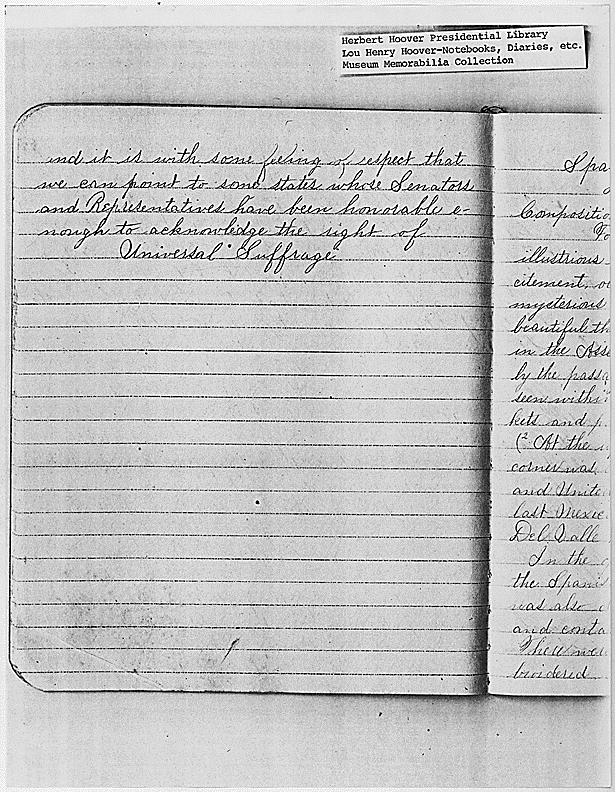 Sample handwritten essay page showing margins and paragraphing (Image: Hoover, Lou Henry, 1874-1944, Public domain, via Wikimedia Commons)
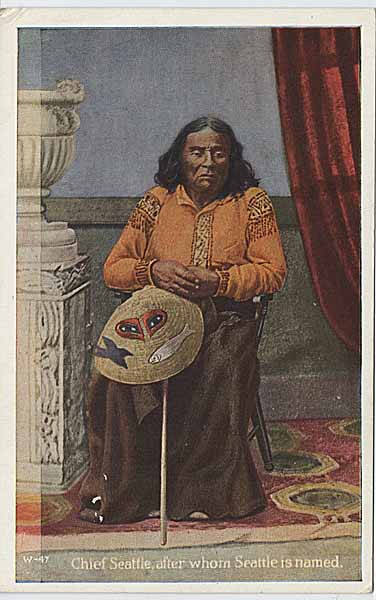 Portrait of Chief Seattle, 19th‑century illustration (Image: E.M. Sammis, Public domain, via Wikimedia Commons)
 Busy Kathmandu market illustrating traditional commerce (Image: Sundar1, CC BY-SA 3.0, via Wikimedia Commons)
6.1 Example 1 – Daraz Product Description (Persuasive Essay Elements)
Daraz sellers write product descriptions that follow an expository‑to‑persuasive flow:
- Hook: “Experience the crisp sound of a premium acoustic guitar.”
- Features (evidence): “Solid spruce top, mahogany back, 41 cm scale.”
- Benefit (analysis): “Delivers rich tones for beginners and professionals alike.”
- Call‑to‑action (conclusion): “Order now and enjoy free delivery across Nepal.”
The structure mirrors the five‑paragraph essay, with the thesis being the product’s unique selling proposition.
6.2 Example 2 – Ncell Promotional Email (Cultural Appeal)
Ncell’s “Festival Data Pack” email uses cultural perspective:
- Opening line: “Celebrate Dashain with unlimited data for your family!” – taps into Nepali festival values of togetherness.
- Body: Lists data limits, pricing, and a short testimonial from a local shopkeeper.
- Closing: “Stay connected, stay blessed – Ncell wishes you a happy Dashain.”
The email’s cultural framing (family, blessings) aligns with Nepali collectivist values, making the promotional message more persuasive.
6.3 Example 3 – Google Blog Post on Climate Change (Global Cultural Perspective)
Google’s “How AI helps predict monsoon patterns” article adopts an expository essay style, but it also acknowledges cultural impacts:
- Discusses how farmers in the Terai rely on monsoon predictions for planting decisions.
- Highlights local knowledge (e.g., “watching the sky”) alongside AI models.
This blend of scientific exposition and cultural context exemplifies the cultural‑aware essay expected in academic writing.
7. Worked Example Linked to a Real Situation
Scenario: A BBA student must write a 500‑word argumentative essay on “Should the Nepal Rastra Bank mandate a 2 % transaction fee for all e‑wallets?”
Step‑by‑step trace:
| Step | Action | Reason |
|---|---|---|
| 1 | Hook – Quote NTC’s 2022 report: “Digital payments grew 60 % in two years.” | Captures reader’s attention with a relevant statistic. |
| 2 | Background – Briefly explain e‑wallet ecosystem (eSewa, Khalti). | Sets context for readers unfamiliar with the market. |
| 3 | Thesis – “A modest 2 % fee will protect consumer data without stifling innovation.” | Clear stance to be defended. |
| 4 | Body Paragraph 1 (Pro‑fee) – Cite security breaches (2023 Khalti hack) and argue fee funds cybersecurity. | Evidence supports claim. |
| 5 | Body Paragraph 2 (Con‑fee) – Present counter‑argument: higher fees may exclude low‑income users; use World Bank data on digital divide. | Shows awareness of opposing view. |
| 6 | Rebuttal – Argue that fee can be tiered; low‑balance accounts pay 1 %. | Demonstrates critical thinking. |
| 7 | Conclusion – Restate thesis, summarize points, suggest pilot program. | Leaves reader with actionable recommendation. |
Word‑count check: Approx. 120 words for intro, 80 words each body paragraph, 70 words for conclusion → 500 words total.
8. Common Pitfalls and How to Avoid Them
| Pitfall | Why it hurts | Remedy |
|---|---|---|
| Over‑generalising culture | Leads to stereotyping and loss of nuance. | Use specific examples and cite credible sources. |
| Weak thesis | Reader cannot follow argument. | Write a one‑sentence claim that is debatable. |
| Insufficient evidence | Argument appears opinion‑based. | Include at least two pieces of quantitative or qualitative data per body paragraph. |
| Ignoring counter‑argument | Reduces credibility. | Allocate a paragraph to acknowledge and refute opposing views. |
| Poor paragraph cohesion | Ideas feel disjointed. | Use transition words (however, moreover, consequently). |
9. Practice Questions
- Identify the cultural lens in the excerpt: “The river is our mother; we must protect it as we protect our children.” (Hint: consider Nepali Hindu reverence for rivers.)
- Rewrite the thesis of the following sentence to make it argumentative: “Digital wallets are popular in Nepal.”
- Create a brief outline (intro + 2 body points + conclusion) for an essay comparing Nepali and Chief Seattle’s view of land ownership.
10. ## In the real world
- Daraz’s product pages use the five‑paragraph essay structure to persuade customers, turning features into benefits and ending with a clear call‑to‑action.
- Ncell’s festival‑themed promotional emails embed cultural values (family, blessings) into the persuasive essay format, increasing conversion rates during Dashain.
- Google’s climate‑change blog blends expository essay techniques with cultural context, showing how AI predictions affect Nepali farmers’ planting decisions.
These examples illustrate that the same essay conventions you practice in class are employed daily by major Nepali and global companies to inform, persuade, and connect with audiences.
11. ## Exam tip
- Read the prompt twice. Highlight the required essay type (expository, argumentative, etc.) and the cultural angle.
- Plan with a 5‑minute outline: thesis → three supporting points → counter‑argument (if required) → conclusion.
- Allocate time for cultural evidence. Use at least one Nepali statistic or local example; this scores marks for relevance.
- Leave 5 minutes for proofreading: check thesis‑body alignment, transition words, and citation format (APA style is preferred for BBA).
By mastering the structural scaffold and consistently weaving cultural perspectives, you will meet the exam’s expectations for depth, analysis, and relevance.
Based on the TU BBA syllabus for English II (ENG202), unit 2.
Discussion
Loading…