Financial AccountingUnit 510 min read
Trial Balance & Error Rectification: Types, Preparation & Adjustments
Unit 5 of Financial Accounting covers the preparation of trial balances, identification of errors, their rectification methods, and the impact of errors on financial statements—essential for ensuring accurate financial records.
What is a Trial Balance?
A trial balance is a summary statement listing all ledger account balances (debit or credit) at a specific date to check if:
- Debit = Credit (arithmetic accuracy).
- No errors exist in recording transactions.
Why Prepare a Trial Balance?
mindmap
root((Why Prepare Trial Balance?))
Accuracy
Checks arithmetic correctness
Detection
Identifies errors in journal/ledger
Preparation
Basis for financial statements
Compliance
Ensures adherence to accounting principles
Efficiency
Saves time in error correction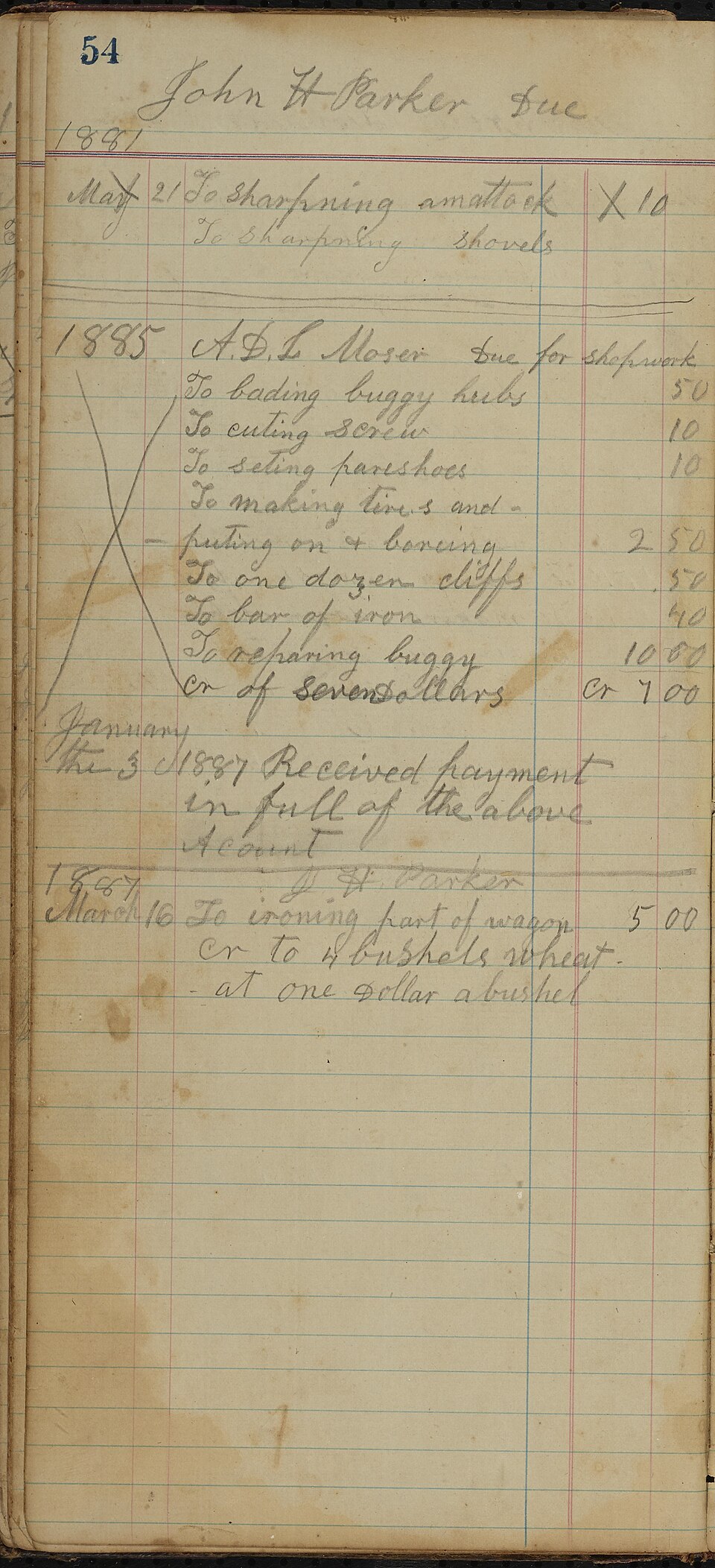 A traditional ledger with T-accounts for debits and credits. (Image: Public domain, via Wikimedia Commons)
Types of Errors Affecting Trial Balance
Errors can be classified based on their impact on the trial balance:
| Type of Error | Effect on Trial Balance | Example |
|---|---|---|
| One-sided Error | Discrepancy in totals | Omitting a transaction entirely (e.g., not recording a sale of Rs 50,000). |
| Compensating Error | Balances out (no discrepancy) | Overstating one account and understating another by the same amount. |
| Complete Reversal | No effect | Recording Rs 10,000 as debit instead of credit (but in wrong accounts). |
| Partial Reversal | Discrepancy | Recording Rs 5,000 instead of Rs 50,000. |
| Wrong Classification | Discrepancy | Treating revenue as an asset. |
| Wrong Amount | Discrepancy | Recording Rs 2,000 instead of Rs 20,000. |
How to Prepare a Trial Balance
Step-by-Step Process
- List all ledger accounts (assets, liabilities, equity, revenue, expenses).
- Extract balances (debit or credit) for each account.
- Summarize debits and credits to verify equality.
- Identify discrepancies if Debit ≠ Credit.
Worked Example: Trial Balance of "Kathmandu Retail Shop" (as of 31st Chaitra 2080)
Assume the following ledger balances (in NPR):
| Account | Debit (Rs.) | Credit (Rs.) |
|---|---|---|
| Cash at Bank | 500,000 | |
| Accounts Receivable | 300,000 | |
| Inventory | 400,000 | |
| Furniture & Fixtures | 200,000 | |
| Accounts Payable | 150,000 | |
| Capital | 900,000 | |
| Sales Revenue | 1,200,000 | |
| Salaries Expense | 100,000 | |
| Rent Expense | 50,000 | |
| Total | 1,550,000 | 1,550,000 |
Observation:
- Debit Total = Credit Total (Rs 1,550,000) → Trial balance is correct.
- If totals differed, errors would need rectification.
Rectification of Errors
Common Errors and Their Corrections
| Error | Rectification Method | Journal Entry |
|---|---|---|
| Omission of a transaction | Record the missing entry. | Dr. Asset/Credit Account <br> Cr. Related Account |
| Wrong amount recorded | Reverse the incorrect entry and record the correct one. | Dr. Correct Account <br> Cr. Correct Account (for overstatement) |
| Wrong classification | Reclassify the account (e.g., expense → asset). | Dr. Correct Account <br> Cr. Incorrect Account |
| Complete reversal of entries | No correction needed (balances out). | None |
| Compensating errors | Correct both entries to reflect the actual transaction. | Dr. Correct Account <br> Cr. Correct Account (adjust both sides) |
| NSF Cheque (Not Sufficient Funds) | Reverse the original entry and record as a bad debt. | Dr. Bad Debts <br> Cr. Accounts Receivable |
| Bank Charges | Record as an expense. | Dr. Bank Charges Expense <br> Cr. Cash/Bank |
Worked Example: Rectifying Errors in "Kathmandu Retail Shop"
Scenario: The trial balance shows a discrepancy of Rs 20,000 (Debit > Credit). Investigation reveals:
- Sale of goods (Rs 10,000) was recorded as Rs 1,000 in the sales journal.
- Rent paid (Rs 5,000) was omitted entirely.
- Purchase of furniture (Rs 5,000) was recorded in the purchase journal instead of the furniture account.
Step 1: Identify the Errors
| Error | Incorrect Entry | Correct Entry |
|---|---|---|
| Understated Sales | Dr. Cash 1,000 <br> Cr. Sales 1,000 | Dr. Cash 10,000 <br> Cr. Sales 10,000 |
| Omitted Rent Payment | Not recorded | Dr. Rent Expense 5,000 <br> Cr. Cash 5,000 |
| Wrong Classification (Furniture) | Dr. Purchases 5,000 <br> Cr. Cash 5,000 | Dr. Furniture 5,000 <br> Cr. Cash 5,000 |
Step 2: Prepare Correcting Journal Entries
flowchart LR
    A["Error 1: Understated Sales"] --> B["Dr. Sales 9,000<br>Cr. Cash 9,000"]
    C["Error 2: Omitted Rent"] --> D["Dr. Rent Expense 5,000<br>Cr. Cash 5,000"]
    E["Error 3: Wrong Classification"] --> F["Dr. Furniture 5,000<br>Cr. Purchases 5,000"]
Step 3: Updated Trial Balance
After corrections, the trial balance now balances:
| Account | Debit (Rs.) | Credit (Rs.) |
|---|---|---|
| Cash at Bank | 496,000 | |
| Accounts Receivable | 300,000 | |
| Inventory | 400,000 | |
| Furniture & Fixtures | 205,000 | |
| Accounts Payable | 150,000 | |
| Capital | 900,000 | |
| Sales Revenue | 1,210,000 | |
| Salaries Expense | 100,000 | |
| Rent Expense | 55,000 | |
| Total | 1,556,000 | 1,556,000 |
In the Real World
eSewa (Digital Payments)
- Concept Used: Bank Reconciliation & Error Detection
- How? eSewa processes thousands of transactions daily. If a user’s account shows a discrepancy (e.g., Rs 500 deducted twice), eSewa’s system flags it as an error in recording and reverses the duplicate charge, ensuring the trial balance matches the actual cash flow.
Khalti (Mobile Banking)
- Concept Used: Rectification of Errors (NSF Cheques)
- How? If a merchant deposits a cheque via Khalti but the bank returns it as NSF (Not Sufficient Funds), Khalti’s accounting system:
- Reverses the original credit to the merchant’s account.
- Records it as a bad debt (loss) in their books.
- Ensures the trial balance reflects the correct cash position.
Daraz (E-Commerce Order Processing)
- Concept Used: Trial Balance for Inventory Management
- How? Daraz’s warehouse system maintains a trial balance of inventory. If a discrepancy arises (e.g., 100 units recorded but only 95 in stock), Daraz:
- Investigates (theft, miscounting, or shipping errors).
- Adjusts the inventory ledger to match physical stock.
- Prevents overstatement of assets in financial reports.
The Accounting Cycle with Trial Balance
flowchart TD
    A["Journal Entries"] --> B["Post to Ledger"]
    B --> C["Trial Balance"]
    C --> D{"Debit = Credit?"}
    D -->|"Yes"| E["Prepare Financial Statements"]
    D -->|"No"| F["Identify & Rectify Errors"]
    F --> C
    E --> G["Close Books"]
Exam Tip
What Examiners Look For
Accuracy in Trial Balance Preparation
- Ensure every ledger account is included.
- Totals must match (Debit = Credit).
- No omissions (e.g., forgetting to include "Discount Allowed").
Error Identification & Rectification
- Classify errors correctly (one-sided, compensating, complete reversal).
- Prepare correct journal entries for rectification.
- Show the adjusted trial balance after corrections.
Real-World Application
- Bank reconciliation (e.g., NSF cheques, unrecorded deposits).
- Inventory discrepancies (e.g., theft, miscounting).
- Classification errors (e.g., treating revenue as capital).
Common Mistakes to Avoid
❌ Ignoring small discrepancies (even Rs 100 errors matter in exams). ❌ Not reconciling bank statements (a frequent exam question). ❌ Incorrect journal entries (e.g., debiting instead of crediting). ❌ Assuming all errors affect the trial balance (compensating errors may not).
Marks Distribution in Exams
| Task | Expected Marks |
|---|---|
| Preparing a trial balance | 5-7 |
| Identifying errors | 3-5 |
| Rectifying errors with journal entries | 5-8 |
| Explaining the impact of errors | 3-5 |
| Total | 16-25 |
Based on the TU BBA syllabus for Financial Accounting (ACC201), unit 5.
Discussion
Loading…