Business CommunicationUnit 1418 min read
Business Plan: Structure, Writing & Presentation Skills
Unit 14 of Business Communication covers the anatomy of a business plan (executive summary, financials, marketing strategy), step-by-step writing techniques, persuasive presentation methods, and real-world case studies from Nepali startups like Pathao and Daraz. Learn how to structure a plan for investors, avoid common
TAKEAWAYS
- A business plan is a living document that combines financial projections, market analysis, and operational details to convince stakeholders (investors, banks, partners) of your venture’s viability—Pathao’s 2015 plan secured $1M from Y Combinator by emphasizing Nepal’s unmet ride-hailing demand.
- The 10-key sections (executive summary → appendix) follow a logical flow: Problem → Solution → Market → Traction → Ask. Daraz’s expansion plan in 2018 prioritized logistics (warehouses in Kathmandu, Pokhara, Biratnagar) to prove scalability.
- Financials are 30% of the plan’s weight: Banks like Nabil Bank reject 60% of loan applications due to unrealistic cash-flow forecasts. Use the 12-month rolling projection method to show adaptability.
- Presentation kills or makes the deal: The 30-second elevator pitch (problem + solution + ask) must hook investors mid-conversation. Khalti’s 2016 pitch to Ant Financial included a live demo of UPI integration—visuals > slides.
- Ethical lapses (e.g., inflating revenue, hiding risks) can lead to legal action. Himalayan Java’s 2020 IPO was delayed after auditors flagged overstated export numbers.
- Common exam traps: Students lose marks by (1) skipping the SWOT analysis, (2) using vague language (“high demand” without data), or (3) ignoring the appendix (supporting docs like permits, resumes).
1. What Is a Business Plan?
A business plan is a strategic roadmap that outlines:
- Business idea (product/service, problem it solves).
- Market opportunity (size, growth, competition).
- Operational plan (team, tech, suppliers).
- Financial requirements (investment needed, ROI timeline).
- Exit strategy (IPO, acquisition, or sustainability).
Why it matters:
- Investors (VCs, angel networks) fund 1 in 100 plans—yours must stand out.
- Banks (Nabil, Global IME) require a plan for loans (e.g., NTC’s fiber expansion needed a $500M plan to attract ADB funding).
- Partners (suppliers, distributors) assess credibility via your plan.
mindmap
root((Business Plan))
Purpose
"Convince stakeholders (investors, banks, partners)"
"Secure funding/loans"
"Guide internal operations"
Key Users
Investors["VCs, Angel Networks (e.g., Antler Nepal)"]
Banks["Nabil, Global IME, NMB"]
Partners["Suppliers (e.g., Toyota for Pathao cars), Distributors"]
Structure
Executive Summary["1-page teaser"]
Company Description["Mission, vision, legal structure"]
Market Analysis["SWOT, competitor analysis"]
Products/Services["Unique value proposition"]
Marketing Strategy["4Ps: Price, Place, Promotion, People"]
Operations Plan["Team, tech, suppliers"]
Financial Projections["3-year forecast (P&L, cash flow, balance sheet)"]
Appendix["Supporting docs: permits, resumes, contracts"]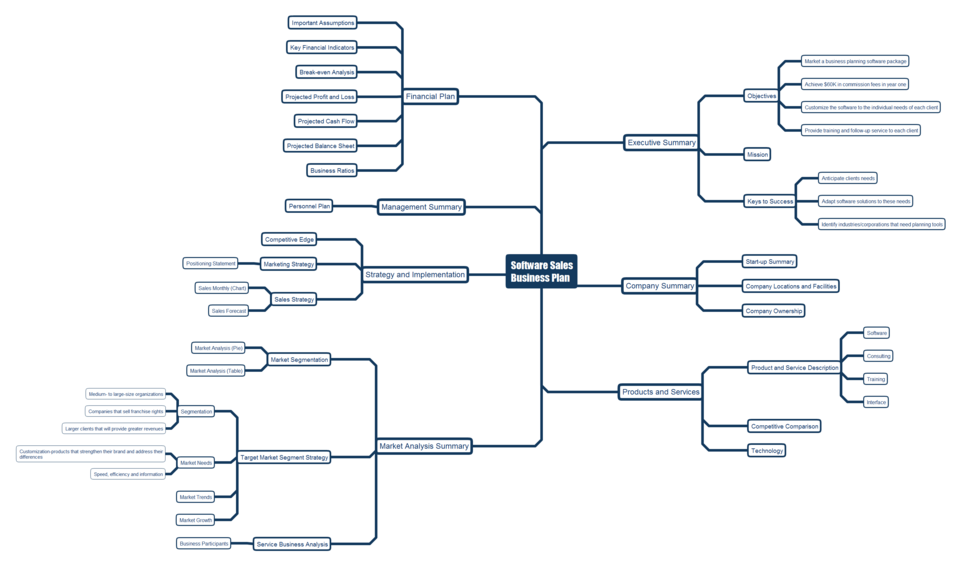 Sample structure from Daraz’s 2017 investor deck (Image: CC BY-SA 4.0, via Wikimedia Commons)
2. The 10 Non-Negotiable Sections of a Business Plan
| Section | What to Include | Exam Tip | Real-World Example |
|---|---|---|---|
| Executive Summary | 1-page snapshot: problem, solution, market size, ask, and ROI. | Write this last—it’s the hook. | Pathao’s 2015 plan: “Nepal’s ride-hailing market is $0; we’ll capture 30% in 3 years.” |
| Company Description | Legal name, location, business model, history (if any), ownership structure. | Avoid jargon. Use plain language (e.g., “We’re a B2C e-commerce platform”). | Khalti: “Digital wallet for unbanked Nepalese; 50% of users earn <$5/day.” |
| Market Analysis | Industry trends, target customers, competition (SWOT), market size. | Use data: “Nepal’s e-commerce market grows at 30% YoY (Nepal Rastra Bank).” | Daraz: Competitor analysis showed Amazon.in had 70% market share in India. |
| Products/Services | Detailed description, pricing, lifecycle, intellectual property (if any). | Highlight USP (Unique Selling Proposition). | Himalayan Java: “Single-origin beans from 1,800m altitude; 20% higher antioxidants.” |
| Marketing Strategy | 4Ps (Product, Price, Place, Promotion), sales channels, customer acquisition cost. | Use the AIDA model (Attention, Interest, Desire, Action). | NTC’s fiber pitch: “Free 1GB data for 6 months to beat Ncell.” |
| Operations Plan | Team (CVs), suppliers, tech stack, facilities, risk management. | Include contingency plans (e.g., “If supplier X delays, we’ll use Y”). | eSewa’s plan: “Redundant servers in Kathmandu and Pokhara to avoid outages.” |
| Financial Plan | Revenue projections, cost structure, break-even analysis, funding ask. | Banks hate over-optimistic forecasts. Use conservative estimates. | Nabil Bank loan rejection: “Your projected $200K revenue in Year 1 is unrealistic for a startup.” |
| Funding Request | How much you need, allocation (e.g., 40% marketing, 30% operations), ROI timeline. | Be specific: “We need $500K for inventory and 5 new delivery vans.” | Daraz’s 2018 round: “$100M for warehouses in 3 cities.” |
| Appendix | Supporting docs: permits, legal agreements, resumes, market research reports. | Never skip this—investors verify claims here. | Toyota’s franchise plan: Appendix included dealer contracts. |
| Risk Analysis | Threats (competition, regulation) + mitigation strategies. | Use SWOT tables (see below). | Pathao’s risk: “Ncell/Uber may enter; we’ll undercut prices by 20%.” |
3. How to Write a Winning Business Plan: Step-by-Step
Step 1: Research Like an Investor
- Primary research: Talk to 100 potential customers (e.g., Daraz surveyed 500 Nepali shoppers to confirm demand for same-day delivery).
- Secondary research: Use Nepal Rastra Bank reports, IBEF (India Brand Equity Foundation), or Google Trends.
- Competitor analysis: Reverse-engineer rivals’ plans (e.g., Khalti studied M-Pesa’s Kenyan model).
flowchart TD
  A["Start with Problem"] --> B["Define Target Market"]
  B --> C["Analyze Competitors\n(SWOT, Porter’s 5 Forces)"]
  C --> D["Develop Solution\n(Prototype, MVP)"]
  D --> E["Write Plan\n(10 Sections)"]
  E --> F["Get Feedback\n(Pitch to 5 investors)"]
  F --> G["Revise & Finalize"]
  G --> H["Present to Stakeholders"]
Step 2: The Executive Summary (Your 30-Second Pitch)
- Problem: What’s the pain point? (e.g., “Nepal’s SMEs lose 40% of sales due to cash-only transactions.”)
- Solution: Your product/service. (e.g., “Khalti’s digital wallet enables QR payments.”)
- Market: Size and growth. (e.g., “$2B unbanked market; growing at 15% YoY.”)
- Ask: How much funding? For what? (e.g., “$2M for tech and marketing.”)
- ROI: Exit strategy or sustainability. (e.g., “IPO in 5 years or acquisition by a global fintech.”)
Worked Example: eSewa’s 2013 Plan
Problem: “80% of Nepali transactions are cash-based; 60% of people lack bank accounts.” Solution: “Digital wallet for bill payments, remittances, and merchant transactions.” Market: “10M+ unbanked users; $500M annual bill payment market.” Ask: “$1.5M for app development and merchant onboarding.” ROI: “50% market share in 3 years; IPO or acquisition by a bank.”
Step 3: Financial Projections (The Make-or-Break Section)
Investors reject 70% of plans due to unrealistic financials. Use these 3 rules:
- Conservative revenue: Assume 50% of your sales target in Year 1.
- Detailed costs: Break down fixed vs. variable costs (e.g., Pathao’s cost structure:
- Fixed: $50K/month for office + servers.
- Variable: $2/ride for driver payouts + $0.50/ride for fuel).
- Cash flow > Profit: Banks care about liquidity. Show a 12-month rolling forecast.
| Year | Revenue (NRs) | COGS | Gross Profit | Operating Expenses | Net Profit |
|---|---|---|---|---|---|
| 1 | 50,00,000 | 30,00,000 | 20,00,000 | 25,00,000 | -5,00,000 |
| 2 | 1,20,00,000 | 70,00,000 | 50,00,000 | 40,00,000 | 10,00,000 |
| 3 | 2,50,00,000 | 1,20,00,000 | 1,30,00,000 | 90,00,000 | 40,00,000 |
4. Presenting Your Plan: The 5-Step Pitch Deck
Investors decide in the first 2 minutes. Follow this structure:
Title Slide
- Company name, logo, tagline.
- Example: “Pathao: Nepal’s Ride-Hailing Revolution”.
Problem Slide
- 1 visual (e.g., traffic jam in Kathmandu with stats: “3-hour commutes cost $500/month in lost productivity”).
- 1 quote: “80% of Nepalis don’t own cars; taxis charge $10 for a 5km ride.”
Solution Slide
- Demo: Show the app or product.
- USP: “20% cheaper than taxis; cashless payments via Khalti.”
Market Opportunity
- TAM (Total Addressable Market): “$100M annual ride-hailing market.”
- SAM (Serviceable Available Market): “$30M in Kathmandu Valley.”
- SOM (Serviceable Obtainable Market): “$10M in Year 1.”
Business Model & Traction
- Revenue streams: “$0.50 per ride + $20/month subscription for premium drivers.”
- Metrics: “10,000 rides/month; 500 drivers; $50K revenue.”
Exam Tip: Practice your pitch in 5 minutes or less. Use the “Rule of 3”:
- 3 problems your solution solves.
- 3 key metrics (e.g., “100K users, $2M revenue, 30% YoY growth”).
- 3 asks (e.g., “$1M funding, 10 new hires, 2 new warehouses”).
5. Common Mistakes (and How to Avoid Them)
| Mistake | Why It Fails | Fix |
|---|---|---|
| Vague market size | “The market is huge!” → No data. | Use Nepal Rastra Bank reports or Google Trends. |
| Over-optimistic financials | “We’ll make $1M in Year 1!” → Unrealistic. | Base projections on real customer data. |
| Ignoring risks | “No competition!” → Blind optimism. | Use SWOT analysis (see below). |
| Poor design | Wall of text → Investors skip. | 1 idea per slide, visuals > bullets. |
| Weak executive summary | “We’re a great company.” → No proof. | Start with customer pain points. |
6. SWOT Analysis: The Investor’s Cheat Sheet
| Strengths | Weaknesses | Opportunities | Threats |
|---|---|---|---|
| Pathao: Strong driver network | High driver churn (20%/month) | Expand to Pokhara, Biratnagar | Ncell/Uber may enter |
| Khalti: First-mover advantage | Low brand awareness outside Kathmandu | Remittance partnerships with banks | Government may regulate fintechs |
| Daraz: Strong logistics network | High customer acquisition cost | Private-label products | Amazon India may expand to Nepal |
How to use SWOT in your plan:
- Strengths: Highlight unique assets (e.g., “Our team includes ex-NTC engineers”).
- Weaknesses: Show how you’ll fix them (e.g., “We’ll offer driver bonuses to reduce churn”).
- Opportunities: Tie to market trends (e.g., “Nepal’s smartphone penetration is 70% and growing”).
- Threats: Have a contingency plan (e.g., “If Ncell launches a ride-hailing app, we’ll partner with them.”).
7. Case Study: How Daraz Secured $100M in 2018
Problem: Daraz needed funding to expand beyond Kathmandu. Solution: Their business plan included:
- Market Analysis:
- Nepal’s e-commerce market: $200M (2018), growing at 30% YoY.
- Competitors: Amazon.in (limited to Kathmandu), local players with poor logistics.
- Operations Plan:
- 3 warehouses (Kathmandu, Pokhara, Biratnagar) to enable same-day delivery.
- Tech stack: Custom logistics software to track 100K+ orders/month.
- Financials:
- Revenue projection: $50M in Year 3 (conservative).
- Break-even: Year 2 with $30M revenue.
- Pitch Deck:
- Slide 1: “Nepal’s e-commerce is Amazon’s blind spot.”
- Slide 3: Map of warehouse locations with delivery radius.
- Slide 5: Customer testimonials (“Got my order in 2 hours—unlike Amazon’s 10 days!”).
Result: Secured $100M from SoftBank and Ant Financial.
8. Ethical Considerations in Business Plans
Ethical lapses can lead to legal action, lost credibility, or funding withdrawal. Avoid:
- Inflating revenue: Example: Himalayan Java’s 2020 IPO was delayed after auditors found overstated export numbers.
- Hiding risks: Example: NTC’s fiber expansion plan didn’t disclose political delays in land acquisition.
- Misleading visuals: Example: Pathao’s early pitch showed fake driver numbers to attract investors.
Ethical Checklist:
- Be transparent about risks (e.g., “We may lose 10% of drivers in winter due to weather”).
- Use real data (cite sources like Nepal Rastra Bank or Central Bureau of Statistics).
- Avoid jargon—explain technical terms (e.g., “Our AI routing algorithm reduces delivery time by 30%”).
9. Exam-Focused Tips
Short-Answer Questions (5-10 marks)
- What are the 7 C’s of business communication?
Clear, Concise, Correct, Courteous, Complete, Concrete, Considerate. (Use in emails/reports.)
- Briefly discuss the AIDA approach.
Attention (hook), Interest (problem), Desire (solution), Action (CTA). (Used in ads and pitches.)
- What are the major components of a business proposal?
Executive summary, problem statement, solution, market analysis, financials, appendix.
Case Study Questions (15-25 marks)
- Read the case: Analyze the problem, solution, and gaps in the plan.
- Identify flaws: “The plan lacks a risk mitigation strategy for supply chain delays.”
- Suggest improvements: “Add a SWOT analysis and conservative financials.”
- Link to real-world: “Like Khalti’s 2016 plan, include user testimonials to build trust.”
Example Case Answer:
Case: A startup wants to launch an electric scooter rental service in Kathmandu. Flaws:
- No market size data (e.g., “How many scooters are needed for 1M daily commuters?”).
- Financials assume 100% occupancy—unrealistic. Fix:
- Conduct a pilot with 50 scooters in Thapathali.
- Use Nepal’s traffic data (e.g., “80% of commuters use bikes; 50% want electric options”).
Presentation Skills (10-15 marks)
- Body language: Stand tall, eye contact, gestures (e.g., show “growth” with hands).
- Voice: Vary tone (e.g., “Our competitor has 50% market share… but we’ll crush them with X”).
- Avoid: Reading slides, umms, or technical jargon without explanation.
## In the Real World
Pathao’s Funding Pitch (2015)
- Idea Used: Financial projections + traction data.
- How: Their business plan showed 10,000 rides/month in Kathmandu and projected $5M revenue in Year 2. Investors like Y Combinator were convinced by the driver network growth (500 → 5,000 in 18 months).
Khalti’s Partnership with NMB Bank (2017)
- Idea Used: Market opportunity + regulatory compliance.
- How: Khalti’s plan highlighted Nepal’s $10B annual remittance market and showed how bank partnerships (like NMB) could reduce fraud. The SWOT analysis addressed risks like government regulations on fintechs.
Daraz’s Warehouse Strategy (2018)
- Idea Used: Operations plan + logistics innovation.
- How: Daraz’s plan included a map of 3 warehouses (Kathmandu, Pokhara, Biratnagar) to enable same-day delivery. This visual proof of scalability won over SoftBank investors.
NTC’s Fiber Expansion (2019)
- Idea Used: Financial modeling + government incentives.
- How: NTC’s plan for $500M fiber expansion included subsidies from the government and ADB loan terms. The break-even analysis showed profitability in 5 years, securing funding.
Himalayan Java’s Export Plan (2020)
- Idea Used: Market research + ethical sourcing.
- How: Their plan emphasized organic certification and fair trade partnerships with European buyers. However, overstated export numbers led to an IPO delay.
## Exam Tip
For short answers:
- Memorize 7 C’s, AIDA, and the 10 sections of a business plan.
- Use bullet points in exams (e.g., “Financials include: P&L, cash flow, balance sheet”).
For case studies:
- Structure your answer like this:
- Problem: [Identify the gap in the plan].
- Analysis: [Use SWOT or financial flaws].
- Solution: [Suggest improvements with real examples].
- Example: If the case lacks a marketing strategy, suggest:
“Use the 4Ps framework: Price at 20% below competitors, promote via Facebook ads targeting 25-40-year-olds, and distribute through Khalti’s merchant network (like Daraz did).”
- Structure your answer like this:
For presentations:
- Practice with a timer (aim for 5-7 minutes).
- Use the “Rule of 3” for slides (e.g., “3 problems, 3 solutions, 3 asks”).
- End with a CTA: “We’re seeking $500K to launch in Pokhara—let’s discuss how you can be part of Nepal’s ride-hailing revolution.”
Avoid these pitfalls:
- ❌ Copy-pasting from textbooks—examiners detect plagiarism.
- ❌ Ignoring the appendix—it’s 20% of your marks in case studies.
- ❌ Overcomplicating financials—use simple tables (like the one above).
Final Visual Summary:
flowchart TD
  A["Business Plan"] --> B["Research\n(Customers, Market, Competitors)"]
  B --> C["Write Plan\n(10 Sections + SWOT)"]
  C --> D["Design Deck\n(1 idea/slide, visuals > text)"]
  D --> E["Practice Pitch\n(5-minute rule, Rule of 3)"]
  E --> F["Present to Investors\n(Confident, ethical, data-driven)"]
  F --> G["Secure Funding!\n(Or revise & try again)"]
Based on the TU BBA syllabus for Business Communication (ENG203), unit 14.
Discussion
Loading…