Business CommunicationUnit 1013 min read
Media & PR: Press Releases & Interviews – Crafting Messages & Handling Q&A
Unit 10 of Business Communication explores how organizations use press releases (structured news announcements) and interviews (structured Q&A) to shape public perception, manage crises, and promote products/services. Learn the anatomy of a press release (headline, boilerplate, quotes), interview techniques (preparatio
Key Concepts & How They Work
1. Press Releases: The Art of Structured News
A press release is a written or recorded communication directed at members of the news media for the purpose of announcing something newsworthy. It follows a standard format to ensure clarity, credibility, and media pickup.
Anatomy of a Press Release
Types of Press Releases
| Type | Purpose | Example (Nepal Context) |
|---|---|---|
| Product Launch | Announce new product/service | Daraz launching "Daraz Mart" for daily essentials |
| Event Announcement | Promote conferences, workshops | NTC organizing "Digital Nepal 2024" tech summit |
| Corporate Update | Share financial results, mergers | Nabil Bank’s Q1 profit announcement |
| Crises/Apologies | Manage negative publicity | Himalayan Java recall due to quality issues |
| Human Interest | Highlight employees/customers | "Meet the Maker": Story of a local artisan on Daraz |
Worked Example: Press Release for a Nepali Company
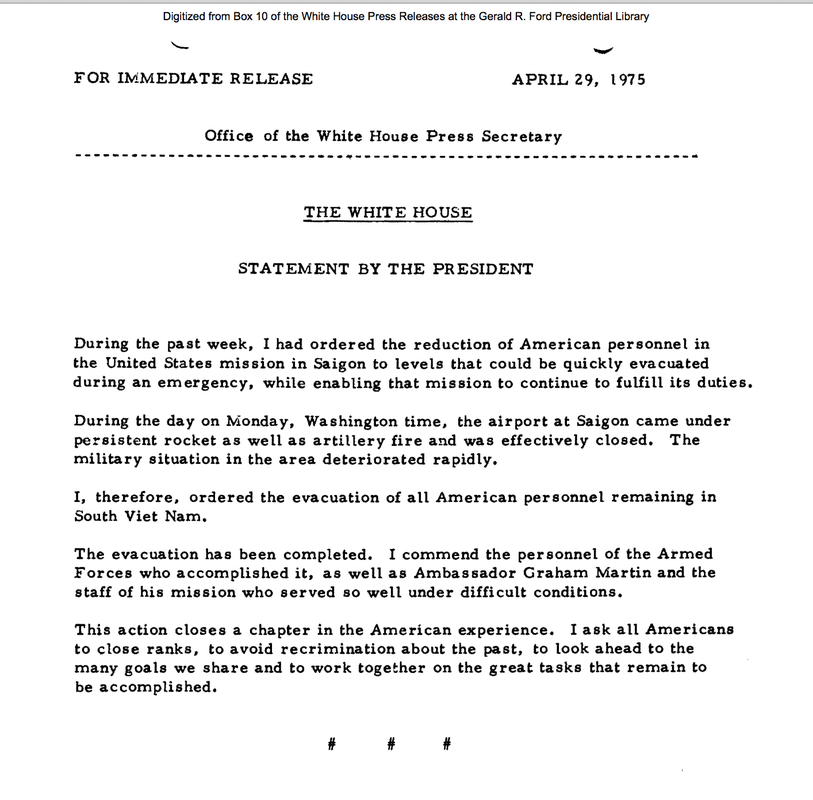 Standard press release layout for reference (Image: The federal government of the United States of America., Public domain, via Wikimedia Commons)
Scenario: Himalayan Java, a Nepali coffee brand, wins "Best Organic Coffee" at the Global Food Expo.
FOR IMMEDIATE RELEASE Himalayan Java Crowned Global Champion at Food Expo Kathmandu, 2024-05-20 – Himalayan Java, Nepal’s premier organic coffee brand, today announced its victory at the Global Food Expo 2024, where it was awarded "Best Organic Coffee" in the international category.
"This recognition is a testament to our farmers’ hard work and our commitment to sustainable practices," said Rajesh Gurung, CEO of Himalayan Java. "We source beans directly from smallholder farmers in the Himalayas, ensuring fair wages and eco-friendly cultivation."
About Himalayan Java: Founded in 2010, Himalayan Java specializes in single-origin, shade-grown coffee from Nepal’s high-altitude regions. The brand exports to 20+ countries and was the first Nepali coffee to be certified USDA Organic.
Media Contact: Anita Shah Marketing Manager, Himalayan Java 📧 anita@himalayanjava.com | 📞 +977-1-4234567
Why This Works:
- Headline grabs attention with a specific achievement.
- Lead paragraph answers Who (Himalayan Java), What (award), Where (Global Food Expo), Why (sustainability).
- Boilerplate provides standardized company info (reusable for future releases).
- Quote adds human interest and credibility.
2. Interviews: Mastering the Q&A
An interview in PR is a structured conversation where an organization’s representative (e.g., CEO, spokesperson) answers questions from media or stakeholders. It can be:
- Live (TV, radio, podcast)
- Print (newspaper, magazine)
- Digital (blog, LinkedIn Q&A)
Types of Interview Questions
| Type | Example (Nepal Context) | How to Handle |
|---|---|---|
| Direct Questions | "How will NTC’s 5G rollout benefit rural Nepal?" | Answer concisely with data (e.g., "Coverage in 50 districts by 2025"). |
| Leading Questions | "Don’t you think Daraz’s late deliveries hurt small sellers?" | Neutralize: "We’re actively working to improve logistics with local partners." |
| Hypothetical | "What if NEPSE’s stock prices crash again?" | Acknowledge + solution: "We monitor trends and advise investors to diversify." |
| Personal | "How do you handle criticism as Nabil Bank’s CEO?" | Share a brief story: "Early in my career, I learned to listen more than I speak." |
Worked Example: Handling a Tough Interview Question
Scenario: *You’re the PR head of Nepal Telecom (NTC), and a journalist asks:* "NTC’s internet speeds are slow compared to competitors like Smart. How do you justify the price?"
Step-by-Step Response:
Acknowledge the concern (shows empathy): "We appreciate customers pointing out areas for improvement. Internet speed is a top priority for us."
Provide data (credibility): "Our average speed in Kathmandu is 45 Mbps, up from 30 Mbps last year. We’ve invested Rs. 10 billion in infrastructure upgrades."
Address the "why" with value: "While we’re competitive, our pricing includes 24/7 customer support, free Wi-Fi zones, and rural coverage—where others don’t operate."
End with a forward-looking statement: "By 2025, we aim to double speeds in urban areas. We welcome feedback to make this happen faster."
Why This Works:
- No defensiveness → Problem-solving tone.
- Balances facts and emotion.
- Ends with a positive action plan.
In the Real World
1. Press Releases in Action
Daraz Nepal
- What it uses: Product launch press releases and event announcements.
- Example: When Daraz introduced "Daraz Pay", it sent a press release to Reporters Nepal, OnlineKhabar, and Kantipur highlighting:
- Why? To compete with Khalti and eSewa in digital payments.
- How? The release included stats (e.g., "50% of sellers now accept Daraz Pay") and a quote from the CEO about financial inclusion.
Nepal Telecom (NTC)
- What it uses: Corporate updates and crises management.
- Example: When NTC faced backlash over 4G blackouts, it issued a press release with:
- Acknowledgment: "We regret the disruption caused by technical issues."
- Solution: "Our engineers are working 24/7 to restore services, with a full report by EOD."
- Contact: Dedicated helpline for complaints.
Google (Global)
- What it uses: Human-interest stories to build brand warmth.
- Example: Google’s "Year in Search" press release shares trending searches (e.g., "Nepal earthquake 2015") and ties them to global events, making data relatable.
2. Interviews Shaping Public Perception
Pathao’s CEO in a Podcast Interview
- Topic: "How Pathao competes with Uber in Nepal."
- Key Takeaway: The CEO used local examples (e.g., "We partner with 50,000 drivers in Kathmandu—more than Uber’s 10,000") to highlight market dominance.
Nabil Bank’s MD in a Financial TV Interview
- Question: "Why are loan interest rates still high in Nepal?"
- Response: Instead of blaming the government, the MD said: "Banks like Nabil offer flexible repayment plans (e.g., 5-year loans for home buyers). We’re also pushing for digital loans to reduce processing costs."
Common Mistakes & How to Avoid Them
Press Release Pitfalls
| Mistake | Fix |
|---|---|
| Too salesy (e.g., "Best product ever!") | Stick to facts + third-party validation (e.g., "Awarded by X Magazine"). |
| No boilerplate | Always include a standard company bio for reuse. |
| Vague language (e.g., "soon") | Use dates (e.g., "Launching June 15, 2024"). |
Interview Pitfalls
| Mistake | Fix |
|---|---|
| Overpromising (e.g., "We’ll fix it tomorrow!") | Use conditional language: "We’re on track to resolve this by Friday." |
| Ignoring the question | Paraphrase first: "You’re asking about X. Here’s how we see it..." |
| Negative tone (e.g., "Our competitors are terrible") | Neutral framing: "We focus on innovation, which sets us apart." |
Exam Tip: How to Score Full Marks
Based on past TU exam questions, here’s how to structure high-scoring answers:
1. For Press Release Questions (e.g., "Prepare a press release for X")
Marks Breakdown:
- Format (30%): Follow the standard structure (headline, dateline, lead, body, boilerplate).
- Content (40%): Answer 5W1H, include quotes, and use local relevance (e.g., mention Nepali laws, competitors, or cultural context).
- Tone (20%): Professional, concise, and positive (avoid jargon).
- Boilerplate (10%): Must include company name, year founded, mission, and key achievements.
Example Starter for Exams:
*"FOR IMMEDIATE RELEASE Nepal’s First Carbon-Neutral Bank Launches Green Loans Kathmandu, 2024-06-01 – Global IME Bank today announced the launch of "Green Loans", offering zero-interest loans for solar panel installations in rural Nepal. This initiative aligns with Nepal’s National Adaptation Plan to reduce carbon emissions by 20% by 2030.
"We’re proud to support Nepal’s transition to renewable energy," said CEO Rajan Khadka. "Our pilot program in Dhading and Sindhupalchowk has already powered 500 homes off-grid."
About Global IME Bank: Founded in 1993, Global IME is Nepal’s first carbon-neutral bank, certified by Gold Standard. With 120 branches nationwide, it serves 2 million customers through digital and traditional banking."*
2. For Interview Questions (e.g., "How would you handle X question?")
Marks Breakdown:
- Structure (30%): Use the Acknowledge-Answer-Solve-Forward (AASF) model.
- Content (40%): Include data, examples, and empathy.
- Professionalism (20%): Avoid defensiveness, jargon, or rudeness.
- Local Context (10%): Relate to Nepali business scenarios (e.g., NEPSE, Khalti, traffic delays).
Example Answer for: "How would you respond if asked about your company’s poor customer service ratings?"
"I’d start by acknowledging the feedback: ‘We’ve received concerns about our response time, and we take this seriously.’ Then, I’d share specific improvements: ‘Last quarter, we reduced average call wait time from 10 to 3 minutes by hiring 50 new agents.’ Next, I’d explain the root cause: ‘Our old IVR system was overloaded, so we’ve invested in AI chatbots to handle 60% of queries instantly.’ Finally, I’d end with a commitment: ‘We’ll publish monthly service reports to keep customers updated.’"
3. For Case Studies (e.g., "Analyze Airbnb’s PR strategy")
Marks Breakdown:
- Introduction (10%): Briefly describe the company and situation.
- Analysis (50%): Use PR concepts (e.g., press releases, crisis management, interviews).
- Local Parallels (20%): Compare to Nepali companies (e.g., "Like Airbnb’s ‘Belong Anywhere’ campaign, Daraz’s ‘Shop Local’ initiative boosts trust.").
- Conclusion (20%): Key takeaways for Nepal’s business environment.
Example Outline for Airbnb Case:
Introduction: "Airbnb, founded in 2008, revolutionized hospitality but faced PR crises like racial discrimination lawsuits and host complaints during COVID-19."
PR Strategies:
- Press Releases: Issued transparency reports on diversity hiring.
- Interviews: CEO Brian Chesky did podcasts to explain COVID refund policies.
- Social Media: Used #AirbnbStaysHome to pivot to experiences (e.g., virtual tours).
Nepali Parallel: "Similarly, Pathao used press releases to clarify driver pay disputes during protests, maintaining stakeholder trust."
Conclusion: "Airbnb’s success shows that proactive PR—combining data, empathy, and local adaptation—can turn crises into opportunities. For Nepali startups like Khalti or Nepal Airlines, this means rapid response and community engagement."
Final Tip: Always practice writing press releases for Nepali scenarios (e.g., a blood donation drive, NEPSE stock crash, or Daraz’s Black Friday sale). For interviews, mock tough questions with a friend—pause before answering to structure your response!
Based on the TU BBA syllabus for Business Communication (ENG203), unit 10.
Discussion
Loading…