Business CommunicationUnit 210 min read
Types & Models of Communication: Flow, Channels & Business Applications
Unit 2 of Business Communication explores the five core communication types (intrapersonal, interpersonal, group, mass, and organizational), six key models (linear, interactional, transactional, Shannon-Weaver, Lasswell, and Schramm), and real-world applications in Nepali businesses (e.g., Daraz’s customer service, Nce
TAKEAWAYS:
- Five types of communication (intrapersonal → mass) each serve distinct business needs (e.g., intrapersonal for self-motivation, mass for NEPSE stock alerts).
- Six models explain how messages flow: linear (one-way, like a bank’s ATM instructions) vs. transactional (two-way, like Pathao’s driver-customer chats).
- Shannon-Weaver’s model (sender → message → channel → receiver → feedback) is the foundation for eSewa’s error messages ("Payment failed: Invalid OTP").
- Lasswell’s 5W model ("Who says What to Whom in Which Channel with What Effect?") decodes Khalti’s marketing: "Khalti says ‘Pay in 3 seconds’ to Nepali shoppers via Facebook ads to boost sales."
- Ethnocentrism (judging others’ communication by your culture) can break Daraz’s global expansion if Nepali managers assume all customers prefer Hindi over Nepali.
- Paralanguage (tone, pitch, silence) in Ncell’s customer care calls determines whether a complaint is resolved or escalated.
1. The Five Types of Business Communication
Business communication isn’t one-size-fits-all. Each type serves a unique purpose, from internal memos to nationwide ads. Here’s how they break down:
mindmap
  root((Types of Business Communication))
    Intrapersonal
      "Self-talk (e.g., a manager’s internal pep talk before a crisis)"
      "Used in: Decision-making, stress management"
    Interpersonal
      "One-on-one (e.g., a banker advising a loan applicant)"
      "Highest trust, lowest distortion"
    Group
      "Teams (e.g., Daraz’s product-launch brainstorming)"
      "Risk: Groupthink (e.g., NTC’s delayed 5G rollout due to internal debates)"
    Mass
      "Large audiences (e.g., NEPSE’s SMS alerts to 10,000+ investors)"
      "Low feedback, high reach"
    Organizational
      "Hierarchy-based (e.g., Chaudhary Group’s top-down policy memos)"
      "Formal, structured (e.g., Nabil Bank’s compliance emails)"
Worked Example: Nabil Bank’s Loan Approval Process
- Intrapersonal: The loan officer self-reflects on risk before approving.
- Interpersonal: Officer explains terms to the customer face-to-face.
- Group: A committee reviews high-value loans.
- Mass: Bank advertises loan schemes via TV (mass communication).
- Organizational: HR sends a memo about new loan policies to all branches.
2. Six Models of Communication: How Messages Travel
Models are blueprints for how messages move. Some are one-way; others are dynamic. Here’s the breakdown:
| Model | Description | Example in Nepal | Strengths | Weaknesses |
|---|---|---|---|---|
| Linear (Aristotelian) | One-way: Sender → Message → Receiver (no feedback). | NTC’s broadcast announcement about load-shedding schedules. | Simple, clear roles. | Ignores receiver’s response. |
| Interactional | Two-way: Sender ↔ Receiver (feedback loop). | A Pathao driver arguing with a passenger about fare via app chat. | Reduces misunderstandings. | Still linear in structure. |
| Transactional | Dynamic: Both parties are simultaneous senders/receivers. | WhatsApp group chat between Daraz’s logistics team and a customer tracking order. | Most realistic for modern comms. | Complex to analyze. |
| Shannon-Weaver | Technical: Sender → Encoder → Channel → Decoder → Receiver → Feedback. | eSewa’s error message: "OTP expired. Resend?" (channel = SMS/app; feedback = retry). | Explains noise/distortion. | Overly technical for casual chats. |
| Lasswell’s 5W | Who says What to Whom in Which Channel with What Effect? | Khalti’s ad: "Khalti (Who) promotes 3-second payments (What) to unbanked youth (Whom) via Facebook (Channel) to increase transactions (Effect)." | Structured for marketing/PR. | Hard to measure "Effect." |
| Schramm’s Model | Semantic: Focuses on shared meaning (e.g., cultural context). | A Nepali manager using Dhusi (respectful term) vs. a foreign CEO saying boss—same word, different meaning. | Highlights cultural barriers. | Requires deep cultural knowledge. |
Why This Matters for Nepali Businesses:
- NTC’s load-shedding announcements use the linear model (no feedback expected).
- Daraz’s customer service relies on the transactional model (live chat = two-way).
- NEPSE’s investor alerts follow Lasswell’s 5W: "NEPSE says market closed to investors via SMS to prevent panic."
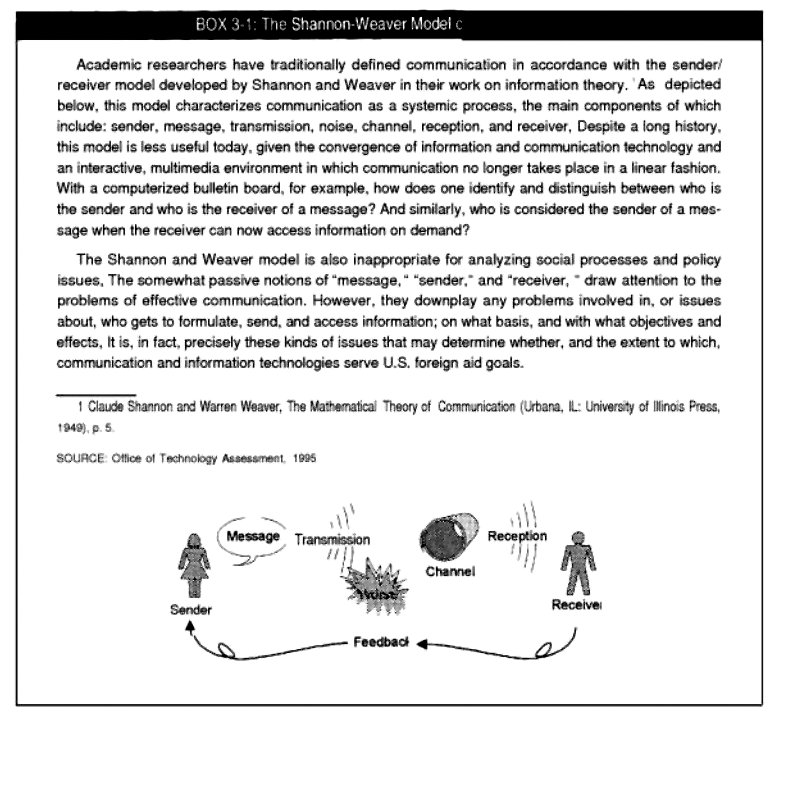 How eSewa’s OTP system encodes, transmits, and decodes messages (Image: OTA, Public domain, via Wikimedia Commons)
3. Real-World Applications: Where These Models Live
Case 1: Daraz’s Order Fulfillment (Transactional Model)
- Customer (Sender) → Places order via app (Message).
- Daraz’s server (Channel) → Processes order.
- Warehouse (Receiver) → Picks items.
- Driver (Feedback loop) → Updates customer via SMS: "Your order is out for delivery!"
- Customer (Now sender) → Replies: "Wrong item sent!" → Cycle repeats.
Why It Works:
- Two-way feedback (SMS/chat) reduces errors.
- Shared meaning: Nepali customers expect Dhanyabad (thank you) in replies.
Case 2: Ncell’s "Happy Hours" Campaign (Lasswell’s 5W)
- Who: Ncell (sender).
- What: "20% off calls from 6–9 PM" (message).
- Whom: Urban youth (target audience).
- Channel: TV ads, WhatsApp broadcasts, billboards.
- Effect: Increased evening call volumes by 30%.
Mistake to Avoid: If Ncell ignored Schramm’s semantic model, they might’ve used slang ("Chill call garcha!") that older users wouldn’t understand.
4. Common Pitfalls: When Communication Fails
Even the best models break down if:
- Ethnocentrism: Assuming all Nepalis prefer formal Nepali over English (e.g., NTC’s Hindi-only load-shedding alerts confuse Newari speakers).
- Noise: Poor internet → WhatsApp messages fail to send (like during Nepal’s 2015 earthquake when SMS networks collapsed).
- Overloading: Too much jargon in a bank’s loan terms → customers sign blindly (leading to defaults).
Worked Example: NTC’s 5G Rollout Delay
- Model Used: Organizational (top-down).
- Problem: Engineers (senders) used technical terms ("spectrum allocation") without explaining to politicians (receivers).
- Result: Miscommunication → delayed launch.
5. How to Make Communication Effective
Use the 7 Cs (from past exam questions!) to ensure clarity, no matter the model:
mindmap
  root((7 Cs of Effective Communication))
    Completeness
      "All key info present (e.g., loan terms: interest rate + penalties)"
    Conciseness
      "Avoid fluff: *‘Urgent’* vs. *‘We need this by EOD as per yesterday’s meeting’*""
    Clarity
      "Simple language: *‘Submit by Friday’* vs. *‘Perform the requisite documentation by 1600 hrs on the 22nd’*""
    Courtesy
      "Tone: *‘We regret to inform’* vs. *‘Your application is rejected’*""
    Correctness
      "Grammar, facts, and ethics (e.g., no fake discounts in ads)"
    Coherence
      "Logical flow: *Problem → Solution → Call to Action*""
    Consideration
      "Audience needs: *‘For rural users, include Nepali + local dialects’*"
Example: Writing a Complaint Email to NEPSE ❌ Bad (Fails 5 Cs):
"Your system is broken. Fix it now or we’ll leave."
✅ Good (All 7 Cs):
"Dear NEPSE Team, Completeness: I’m unable to place orders due to the ‘Server Unavailable’ error (Error Code: NP-404). Conciseness/Clarity: Please resolve this by Friday, 15th June, as I have pending trades. Courtesy/Correctness: I’ve attached screenshots for your reference. Let me know if further details are needed. Coherence: I’ve tried refreshing but the issue persists since yesterday. Consideration: Many traders may face this—could you prioritize? Best regards, [Your Name]"
6. Exam Tip: How to Score Full Marks
Define + Explain + Example:
- Bad: "The linear model is one-way."
- Good:
"The linear model is a one-way communication process where the sender transmits a message without expecting feedback. Example: NTC’s load-shedding announcements on radio follow this model—they broadcast schedules without inviting public responses. Limitations: This ignores receiver reactions, which can lead to confusion (e.g., if schedules aren’t clear)."
Compare Models in a Table: Use the 6-model table above but highlight differences (e.g., "Only the transactional model accounts for simultaneous sender-receiver roles").
Link to Nepali Context:
- For mass communication, mention NEPSE’s SMS alerts or Khalti’s ads.
- For organizational, draw NTC’s hierarchy (CEO → Zonal Office → District Office).
Case Study Tricks:
- If given Airbnb’s early struggles, analyze:
- Initial model: Linear (one-way listings).
- Problem: No feedback → bad reviews.
- Fix: Switched to transactional (host-guest chats).
- If given Airbnb’s early struggles, analyze:
Avoid:
- Vague statements like "communication is important."
- Ignoring cultural context (e.g., Nepali vs. Western directness).
Final Visual: Communication Model Cheat Sheet
flowchart TD
  A["Linear Model"] -->|"One-way"| B["Interactional"]
  B -->|"Two-way"| C["Transactional"]
  C -->|"Dynamic"| D["Shannon-Weaver"]
  D -->|"Technical"| E["Lasswell's 5W"]
  E -->|"Marketing"| F["Schramm's Semantic"]
  F -->|"Cultural"| G["Use:\n- Linear: NTC ads\n- Transactional: Daraz chats\n- 5W: Khalti ads"]
Based on the TU BBA syllabus for Business Communication (ENG203), unit 2.
Discussion
Loading…