Leadership Organizational BehaviorUnit 310 min read
Perception & Decision-Making: Factors, Process, and Linkages
Unit 3 of Leadership Organizational Behavior explores how individuals interpret stimuli (perception) and make choices (decision-making), covering factors affecting perception, the perception process, sensation vs. perception, and their critical role in organizational decisions—with real-world examples from Nepali busin
TAKEAWAYS:
- Perception is subjective: Factors like personality, culture, and context shape how we interpret the same information (e.g., a Daraz customer’s review may be seen as "honest" or "biased" by different managers).
- Decision-making follows perception: Poor perception leads to flawed decisions (e.g., Ncell’s misjudged network expansion due to incorrect market trend analysis).
- Bias is inevitable: Heuristics (mental shortcuts) simplify choices but can distort outcomes (e.g., a bank loan officer rejecting a rural entrepreneur based on stereotypes).
- Organizations leverage perception: Tools like structured interviews (at Nabil Bank) or data dashboards (at eSewa) reduce perceptual errors in hiring/policy-making.
- Linkage matters: Perception → Attitude → Behavior → Decision (e.g., a Pathao driver’s perception of traffic affects their route choice and earnings).
- Real-world applications: From Kathmandu traffic congestion (perception of "chaos" vs. "flexibility") to NEPSE stock picks (investors’ emotional vs. rational judgments).
1. Definitions: Perception vs. Sensation
Perception is the process of organizing and interpreting sensory information to give it meaning. It involves:
- Sensation: Raw data from senses (e.g., seeing a "red sale banner" on Daraz).
- Perception: Assigning meaning (e.g., interpreting the banner as "limited-time discount" or "scam").
mindmap
root((Perception Process))
Sensation["Raw Input (Senses)"]
Organization["Categorizing Input"]
Interpretation["Assigning Meaning"]
Response["Behavioral Outcome"]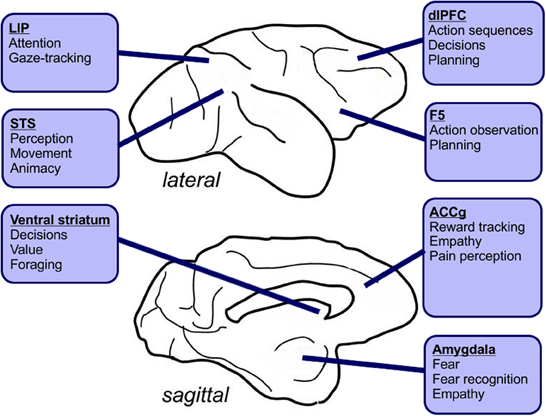 How sensory input (eyes, ears) becomes perception in the brain (Image: Gariépy J-F, Watson KK, Du E, Xie DL, Erb J, Amasino D and P, CC BY 3.0, via Wikimedia Commons)
2. Major Factors Affecting Perception
These factors create perceptual distortions in organizations. Use this table to compare them:
| Factor | Definition | Example in Nepal | Impact on Decisions |
|---|---|---|---|
| Perceiver Characteristics | Traits like personality, experience, or attitudes. | A senior NTC engineer may perceive a new traffic route as "risky" due to past failures. | Slower adoption of innovative solutions. |
| Target Characteristics | Features of the object/person being perceived (e.g., age, appearance). | A young job applicant at Himalayan Java is judged "too inexperienced" despite skills. | Hiring bias against youth/older candidates. |
| Situational Context | Environment or circumstances (e.g., time pressure, culture). | During monsoon, a Daraz delivery agent perceives "all roads are bad," avoiding shortcuts. | Increased delivery delays. |
| Social/Cultural Norms | Shared beliefs or values of a group. | In conservative banks, female loan officers may perceive rural women as "unreliable." | Fewer loans approved to women entrepreneurs. |
3. The Perception Process: A Step-by-Step Trace
Use this filter model to understand how perception works. Apply it to a real scenario:
flowchart TD
  A["Stimulus (Input)"] --> B["Attention"]
  B --> C["Organization"]
  C --> D["Interpretation"]
  D --> E["Response"]
Worked Example: Ncell’s Network Expansion
- Stimulus: Rising 4G complaints in Kathmandu.
- Attention: Management notices complaints but ignores rural areas (filter: "urban = priority").
- Organization: Groups complaints by district (e.g., "Lalitpur = high," "Dhading = low").
- Interpretation: Decides to upgrade towers in Lalitpur first (bias: urban bias).
- Response: Rural customers face poor service → churn.
 Physical infrastructure behind Ncell’s perceptual decisions (Image: photobankmd, CC0, via Wikimedia Commons)
4. Sensation vs. Perception: Key Differences
| Aspect | Sensation | Perception |
|---|---|---|
| Definition | Detection of stimuli (e.g., light, sound). | Interpretation of stimuli (e.g., "red light = stop"). |
| Example | Your eyes detect a "blinking LED" on a bank ATM. | You perceive it as "ATM is working." |
| Subjectivity | Objective (same for all). | Highly subjective (varies by person). |
| Role in OB | Provides raw data for perception. | Drives attitudes, decisions, and behavior. |
5. Perceptual Errors and Biases
Organizations suffer from systematic errors in perception. Here’s how they manifest:
mindmap
  root((Perceptual Biases))
    Halo Effect["One trait dominates judgment"]
    Stereotyping["Overgeneralizing groups"]
    Selective Perception["Focusing on confirming info"]
    Projection["Assuming others think like you"]
    Contrast Effect["Judging relative to others"]
Case Study: Chaudhary Group’s Hiring Bias
- Scenario: A manager at CG hires a candidate from a prestigious college (halo effect), ignoring a more skilled candidate from a regional university.
- Outcome: High turnover as the "prestige hire" lacks adaptability.
- Fix: Structured interviews with blind resumes (remove names/schools).
6. Linkage Between Perception and Decision-Making
Perception is the foundation of decision-making. Poor perception leads to:
- Inaccurate problem identification (e.g., NTC sees traffic as "driver issue" instead of "road design").
- Biased alternatives (e.g., a bank rejects a loan based on the borrower’s appearance).
- Flawed choice (e.g., eSewa prioritizes urban users over rural, missing market growth).
Visual Linkage:
flowchart LR
  A["Perception"] -->|"Feeds into"| B["Attitudes"]
  B -->|"Influences"| C["Behavior"]
  C -->|"Leads to"| D["Decision-Making"]
  D -->|"Results in"| E["Organizational Outcomes"]
Worked Example: Kathmandu Traffic Congestion
- Perception: Drivers see traffic as "chaotic" (subjective interpretation of delays).
- Decision: Some take alternate routes (individual action), while others blame "government inefficiency" (collective attitude).
- Outcome: Gridlock persists due to fragmented decisions.
7. Improving Perception and Decision-Making
Organizations use these strategies to reduce errors:
| Strategy | How It Works | Nepali Example |
|---|---|---|
| Structured Processes | Standardized steps (e.g., SWOT analysis). | Nabil Bank’s loan approval workflow. |
| Diverse Teams | Multiple perspectives reduce bias. | Daraz’s cross-functional product teams. |
| Data-Driven Decisions | Rely on metrics, not gut feelings. | eSewa’s user behavior analytics. |
| Training | Teach employees to recognize biases (e.g., implicit association tests). | NTC’s traffic management workshops. |
| Feedback Loops | Regular reviews to correct misperceptions. | Pathao’s driver performance ratings. |
In the Real World
eSewa’s Perception of User Trust
- Idea Used: Selective perception and social proof.
- How: eSewa highlights "10,000+ verified users" to combat skepticism about online payments. Their dashboard shows transaction success rates to reinforce trust (reducing users’ perception of risk).
Ncell’s Network Expansion Decisions
- Idea Used: Contrast effect and situational context.
- How: Ncell’s marketing team perceives urban areas as "high demand" (contrast: rural = low priority) and expands towers in Kathmandu first. However, rural areas like Dang show higher growth potential when analyzed objectively.
Daraz’s Supplier Perception
- Idea Used: Halo effect and stereotyping.
- How: Daraz’s procurement team may favor suppliers from Kathmandu (halo: "reliable") over rural artisans (stereotype: "less efficient"), missing out on unique products like Mustang wool blankets.
Exam Tip
For short-answer questions (e.g., "Factors affecting perception"):
- Use the acronym "POTS" to remember:
- Perceiver (traits, experience)
- Object (target characteristics)
- Time (situational context)
- Setting (cultural/social norms).
- Example Answer:
"The four major factors affecting perception are perceiver characteristics (e.g., personality), target characteristics (e.g., appearance), situational context (e.g., time pressure), and social norms (e.g., cultural biases). Organizations like NTC must account for these to avoid errors in traffic planning."
- Use the acronym "POTS" to remember:
For case studies (e.g., Shakya Battery’s marketing department):
- Step 1: Identify the perceptual bias (e.g., overestimating urban demand).
- Step 2: Link it to decision-making (e.g., allocating more budget to urban ads).
- Step 3: Suggest solutions (e.g., market research in rural areas).
- Example Answer Structure:
"The case reflects the contrast effect, where Shakya Battery’s management perceives urban markets as more lucrative than rural areas. This bias led to a decision to create a marketing department focused on cities, ignoring rural growth potential. To improve, they should conduct structured market segmentation and use data analytics (like Daraz does) to reduce perceptual distortions."
For perception-decision linkage questions:
- Draw a flowchart (like the one above) and label each step with a real-world example.
- Example:
"Perception influences decision-making through a four-step process: (1) Ncell perceives 4G complaints as urban-focused (stimulus), (2) ignores rural feedback (attention bias), (3) decides to upgrade urban towers (decision), and (4) faces rural customer churn (outcome). This shows how perceptual errors cascade into poor decisions."
Avoid common mistakes:
- ❌ Confusing sensation (raw input) with perception (interpretation).
- ❌ Ignoring situational context in case studies (e.g., monsoon affecting Daraz deliveries).
- ❌ Overlooking cultural factors (e.g., hierarchical decisions in Nepali banks vs. flat structures in startups).
Based on the TU BBA syllabus for Leadership Organizational Behavior, unit 3.
Discussion
Loading…