Fundamentals Of MarketingUnit 79 min read
Distribution Channels & Marketing Logistics: Structures, Strategies & Real Cases
Unit 7 of Fundamentals Of Marketing covers the physical flow of goods from producers to consumers, analyzing channel structures (direct vs. indirect), logistics systems, and how companies like Daraz, Nabil Bank, and Toyota optimize distribution for efficiency and profitability.
TAKEAWAYS:
- Distribution channels are intermediaries (retailers, wholesalers, agents) that bridge producers and consumers, reducing transaction costs and increasing market reach.
- Marketing logistics (transportation, warehousing, inventory) ensures products arrive right quantity, right place, right time—critical for perishable goods like Himalayan Java coffee or NTC’s telecom equipment.
- Channel length (direct vs. indirect) depends on product type (convenience vs. specialty), market size, and company resources—e.g., Apple uses direct sales for premium products while Daraz relies on third-party sellers.
- Conflict and cooperation in channels (e.g., manufacturer vs. retailer disputes) can be managed through leadership, incentives, or vertical integration (like Nabil Bank’s ATMs for financial distribution).
- Digital channels (e-commerce, mobile apps) are reshaping distribution—Pathao’s delivery network and eSewa’s payment gateways show how tech reduces friction in B2C and B2B flows.
- Reverse logistics (returns, recycling) is a growing focus—Nepal’s waste management challenges highlight the need for sustainable channel design.
1. What is Distribution? The "Other Half" of Marketing
Distribution is the physical flow of goods, services, and information from producers to end-users. Unlike the "4Ps" (Product, Price, Promotion), distribution ensures that the right product reaches the right customer at the right time—without it, even the best product fails.
Why is Distribution Called the "Other Half" of Marketing?
Marketing creates demand; distribution fulfills it. Without efficient channels:
- Inventory piles up (e.g., unsold Himalayan Java coffee beans).
- Customers switch to competitors (e.g., Daraz loses sales if delivery is delayed).
- Costs skyrocket (e.g., NTC’s telecom equipment damaged in transit).
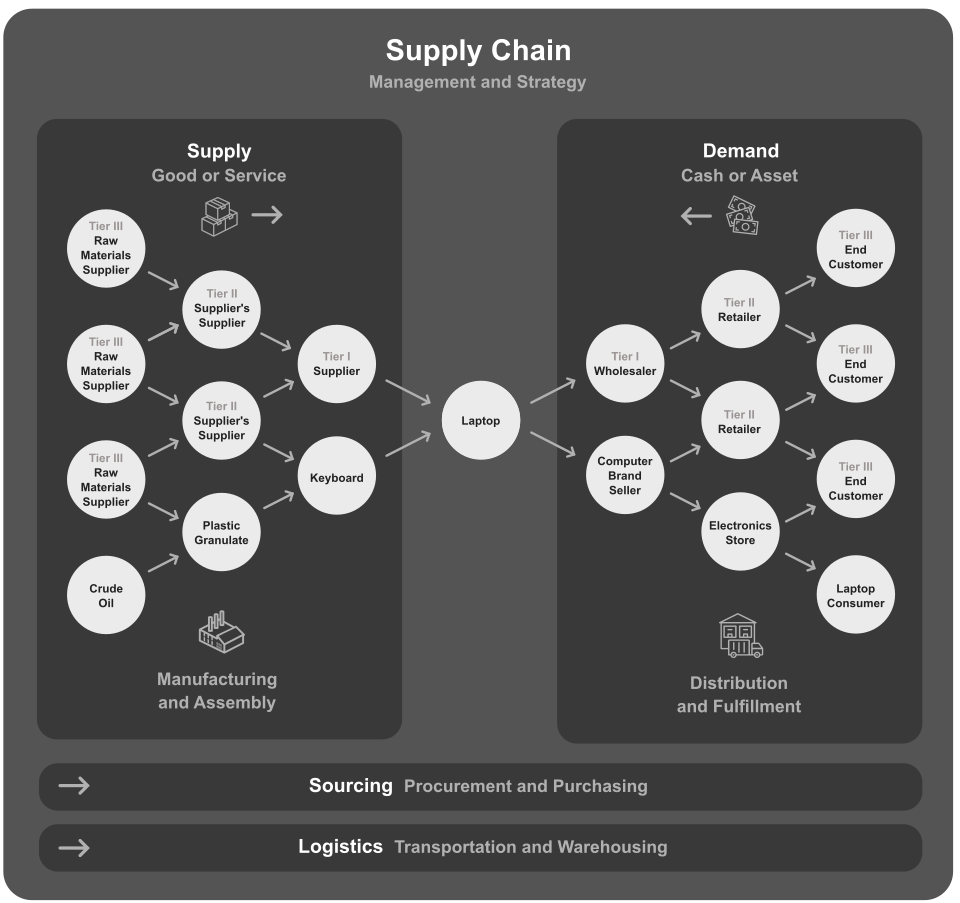 How goods flow from manufacturer to consumer (Image: Miguel Garcia Gonzalez, CC BY-SA 4.0, via Wikimedia Commons)
2. Marketing Logistics: The Backbone of Distribution
Marketing logistics is the planning, implementation, and control of the flow of goods, services, and related information from point of origin to consumption. It includes:
- Transportation (road, rail, air, digital).
- Warehousing (storage, inventory management).
- Inventory control (just-in-time vs. bulk stocking).
- Order processing (e.g., Daraz’s order fulfillment centers).
Key Functions of Marketing Logistics
| Function | Example in Nepal | Impact |
|---|---|---|
| Transportation | NTC’s fiber-optic cable laying for internet | Faster rural connectivity |
| Warehousing | Chaudhary Group’s godowns for FMCG products | Reduces spoilage for perishable goods |
| Inventory | eSewa’s digital payment processing | Instant transaction confirmation |
| Order Processing | Pathao’s rider dispatch system | Real-time order tracking |
flowchart TD
    A["Producer (e.g., Himalayan Java)"] -->|"Ships"| B["Warehouse (e.g., Chaudhary Group)"]
    B -->|"Distributes"| C["Retailer (e.g., local shops)"]
    C -->|"Sells to"| D["Consumer"]
    D -->|"Returns/Recycling"| E["Reverse Logistics"]
    B -->|"Digital"| F["E-commerce (e.g., Daraz)"]
    F --> D
3. Channel Structures: Direct vs. Indirect
Channels determine how products reach customers. The choice depends on:
- Product type (convenience vs. specialty).
- Market size (urban vs. rural).
- Company resources (small businesses vs. multinationals).
A. Direct Channels (Producer → Consumer)
- No intermediaries (e.g., Apple’s online store, Nabil Bank’s ATMs).
- Best for: High-value, customizable, or perishable goods.
- Example: Nepal’s local honey producers selling directly to hotels via WhatsApp.
B. Indirect Channels (Producer → Retailer → Consumer)
- Uses wholesalers, agents, or retailers (e.g., Daraz’s third-party sellers).
- Best for: Low-cost, high-volume products (e.g., FMCG, electronics).
Channel Length Comparison
| Channel Type | Example in Nepal | Pros | Cons |
|---|---|---|---|
| Direct (0-level) | Nabil Bank’s mobile banking app | Higher profit margins | Limited reach |
| 1-level (Retailer) | Local dukaan selling Himalayan Java | Wider distribution | Higher costs |
| 2-level (Wholesaler + Retailer) | Daraz’s seller network | Efficient for bulk goods | Complex coordination |
| 3-level (Agent + Wholesaler + Retailer) | NTC’s telecom distributors | Good for rural areas | High channel conflict risk |
mindmap
  root((Channel Structures))
    Direct
      Example: Apple Online Store
      Pros: High control, direct feedback
      Cons: Limited reach
    Indirect
      1-Level: Retailer (e.g., local shops)
      2-Level: Wholesaler + Retailer (e.g., Daraz)
      3-Level: Agent + Wholesaler + Retailer (e.g., NTC)
4. Channel Conflict: When Intermediaries Clash
Conflicts arise when goals misalign (e.g., manufacturer wants high margins, retailer wants low prices). Types:
- Vertical Conflict: Between levels (e.g., Nabil Bank vs. its ATMs over transaction fees).
- Horizontal Conflict: Between competitors (e.g., Daraz vs. Hamrobazaar over seller rights).
How to Manage Conflict
| Strategy | Example | Outcome |
|---|---|---|
| Leadership | Toyota’s dealer training programs | Standardized service quality |
| Incentives | NTC offering discounts to distributors | Loyalty and cooperation |
| Vertical Integration | Chaudhary Group owning retail stores | Control over pricing and promotion |
5. Digital Distribution: The New Frontier
Tech is disrupting traditional channels:
- E-commerce (Daraz, Hamrobazaar): Reduces need for physical stores.
- Mobile Payments (eSewa, Khalti): Speeds up transactions.
- Dropshipping: Eliminates inventory risks (e.g., Nepal’s small fashion brands).
Case Study: Pathao’s Delivery Network
- Problem: Urban congestion in Kathmandu.
- Solution: Real-time GPS tracking + micro-fulfillment hubs.
- Result: Faster than traditional delivery services.
6. Reverse Logistics: The Unsung Hero
Returns, recycling, and waste management are critical for sustainability.
- Example: Nepal’s plastic waste crisis → Companies like Himalayan Java now use biodegradable packaging.
- Key Steps:
- Collection (e.g., Daraz’s return centers).
- Processing (recycling, refurbishing).
- Disposal (ethical waste management).
In the Real World
Daraz’s Multi-Channel Strategy
- Uses wholesalers for bulk goods (e.g., electronics) and direct sales for premium brands (e.g., Apple).
- Why? Balances cost and reach—similar to Chaudhary Group’s FMCG distribution.
Nabil Bank’s ATM Network
- Direct channel for cash withdrawals, but indirect for loan disbursement (via bank branches).
- Key Idea: Channel flexibility based on customer needs.
Himalayan Java’s Direct-to-Consumer Model
- Sells directly to hotels and cafes via WhatsApp, cutting out middlemen.
- Result: Higher profit margins and fresher products.
Exam Tip
Case Study Questions (e.g., Apple Watch):
- Identify the channel structure (direct vs. indirect).
- Explain why Apple chose that channel (premium pricing, control).
- Discuss potential conflicts (e.g., with retailers like Hamrobazaar).
Definitions:
- Marketing Logistics: "The process of planning, implementing, and controlling the efficient flow of goods..."
- Channel Conflict: "Disagreements between channel members over goals, roles, or rewards."
Comparisons:
- Always use tables (like the one above) to differentiate direct vs. indirect channels.
Real-World Links:
- Tie answers to Nepali examples (eSewa, Daraz, NTC) for higher marks.
- Example: "Like Nabil Bank’s ATMs, Pathao uses a direct channel for last-mile delivery to reduce delays."
Final Visual Summary:
mindmap
  root((Distribution Channels))
    Direct
      Example: Apple, Nabil Bank
      Pros/Cons: High control vs. limited reach
    Indirect
      1-Level: Retailer
      2-Level: Wholesaler + Retailer
      3-Level: Agent + Wholesaler + Retailer
    Digital
      E-commerce, Mobile Payments
    Reverse Logistics
      Returns, Recycling, Waste Management
    Conflict Management
      Leadership, Incentives, Integration
Based on the TU BBA syllabus for Fundamentals Of Marketing (MKT201), unit 7.
Discussion
Loading…