Fundamentals Of MarketingUnit 119 min read
Marketing Basics: Definitions, Concepts & Philosophies
Unit 1 of Fundamentals Of Marketing covers the core definitions of marketing (exchange, needs/wants/demands, transactions), the evolution of marketing philosophies (production → sales → marketing → societal), and the 7 key functions of marketing (product planning, pricing, promotion, distribution, financing, risk-takin
TAKEAWAYS:
- Marketing is not just selling—it’s a value-creating process that starts with identifying customer needs and ends with satisfying them profitably (exchange philosophy).
- The marketing mix (4Ps)—Product, Price, Place, Promotion—are tools to implement marketing strategies, but services add 3 extra Ps: People, Process, Physical Evidence.
- Proactive marketing (anticipating trends) outperforms reactive marketing (firefighting) in long-term success (e.g., Apple’s iPhone vs. Nokia’s delayed touchscreen pivot).
- Nepal’s marketing environment is shaped by cultural diversity, infrastructure gaps, and digital adoption (e.g., eSewa’s success hinges on mobile-first strategies).
- The marketing communication process follows a sender → message → channel → receiver → feedback loop (like WhatsApp’s end-to-end encryption ensuring secure message delivery).
- Marketing logistics (getting the right product to the right place at the right time) is the "other half of marketing"—without it, even the best product fails (e.g., Daraz’s warehouse delays during COVID-19).
1. What Is Marketing? Core Definitions
Marketing is often misunderstood as just advertising or selling. But its true essence lies in creating value for customers while achieving organizational goals. Let’s break it down:
A. The Exchange Philosophy
Marketing revolves around exchange—the act of obtaining a desired product by offering something in return (money, time, effort). For an exchange to occur, five conditions must be met:
- Two or more parties (buyer and seller).
- Each party has something the other desires.
- Communication and delivery must occur.
- Freedom to accept or reject the offer.
- Desire to deal with each other.
mindmap
  root((Marketing Exchange))
    Conditions
      Two Parties["Buyer ↔ Seller"]
      Mutual Desire["What one has, the other wants"]
      Communication["Advertising, Negotiation, Packaging"]
      Freedom["No coercion"]
      Willingness["Both parties benefit"]
    Example["eSewa: You pay (money) for a bill payment (service)"]
B. Needs, Wants, and Demands
- Need: A basic human requirement (e.g., hunger, safety).
- Want: A need shaped by culture/personality (e.g., wanting a Himalayan Java coffee instead of tea).
- Demand: Wants backed by buying power (e.g., a student wanting an iPhone but demanding a budget phone like Redmi).
| Term | Definition | Example (Nepal) | Example (Global) |
|---|---|---|---|
| Need | Basic requirement | Need for electricity (NTC provides it) | Need for clean water (Aquafina) |
| Want | Need shaped by culture/wishes | Want organic Nepali rice (Bhatbhateni) | Want Tesla Model 3 (luxury) |
| Demand | Want + buying power | Demand for smartphones under Rs. 20K | Demand for Netflix subscriptions |
C. Transactions and Relationships
- Transaction: A trade between two parties (e.g., buying a Khalti recharge card).
- Relationship Marketing: Building long-term bonds (e.g., Nabil Bank’s loyalty programs for frequent customers).
2. The Evolution of Marketing Philosophies
Marketing philosophies have shifted from product-centric to customer-centric approaches. Here’s the timeline:
flowchart LR
  A["Production Era (1920s)"] -->|"Focus: Mass production"| B["Sales Era (1950s)"]
  B -->|"Focus: Aggressive selling"| C["Marketing Era (1960s)"]
  C -->|"Focus: Customer needs"| D["Societal Marketing Era (1990s)"]
  D -->|"Focus: Sustainability"| E["Digital/Relationship Era (2020s)"]

  A -->|"Example"| A1["Ford Model T: 'Any color, so long as it's black'"]
  B -->|"Example"| B1["Nokia: Pushy salesmen in Nepal"]
  C -->|"Example"| C1["Apple: 'Think Different' campaign"]
  D -->|"Example"| D1["Patagonia: Eco-friendly clothing"]
  E -->|"Example"| E1["Amazon: Personalized recommendations"]
| Era | Focus | Example (Nepal) | Example (Global) | Criticism |
|---|---|---|---|---|
| Production | Efficiency, low cost | NTC’s bulk electricity supply | Henry Ford’s assembly line | Ignores customer preferences |
| Sales | Aggressive selling | Door-to-door insurance agents | Used car salesmen | Creates distrust |
| Marketing | Customer satisfaction | Daraz’s personalized ads | Coca-Cola’s "Share a Coke" | Can be manipulative |
| Societal | Sustainability + ethics | Himalayan Java’s fair trade | TOMS Shoes (One for One model) | Higher costs |
| Digital/Relationship | Data-driven personalization | eSewa’s AI chatbot | Netflix’s recommendation algo | Privacy concerns |
WORKED EXAMPLE: Why Did Nokia Fail in Smartphones?
- Production Era Mindset: Nokia focused on hardware durability (great for feature phones) but ignored customer desires for touchscreens and apps.
- Sales Era Trap: Even when they launched the Nokia N95, their sales tactics were too pushy, alienating tech-savvy users.
- Marketing Era Miss: They didn’t adapt fast enough to Apple’s iPhone (2007) and Google’s Android ecosystem.
3. The 7 Functions of Marketing
Marketing isn’t just about ads—it involves seven key activities that ensure products reach customers effectively:
mindmap
  root((7 Functions of Marketing))
    Product Planning["Developing goods/services"]
    Pricing["Setting value"]
    Promotion["Advertising, PR, Sales"]
    Distribution["Logistics, Channels"]
    Financing["Credit, Leasing"]
    Risk-Taking["Inventory, Market Fluctuations"]
Market Research["Data Collection, Analysis"]| Function | Definition | Example (Nepal) | Example (Global) |
|---|---|---|---|
| Product Planning | Designing products/services | Nepal Bank’s digital loan apps | Tesla’s electric vehicles |
| Pricing | Determining value | Khalti’s dynamic transaction fees | Amazon’s dynamic pricing |
| Promotion | Communicating value | Daraz’s festive discounts | Nike’s "Just Do It" ads |
| Distribution | Getting products to customers | NTC’s last-mile delivery challenges | FedEx’s global logistics |
| Financing | Funding transactions | Nabil Bank’s SME loans | PayPal’s cross-border payments |
| Risk-Taking | Handling uncertainties | Retailers stocking winter clothes in summer | Netflix’s original content bets |
| Market Research | Gathering customer insights | eSewa’s user behavior analytics | Google’s search trend data |
4. The Marketing Mix (4Ps + 3 Extended Ps for Services)
The marketing mix (4Ps) is the toolkit marketers use to implement strategies. For services, three extra Ps are added.
A. The 4Ps (Goods)
| P | Definition | Example (Nepal) | Example (Global) |
|---|---|---|---|
| Product | What is being sold | Himalayan Java’s instant coffee | Coca-Cola’s soda |
| Price | Monetary value | NTC’s tiered electricity pricing | Apple’s premium pricing |
| Place | Distribution channels | Daraz’s warehouse network | Walmart’s global stores |
| Promotion | Communication strategies | Pathao’s referral discounts | McDonald’s "Big Mac" ads |
B. The 7Ps (Services)
Services require tangible evidence (Physical Evidence), skilled employees (People), and reliable processes (Process).
| P | Definition | Example (Nepal) | Example (Global) |
|---|---|---|---|
| People | Employees interacting with customers | Nabil Bank’s customer service agents | Disney’s theme park staff |
| Process | Systems delivering the service | eSewa’s online payment flow | McDonald’s assembly-line service |
| Physical Evidence | Tangible clues about service quality | Khalti’s app interface | Starbucks’ store design |
WORKED EXAMPLE: Why Does eSewa Succeed Where Other Nepali Apps Fail?
- Product: Digital wallet (unique in Nepal).
- Price: Low transaction fees (competitive).
- Place: Available on every mobile phone (even basic feature phones).
- Promotion: Government-backed trust + viral word-of-mouth.
- People: 24/7 customer support (critical for digital literacy challenges).
- Process: Seamless OTP verification (reduces fraud).
- Physical Evidence: Branded app icon (trust signal).
5. Marketing Communication Process
Marketing communication follows a linear model where feedback ensures the message is received correctly.
sequenceDiagram
participant Sender as Marketer (e.g., Daraz)
participant Message as Ad/Packaging
participant Channel as TV/Internet
participant Receiver as Customer
participant Feedback as Purchase/Review
Sender->>Message: Creates ad ("50% off on electronics")
Message->>Channel: Broadcasts via Facebook/TV
Channel->>Receiver: Customer sees ad
Receiver->>Feedback: Likes ad, visits Daraz, buys product
Feedback->>Sender: Daraz gets sales data (feedback loop)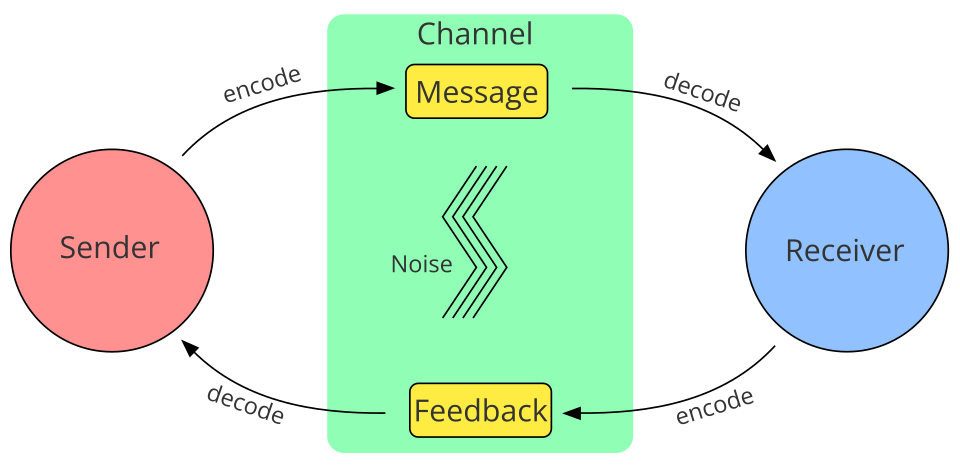 Sender → Message → Channel → Receiver → Feedback (Image: Phlsph7, CC BY-SA 4.0, via Wikimedia Commons)
REAL-WORLD APPLICATION: How Pathao Uses This Model
- Sender: Pathao’s marketing team.
- Message: "Get Rs. 100 off your first ride."
- Channel: Facebook ads, in-app notifications.
- Receiver: Kathmandu’s young professionals.
- Feedback: Users download the app, ride frequently → Pathao refines ads based on data.
6. Marketing Environment in Nepal
Nepal’s marketing environment is unique due to:
- Cultural diversity (Hindu, Buddhist, indigenous traditions).
- Infrastructure challenges (rural vs. urban divides).
- Digital adoption (mobile-first economy).
A. Microenvironment (Internal Factors)
| Factor | Impact on Marketing | Example |
|---|---|---|
| Company | Resources, brand image | Nabil Bank’s strong reputation |
| Suppliers | Raw material availability | Himalayan Java’s coffee bean supply |
| Marketing Intermediaries | Distributors, retailers | Daraz’s third-party sellers |
| Customers | Needs, buying power | Students demanding affordable laptops |
| Public | Government, media, pressure groups | NTC’s protests over tariff hikes |
B. Macroenvironment (External Factors)
| Factor | Sub-Factors | Example (Nepal) | Example (Global) |
|---|---|---|---|
| Demographic | Age, gender, income | eSewa’s target: 18-35 age group | Netflix’s teen-focused content |
| Economic | Inflation, unemployment | Khalti’s fee hikes during inflation | Amazon’s price adjustments |
| Natural | Climate, natural disasters | NTC’s power cuts in monsoon | Tesla’s solar panel marketing |
| Technological | Digital tools, AI | Daraz’s AI recommendations | Google’s self-driving cars |
| Political/Legal | Laws, trade restrictions | Nepal’s import taxes on electronics | EU’s GDPR data privacy laws |
| Cultural | Values, traditions | Nepal Bank’s "Banking for All" campaign | McDonald’s adapting menus globally |
CASE STUDY: How Daraz Adapts to Nepal’s Marketing Environment
- Demographic: Targets urban youth (Kathmandu, Pokhara) with trendy products.
- Economic: Offers installment plans for low-income buyers.
- Technological: Uses WhatsApp for customer support (high mobile penetration).
- Cultural: Localized festivals (e.g., Dashain, Tihar discounts).
- Political: Navigates import taxes by partnering with local suppliers.
7. Proactive vs. Reactive Marketing
| Aspect | Proactive Marketing | Reactive Marketing |
|---|---|---|
| Approach | Anticipates trends | Responds to problems |
| Example (Nepal) | Nepal Bank’s digital transformation (2015) | NTC’s last-minute tariff hikes |
| Example (Global) | Apple’s iPhone (2007) | Blockbuster’s late DVD rental model |
| Advantages | First-mover advantage, customer loyalty | Quick fixes, less risk |
| Disadvantages | High R&D costs, uncertain payoff | Reactive image, customer frustration |
WORKED EXAMPLE: Proactive Marketing in Action
- Company: Himalayan Java
- Strategy: Anticipated health-conscious consumers and launched organic, single-origin coffee.
- Result: 30% market share in Nepal’s premium coffee segment.
8. Marketing Logistics: The "Other Half" of Marketing
Marketing logistics ensures products reach customers at the right time, place, and cost. It includes:
- Warehousing
- Inventory management
- Transportation
- Order processing
Why It’s Critical?
- Daraz’s 2020 warehouse delays during COVID-19 led to customer complaints despite strong demand.
- NTC’s power distribution failures in rural areas frustrate businesses.
flowchart TD
  A["Product Manufactured"] --> B["Warehousing"]
  B --> C["Inventory Management"]
  C --> D["Transportation"]
  D --> E["Order Processing"]
  E --> F["Customer Delivery"]
  F --> G["Feedback Loop"]
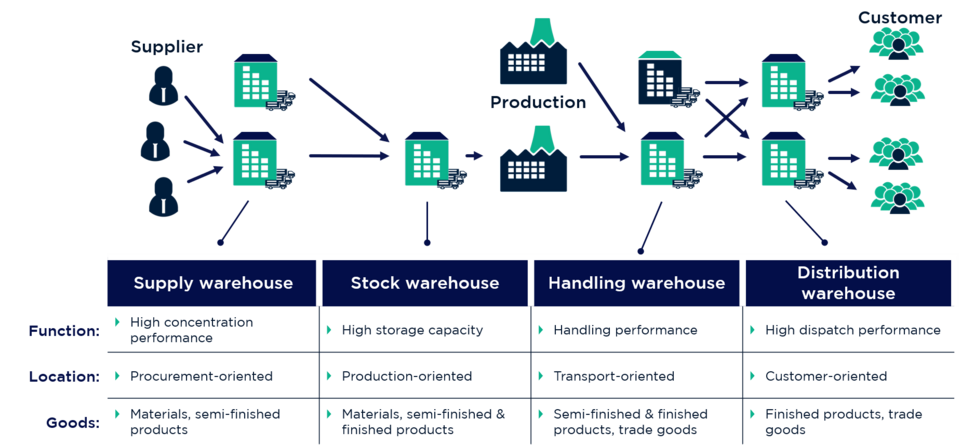 From factory to customer (Image: OCM Management Consultants, CC BY-SA 4.0, via Wikimedia Commons)
9. Selling vs. Marketing Concept
| Aspect | Selling Concept | Marketing Concept |
|---|---|---|
| Focus | Seller’s needs (push products) | Customer’s needs (pull products) |
| Example (Nepal) | Insurance agents cold-calling | Nabil Bank’s personalized loan offers |
| Example (Global) | Door-to-door encyclopedia sales | Apple’s ecosystem (iPhone + AirPods) |
| Risk | Customer dissatisfaction | Higher upfront costs (market research) |
| Success Metric | Short-term sales | Long-term customer retention |
WORKED EXAMPLE: Why Did Nokia Fail with the Selling Concept?
- Mistake: Pushed feature phones even as customers wanted smartphones.
- Result: Lost to Apple and Samsung, which used the marketing concept.
In the Real World
eSewa’s Success
- Idea Used: Digital marketing mix (7Ps) + proactive adaptation.
- How? Recognized Nepal’s mobile-first economy and built a user-friendly app with low transaction fees, government trust, and 24/7 support.
Daraz’s Logistics Struggles
- Idea Used: Marketing logistics failures.
- How? During COVID-19, warehouse bottlenecks caused delays, hurting customer trust despite strong demand.
Nepal Bank’s Digital Transformation
- Idea Used: Proactive marketing.
- How? Launched mobile banking apps before competitors, targeting unbanked populations with simplified onboarding.
Pathao’s Ride-Hailing Model
- Idea Used: Marketing communication process.
- How? Used Facebook ads (channel) to attract Kathmandu’s youth (receiver) with discounts (message), leading to high retention.
Himalayan Java’s Premium Positioning
- Idea Used: Market segmentation + 7Ps.
- How? Targeted middle-class coffee lovers with organic, ethically sourced beans and brand storytelling.
Exam Tip
This unit is conceptual but heavily tested in exams. Here’s how to score full marks:
1. Definition-Based Questions (5-10 marks)
- Do: Use official textbook definitions (e.g., Kotler’s definitions).
- Example Answer:
"Marketing is the process of creating, communicating, delivering, and exchanging offerings that have value for customers, clients, partners, and society at large." (Kotler) Key points to include:
- Exchange (buyer-seller interaction).
- Value creation (not just selling).
- Stakeholders (customers, society, partners).
2. Differentiation Questions (Selling vs. Marketing, Proactive vs. Reactive)
- Structure:
- Define both terms.
- Compare using a table (as shown above).
- Give a Nepali + global example.
- Conclude with which is better and why.
3. Case Study Analysis (15-20 marks)
- Step-by-Step Approach:
- Identify the marketing philosophy (e.g., Apple Watch = marketing concept).
- Analyze the 4Ps/7Ps (e.g., Apple’s premium pricing, retail stores as promotion).
- Discuss the marketing environment (e.g., global tech trends, competition from Wear OS).
- Suggest improvements (e.g., localizing Apple Watch for Nepal’s payment systems).
4. Short-Answer Questions (3-5 marks)
- Example Question: "Discuss the components of the marketing mix for services."
- Answer Structure:
The 7Ps for services include:
- Product: Core service (e.g., eSewa’s bill payment service).
- Price: Transaction fees (e.g., 1% on Khalti transfers).
- Place: Distribution channels (e.g., mobile app, USSD codes).
- Promotion: Ads, word-of-mouth (e.g., eSewa’s government partnerships).
- People: Staff training (e.g., Nabil Bank’s customer service agents).
- Process: Service delivery (e.g., OTP verification in Khalti).
- Physical Evidence: Branding (e.g., Khalti’s app icon).
5. Diagram-Based Questions
- Always draw:
- Marketing mix (4Ps/7Ps).
- Marketing communication process.
- Proactive vs. reactive marketing flowchart.
- Label clearly and link to examples.
Final Checklist Before Submitting
✅ Definitions: Use Kotler’s or official syllabus definitions. ✅ Examples: Mix Nepali (eSewa, Daraz, NTC) and global (Apple, Amazon). ✅ Diagrams: Draw at least one (e.g., 7Ps, communication process). ✅ Structure: Introduction → Body (subtopics) → Conclusion. ✅ Exam Language: Formal, concise, no slang.
Good luck! This unit is foundational—master it, and the rest of marketing becomes easier. 🚀
Based on the TU BBA syllabus for Fundamentals Of Marketing (MKT201), unit 1.
Discussion
Loading…