Legal Environment Business NepalUnit 1212 min read
International Trade & INCOTERMS 2020: Rules, Risks & Real-World Use
Unit 12 of Legal Environment of Business (Nepal) explains how INCOTERMS 2020 govern global trade, covering definitions, key terms (EXW, DDP, FCA), risk transfer points, and their application in contracts. It also explores international trade laws, documentation, and dispute resolution—with Nepali and global case studie
TAKEAWAYS:
- INCOTERMS 2020 are 11 standardized trade terms that clarify obligations (costs, risks, documentation) between buyers/sellers in international contracts.
- The risk transfer point (where ownership and liability shift) is critical—it’s not always the same as the delivery location.
- Nepal’s trade (e.g., Daraz exports, NTC’s cross-border logistics) relies on INCOTERMS to avoid disputes over delays, damages, or customs.
- INCOTERMS vs. national laws: They supplement (not replace) contracts, so always include them in sales agreements.
- Digital trade (e.g., eSewa’s cross-border payments) uses INCOTERMS for remittance terms like "DDP" to define when funds transfer.
- Exam focus: Compare terms (e.g., FOB vs. CIF), identify risk transfer points, and apply them to case scenarios (e.g., Daraz shipping a defective order).
1. Why International Trade Needs INCOTERMS
International trade is complex because it involves:
- Multiple countries’ laws (e.g., Nepal’s customs vs. China’s export rules).
- Different transport modes (sea, air, road—each with unique risks).
- Currency, taxes, and documentation (bills of lading, commercial invoices).
Without INCOTERMS, disputes arise over:
- Who pays for shipping (e.g., Daraz’s seller or buyer)?
- Who bears loss/damage if goods are stolen at sea?
- Who handles customs clearance (e.g., NTC or the importer)?
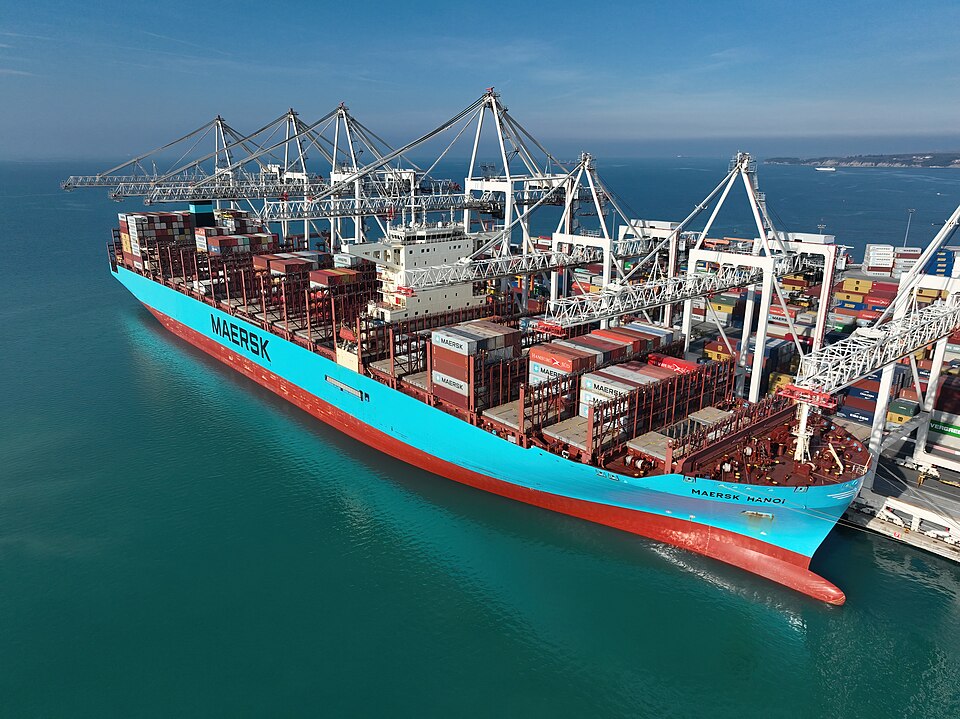 Risk transfer in sea freight: Where does liability shift under INCOTERMS? (Image: Petar Milošević, CC BY-SA 4.0, via Wikimedia Commons)
2. The 11 INCOTERMS 2020: Categories and Key Terms
INCOTERMS are divided into 4 groups based on transport mode and risk transfer. Here’s a comparison table:
| Group | Term | Transport Mode | Risk Transfer | Who Arranges? | Example Use Case |
|---|---|---|---|---|---|
| Any | EXW | All | Seller’s premises | Buyer arranges everything | A Nepali exporter selling spices to India. |
| Any | DDP | All | Buyer’s named place | Seller handles all costs/risks | Daraz selling electronics to Bangladesh. |
| Sea/Lake | FCA | All (but named port) | Carrier’s risk at port | Seller delivers to carrier | Himalayan Java exporting coffee to Europe. |
| Sea/Lake | CIF | Sea only | On board ship | Seller pays insurance + freight | NTC importing machinery from China. |
| Sea/Lake | FOB | Sea only | On board ship | Buyer pays freight/insurance | Miracle Pharma exporting medicine to Africa. |
Key Definitions:
- EXW (Ex Works): Seller’s minimal obligation—goods are ready at their premises. Risk: Buyer bears all costs/risks from pickup.
- DDP (Delivered Duty Paid): Seller’s maximal obligation—goods arrive at buyer’s door, including customs duties. Risk: Seller bears all until delivery.
- FCA (Free Carrier): Seller delivers goods to a carrier (e.g., truck/ship). Risk transfers at carrier’s risk point.
- CIF (Cost, Insurance, Freight): Seller pays freight and insurance to the named port. Risk transfers on boarding the ship.
- FOB (Free On Board): Seller’s obligation ends when goods cross the ship’s rail. Buyer pays for ocean freight.
MERMAID DIAGRAM: INCOTERMS Risk Transfer Flowchart
flowchart TD
    A["EXW\n(Seller's Premises)"] -->|"Risk transfers to Buyer"| B["FCA\n(Carrier's Risk Point)"]
    B --> C["CPT/CIP\n(Carrier's Risk Point)"]
    C --> D["DAT/DPU\n(Unloaded at Destination)"]
    D --> E["DDP\n(Buyer's Named Place)"]
    F["FOB\n(On Board Ship)"] --> G["CFR/CIF\n(On Board Ship)"]
    G --> H["CIP/CIF\n(Destination Port)"]
3. How INCOTERMS Work in Real Trade: Case Studies
Case 1: Daraz Selling a Defective Laptop to Bangladesh
- Term Used: DDP (Delivered Duty Paid).
- Scenario: A buyer in Dhaka orders a laptop from Daraz Nepal. The laptop arrives damaged.
- Analysis:
- Under DDP, Daraz (seller) is responsible for all risks until delivery, including customs and damage.
- If the laptop is damaged in transit, Daraz must replace or refund the buyer (as per their contract).
- If damaged after delivery, the buyer’s local laws apply.
Why This Matters:
- Daraz uses DDP for high-value items to avoid buyer complaints about hidden costs (customs, taxes).
- Risk: If Daraz mislabels the term (e.g., uses FOB instead), they might lose disputes over damaged goods.
Case 2: NTC Importing Telecom Equipment from China
- Term Used: CIF (Cost, Insurance, Freight).
- Scenario: NTC orders 5G equipment from a Chinese supplier. The ship sinks near Sri Lanka.
- Analysis:
- Under CIF, the seller’s obligation ends when goods are loaded on the ship.
- Risk transfers to NTC once the goods are on board (even if the ship sinks).
- NTC’s marine insurance would cover the loss (since they arranged it).
Real-World Tie-In:
- NTC’s contracts with global suppliers always specify CIF or CIP to clarify who bears ocean risks.
- Exam Tip: Always ask—Where does the risk transfer? (Not just "who pays shipping?")
Case 3: eSewa’s Cross-Border Remittance (Digital Trade)
- Term Used: DDP for Funds (analogous to trade terms).
- Scenario: A Nepali sends $500 to a family in the US via eSewa.
- Analysis:
- eSewa acts like a seller of funds—they ensure the money arrives DDP (no hidden fees at the recipient’s end).
- If the bank deducts unexpected charges, eSewa may refund the sender (similar to a DDP trade term).
4. INCOTERMS vs. National Laws: What Overrides What?
INCOTERMS are international trade terms, but national laws (e.g., Nepal’s Customs Act, India’s Sales of Goods Act) can override them in specific cases.
| Scenario | INCOTERMS Rule | National Law Override | Example |
|---|---|---|---|
| Prohibited goods | INCOTERMS apply normally. | Local laws ban the goods (e.g., Nepal’s drug laws). | Miracle Pharma’s "AIDS cure" ad violates Nepal’s drug regulations, regardless of INCOTERMS. |
| Force majeure | Risk transfers as per term. | Government imposes embargoes (e.g., COVID-19 port closures). | If a ship is blocked due to a Nepal-India border dispute, the risk may shift back to the seller. |
| Insurance disputes | CIF/CIP covers marine risks. | Nepali insurance laws limit coverage. | NTC’s CIF policy may exclude "war risks," so they must buy extra insurance. |
Key Takeaway:
- Always check local laws before finalizing INCOTERMS.
- Exam Question: "Can INCOTERMS override Nepal’s Customs Act?" → No, but they work alongside it.
5. Common Mistakes in INCOTERMS (and How to Avoid Them)
| Mistake | Why It’s Wrong | How to Fix It |
|---|---|---|
| Using FOB for air freight | FOB is sea-only. | Use FCA for air/road. |
| Not specifying the port/place | Ambiguity leads to disputes. | Always write: "FOB Port of Kolkata". |
| Ignoring incoterms.com updates | 2020 replaced DAT with DPU. | Use the latest version in contracts. |
| Assuming DDP = seller pays everything. | Some countries tax imports differently. | Verify local customs duties. |
Worked Example: Miracle Pharma’s False Ad (Past Exam Question) Question: Miracle Pharma advertised a "100% AIDS cure" in an international newspaper. Mrs. A (Nepal) orders it, but it’s ineffective. Can she sue under INCOTERMS? Analysis:
- INCOTERMS Role: If the contract used EXW or FCA, the risk of defective goods lies with the seller (Miracle Pharma).
- National Law Override:
- Nepal’s Drug Act prohibits false medical claims.
- Consumer Protection Act (2075) allows Mrs. A to sue for misrepresentation.
- INCOTERMS Limitation: They don’t cover product quality—only delivery risks. Answer: Mrs. A can sue under Nepal’s Consumer Protection Act, but INCOTERMS would only apply to shipping terms (e.g., if the medicine was lost in transit).
6. INCOTERMS in Nepal’s Trade: Key Players
| Company | Sector | INCOTERMS Used | Why? |
|---|---|---|---|
| Daraz | E-commerce | DDP, FCA | Avoids buyer complaints about hidden costs. |
| NTC | Telecom Equipment | CIF, CIP | Manages ocean freight risks. |
| Nepal Oil Corp | Fuel Imports | FOB, CFR | Buyer (NOC) controls insurance. |
| Himalayan Java | Coffee Exports | EXW, FCA | Seller minimizes obligations. |
| Nepal Bank Ltd | Cross-border Loans | DDP (for funds) | Ensures loan amounts arrive intact. |
7. Digital Trade and INCOTERMS: The Future
With e-commerce booming (Daraz, Amazon, Alibaba), INCOTERMS are adapting:
- e-Delivery Terms: Some contracts now use "DDD" (Delivered Digitally Delivered) for software/ebooks.
- Blockchain for Proof: Companies like Maersk use digital bills of lading to track risk transfer points in real time.
- Nepal’s eSewa/Khalti: For remittances, they act like "DDP for money"—ensuring funds arrive without hidden fees.
Exam Tip: Expect questions on digital trade + INCOTERMS in future papers!
Exam Tip: How to Score Full Marks
- Memorize the 11 Terms: Know which are sea-only (FOB, CFR, CIF) vs. any mode (EXW, FCA, DDP).
- Risk Transfer is Key: Always identify where and when risk shifts (e.g., "FOB: on boarding the ship").
- Compare Terms: Questions often ask:
- "Why would a seller choose CIF over FOB?" → Answer: CIF includes insurance (seller’s responsibility).
- "What’s the difference between DAT and DPU?" → Answer: DAT = delivered on the vessel; DPU = delivered at place (unloaded).
- Case Studies: Relate to Daraz, NTC, or Miracle Pharma scenarios. Example:
"If NTC uses CIF to import equipment, but the ship sinks in the Bay of Bengal, who bears the loss?" Answer: NTC (buyer), because risk transfers on boarding under CIF.
- National Law Integration: Always link INCOTERMS to Nepal’s Consumer Protection Act, Customs Act, or Contract Act.
- Avoid Common Pitfalls:
- ❌ Saying "FOB is for air freight."
- ❌ Ignoring the named port/place in the term.
- ❌ Assuming DDP means "seller pays everything" (check local taxes!).
Final Formula for Exam Answers:
1. Define the INCOTERM (e.g., "DDP means the seller bears all risks until delivery at the buyer’s named place"). 2. State the risk transfer point (e.g., "under DDP, risk transfers at the buyer’s door"). 3. Relate to a real case (e.g., "like Daraz’s DDP policy for Bangladesh orders"). 4. Mention national law (e.g., "but Nepal’s Customs Act may add duties").
Summary Mindmap
mindmap
  root((INCOTERMS 2020))
    Group1: Any Transport
      EXW["Ex Works\n(Seller’s Premises)"]
      DDP["Delivered Duty Paid\n(Buyer’s Place)"]
      FCA["Free Carrier\n(Carrier’s Risk Point)"]
    Group2: Sea/Lake Only
      FOB["Free On Board\n(On Board Ship)"]
      CIF["Cost, Insurance, Freight\n(On Board Ship)"]
      CFR["Cost and Freight\n(On Board Ship)"]
    Key Concepts
      RiskTransfer["Risk transfers at:\n- EXW: Seller’s premises\n- FOB: Ship’s rail\n- DDP: Buyer’s door"]
      Documentation["Bill of Lading, Commercial Invoice, Insurance Policy"]
    Real-World
      Daraz["Uses DDP for e-commerce"]
      NTC["Uses CIF for equipment"]
      eSewa["Digital DDP for remittances"]
    Exam Focus
      Compare["FOB vs. CIF vs. DDP"]
      Cases["Miracle Pharma, NTC ship sinking"]
      Laws["Nepal’s Customs Act overrides if needed"]
Based on the TU BBA syllabus for Legal Environment Business Nepal (MGT234), unit 12.
Discussion
Loading…