Entrepreneurship and Business Resource MappingUnit 414 min read
Feasibility Analysis & Business Planning: Methods, Models & Case Studies
Unit 4 of Entrepreneurship and Business Resource Mapping explores feasibility analysis (technical, market, financial, organizational) and business planning frameworks, with real-world applications in Nepali startups (e.g., Daraz logistics, Nabil Bank loan approvals) and global models (Google’s 70/20/10 innovation). Lea
Core Concepts: Definitions and Scope
1. Feasibility Analysis: The "Go/No-Go" Decision Tool
Feasibility analysis is a structured evaluation of a business idea to determine its practicality, profitability, and sustainability before investing resources. It answers:
- Can this idea work? (Technical feasibility)
- Will customers buy it? (Market feasibility)
- Is it financially viable? (Financial feasibility)
- Can we execute it? (Organizational feasibility)
Why it matters:
"Feasibility analysis is like a doctor’s check-up for your business idea—it identifies weaknesses before you fall sick (lose money)." — Steve Blank (Entrepreneur & Author)
2. Business Planning: The Roadmap to Execution
A business plan is a written document that outlines:
- Business goals, strategies, and operational details.
- Financial projections and resource requirements.
- Risk management and contingency plans.
Key distinction:
| Feasibility Analysis | Business Plan |
|---|---|
| Diagnostic tool (evaluates viability) | Prescriptive tool (guides execution) |
| Short-term (pre-launch) | Long-term (launch to growth) |
| Focuses on risks | Focuses on opportunities |
Types of Feasibility Analysis
Visualize the 4 key dimensions as a decision matrix:
1. Technical Feasibility
Definition: Assesses whether the product/service can be produced/delivered with existing technology and resources.
Example (Nepal Context):
- Pathao’s Ride-Hailing App:
- Feasibility Check: Can Pathao’s algorithm match drivers with riders in real-time in Kathmandu’s traffic?
- Solution: Used Google Maps API and machine learning to optimize routes.
- Risk: Poor internet connectivity in rural areas → Workaround: Offline maps for drivers.
Worked Example: A local bakery in Pokhara wants to sell gluten-free bread.
- Technical Feasibility:
- Do they have ovens that can bake gluten-free dough uniformly?
- Can they source gluten-free flour locally (or import at a reasonable cost)?
- Red Flag: If the oven requires modification costing Rs. 500,000, the idea may not be feasible.
2. Market Feasibility
Definition: Evaluates customer demand, competition, and industry trends.
Tools:
- SWOT Analysis (Strengths, Weaknesses, Opportunities, Threats)
- PESTEL Analysis (Political, Economic, Social, Technological, Environmental, Legal factors)
Example (Nepal):
- Daraz’s Entry into Nepal (2016):
- Market Feasibility Check:
- Demand: Urban Nepalese were shifting from physical to online shopping (post-2015 earthquake).
- Competition: Local players like Sanjhya.com were weak in logistics.
- Trend: Mobile penetration was rising (60% smartphone users by 2016).
- Outcome: Daraz became Nepal’s largest e-commerce platform.
- Market Feasibility Check:
Worked Example: *A startup in Nepal wants to launch a plant-based meat alternative (e.g., "Nepali Soy").
- Market Feasibility:
- Target Audience: Health-conscious urban youth (Kathmandu, Lalitpur, Bhaktapur).
- Competitors: Limited (mostly imported products like Beyond Meat).
- Trend: Veganism is growing (Google Trends shows +300% interest in "vegan food Nepal" over 5 years).
- Risk: High production cost of soy protein → Solution: Partner with local farmers for cheaper soybeans.
3. Financial Feasibility
Definition: Checks if the business can generate enough revenue to cover costs and yield profit.
Key Metrics:
- Break-even Analysis: Point where Total Revenue = Total Cost.
- Formula:
- Net Present Value (NPV): Discounted cash flow analysis to assess profitability.
- Return on Investment (ROI):
Example (Nepal):
- Nabil Bank’s Personal Loan:
- Financial Feasibility Check:
- Interest Rate: 12% per annum (competitive with other banks).
- Break-even: If a loan of Rs. 500,000 is repaid in 5 years, the bank ensures the interest income covers operational costs.
- Risk: Default risk → Solution: Credit scoring based on borrower’s income and repayment history.
- Financial Feasibility Check:
Worked Example: *A café in Thamel wants to install a solar panel system to reduce electricity costs.
- Financial Feasibility:
- Initial Cost: Rs. 800,000 (solar panels + installation).
- Monthly Savings: Rs. 20,000 (electricity bill reduction).
- Payback Period:
- NPV: If the system lasts 10 years, the café saves Rs. 240,000/year after payback → Highly feasible.
4. Organizational Feasibility
Definition: Assesses whether the team, management, and operational structure can execute the plan.
Key Questions:
- Do we have the right skills in-house?
- Can we hire/commission missing expertise?
- Are there legal/regulatory hurdles?
Example (Nepal):
- Himalayan Java’s Expansion:
- Organizational Feasibility Check:
- Team: Hired agricultural experts to manage coffee farms in Ilam.
- Supply Chain: Partnered with local cooperatives to ensure quality beans.
- Legal: Obtained organic certification to enter premium markets.
- Organizational Feasibility Check:
Worked Example: *A tech startup in Nepal wants to develop a fintech app for microloans.
- Organizational Feasibility:
- Team Gaps:
- Need blockchain experts (currently none in the team).
- Need legal advisors for Rastra Bank compliance.
- Solution:
- Hire freelancers from Upwork for blockchain development.
- Partner with Nepal Law Campus graduates for legal review.
- Team Gaps:
Business Planning: Structure and Components
A well-structured business plan follows a logical flow:
mindmap
  root((Business Plan))
    Executive Summary
    Business Description
    Market Analysis
    Organization & Management
    Products/Services
    Marketing & Sales Strategy
    Funding Request (if applicable)
    Financial Projections
    Appendix
1. Executive Summary
- Purpose: A 1-page snapshot of the entire plan.
- Content:
- Business name, location, and mission.
- Elevator pitch (30-second description of the business).
- Key financial highlights (revenue, profit margins).
Example:
"E-Sewa Nepal is an online platform connecting tailors with customers for custom clothing. With Kathmandu’s growing youth population and increasing internet usage, we aim to capture 10% of the Rs. 50 billion garment market within 3 years. Projected revenue: Rs. 20 million in Year 1."
2. Market Analysis
Tools:
- Market Segmentation: Dividing customers into groups (e.g., age, income, location).
- Competitor Analysis: Porter’s Five Forces (threat of new entrants, bargaining power of suppliers, etc.).
Example (Nepal):
- Khalti’s Dominance in Digital Payments:
- Market Analysis:
- Segment: Unbanked population (60% of Nepalese).
- Competitors: eSewa, IME Pay.
- Strategy: Partnered with NTC and Ncell for USSD-based payments (no internet needed).
- Market Analysis:
3. Financial Plan
Key Sections:
- Income Statement: Revenue vs. expenses.
- Cash Flow Statement: Inflows and outflows.
- Balance Sheet: Assets, liabilities, equity.
Worked Example: *A homestay business in Pokhara.
- Year 1 Financial Projections:
Item Amount (Rs.) Revenue (10 rooms) 12,00,000 Food & Utilities 4,00,000 Staff Salaries 6,00,000 Marketing 50,000 Net Profit 1,50,000
In the Real World
1. Google’s 70/20/10 Innovation Model (Disruptive Innovation)
Where it’s used: Google allocates 70% of resources to core business, 20% to adjacent markets, and 10% to moonshots (e.g., Google X).
- Example:
- Core (70%): Search engine, YouTube ads.
- Adjacent (20%): Google Maps (originally for internal use).
- Moonshot (10%): Wing (drone deliveries) → Later sold to Alphabet.
Nepal Connection:
- Ncell’s "Ncell Money": Started as a core telecom service, expanded to mobile banking (adjacent), and now explores AI chatbots (moonshot).
2. Daraz’s Feasibility Analysis Before Launch in Nepal
Technical Feasibility:
- Challenge: Nepal’s poor logistics infrastructure.
- Solution: Built in-house delivery teams and partnered with local couriers.
Market Feasibility:
- Demand: Urban Nepalese were frustrated with physical shopping (traffic, limited options).
- Competitor Gap: Local e-commerce sites lacked trust and payment options.
Financial Feasibility:
- Break-even: Achieved in 18 months by focusing on high-margin electronics and groceries.
Organizational Feasibility:
- Team: Hired former Amazon and Flipkart employees to manage operations.
3. Nabil Bank’s Loan Approval Process (Financial Feasibility)
How it works:
- Customer applies for a loan (e.g., Rs. 1 million for a small business).
- Bank runs a feasibility check:
- Financial Feasibility: Can the business generate Rs. 150,000/month to repay the loan?
- Collateral: Does the applicant have land or assets worth Rs. 1.5 million?
- Decision: Approved if debt-to-income ratio < 30%** and **credit score > 650.
Real-World Impact:
- Helped 50,000+ SMEs in Nepal access funding since 2010.
Case Study: Rashmi Garments (1987)
Background:
- Mrs. Rashmi Agarwal started with two machines (Rs. 20,000 investment) in 1987.
- Product: Readymade garments for export.
Feasibility Analysis:
| Dimension | Feasibility Check | Outcome |
|---|---|---|
| Technical | Could she produce 100 shirts/day? | Yes (machines had capacity). |
| Market | Was there demand in Europe/USA? | Yes (garment exports were rising). |
| Financial | Could she break even in 2 years? | Yes (Rs. 50,000/month revenue). |
| Organizational | Did she have sewing skills? | Yes (trained workers from scratch). |
Business Plan Highlights:
- Marketing: Exported to UK and Middle East via agents.
- Funding: Reinvested profits (no bank loans initially).
- Growth: Expanded to 50 machines by 1995.
Lesson:
"Feasibility analysis is not just for big businesses—even a Rs. 20,000 startup can succeed if the numbers add up."
Exam Tip: How to Score Full Marks
1. Structured Approach
- Feasibility Analysis: Always answer in 4 parts (Technical, Market, Financial, Organizational).
- Business Plan: Use the mindmap structure above (executive summary first, financial last).
2. Real-World Examples
- Nepal: Daraz, Khalti, Nabil Bank, Himalayan Java.
- Global: Google (70/20/10), Amazon (logistics feasibility), Tesla (technical feasibility of EVs).
3. Formulas to Remember
- Break-even Point:
- ROI:
4. Common Mistakes to Avoid
- ❌ Ignoring one dimension (e.g., only discussing financial feasibility).
- ❌ Vague answers (e.g., "The market is big" → Specify: "Urban Nepalese aged 25-35 spend Rs. 5,000/month on food delivery").
- ❌ No calculations (always show break-even or ROI if financial feasibility is asked).
5. Case Study Strategy
- Step 1: Identify the type of feasibility (technical/market/financial).
- Step 2: Apply tools (SWOT, PESTEL, break-even analysis).
- Step 3: Link to real-world solutions (e.g., "Like Daraz, this business should partner with local couriers").
Final Checklist for Full Marks
✅ Define the concept clearly. ✅ Use a diagram/table (e.g., feasibility matrix, business plan mindmap). ✅ Give a Nepali example (Daraz, Khalti, Nabil Bank). ✅ Show calculations (break-even, ROI). ✅ Discuss risks and solutions.
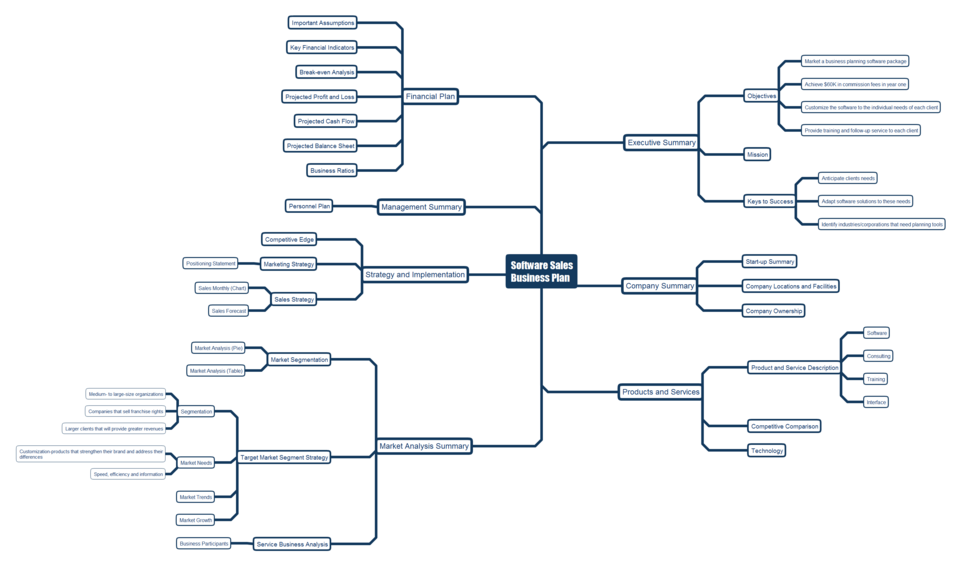 A standard 15-page business plan layout with sections highlighted. (Image: CC BY-SA 4.0, via Wikimedia Commons)
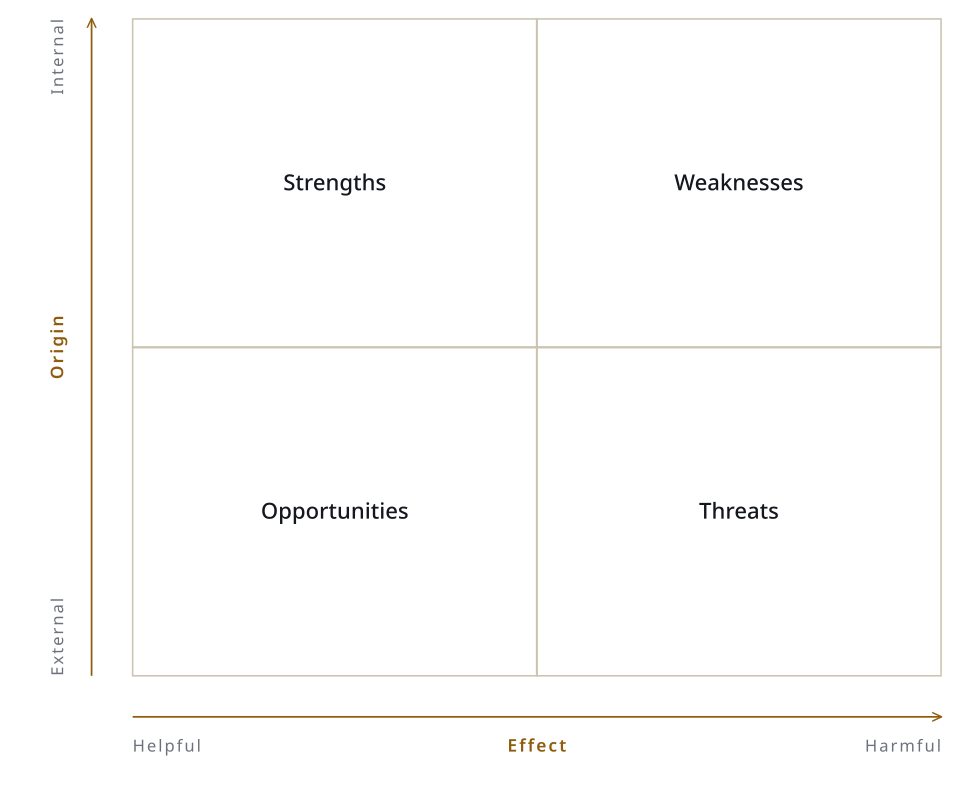 A 2x2 grid with Strengths, Weaknesses, Opportunities, and Threats. (Image: Peter Gladdish, CC BY 4.0, via Wikimedia Commons)
Based on the TU BBA syllabus for Entrepreneurship and Business Resource Mapping (MGT237), unit 4.
Discussion
Loading…