Working Capital ManagementUnit 67 min read
Cash Conversion Cycle & Working Capital Financing Approaches
Unit 6 of Working Capital Management explores the Cash Conversion Cycle (CCC), its calculation, and three financing strategies (conservative, aggressive, matching) with real-world examples from Nepali businesses (e.g., Daraz, Ncell). It covers how CCC impacts liquidity, profitability, and financing decisions, with visu
TAKEAWAYS:
- The Cash Conversion Cycle (CCC) measures how long cash is tied up in operations (inventory → sales → collections → payments), and a shorter CCC means better liquidity.
- Three financing approaches (conservative, aggressive, matching) balance risk and cost, with conservative being safest but costly, aggressive risky but cheap.
- Working capital financing must align with CCC: short-term financing for short CCCs, long-term for long CCCs to avoid liquidity crises.
- Real-world tie-ins: Daraz uses aggressive financing for fast-moving inventory; Ncell uses matching financing for predictable receivables; banks use conservative financing for liquidity buffers.
- Exam focus: Calculate CCC from inventory turnover, collection period, and payment period; compare financing strategies; and link CCC to profitability.
1. Cash Conversion Cycle (CCC): The Lifeblood of Working Capital
The Cash Conversion Cycle (CCC) is the time between paying for inventory and receiving cash from sales. It reveals how efficiently a firm converts investments into cash. A shorter CCC means less cash is tied up in operations, improving liquidity and profitability.
How CCC Works: The Formula
CCC is calculated using three key metrics:
- Inventory Conversion Period (ICP): Time to sell inventory.
- Receivables Collection Period (RCP): Time to collect sales revenue.
- Payables Payment Period (PPP): Time to pay suppliers.
The formula:
CCC = ICP + RCP – PPP
- ICP =
- RCP =
- PPP =
Visual: The CCC Timeline
flowchart LR
    A["Pay for Inventory\n(PPP)"] --> B["Hold Inventory\n(ICP)"]
    B --> C["Sell on Credit\n(RCP)"]
    C --> D["Collect Cash\n(CCC)"]
    D -->|"Cash Freed"| A
Example: Kathmandu Retail Shop
- Inventory Turnover: 12 times/year → ICP = days
- Receivables Turnover: 6 times/year → RCP = days
- Payables Turnover: 9 times/year → PPP = days
- CCC = 30.4 + 60.8 – 40.6 = 50.6 days
Interpretation: Kathmandu’s cash is tied up for 50.6 days on average. If they can reduce this to 30 days, they free up Rs. 200,000/month (assuming Rs. 2M in sales).
2. Why CCC Matters: Liquidity vs. Profitability Trade-off
A shorter CCC improves liquidity (ability to pay short-term debts) but may reduce profitability (e.g., faster collections mean less revenue from interest on receivables). Firms must balance:
- Reducing CCC: Faster inventory turnover, stricter credit terms, delayed payments to suppliers.
- Increasing CCC: Relaxed credit policies (higher sales but more bad debts), bulk inventory purchases (discounts but higher holding costs).
Real-World Example: Daraz vs. Ncell
| Company | CCC Strategy | Why? |
|---|---|---|
| Daraz | Aggressive CCC | Fast inventory turnover (daily sales), short collection period (cash on delivery), delayed supplier payments to maximize cash flow. |
| Ncell | Matching CCC | Predictable receivables (prepaid/postpaid cycles), aligned financing (short-term loans for receivables). |
| Nepal Rastra Bank | Conservative CCC | Holds high cash reserves (liquidity buffer), long payment periods to suppliers, minimal inventory risk. |
3. Working Capital Financing Approaches
Firms finance working capital using short-term (e.g., bank loans, trade credit) or long-term (e.g., bonds, equity) sources. The financing approach depends on CCC length and risk tolerance.
Three Financing Strategies
| Approach | Financing Mix | Risk Level | Cost | Best For | Example |
|---|---|---|---|---|---|
| Conservative | Mostly long-term, minimal short-term | Low | High | Stable firms, high CCC | Banks, insurance companies |
| Aggressive | Mostly short-term, little long-term | High | Low | Fast CCC, high growth firms | E-commerce (Daraz, Amazon) |
| Matching | Mix matches CCC duration | Moderate | Moderate | Balanced risk/reward | Retailers (Big Mart, Kathmandu) |
Visual: Financing vs. CCC Trade-off
pie
    title Working Capital Financing Approaches
    "Conservative: Long-term > Short-term" : 30
    "Matching: Balanced" : 40
    "Aggressive: Short-term > Long-term" : 30
Example: Kathmandu Retail Shop (CCC = 50.6 days)
- Conservative: Finance 80% with long-term debt (bonds), 20% with short-term loans.
- Aggressive: Finance 80% with short-term trade credit, 20% with equity.
- Matching: Finance 50% with short-term loans (to match 50-day CCC), 50% with long-term.
4. How Financing Affects Profitability
Financing choices impact interest costs and tax shields (interest is tax-deductible). Compare:
| Metric | Conservative | Aggressive | Matching |
|---|---|---|---|
| Interest Cost | High (long-term debt) | Low (short-term debt) | Moderate |
| Tax Shield | High (more interest) | Low (less interest) | Moderate |
| Financial Risk | Low | High (short-term refinancing) | Moderate |
| Profitability Impact | Stable but lower ROA | Higher ROA but risky | Balanced |
Worked Example: NTC’s Financing Choice
- CCC: 45 days (inventory: 30 days, collections: 60 days, payments: 45 days).
- Option 1 (Conservative): Rs. 500M long-term debt at 10% → Interest = Rs. 50M.
- Option 2 (Aggressive): Rs. 300M short-term loan at 8% + Rs. 200M equity → Interest = Rs. 24M.
- Tax Benefit: Assume 25% tax rate → Conservative saves Rs. 12.5M in taxes.
- Decision: If NTC expects stable cash flows, conservative is safer. If growth is rapid, aggressive may work.
5. Exam Tip: How to Score Full Marks
CCC Calculation: Always show all three steps (ICP, RCP, PPP) and label units (days).
- ❌ Wrong: "CCC = 60 days" (no breakdown).
- ✅ Correct:
ICP = 365/Inventory Turnover = 30 days
RCP = 365/Receivables Turnover = 60 days
PPP = 365/Payables Turnover = 40 days
CCC = 30 + 60 – 40 = 50 days
Financing Strategies: Use a table to compare conservative/aggressive/matching. Mention risk vs. cost trade-off.
Real-World Links: Tie examples to Nepali businesses (e.g., "Like Daraz, a firm with a 30-day CCC can use aggressive financing").
- Avoid generic examples (e.g., "Coca-Cola"); use local firms.
Cash Flow Impact: Explain how financing affects liquidity and profitability (e.g., "Short-term debt reduces interest costs but increases refinancing risk").
Diagrams: Draw CCC timelines or financing mix pies to visualize trade-offs.
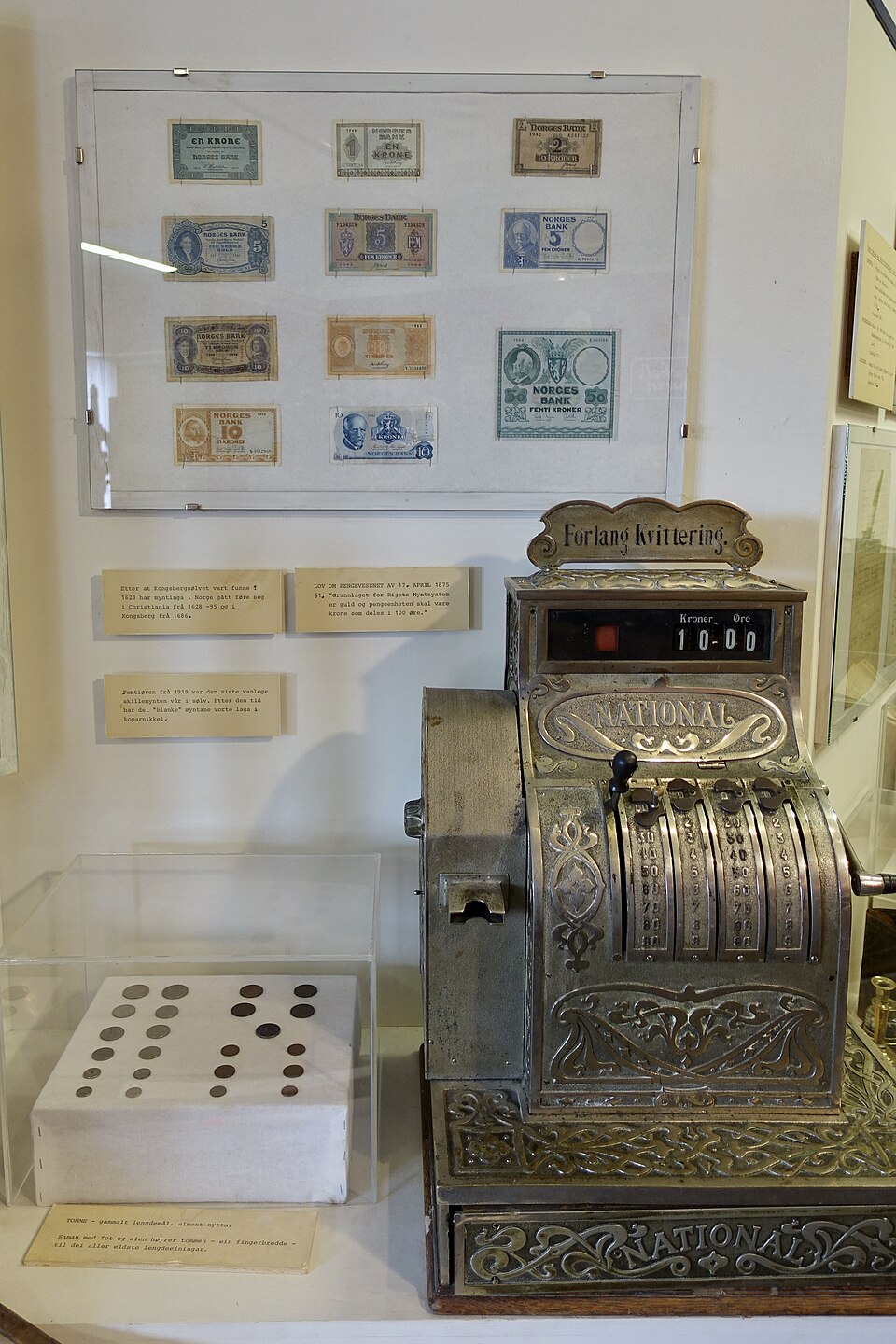 A physical cash register symbolizing the importance of CCC in managing liquidity. (Image: Wolfmann, CC BY-SA 4.0, via Wikimedia Commons)
Based on the TU BBA syllabus for Working Capital Management (BNK203), unit 6.
Discussion
Loading…