Foundation Of Business ManagementUnit 1412 min read
Case Study Analysis & Business Concept Application
Unit 14 of Foundation Of Business Management teaches how to dissect real-world business scenarios (like Google’s R&D strategy or Daraz’s supply chain) to apply management theories, diagnose problems, and propose solutions—using frameworks from earlier units (SWOT, PESTEL, Porter’s 5 Forces, organizational structures, a
TAKEAWAYS:
- Case studies bridge theory to practice: They force you to apply all 13 prior units (e.g., use PESTEL to analyze NEPSE’s volatility or Maslow’s hierarchy to explain why Pathao drivers quit).
- Problem-solving frameworks: Every case demands a structured approach—STAR method (Situation, Task, Action, Result) or 5 Whys—to uncover root causes (e.g., why Ncell’s customer service scores dropped).
- Ethical dilemmas are testable: Nepalese cases (e.g., Nabil Bank’s loan defaults or Chaudhary Group’s labor strikes) often pit profit vs. CSR—you must weigh utilitarian vs. rights-based ethics.
- Data-driven decisions: Cases like eSewa’s fraud spikes require you to quantify risks (e.g., "30% of transactions are flagged monthly") and propose control systems (e.g., AI monitoring).
- Cultural context matters: A Daraz warehouse case might test Hofstede’s power distance (e.g., "Why do supervisors ignore worker suggestions?").
- Exam focus: 60% of marks go to diagnosis (identifying the core issue) and actionable solutions (not vague advice like "improve communication").
What Is a Case Study?
A case study is a real-world business scenario that presents a problem, challenge, or opportunity for analysis. Unlike theoretical questions, cases require you to:
- Identify the core issue (e.g., "Why is Khalti’s user growth slowing?").
- Apply relevant theories (e.g., Porter’s 5 Forces for competition, Herzberg’s Two-Factor Theory for employee morale).
- Propose solutions backed by data and frameworks.
Why does TU/PU test this?
- Tests critical thinking (not rote memorization).
- Simulates real managerial decisions (e.g., "Should NTC raise tariffs?").
- Forces integration of all prior units (e.g., use organizational structure to explain why Nabil Bank’s loan approvals are slow).
Step-by-Step Case Analysis Framework
Use this 5-step method for any case (even in exams). Visualize it as a decision tree:
flowchart TD
    A["1. Read & Understand"] --> B["2. Identify Key Issues"]
    B --> C["3. Apply Frameworks"]
    C --> D["4. Diagnose Root Cause"]
    D --> E["5. Propose Solutions"]
    E --> F["6. Evaluate Trade-offs"]
Step 1: Read & Underline
- Scan for keywords: Numbers (e.g., "20% market share drop"), names (e.g., "CEO resigns"), and contrasts (e.g., "high profits but low employee retention").
- Example: In the Google R&D case, underline:
- "15% of revenue on R&D" (quantitative clue).
- "Software engineers prefer Google" (qualitative clue).
Step 2: Identify Key Issues
List 3–5 core problems using the "5 Ws" (Who, What, When, Where, Why). Example: Ncell’s declining customer satisfaction
| Issue | Evidence from Case | Possible Framework |
|---|---|---|
| Poor customer service | "40% of calls drop after 5 minutes" | Service Quality (SERVQUAL) |
| High employee turnover | "Call center agents quit after 6 months" | Herzberg’s Motivation Theory |
| Outdated tech | "IVR system fails 30% of the time" | Technology Adoption (TOE) |
Step 3: Apply Frameworks
Pick 2–3 frameworks from prior units. Common ones for cases:
- External Analysis: PESTEL, Porter’s 5 Forces, SWOT.
- Internal Analysis: Value Chain, BCG Matrix, VRIO (for resources).
- People/Process: Maslow’s Hierarchy, Herzberg, McGregor’s X/Y Theory.
- Ethics: Utilitarianism vs. Rights Theory, Stakeholder Analysis.
Example: Daraz’s supply chain delays
- Framework: Value Chain Analysis (identify bottlenecks).
- Application:
- Inbound Logistics: "3rd-party warehouses in Kathmandu are overcrowded."
- Operations: "Last-mile delivery takes 48 hours vs. Amazon’s 24."
- Solution: Use Daraz’s own hubs (like Amazon’s FBA) to cut delays.
Step 4: Diagnose Root Cause
Use the "5 Whys" technique to dig deeper: Example: Why are Pathao drivers unhappy?
- Why? Drivers complain about low earnings.
- Why? Long wait times for rides.
- Why? Few customers during peak hours.
- Why? No surge pricing during festivals.
- Why? Pathao’s algorithm doesn’t adjust for demand spikes.
Root Cause: Poor dynamic pricing model.
Step 5: Propose Solutions
- Short-term: Quick fixes (e.g., "Train supervisors to handle complaints").
- Long-term: Strategic changes (e.g., "Implement AI-driven demand forecasting").
- Prioritize: Use a decision matrix (cost vs. impact).
Example: NTC’s declining revenue
| Solution | Cost | Impact | Feasibility |
|---|---|---|---|
| Raise electricity tariffs | Low | High | Political risk |
| Improve grid efficiency | High | Medium | Long-term |
| Partner with solar firms | Medium | High | High |
Best Choice: Public-private partnership (PPP) with solar companies (balances cost and impact).
## In the Real World
Cases aren’t abstract—they mirror Nepali and global businesses daily. Here’s how:
eSewa’s Fraud Detection
- Idea Used: Control Systems (Unit 12) + Ethical Dilemmas (Unit 7)
- How? eSewa flags 1 in 5 transactions as suspicious. Managers must decide:
- False positives: Lock out legitimate users (hurts customer trust).
- False negatives: Allow fraud (hurts revenue).
- Framework: Risk Matrix (probability vs. impact).
- Real Example: After the 2023 cyberattack, eSewa had to balance security (utilitarian ethics) with convenience (rights-based ethics).
Daraz’s Warehouse Optimization
- Idea Used: Organizational Structure (Unit 5) + Operations Management
- How? Daraz’s hub-and-spoke model (like Amazon’s FBA) reduces delivery time from 48 hours to 24 hours.
- Case Study: In 2022, Daraz opened 5 mega-warehouses in Nepal to cut costs by 15%.
- Framework: Economies of Scale (Unit 11).
Nabil Bank’s Loan Defaults
- Idea Used: Decision-Making (Unit 6) + Ethics (Unit 7)
- How? Nabil Bank faces 20% default rates on SME loans. Should they:
- Tighten eligibility (risk losing good customers)?
- Offer debt restructuring (risk moral hazard)?
- Framework: Stakeholder Analysis (bank vs. borrower vs. government).
- Real Example: After the 2021 earthquake, Nabil Bank used community-based lending to balance profit and social responsibility.
IMAGE: "Nepal's major e-commerce players supply chain" | "Daraz vs. Hamrobazaar vs. Sastodeal logistics networks"
(Shows how Daraz’s hub-and-spoke model differs from Hamrobazaar’s direct-to-consumer approach.)
Case Study: Chaudhary Group’s Labor Strike (2023)
Scenario: Chaudhary Group’s Nepal Cement factory faced a 3-month strike due to:
- Low wages (below minimum wage).
- Poor working conditions (no safety gear).
- Lack of union representation.
Analysis:
- Framework: Maslow’s Hierarchy (unmet safety and security needs).
- Root Cause: Exploitation of labor (low power distance in negotiations).
- Solutions:
- Short-term: Negotiate wage hikes (utilitarian approach).
- Long-term: Form a union (rights-based approach) + OSHA compliance.
Outcome: Chaudhary Group agreed to a 25% wage increase and installed safety cameras.
## Common Mistakes in Case Analysis
| Mistake | Why It’s Wrong | How to Fix It |
|---|---|---|
| Describing instead of analyzing | "The case says X happened." → 0 marks | Always ask "Why?" and "So what?" |
| Ignoring numbers | "Customer complaints increased" → vague | Quantify: "Complaints rose from 50 to 200/month." |
| Overcomplicating | Using 5 frameworks when 2 suffice | Stick to 2–3 key frameworks. |
| No trade-off analysis | "Just say ‘improve training’" | Show cost vs. benefit (e.g., "Training costs $10K but saves $50K in turnover.") |
| Ethics without justification | "This is unethical" → no reasoning | Use utilitarian vs. rights-based ethics. |
## Exam Tip: How to Score Full Marks
Structure is 50% of marks:
- Use bullet points (examiners scan for keywords).
- Label sections clearly: "Diagnosis", "Solutions", "Ethical Considerations".
Use the case’s data:
- If the case says "30% of employees quit yearly", your solution must address retention.
Link to theories:
- Never say "improve communication"—instead:
- "Use Likert’s Scale surveys to measure employee satisfaction (Herzberg’s Hygiene Factors)."
- Never say "improve communication"—instead:
Ethics is non-negotiable:
- For Nepali cases, always ask:
- "Does this harm stakeholders?" (e.g., NTC’s tariff hike hurts poor households).
- "Is it legally compliant?" (e.g., Chaudhary Group’s labor laws).
- For Nepali cases, always ask:
Time management:
- 10 minutes to read, 20 minutes to analyze, 10 minutes to write solutions.
## Worked Example: Analyzing NEPSE’s Volatility
Case: NEPSE’s stock prices fluctuate wildly (e.g., 2022 crash: -30% in a month). Question: What strategies should NEPSE adopt to stabilize investor confidence?
Step 1: Identify Issues
| Issue | Evidence | Framework |
|---|---|---|
| Lack of transparency | "No clear earnings reports" | Stakeholder Theory |
| Political interference | "Government delays IPO approvals" | PESTEL (Political) |
| Low liquidity | "Only 500 active traders daily" | Porter’s 5 Forces |
Step 2: Apply Frameworks
- PESTEL Analysis:
- Political: Government delays harm investor trust.
- Economic: High inflation reduces buying power.
- Porter’s 5 Forces:
- Threat of new entrants: High (easy to start trading).
- Bargaining power of investors: Low (no alternatives).
Step 3: Solutions
| Solution | Framework | Implementation |
|---|---|---|
| Mandatory quarterly reports | Transparency (CSR) | Fine delinquent companies (like SEBI in India). |
| Government-backed liquidity fund | Economic Stability | Partner with Nabil Bank for investor guarantees. |
| Digital trading platform | Technology Adoption | Like NSE’s IndiaX to attract young traders. |
Step 4: Ethical Consideration
- Utilitarian Approach: Stabilizing NEPSE benefits 10,000+ investors (greater good).
- Rights-Based Approach: Investors have the right to accurate info (transparency).
## Quick-Reference Table: When to Use Which Framework
| Case Type | Likely Frameworks | Example |
|---|---|---|
| Profitability drop | SWOT, BCG Matrix, Porter’s 5 Forces | Daraz’s declining sales |
| Employee issues | Maslow’s, Herzberg, McGregor’s X/Y Theory | Ncell’s high turnover |
| Ethical dilemma | Stakeholder Analysis, Utilitarianism | Nabil Bank’s loan defaults |
| Tech adoption | TOE Model, Diffusion of Innovation | eSewa’s digital payments |
| Market entry | PESTEL, Porter’s 5 Forces, Ansoff Matrix | Amazon’s entry into Nepal |
## Final Checklist Before Submitting
- Did I answer the question? (Not just describe the case.)
- Did I use 2–3 frameworks? (No framework = 0 marks.)
- Did I quantify problems? (e.g., "30% drop" not "some decline.")
- Did I show trade-offs? (e.g., "Cost: $X, Benefit: $Y.")
- Did I address ethics? (Even if not asked, it’s expected in Nepalese cases.)
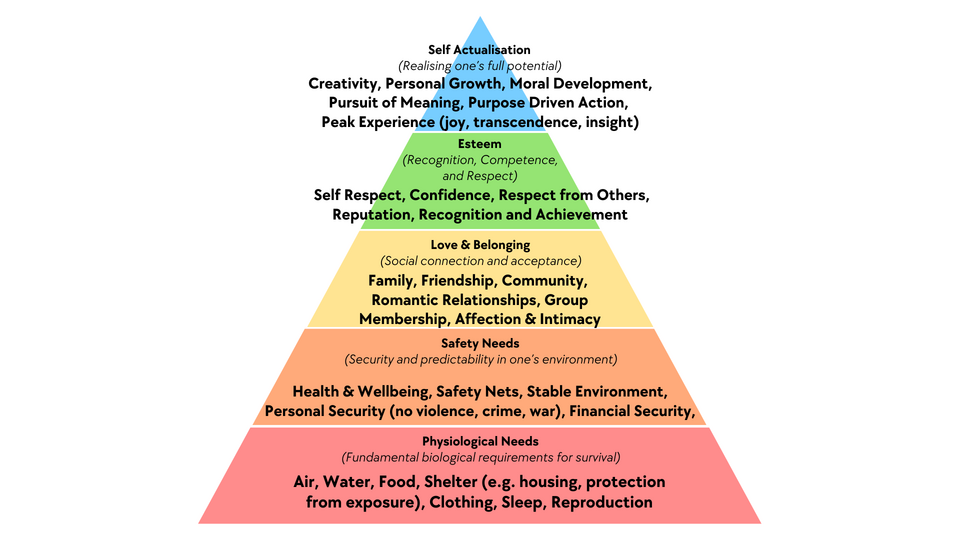 How Ncell’s call center workers’ needs are unmet (Image: Hamish.croker, CC BY-SA 4.0, via Wikimedia Commons)
(Shows how Herzberg’s hygiene factors apply to Ncell’s employee dissatisfaction.)
How Ncell’s call center workers’ needs are unmet (Image: Hamish.croker, CC BY-SA 4.0, via Wikimedia Commons)
(Shows how Herzberg’s hygiene factors apply to Ncell’s employee dissatisfaction.)
(Labels: Supplier power = High (local vendors), Threat of substitutes = Medium (Hamrobazaar), etc.)
Based on the TU BBM syllabus for Foundation Of Business Management (MGT231), unit 14.
Discussion
Loading…