Foundation Of Business ManagementUnit 1212 min read
Control & Performance Management: Systems, Types, Challenges & Ethics
Unit 12 of Foundation Of Business Management explores the control process (feedforward, concurrent, feedback), types of control (strategic, tactical, operational), performance management systems (balanced scorecard, OKRs), challenges (resistance, cost, over-control), and ethical dilemmas in monitoring—with real-world c
TAKEAWAYS:
- Control is a closed-loop system: It compares actual performance to standards (via feedforward, concurrent, or feedback loops) and corrects deviations—like Ncell tracking call-drop rates in real time.
- Three control types: Strategic (long-term, e.g., Daraz’s market expansion), tactical (mid-term, e.g., Kathmandu traffic route optimization), and operational (daily, e.g., bank ATM transaction limits).
- Balanced Scorecard > single metrics: Nabil Bank uses financial (ROI), customer (NPS), internal process (loan approval time), and learning/growth (employee training) metrics to avoid tunnel vision.
- Ethics matter: Over-control (e.g., micromanaging Pathao delivery drivers) breeds distrust; under-control (e.g., NEPSE’s lax fraud checks) invites scandals.
- Contingency theory applies: A startup (e.g., Himalayan Java) needs tight operational control, while a mature firm (e.g., Chaudhary Group) relies more on strategic controls.
- Performance ≠ punishment: Feedback should be SMART (Specific, Measurable, Achievable, Relevant, Time-bound)—like Daraz’s "30-day return policy" for customer satisfaction.
1. What Is Control in Management?
Control is the process of monitoring, comparing, and correcting organizational performance to ensure goals are met. It acts like a thermostat:
- Input → Standards (e.g., NTC’s target of 99.5% network uptime).
- Process → Actual performance (e.g., real-time call-drop data).
- Output → Corrective action (e.g., rerouting towers in Kathmandu).
flowchart TD
    A["Standards\n(e.g., 20% YoY growth)"] -->|"Compare"| B["Actual Performance\n(e.g., 18% growth)"]
    B -->|"Deviation?"| C{"Yes/No"}
    C -->|"No"| D["No Action"]
    C -->|"Yes"| E["Corrective Action\n(e.g., cost-cutting)"]
    E --> A
Why it matters:
- Prevents failures: Like how eSewa freezes transactions if fraud patterns exceed 0.1%.
- Adapts to change: Ncell adjusts data plans based on usage trends (e.g., unlimited night browsing).
- Improves efficiency: Daraz uses ABC analysis to control inventory (80% of sales come from 20% of products).
2. Types of Control
Controls are classified by time horizon and level in the organization:
| Type | Time Frame | Level | Example (Nepal) | Tools Used |
|---|---|---|---|---|
| Strategic | Long-term (1–5 yrs) | Top management | Nabil Bank’s "Digital First" strategy | SWOT analysis, PESTEL framework |
| Tactical | Mid-term (6–24 mos) | Middle managers | Kathmandu Metropolitan City’s traffic signals | Gantt charts, budget variance analysis |
| Operational | Short-term (<6 mos) | Frontline staff | Khalti’s daily transaction limits | Dashboards, real-time alerts |
Worked Example: NEPSE’s Market Control
- Strategic: Targets 15% annual growth in listed companies.
- Tactical: Quarterly checks on insider trading reports.
- Operational: Daily monitoring of trade volumes to detect anomalies (e.g., sudden spikes in a single stock).
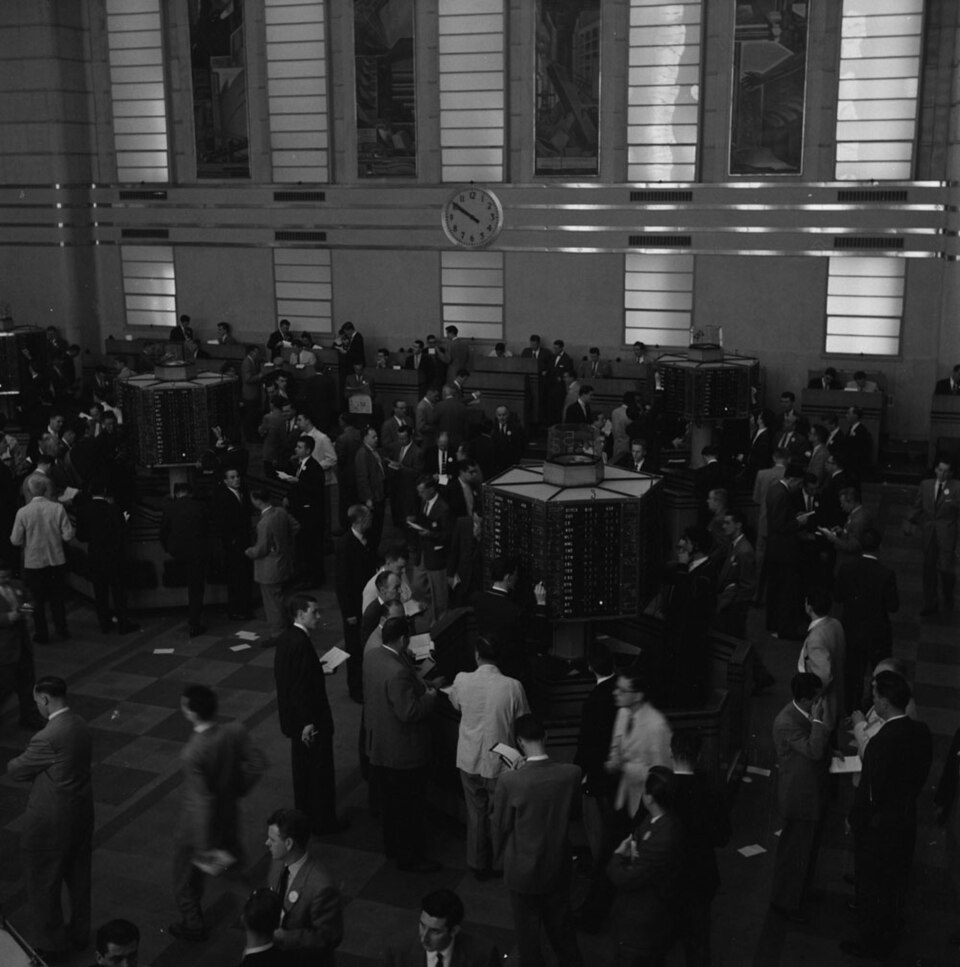 NEPSE’s control room tracks unusual trading patterns. (Image: Chris Lund, Public domain, via Wikimedia Commons)
3. The Control Process: Step-by-Step
Use this 4-step cycle to design controls (applied by Google’s Project Oxygen for employee performance):
Establish Standards
- Define measurable goals (e.g., "Reduce customer complaint resolution time to <24 hours").
- Example: Pathao’s target: 95% of orders delivered within 30 minutes.
Measure Performance
- Collect data (quantitative/qualitative).
- Tools: Surveys (e.g., NTC’s customer satisfaction index), sensors (e.g., Daraz’s warehouse inventory scanners).
Compare & Identify Deviations
- Use control charts (like in Six Sigma) to spot trends.
- Example: If Ncell’s 4G speed drops below 15 Mbps in 3+ districts, trigger an investigation.
Take Corrective Action
- Immediate: Pause faulty processes (e.g., freeze Khalti transactions if fraud detected).
- Long-term: Redesign systems (e.g., NTC’s fiber-optic expansion in rural areas).
mindmap
  root((Control Process))
    Establish Standards
      SMART Goals
      Benchmarks
    Measure Performance
      Data Collection
      KPIs
    Compare
      Variance Analysis
      Root Cause
    Corrective Action
      Immediate Fixes
      Process Redesign
4. Essentials of an Effective Control System
A control system fails if it’s too rigid or too lax. Use these 5 principles (tested by Toyota’s Kaizen system):
- Economical: Cost of control < benefit gained.
- Example: Daraz spends ~5% of revenue on fraud detection (vs. 20% loss from fraud).
- Flexible: Adapts to changes (e.g., Ncell’s dynamic pricing during festivals).
- Forward-looking: Predicts issues (e.g., NTC’s weather-based network stress tests).
- Objective: Uses data, not gut feelings (e.g., Nabil Bank’s automated loan risk scores).
- Timely: Acts before damage occurs (e.g., eSewa’s real-time fraud alerts).
Case Study: Himalayan Java’s Quality Control
- Problem: Customer complaints about stale coffee beans.
- Solution:
- Standard: "Shelf life ≤ 6 months from roast date."
- Control: RFID tags on every bag + weekly taste tests.
- Result: 40% drop in returns.
5. Challenges to Effective Control
Even the best systems face hurdles. Here’s how Nepal’s businesses handle them:
| Challenge | Cause | Nepali Example | Solution |
|---|---|---|---|
| Resistance to feedback | Fear of blame | Employees at Chaudhary Group hiding errors | Anonymous surveys + reward honesty |
| Over-control | Micromanagement | Pathao drivers tracked every 2 minutes | Trust-based zones (e.g., no GPS in rural areas) |
| Costly implementation | High setup costs | NTC’s fiber-optic rollout delays | Phased rollout (start with high-traffic areas) |
| Lack of data | Poor record-keeping | Small shops in Thamel using cash-only | Partner with Khalti for digital receipts |
| Ethical dilemmas | Privacy vs. monitoring | Ncell tracking user locations without consent | Transparent policies + opt-in tracking |
6. Performance Management Systems
Controls ≠ performance management. The latter is proactive and people-focused. Two key models:
A. Balanced Scorecard (BSC)
Developed by Kaplan & Norton, used by Nabil Bank to track:
- Financial: Net profit margin (target: 12%).
- Customer: Net Promoter Score (NPS > 60).
- Internal Processes: Loan approval time (<7 days).
- Learning & Growth: Employee training hours (>40/year).
graph TD
    A["Vision: Be Nepal's Most Trusted Bank"] --> B["Financial\n(Profitability)"]
    A --> C["Customer\n(Satisfaction)"]
    A --> D["Internal\n(Efficiency)"]
    A --> E["Learning\n(Innovation)"]
    B -->|"KPI"| F["ROI > 10%"]
    C -->|"KPI"| G["NPS > 60"]
    D -->|"KPI"| H["Loan processing: <7 days"]
    E -->|"KPI"| I["Employee upskilling: 40 hrs/year"]
B. Objectives and Key Results (OKRs)
Used by Google and Daraz to set ambitious goals:
- Objective: Increase repeat customers.
- Key Results:
- 30% of users log in weekly (current: 15%).
- Average order value rises by 20% (current: $12).
Comparison Table:
| Feature | Balanced Scorecard | OKRs |
|---|---|---|
| Focus | Balanced view (4 perspectives) | Top priorities only |
| Frequency | Quarterly/annual reviews | Quarterly (with weekly check-ins) |
| Best for | Large, stable orgs (e.g., banks) | Fast-moving startups (e.g., Daraz) |
| Example | Nabil Bank’s NPS tracking | Pathao’s "Reduce no-shows by 50%" |
7. Ethical Issues in Control
Control can backfire if it violates ethics. Common dilemmas in Nepal:
Surveillance Overreach
- Example: Ncell tracking user locations to "optimize" networks → Privacy violation.
- Solution: Opt-in policies + anonymized data.
Bias in Performance Reviews
- Example: Chaudhary Group promoting "favorites" over merit.
- Solution: Blind evaluations + 360-degree feedback.
Whistleblower Retaliation
- Example: Employees at NEPSE fired for reporting insider trading.
- Solution: Anonymous reporting channels (like eSewa’s fraud hotline).
Case Study: Kathmandu Traffic Police’s Ethical Dilemma
- Control: Use speed cameras to fine violators.
- Ethical Issue: Low-income drivers disproportionately affected.
- Solution: Install cameras near accident hotspots and offer free safety workshops.
In the Real World
Ncell’s Network Control
- Idea: Concurrent control (real-time monitoring).
- How: Uses AI-driven predictive analytics to reroute traffic before congestion occurs. During Dashain, they preemptively increase tower capacity in Lalitpur by 30%.
- Impact: Reduced call drops by 45% during festivals.
Daraz’s Inventory Control
- Idea: ABC analysis (prioritizing high-value items).
- How: Tracks sales data to classify products:
- A (20% items, 80% sales): Stocked in multiple warehouses (e.g., Samsung phones).
- B (30% items, 15% sales): Moderate stock (e.g., kitchenware).
- C (50% items, 5% sales): Minimal stock (e.g., niche electronics).
- Result: 25% lower storage costs.
Nabil Bank’s Loan Control
- Idea: Feedback control (post-loan monitoring).
- How: After approving a business loan, they:
- Set a repayment threshold (e.g., 90% on time).
- Use automated alerts if payments miss deadlines.
- Offer financial coaching before penalizing.
- Impact: Default rates dropped from 8% to 3% in 2 years.
Exam Tip
Case Analysis (40% of marks)
- Structure:
- Identify the control type (strategic/tactical/operational).
- Highlight deviations (e.g., "Heathrow’s Terminal 5 cost overrun by 20%").
- Suggest corrective actions (e.g., "Implement a phase-wise budget review system").
- Example Question: "TGSS’s profitability is declining. Analyze using control theory."
- Answer:
- Problem: Tactical control (sales targets) failing.
- Root Cause: Over-reliance on online ads (high CAC) vs. low LTV.
- Fix: Shift to strategic control (long-term brand building) + operational (personalized recommendations).
- Answer:
- Structure:
Diagrams = Easy Marks
- Draw control process flowcharts or balanced scorecard maps.
- Example: For "essentials of control," sketch a thermostat analogy (set point = standards, sensor = measurement, heater/cooler = corrective action).
Link to Nepal
- Always tie answers to local examples:
- NTC: Use for operational control (network uptime).
- NEPSE: Use for strategic control (market regulations).
- Pathao/Khalti: Use for ethical control (data privacy).
- Always tie answers to local examples:
Avoid Common Mistakes
- ❌ Saying "control is only about punishment." ✅ Instead: "Control is proactive (feedforward) and corrective (feedback)."
- ❌ Ignoring contingency theory. ✅ Always ask: "Does this control fit the org’s size/culture?" (e.g., tight controls for startups vs. loose for multinationals).
Final Visual Summary:
classDiagram
    class ControlSystem {
        +Establish Standards()
        +Measure Performance()
        +Compare()
        +Correct()
    }
    class BalancedScorecard {
        +Financial
        +Customer
        +Internal
        +Learning
    }
    class EthicalControl {
        +Privacy
        +Fairness
        +Transparency
    }
    ControlSystem --> BalancedScorecard : "Uses"
    ControlSystem --> EthicalControl : "Must Include"
Based on the TU BBM syllabus for Foundation Of Business Management (MGT231), unit 12.
Discussion
Loading…