Financial AccountingUnit 514 min read
Depreciation & Asset Valuation: Methods, Journal Entries & Impact
Unit 5 of Financial Accounting: Explores how fixed assets lose value over time, the rules for calculating depreciation, how to record it in books, and how to value assets at year-end—with real-world examples from Nepali businesses like NTC and Daraz.
TAKEAWAYS:
- Depreciation is the systematic allocation of an asset’s cost over its useful life, not a measure of physical wear.
- Straight-line, reducing balance, and units-of-production are the three primary methods, each suited to different asset types.
- Journal entries for depreciation affect Profit & Loss Account (expense) and Accumulated Depreciation (contra-asset).
- Net Book Value (NBV) = Cost – Accumulated Depreciation; it’s used for financial statements and loan collateral.
- Partial-year depreciation adjusts for assets acquired or disposed mid-period.
- Disposal of assets requires calculating profit/loss on sale and updating accumulated depreciation.
1. Why Depreciate? The Business Case
Assets like machinery, vehicles, and buildings lose value due to wear, tear, obsolescence, or usage. Depreciation:
- Matches expenses to revenue (accrual principle).
- Shows true profitability by reducing asset value over time.
- Complies with accounting standards (IAS 16, Nepal’s GAAP).
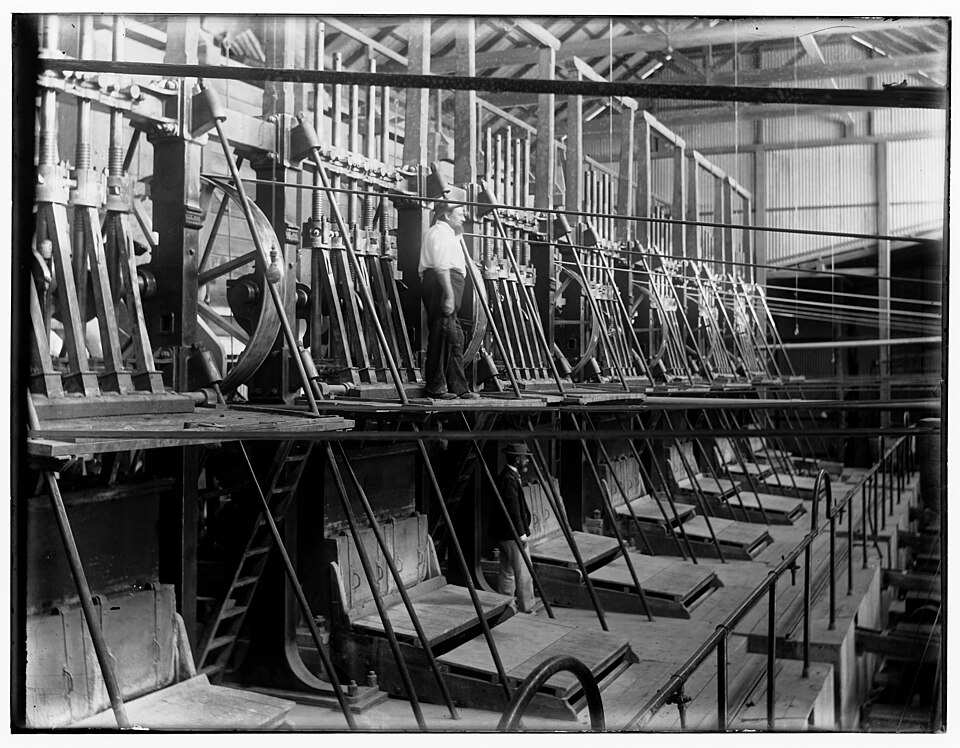 A typical asset subject to depreciation (e.g., a Daraz warehouse forklift). (Image: Queensland State Archives, PDM-owner, via Wikimedia Commons)
Depreciation does not mean the asset is sold—it’s an accounting adjustment.
A typical asset subject to depreciation (e.g., a Daraz warehouse forklift). (Image: Queensland State Archives, PDM-owner, via Wikimedia Commons)
Depreciation does not mean the asset is sold—it’s an accounting adjustment.
2. Definitions & Key Terms
| Term | Definition |
|---|---|
| Depreciable Cost | Cost of asset – Salvage value (e.g., Rs 250,000 – Rs 10,000 = Rs 240,000). |
| Useful Life | Estimated years/miles the asset will serve (e.g., 5 years for office furniture). |
| Salvage Value | Estimated residual value at end of life (e.g., Rs 10,000 for a used car). |
| Accumulated Depreciation | Cumulative depreciation expense recorded over time (contra-asset). |
| Net Book Value (NBV) | Cost – Accumulated Depreciation (e.g., Rs 250,000 – Rs 50,000 = Rs 200,000). |
3. Methods of Depreciation
Three widely used methods, each with pros/cons:
A. Straight-Line Method (SLM)
- How it works: Equal annual depreciation.
- Example: A Rs 250,000 machine with 5-year life and Rs 10,000 salvage value:
B. Reducing Balance Method (RBM)
- How it works: Higher depreciation in early years (accelerated). (Nepal uses 2× straight-line rate for RBM.)
- Example: Same machine, 20% rate (1/5 × 2):
- Year 1: 250,000 × 20% = Rs 50,000
- Year 2: (250,000 – 50,000) × 20% = Rs 40,000
C. Units of Production Method (UOPM)
- How it works: Depreciation based on actual usage (e.g., km driven for a car).
- Example: A car costing Rs 3,010,000 with 300,000 km life and 10,000 salvage value:
- Depreciation/km = (3,010,000 – 10,000)/300,000 = Rs 10 per km.
- If driven 50,000 km in Year 1: Rs 500,000 depreciation.
Comparison Table:
| Method | Best For | Tax Impact | Accounting Complexity |
|---|---|---|---|
| Straight-Line | Low-usage assets (e.g., office furniture) | Neutral | Low |
| Reducing Balance | High-early-value assets (e.g., tech) | Higher early years | Medium |
| Units of Production | Usage-dependent assets (e.g., vehicles) | Variable | High |
4. Journal Entries for Depreciation
Depreciation is recorded annually in the Profit & Loss Account (expense) and Accumulated Depreciation (contra-asset).
Example: Straight-Line Depreciation for a Machine
Given:
- Machine purchased on 1 Baisakh 2076 for Rs 250,000.
- Useful life: 5 years; salvage value: Rs 10,000.
- Depreciation rate: 20% per year (SLM).
Journal Entry (Year 1):
Date       Particulars                     | Dr (Rs) | Cr (Rs)
2076-12-31 Depreciation A/c                | 48,000  |
         To Accumulated Depreciation-Machine |         | 48,000
Explanation:
- Dr Depreciation A/c: Expense increases profit (reduces net income).
- Cr Accumulated Depreciation: Reduces asset’s NBV.
Ledger Posting (T-Account):
Accumulated Depreciation - Machine
2076-12-31: 48,000
2077-12-31: 48,000
2078-12-31: 48,000
Total: 144,000
Machine Account:
Cost: 250,000
Less: Accumulated Depreciation: (144,000)
NBV: 106,000
5. Partial-Year Depreciation
If an asset is acquired or disposed mid-year, adjust the depreciation period proportionally.
Example: A Rs 150,000 machine bought on 1 Kartik 2077 (5-month delay) with 5-year life.
- Full-year depreciation: Rs 150,000 / 5 = Rs 30,000/year.
- Partial-year depreciation: (30,000 × 5/12) = Rs 12,500 (for 2077).
Journal Entry:
Date       Particulars                     | Dr (Rs) | Cr (Rs)
2077-12-31 Depreciation A/c                | 12,500  |
         To Accumulated Depreciation-Machine |         | 12,500
6. Disposal of Depreciable Assets
When an asset is sold, calculate:
- Accumulated Depreciation up to disposal date.
- Book Value (NBV) = Cost – Accumulated Depreciation.
- Profit/Loss on Sale = Sale Price – NBV.
flowchart TD
  A["Asset Sold for Rs 120,000"] --> B["Calculate Accumulated Depreciation: Rs 144,000"]
  B --> C["Compute NBV: Rs 250,000 - Rs 144,000 = Rs 106,000"]
  C --> D["Determine Profit/Loss: Rs 120,000 - Rs 106,000 = Rs 14,000"]
  D --> E["Record Profit in P&L A/c"]
  D --> F["Update Accumulated Depreciation"]
  F --> G["Remove Asset from Balance Sheet"]
Step-by-step disposal process for the Kathmandu Retail Shop’s machine
Example: Sell the Rs 250,000 machine (NBV: Rs 106,000) for Rs 120,000 on 1 Chaitra 2079.
- Accumulated Depreciation: 48,000 × 3 years = Rs 144,000.
- NBV: 250,000 – 144,000 = Rs 106,000.
- Profit/Loss: 120,000 – 106,000 = Rs 14,000 profit.
Journal Entries:
1. Update Depreciation (if not yet recorded for 2078):
   Depreciation A/c (48,000) | Accumulated Depreciation (48,000)

2. Dispose of Asset:
   Bank A/c (120,000) | Machine A/c (250,000)
   Profit on Sale A/c (14,000) | Accumulated Depreciation (144,000)
Ledger Posting (Machine Account):
Cost: 250,000
Less: Accumulated Depreciation: (192,000)
NBV: 58,000
Sale: 120,000
Profit: 14,000
7. In the Real World
Depreciation affects every business—from micro-enterprises to multinational corporations. Here’s how Nepali companies use it:
A. NTC’s Telecommunication Towers
- Idea: NTC depreciates its cell towers (cost: Rs 5M–10M each) using straight-line method over 10–15 years.
- Why? Towers lose signal strength over time, and NTC must replace them. Depreciation spreads the cost across years, reducing annual expenses and improving financial health.
- Real Impact: Helps NTC justify higher tariffs to regulators by showing "wear-and-tear" costs.
B. Daraz’s Warehouse Equipment
- Idea: Forklifts and conveyor belts in Daraz’s warehouses are depreciated using reducing balance method (higher expense early, when usage is highest).
- Why? Daraz replaces equipment frequently due to high turnover. RBM matches higher early costs with peak operational activity.
- Worked Example: A Rs 2M forklift with 5-year life and Rs 200,000 salvage value:
- Year 1: 2M × 20% = Rs 400,000 depreciation.
- Year 5: (2M – accumulated depreciation) × 20% ≈ Rs 128,000. Daraz uses this to budget for replacements.
C. Pathao’s Delivery Vehicles
- Idea: Pathao depreciates its fleet (motorcycles, cars) using units-of-production method, tracking km driven.
- Why? Vehicles in Kathmandu’s traffic wear out faster. Depreciation per km adjusts for actual usage (e.g., Rs 5/km for a motorcycle).
- Real Impact: Pathao’s financial statements reflect true vehicle costs, helping it negotiate loans with banks like NMB.
8. Depreciation’s Impact on Profit
Depreciation reduces taxable income and affects financial ratios:
| Scenario | Impact on Profit | Impact on Tax | Impact on Ratios |
|---|---|---|---|
| Higher Depreciation (RBM) | Lower profit | Lower tax | Higher debt-to-equity |
| Lower Depreciation (SLM) | Higher profit | Higher tax | Lower return on assets |
Example: A Rs 250,000 machine with:
- SLM: Rs 48,000/year → Profit = Rs 500,000 – 48,000 = Rs 452,000.
- RBM: Rs 50,000 (Year 1) → Profit = Rs 500,000 – 50,000 = Rs 450,000.
Why it matters: Banks like Global IMEbank use depreciation data to assess a business’s cash flow stability before lending.
9. Exam Tip: Common Pitfalls
- Miscounting useful life: Always check the asset’s expected lifespan (e.g., 5 years for furniture, 10 years for buildings).
- Ignoring salvage value: Subtract it from cost before calculating depreciation.
- Partial-year errors: Use the formula
(Depreciation × Months Owned/12)for mid-year transactions. - Disposal mistakes: Forget to close the asset account and update accumulated depreciation at disposal.
- Method confusion: Match the method to the asset (e.g., RBM for tech, SLM for furniture).
Past Exam Question (Adapted): A company bought a machine for Rs 200,000 on 1 Chaitra 2077 with a 5-year life and Rs 20,000 salvage value. Calculate depreciation for 2077–2081 using SLM and RBM (20% rate). Solution:
| Year | SLM (Rs) | RBM (Rs) | NBV (SLM) | NBV (RBM) |
|---|---|---|---|---|
| 2077 | 36,000 | 40,000 | 164,000 | 160,000 |
| 2078 | 36,000 | 32,000 | 128,000 | 128,000 |
| 2079 | 36,000 | 25,600 | 92,000 | 102,400 |
| 2080 | 36,000 | 20,480 | 56,000 | 81,920 |
| 2081 | 36,000 | 16,384 | 20,000 | 65,536 |
10. Worked Example: Kathmandu Retail Shop
Scenario: Sagar’s Stationery buys a printer for Rs 80,000 on 1 Baisakh 2076. Life: 4 years; salvage: Rs 10,000. Depreciate using SLM and RBM (25% rate).
Step 1: Calculate Annual Depreciation
- SLM:
- RBM:
Step 2: Journal Entries (SLM)
| Date | Particulars | Dr (Rs) | Cr (Rs) |
|---|---|---|---|
| 2076-12-31 | Depreciation A/c | 19,000 | |
| To Accumulated Depreciation | 19,000 | ||
| 2077-12-31 | Depreciation A/c | 19,000 | |
| To Accumulated Depreciation | 19,000 |
Step 3: Ledger Posting (Printer Account)
Cost: 80,000
Less: Accumulated Depreciation (SLM): (38,000)
NBV: 42,000
Step 4: Disposal (Sold for Rs 35,000 on 1 Chaitra 2079)
- Update Depreciation for 2078: Rs 19,000.
- NBV: 80,000 – (19,000 × 2) = Rs 42,000.
- Profit/Loss: 35,000 – 42,000 = Rs 7,000 loss.
Final Journal Entry:
Bank A/c (35,000) | Printer A/c (80,000)
Loss on Sale A/c (7,000) | Accumulated Depreciation (38,000)
11. Visualizing the Accounting Cycle
sequenceDiagram
  participant Transaction
  participant Journal
  participant Ledger
  participant TrialBalance
  participant FinancialStatements
  Transaction->>Journal: Record in Journal
  Journal->>Ledger: Post to T-Accounts
  Ledger->>TrialBalance: Prepare Trial Balance
  TrialBalance->>FinancialStatements: Generate Income Statement & Balance Sheet
  FinancialStatements->>Depreciation: Adjust for Depreciation Expense
  FinancialStatements->>Depreciation: Update Accumulated Depreciation
  note right of FinancialStatements: Depreciation affects both P&L and Balance Sheet
How depreciation integrates into the accounting cycle (Kathmandu Retail Shop example)
In the real world
- eSewa: Uses straight-line depreciation for its server infrastructure (e.g., Rs 500,000 server with 5-year life → Rs 100,000/year expense) to match IT costs with revenue generated from digital transactions.
- Daraz Warehouse Forklifts: Apply units-of-production depreciation (e.g., Rs 2,000,000 forklift with 50,000 km life → Rs 40/km; depreciated based on actual km driven monthly).
- Nepal Rastra Bank (NRB): Requires banks like Nabil Bank to use reducing balance method for high-value assets (e.g., ATMs) to reflect faster obsolescence in early years, ensuring accurate risk assessment for loan collateral.
Based on the TU BBM syllabus for Financial Accounting (ACC201), unit 5.
Discussion
Loading…