Cost Management AccountingUnit 111 min read
Cost & Management Accounting: Definitions, Roles, and Systems
Unit 1 of Cost Management Accounting introduces core concepts like cost accounting’s purpose, its distinction from financial accounting, key systems (job order, process costing), and how managers use cost data for decision-making—with Nepali business examples and exam-focused visuals.
Core Concepts and Definitions
1. What is Cost Accounting?
Cost accounting is a branch of accounting that focuses on measuring, analyzing, and reporting costs to help managers make informed decisions. Unlike financial accounting (which reports to external stakeholders), cost accounting is internal and future-oriented.
classDiagram
class FinancialAccounting {
+Reports to: External stakeholders (investors, tax authorities)
+Focus: Historical data
+Purpose: Compliance, transparency
}
class CostAccounting {
+Reports to: Internal managers
+Focus: Future planning, decision-making
+Purpose: Cost control, profitability analysis
}
FinancialAccounting -->|"Uses"| CostAccounting : "Cost data"
CostAccounting -->|"Feeds into"| ManagementAccounting : "Strategic decisions"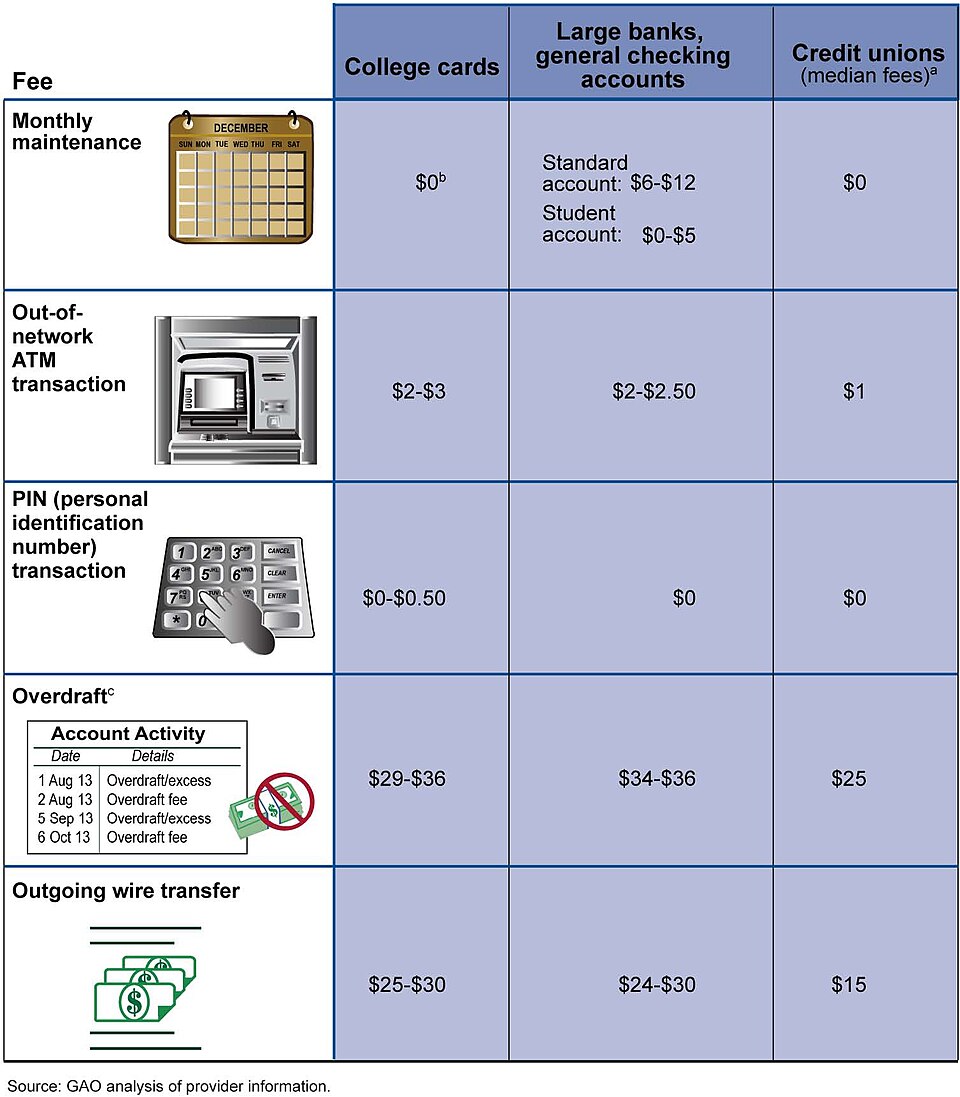 accounting types comparison table (Image: U.S. Government Accountability Office from Washington, DC, U, Public domain, via Wikimedia Commons)
| Feature | Financial Accounting | Cost Accounting |
|---|---|---|
| Primary Users | Investors, Government, Public | Managers, Executives |
| Time Focus | Past (historical) | Future (planning) |
| Purpose | Compliance, Stewardship | Decision-making, Control |
| Example Reports | Income Statement, Balance Sheet | Cost Sheets, Budget Variances |
2. What is Management Accounting?
Management accounting is the broader field that uses cost data (and other financial/non-financial data) to help managers plan, control, and optimize operations. It includes:
- Budgeting (planning future costs/revenues)
- Performance measurement (e.g., variance analysis)
- Strategic decision-making (e.g., make vs. buy, pricing)
Key Difference: Cost accounting collects cost data, while management accounting uses that data + other info to guide decisions.
Why Cost and Management Accounting Matter
Key Objectives
- Cost Control: Identify and reduce unnecessary expenses.
- Pricing Decisions: Set prices that cover costs + profit.
- Profit Planning: Use CVP analysis to predict profitability at different sales volumes.
- Resource Allocation: Decide where to invest (e.g., new machinery vs. labor).
- Performance Evaluation: Compare actual vs. budgeted costs.
In the Real World
1. eSewa (Digital Payments) – Cost Allocation for Transaction Fees
- Idea Used: Overhead Cost Allocation (Unit 6) and Contribution Margin (Unit 3).
- How?
eSewa earns a small fee per transaction (e.g., Rs 5 for utility payments). To set this fee, they:
- Allocate IT infrastructure costs (servers, security) across different services (electricity, phone bills, etc.).
- Use contribution margin analysis to ensure fees cover variable costs (e.g., payment processing) + a profit margin.
- Example: If processing a Rs 10,000 electricity bill costs eSewa Rs 10 (variable) + Rs 5 overhead, they charge Rs 15 to ensure profitability.
2. Daraz (E-Commerce) – Economic Order Quantity (EOQ) for Inventory
- Idea Used: EOQ Model (Unit 5).
- How?
Daraz stores inventory in warehouses across Nepal. For a product like mobile phones:
- Annual demand: 50,000 units.
- Ordering cost: Rs 200 per order (staff time, logistics).
- Holding cost: 20% of inventory value per year (storage, insurance).
- EOQ Calculation: If the cost per phone is Rs 20,000:
- Result: Daraz orders 71 phones at a time to minimize total inventory costs.
3. NTC (Nepal Telecom) – Cost-Volume-Profit (CVP) for Pricing
- Idea Used: CVP Analysis (Unit 3).
- How?
NTC offers prepaid and postpaid plans. To decide whether to launch a new Rs 500/month plan:
- Variable cost per user: Rs 100 (data, calls, SMS).
- Fixed costs: Rs 50 million (network infrastructure, salaries).
- Contribution margin per user: Rs 500 – Rs 100 = Rs 400.
- Break-even users:
- Decision: If NTC expects >125,000 users, the plan is profitable.
Cost Accounting Systems
Two primary systems help track and assign costs:
1. Job Order Costing
Used by companies that produce custom or unique products (e.g., tailors, printers, construction firms).
Example: A Kathmandu Tailor Shop (Mr. Thapa’s Garments)
- Job: Custom wedding suit for Rs 15,000.
- Costs Assigned:
- Direct Materials: Rs 3,000 (fabric, buttons).
- Direct Labor: Rs 5,000 (tailor’s time).
- Manufacturing Overhead: Rs 2,000 (allocated based on labor hours).
- Total Cost: Rs 10,000.
- Profit: Rs 15,000 – Rs 10,000 = Rs 5,000.
| Job Order #KW-2024 | Wedding Suit |
|---|---|
| Direct Materials | Rs 3,000 |
| Direct Labor | Rs 5,000 |
| Manufacturing Overhead | Rs 2,000 (allocated at 40% of labor) |
| Total Cost | Rs 10,000 |
| Selling Price | Rs 15,000 |
| Profit | Rs 5,000 |
2. Process Costing
Used by companies that produce identical units in a continuous process (e.g., oil refineries, cement factories, food processing).
Example: Nepal Cement Factory (NCF)
- Process: Producing 1,000 bags of cement per day.
- Costs:
- Direct Materials: Rs 20,000 (raw materials).
- Direct Labor: Rs 10,000 (workers).
- Manufacturing Overhead: Rs 30,000 (depreciation, utilities).
- Total Cost: Rs 60,000.
- Cost per Unit:
| Element | Cost (Rs) | Cost per Unit (Rs/bag) |
|---|---|---|
| Direct Materials | 20,000 | 20 |
| Direct Labor | 10,000 | 10 |
| Manufacturing Overhead | 30,000 | 30 |
| Total Cost | 60,000 | 60 |
How Cost and Management Accounting Work Together
flowchart TD
    A["Cost Accounting"] -->|"Provides Cost Data"| B["Management Accounting"]
    B --> C["Budgeting"]
    B --> D["Decision Making"]
    B --> E["Performance Measurement"]
    C -->|"Uses"| F["Cost Data"]
    D -->|"Relies on"| G["Relevant Costs"]
    E -->|"Compares"| H["Actual vs. Budgeted Costs"]
Key Differences: Cost vs. Financial vs. Management Accounting
classDiagram
    class AccountingType {
        <<abstract>>
        +Purpose
        +Users
        +Time Focus
    }
    class FinancialAccounting {
        +Purpose: "Compliance, Reporting"
        +Users: "Investors, Government"
        +Time Focus: "Past"
    }
    class CostAccounting {
        +Purpose: "Cost Measurement, Control"
        +Users: "Managers"
        +Time Focus: "Past & Future"
    }
    class ManagementAccounting {
        +Purpose: "Decision Support, Planning"
        +Users: "All Levels of Management"
        +Time Focus: "Future"
    }
    FinancialAccounting --|> AccountingType
    CostAccounting --|> AccountingType
    ManagementAccounting --|> AccountingType
    CostAccounting --> ManagementAccounting : "Feeds into"
Worked Example: Kathmandu Retail Shop (Cost Classification)
Scenario: Mr. Gurung’s Electronics sells mobile phones. Classify the following costs:
| Cost Item | Type of Cost | Explanation |
|---|---|---|
| Phone purchase cost (Rs 20,000) | Product Cost (Direct Material) | Cost of inventory; part of the phone’s cost. |
| Shop rent (Rs 50,000/month) | Period Cost (Fixed) | Expired in the period; not part of inventory. |
| Salesperson salary (Rs 30,000) | Period Cost (Variable) | Varies with sales volume. |
| Electricity for shop (Rs 5,000) | Mixed Cost (Semi-Variable) | Fixed base + variable usage. |
| Commission to Daraz (5% of sales) | Variable Product Cost | Changes with number of units sold. |
flowchart TD
    A["Cost"] --> B{"Direct or Indirect?"}
    B -->|"Direct"| C{"Product or Period?"}
    C -->|"Product"| D["Inventory Cost"]
    C -->|"Period"| E["Expensed Immediately"]
    B -->|"Indirect"| F{"Variable or Fixed?"}
    F -->|"Variable"| G["Variable Overhead"]
    F -->|"Fixed"| H["Fixed Overhead"]
Exam Tip: How to Score Full Marks
- Define Clearly: Always start with precise definitions (e.g., "Cost accounting is a process of recording, classifying, and analyzing costs...").
- Use Examples: Relate to Nepali businesses (e.g., NTC, Daraz, local shops) to show understanding.
- Visuals = Extra Marks: Draw T-accounts for ledger entries, flowcharts for processes, or tables for comparisons.
- Link to Real Life: In essays, connect concepts to eSewa’s fee structure or Daraz’s inventory orders.
- Common Pitfalls:
- ❌ Confusing product costs (inventory) with period costs (expenses).
- ❌ Forgetting to calculate totals in cost sheets (examiners check arithmetic!).
- ❌ Ignoring units in CVP problems (always state "per unit" or "total").
Past Exam Question Analysis:
"Differentiate between product cost and period cost with examples." Model Answer: Product Costs are capitalized as inventory and expensed when sold. Examples:
- Direct materials (fabric for a tailor).
- Direct labor (tailor’s wages).
- Manufacturing overhead (factory rent).
Period Costs are expensed immediately in the income statement. Examples:
- Selling expenses (advertising for Daraz).
- Administrative expenses (office salaries at NTC).
- R&D costs (eSewa’s app development).
Visual Proof:
pie
    title Cost Classification in a Manufacturing Firm
    "Product Costs (60%)" : 60
    "Period Costs (40%)" : 40
Summary Checklist
Before the exam, ensure you can: ✅ Define cost accounting vs. management accounting. ✅ Differentiate job order vs. process costing with examples. ✅ Classify costs as fixed, variable, direct, indirect, product, or period. ✅ Explain how eSewa, Daraz, or NTC use these concepts in real life. ✅ Prepare a cost sheet for a Nepali business (e.g., a Kathmandu shop).
Based on the TU BBM syllabus for Cost Management Accounting (ACC202), unit 1.
Discussion
Loading…