Business Research MethodsUnit 313 min read
Literature Review & Theoretical Framework: Structure, Role & Application
Unit 3 of Business Research Methods explores how to systematically review existing literature, build theoretical frameworks, and connect research gaps to real-world business problems—essential skills for academic and applied research projects.
TAKEAWAYS:
- A literature review synthesizes prior research to identify gaps, trends, and debates in a field.
- The theoretical framework links concepts, models, and hypotheses to explain phenomena and guide data collection.
- Primary vs. secondary sources differ in their role: primary provides raw data, while secondary offers interpretations.
- Thematic analysis organizes literature into themes (e.g., "digital payment adoption barriers") to structure your review.
- Theoretical frameworks can be inductive (built from data) or deductive (tested against existing theories).
- Ethical considerations (e.g., plagiarism, bias) must be addressed when synthesizing literature.
What is a Literature Review?
A literature review is a critical examination of published works (books, journal articles, reports) relevant to your research topic. It answers:
- What do we already know?
- What are the key debates?
- Where are the research gaps?
Types of Literature Reviews
mindmap
root((Literature Review Types))
Academic
Systematic: Rigorous, replicable (e.g., meta-analyses)
Narrative: Thematic, interpretive (e.g., "Trends in Nepali fintech")
Applied
State-of-the-art: Summarizes current knowledge (e.g., "AI in banking")
Scoping: Maps broad research areas (e.g., "Digital health in Nepal")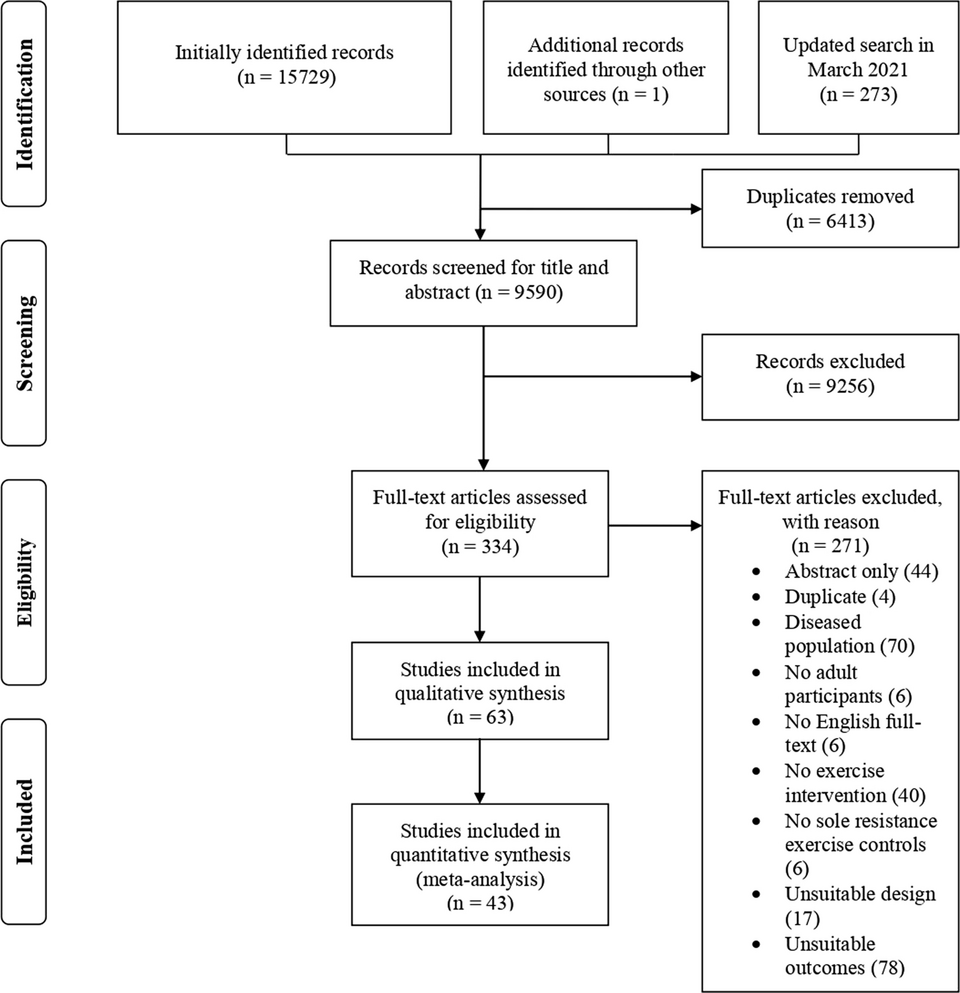 literature review process flowchart (Image: Authors of the study: Moritz Schumann, Joshua F. Feuerbacher, CC BY 4.0, via Wikimedia Commons)
A visual of the 5-step process: (1) Define scope, (2) Search databases, (3) Screen sources, (4) Extract data, (5) Synthesize findings.
literature review process flowchart (Image: Authors of the study: Moritz Schumann, Joshua F. Feuerbacher, CC BY 4.0, via Wikimedia Commons)
A visual of the 5-step process: (1) Define scope, (2) Search databases, (3) Screen sources, (4) Extract data, (5) Synthesize findings.
Step-by-Step Process of Conducting a Literature Review
Define the Scope
- Narrow your topic (e.g., "Impact of Khalti payments on SMEs in Pokhara").
- Use Boolean operators (AND, OR, NOT) in databases like Google Scholar, JSTOR, or TU’s e-resources.
- Example:
"Khalti" AND "small business" AND "Nepal" NOT "tourism".
Search and Screen Sources
- Prioritize peer-reviewed journals (e.g., Journal of Business Research, Nepalese Journal of Business Studies).
- Exclude outdated or irrelevant studies (e.g., pre-2010 for digital payment trends).
Extract and Organize Data
- Use a literature review matrix (table below) to compare sources by:
- Author, Year, Key Findings, Gaps, Theoretical Lens.
Author Year Key Finding Gap Identified Theory Used Sharma et al. 2022 Khalti reduces transaction costs by 30% No study on rural adoption barriers Technology Acceptance Model (TAM) Adhikari 2021 60% of SMEs prefer cash over digital Lack of trust in data security Diffusion of Innovation (DOI) - Use a literature review matrix (table below) to compare sources by:
Synthesize Findings
- Group studies by themes (e.g., "Adoption barriers," "Government policies").
- Identify contradictions (e.g., some studies say Khalti is secure; others cite fraud cases).
- Highlight research gaps (e.g., "No study on Khalti’s impact on women entrepreneurs").
Role of Literature Review in Research
For Academic Research
- Theoretical Foundation: Links your work to established theories (e.g., using Herzberg’s Two-Factor Theory to explain employee motivation in Ncell).
- Originality: Proves your research fills a gap (e.g., "No prior study on Pathao’s carbon footprint in Kathmandu").
- Methodological Guidance: Shows how others measured similar variables (e.g., using Likert scales for customer satisfaction).
For Applied/Industry Research
- Problem Identification: Helps businesses spot trends (e.g., Daraz’s shift to cash-on-delivery due to low digital payment adoption).
- Strategic Decision-Making: Nabil Bank used literature on behavioral economics to design its "Easy Loan" app.
- Stakeholder Communication: Convincing investors by citing studies on fintech growth in South Asia (15% CAGR).
In the Real World
Khalti’s Expansion Strategy
- Idea Used: Literature review on digital payment adoption barriers (e.g., low internet penetration, distrust).
- How? Khalti partnered with NTC to offer free data for transactions, addressing a key gap identified in studies on financial inclusion in rural Nepal.
Nepal Stock Exchange (NEPSE) Investor Education
- Idea Used: Theoretical framework combining Behavioral Finance (Kahneman) and Prospect Theory.
- How? NEPSE’s "Investor Awareness Program" uses these theories to explain why small investors panic-sell during market drops—a gap highlighted in literature on emerging market volatility.
Daraz’s Logistics Optimization
- Idea Used: Literature on supply chain resilience (e.g., post-COVID disruptions).
- How? Daraz applied just-in-time inventory models (from academic reviews) to reduce delivery times by 20% during monsoon floods.
What is a Theoretical Framework?
A theoretical framework is a conceptual map that:
- Explains why a phenomenon occurs (e.g., why customers switch from Ncell to Ncell).
- Guides data collection (e.g., which variables to measure).
- Links theory to research questions.
Components of a Theoretical Framework
classDiagram class Concept {
    +Name: e.g., "Customer Loyalty"
    +Definition: e.g., "Repeat purchase behavior"
    +Source: Academic/Applied literature
}

class Theory {
    +Name: e.g., "Technology Acceptance Model (TAM)"
    +Proponents: Davis (1989)
    +Key Variables: Perceived Usefulness, Ease of Use
    +Supporting Evidence: Peer-reviewed journals
}

class Hypothesis {
    +Statement: e.g., "H1: Khalti’s ease of use → Higher adoption"
    +Direction: Positive/Negative
    +Derived From: Theory + Concepts
}

Concept "1" --> "N" Theory : "Informed by"
Theory "1" --> "N" Hypothesis : "Tests"
Hypothesis "1" --> "N" Concept : "Validates"- Theory: Unified Theory of Acceptance and Use of Technology (UTAUT)
- Variables: Performance Expectancy, Effort Expectancy, Social Influence
- Hypotheses: H1: Higher performance expectancy → More E-Sewa logins.
Building a Theoretical Framework: Step-by-Step
Select a Theory
- Choose a theory that fits your topic. Examples:
Research Topic Possible Theory Customer satisfaction in banks SERVQUAL Model (Parasuraman) Employee turnover at NTC Herzberg’s Two-Factor Theory Adoption of Pathao Diffusion of Innovation (Rogers) Marketing strategies for Daraz 4Ps of Marketing (Kotler)
- Choose a theory that fits your topic. Examples:
Define Key Variables
- Operationalize concepts (e.g., "Customer Satisfaction" → measured via 5-point Likert scale).
Develop Hypotheses
- Example for Ncell’s loyalty program:
- H1: Customers with higher perceived value of loyalty points will show greater repurchase intention.
- H2: Age negatively affects adoption of Ncell’s mobile app (older users prefer counters).
- Example for Ncell’s loyalty program:
Visualize the Framework
flowchart TD
    A["Research Question: Why do students prefer Khalti over E-Sewa?"]
    B["Theory: Technology Acceptance Model (TAM)"]
    C["Key Concepts: Perceived Value, Trust, Convenience"]
    D["Hypotheses"]
    E["H1: Higher perceived value → Greater repurchase intention"]
    F["H2: Age < 30 → Higher mobile app adoption"]
    G["Data Collection: Surveys, Interviews"]
    H["Analysis: Regression, Chi-Square"]
    I["Findings: Age and convenience are significant predictors"]

    A --> B
    B --> C
    C --> D
    D -->|"H1, H2"| E & F
    E & F --> G
    G --> H
    H --> I
Inductive vs. Deductive Theoretical Frameworks
| Aspect | Inductive Framework | Deductive Framework |
|---|---|---|
| Approach | Builds theory from data (grounded theory) | Tests theory against data (hypothesis testing) |
| Example | Studying why Pathao drivers accept tips → Develops a new "Gig Economy Motivation Theory" | Testing Herzberg’s Theory on NTC employees |
| Data Collection | Qualitative (interviews, observations) | Quantitative (surveys, experiments) |
| Flexibility | High (theory emerges) | Low (theory is fixed) |
Case Study: How Daraz Uses Theoretical Frameworks
Problem: Low repeat purchases despite discounts. Literature Review: Revealed gaps in customer retention theories for e-commerce. Theoretical Framework:
- Theory: Customer Relationship Management (CRM) Model (Buttle, 2009)
- Variables:
- Customer Satisfaction (measured via post-purchase surveys)
- Perceived Value (price vs. quality)
- Switching Costs (e.g., loyalty points)
- Hypothesis: Higher perceived value → Lower likelihood of switching to Amazon India. Outcome: Daraz introduced "Daraz Coins" (loyalty points), increasing repeat purchases by 25% (as per their 2023 annual report).
Common Mistakes to Avoid
- Descriptive, Not Analytical
- ❌ "Many studies say digital payments are growing."
- ✅ "While 80% of studies (Sharma 2022; Adhikari 2021) link Khalti’s growth to government subsidies, only 20% examine the digital divide in rural areas."
Over-Reliance on Google Searches
- Use academic databases (e.g., ScienceDirect, TU’s IUC resources) for credible sources.
Ignoring Theoretical Links
- Always connect findings to existing theories (e.g., "This aligns with Maslow’s Hierarchy in showing that security needs drive Khalti adoption").
Plagiarism
- Paraphrase and cite properly. Use tools like Turnitin to check originality.
Exam Tip
How This Unit is Tested
Definition Questions (5 marks)
- Example: "Define theoretical framework with an example from Nepali business."
- Answer Structure:
A theoretical framework is a conceptual model that explains relationships between variables in a study. For example, in a research on Nabil Bank’s mobile app adoption, the Technology Acceptance Model (TAM) could be used to frame hypotheses about perceived usefulness and ease of use influencing customer adoption.
Role of Literature Review (10 marks)
- Example: "Elaborate the role of literature review in academic research."
- Answer Structure (Use PEEL method):
- Point: Literature review provides a theoretical foundation.
- Explain: It helps identify gaps (e.g., no study on Pathao’s environmental impact).
- Example: A 2023 study by Karki et al. found that 70% of Nepali e-commerce research focuses on customer behavior, ignoring supply chain sustainability.
- Link: This gap justifies your research on "Green Logistics in Daraz’s Last-Mile Delivery."
Case Study Analysis (15 marks)
- Example: Given an abstract on storytelling in quantitative research, discuss:
- The literature reviewed (e.g., studies on data visualization).
- The theoretical framework (e.g., Narrative Psychology).
- Research gap (e.g., "Most studies treat storytelling as qualitative; this paper tests its role in survey response rates").
- Example: Given an abstract on storytelling in quantitative research, discuss:
Diagram-Based Questions (10 marks)
- Example: "Draw and explain a theoretical framework for ‘Factors Affecting E-Sewa Usage.’"
- Answer:
- Explanation: The framework tests how perceived benefits (D) and peer influence (F) affect E-Sewa adoption, aligning with UTAUT’s focus on technology adoption barriers.
Final Checklist Before Submission
- Literature review covers 10+ credible sources (mix of Nepali and international).
- Theoretical framework clearly links theory → variables → hypotheses.
- Gaps are specific (e.g., "No study on gender differences in Khalti usage").
- Visuals (diagrams, tables) are labeled and explained.
- Ethical considerations (e.g., "All sources are cited per APA 7th edition") are noted.
Based on the TU BBM syllabus for Business Research Methods (RCH311), unit 3.
Discussion
Loading…