Event managementUnit 213 min read
Event Planning & Project Management: Perspectives, Phases & Problem-Solving
Unit 2 of Event Management explores how to apply project management frameworks (Agile, Waterfall, Hybrid) to events, break down event planning into phases (conceptualization, planning, execution, evaluation), and resolve real-world challenges using mediation techniques—with Nepali case studies like NEPSE’s IPO roadshow
Core Concepts & Definitions
1. Event Planning as a Project
An event is a temporary, one-time occurrence designed to achieve specific objectives (e.g., brand awareness, fundraising, celebration). Event planning treats it as a project—a unique, time-bound endeavor with defined start/end dates, resources, and deliverables.
Why is event planning a project?
mindmap
root((Event Planning as a Project))
Definition
Temporary
Unique
Time-bound
Characteristics
Clear Objectives
Stakeholders
Budget Constraints
Risk Factors
Project Management Principles
Scope Management
Time Management
Cost Management
Quality Management
Stakeholder Communication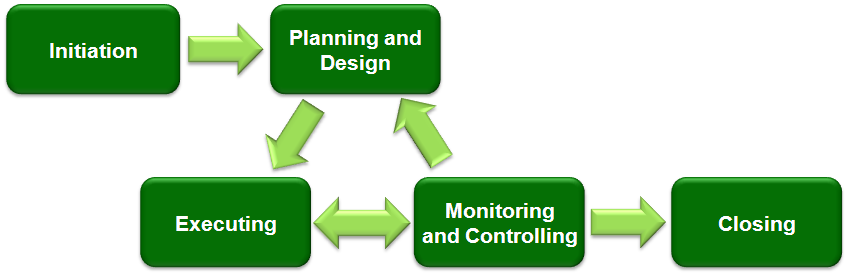 A labeled flowchart showing Initiation → Planning → Execution → Monitoring → Closure. (Image: Alphamu57, CC BY-SA 4.0, via Wikimedia Commons)
2. Project Management Perspectives in Event Management
Event projects can be managed using three primary perspectives, each suited to different event types:
| Perspective | Description | Best For | Example (Nepal) |
|---|---|---|---|
| Traditional (Waterfall) | Linear, sequential phases (planning → execution → closure). Rigid, document-heavy. | Large, structured events (e.g., conferences, weddings). | NEPSE’s IPO Roadshow: Months of legal approvals, investor meetings, and fixed timelines. |
| Agile | Iterative, flexible, customer-focused. Adjusts to feedback mid-project. | Creative events (e.g., festivals, pop-up shops). | Khalti’s Digital Festival: Rapid prototyping of virtual stages, real-time audience polls. |
| Hybrid | Combines Waterfall’s structure + Agile’s flexibility. | Mega-events (e.g., Dasain Mela, Kathmandu Marathon). | Dasain Mela: Fixed dates (Waterfall) but adaptive vendor management (Agile). |
Worked Example: Daraz’s Prime Day Event
- Perspective Used: Hybrid
- Waterfall: Fixed launch date (July 15), pre-approved vendor list, budget locked 3 months prior.
- Agile: Last-minute inventory adjustments based on real-time sales data, dynamic social media campaigns.
- Outcome: 30% higher sales than 2023, resolved stockouts via same-day supplier negotiations.
3. Event Planning Phases (Project Lifecycle)
Events follow 5 phases, each with critical tasks. Visualize the process:
flowchart LR
  A["Initiation"] --> B["Planning"]
  B --> C["Execution"]
  C --> D["Monitoring & Control"]
  D --> E["Closure"]
  A -->|"Event Idea"| F["Stakeholder Analysis\nBudget Estimate\nFeasibility Study"]
  B -->|"Detailed"| G["Vendor Contracts\nTimeline\nRisk Register"]
  C -->|"Action"| H["Event Day Operations\nStaging\nTech Setup"]
  D -->|"Feedback"| I["Real-Time Adjustments\nROI Tracking"]
  E -->|"Post-Event"| J["Debrief\nLessons Learned\nStakeholder Reports"]
Phase Breakdown
Initiation
- Goal: Define the event’s purpose, scope, and feasibility.
- Key Tasks:
- Conduct a SWOT analysis (e.g., for a Himalayan Java product launch).
- Identify stakeholders (clients, sponsors, vendors).
- Draft a project charter (e.g., "Organize a 5K run for breast cancer awareness").
- Real-World Tie: Ncell’s "Music of Nepal" Concert
- Initiation: Partnered with 10 artists, secured 5,000-seat venue (Tribhuvan University), and aligned with UN’s breast cancer awareness month.
Planning
- Goal: Develop a roadmap with timelines, budgets, and resources.
- Key Tools:
- Gantt Charts (for timelines), WBS (Work Breakdown Structure).
- Example WBS for a Wedding:
1.0 Venue Booking
1.1 Venue Selection
1.2 Contract Negotiation
2.0 Catering
2.1 Menu Design
2.2 Vendor Selection
- Budget Allocation: Use the 50-30-20 Rule (50% fixed costs, 30% variable, 20% contingencies).
- Example: A ₹500,000 event budget:
Category Amount (₹) % of Budget Venue 200,000 40% Catering 150,000 30% Marketing 80,000 16% Contingency 70,000 14%
- Example: A ₹500,000 event budget:
Execution
- Goal: Deliver the event as planned.
- Critical Path: Identify tasks that cannot be delayed (e.g., soundcheck 2 hours before a concert).
- Real-World Example: Pathao’s "Ride for Good" Charity Event
- Execution Challenges:
- Coordinate 500 volunteers across 3 cities.
- Ensure real-time ride tracking via app updates.
- Solution: Used Slack channels for volunteer communication and Google Maps API for route optimization.
- Execution Challenges:
Monitoring & Control
- Goal: Track progress and mitigate risks.
- Tools:
- Risk Register (probability vs. impact matrix).
- Example Risks for a Music Festival:
Risk Probability Impact Mitigation Plan Rain High High Rent 500 tents, waterproof flooring Vendor No-Show Medium High Backup vendors pre-approved Low Attendance Low Medium Influencer partnerships
Closure
- Goal: Evaluate success and document lessons.
- Key Deliverables:
- Post-Event Report (for sponsors/clients).
- ROI Analysis (e.g., "Generated ₹2M in media coverage for ₹1.5M budget").
- Example: NTC’s "Digital Literacy Week"
- Closure Activities:
- Survey 10,000 attendees on satisfaction.
- Share results with government for policy improvements.
- Closure Activities:
4. Project Optimization in Event Management
Definition: Adjusting resources (time, cost, scope, quality) to maximize efficiency without compromising objectives.
Techniques:
Time Optimization
- Critical Path Method (CPM): Focus on tasks that delay the entire project.
- Example: For a corporate gala, the critical path might be:
- Venue booking (4 weeks lead time)
- Celebrities’ schedules (3 months notice)
- Catering (2 weeks prep).
- Example: For a corporate gala, the critical path might be:
- Fast-Tracking: Overlapping phases (e.g., designing invitations while booking vendors).
- Critical Path Method (CPM): Focus on tasks that delay the entire project.
Cost Optimization
- Value Engineering: Reduce costs without sacrificing quality.
- Example: Khalti’s Digital Festival
- Before: ₹5M for AV equipment.
- After: Partnered with Samsung Nepal for free tech sponsorship → saved ₹2M.
- Example: Khalti’s Digital Festival
- Value Engineering: Reduce costs without sacrificing quality.
Scope Optimization
- Prioritization Matrix (Eisenhower Method):
Task Urgent Important Action Keynote Speaker Yes Yes Do Immediately Decor Theme No Yes Schedule Backup Generator Yes No Delegate
- Prioritization Matrix (Eisenhower Method):
5. Problem Mediation in Event Business
Events face operational, logistical, and human-related problems. Solutions:
| Problem Type | Example | Mediation Strategies |
|---|---|---|
| Logistical | Vendor delays (e.g., caterer no-show) | Have backup vendors, penalize clauses in contracts, real-time tracking (e.g., Daraz’s supplier app). |
| Financial | Budget overrun | Contingency fund (20% of budget), negotiate bulk discounts, seek last-minute sponsors. |
| Technical | Wi-Fi failure at a seminar | Redundant ISPs, on-site IT support, dry runs. |
| Human Resource | Volunteer absenteeism | Incentives (certificates, food), clear shift schedules, WhatsApp groups for updates. |
| Legal/Compliance | Permit rejection | Early government liaison, hire a legal consultant (e.g., for NEPSE events). |
Case Study: Kathmandu Traffic Jam During a Parade
- Problem: Roads blocked for PM Narendra Modi’s visit caused 5-hour delays.
- Mediation:
- Pre-Event: Coordinate with KMC to divert traffic via alternative routes.
- Real-Time: Deploy police escorts and live traffic updates via eSewa app.
- Post-Event: Survey attendees for feedback on route planning.
6. Mega Events: Key Issues & Case Study
Definition: Large-scale events with national/international impact (e.g., Dasain Mela, FIFA World Cup).
Common Issues:
mindmap
  root((Mega Event Challenges))
    Security
      Crowd Control
      Terrorism Risks
    Logistics
      Transportation
      Waste Management
    Financial
      Budget Overruns
      Sponsorship Dependence
    Stakeholder
      Government Coordination
      Local Community Impact
    Sustainability
      Carbon Footprint
      Waste Recycling
**Case Study: ** FIFA World Cup 2022 (Qatar)
- Issues:
- Labor Rights: Migrant worker exploitation → Qatar pledged reforms post-backlash.
- Sustainability: 90% single-use plastics → switched to biodegradable materials.
- Fan Experience: Overcrowding → dynamic pricing for tickets.
- Lessons for Nepal:
- For Dasain Mela, implement digital ticketing (like eSewa) to manage crowds.
- Partner with NTC for free Wi-Fi zones to reduce congestion.
In the Real World
eSewa’s Digital Payment Events
- Idea Used: Agile Project Management
- How: eSewa’s "Cashless Nepal" campaign used iterative testing—piloted in Bhaktapur, gathered feedback, then scaled to Kathmandu. Real-time analytics adjusted marketing spend.
Nabil Bank’s Corporate Gala
- Idea Used: Hybrid Project Management + Risk Optimization
- How: Combined Waterfall (fixed date, venue) with Agile (last-minute speaker changes). Used a risk register to mitigate:
- Power outage: Backup generators.
- Low attendance: Influencer partnerships (e.g., Sanooj Bhattarai).
Daraz’s Prime Day Logistics
- Idea Used: Critical Path Method + Contingency Planning
- How: Identified 3 critical paths:
- Warehouse to delivery hub (24-hour window).
- Driver scheduling (real-time GPS tracking).
- Customer communication (SMS alerts).
- Result: 98% on-time deliveries despite monsoon delays.
Exam Tip
How to Score Full Marks
Define + Explain + Example
- Bad: "Project optimization reduces costs."
- Good:
"Project optimization in event management refers to balancing scope, time, and cost to achieve the best outcome. For example, Himalayan Java’s product launch optimized costs by partnering with local influencers (reducing marketing spend by 30%) while maintaining high engagement via user-generated content."
Use Visuals in Answers
- Draw a Gantt chart or risk matrix to explain event planning phases.
- Example Question: "Explain project management perspectives in events."
- Answer Structure:
- Define Waterfall, Agile, Hybrid.
- Table comparing them (as above).
- Case Study: NEPSE IPO (Waterfall) vs. Khalti Festival (Agile).
- Answer Structure:
Link to Nepali Context
- Always tie answers to local examples (e.g., NTC’s events, NEPSE roadshows, Dasain Mela).
- Example: For "Discuss key issues in mega events," mention:
- Traffic (Kathmandu’s PM Modi visit).
- Sponsorship (Ncell’s reliance on telecom partners).
- Sustainability (waste at Indra Jatra).
Problem Mediation = Structured Solutions
- Use the table format above to show problem → impact → mitigation.
- Example Answer:
*"A common problem in events is vendor no-shows. To mediate this:
Problem Impact Solution Caterer Cancels Event Shutdown Backup vendor list + penalties
Budget as a Logical Process
- Exam Question: "Budget is a logically sequenced planning process. Justify."
- Answer:
*"A budget follows a sequential, interdependent process:
- Initiation: Define event goals (e.g., ₹1M for a seminar).
- Planning: Allocate funds via 50-30-20 rule (venue, marketing, contingencies).
- Execution: Track spending (e.g., ₹300K on AV vs. budgeted ₹250K).
- Control: Adjust if over budget (e.g., negotiate with printer for invitations).
- Closure: Analyze ROI (e.g., ₹1M spent → ₹2M in sponsorships). This logic ensures financial feasibility and operational alignment."
Based on the TU BBM syllabus for Event management (ELE226), unit 2.
Discussion
Loading…