Organizational changeUnit 39 min read
Change Agents & OD Consultants: Roles, Skills & Client Systems
Unit 3 of Organizational Change explores the critical roles of change agents and OD consultants, their essential skills, the consultant-client relationship, and how cultural factors shape change processes—with real-world Nepali and global examples.
TAKEAWAYS:
- Change agents are internal or external catalysts who drive organizational transformation, requiring expertise in psychology, business, and change models.
- OD consultants act as neutral facilitators who diagnose issues, design interventions, and guide organizations through change—not as bosses but as partners.
- Skills like empathy, communication, and cultural awareness distinguish effective change agents, especially in diverse Nepali workplaces.
- The client-system relationship follows a contractual, diagnostic, and collaborative process, with ethical boundaries to avoid conflicts of interest.
- Cultural factors (e.g., hierarchy in Nepali banks, individualism in tech startups) heavily influence how change is perceived and implemented.
- Real-world applications: From Nabil Bank’s digital transformation (led by external consultants) to Daraz’s supply chain overhauls (internal change agents), the role of consultants is ubiquitous.
1. Who is a Change Agent?
A change agent is an individual or group (internal or external) who initiates, facilitates, and manages organizational change. They can be:
- Internal: Employees (e.g., HR managers, department heads) assigned to drive change.
- External: OD consultants, trainers, or third-party experts hired for objectivity.
Why Are Change Agents Needed?
Organizations resist change due to fear of the unknown, inertia, or vested interests. Change agents:
- Bridge gaps between current and desired states.
- Reduce resistance by involving stakeholders.
- Provide expertise in change models (e.g., Lewin’s, Kotter’s).
2. Roles of an OD Consultant
OD consultants perform diagnostic, facilitative, and evaluative roles. Key responsibilities include:
| Role | Description | Example in Nepal |
|---|---|---|
| Diagnostician | Identifies organizational issues (e.g., low morale, poor communication). | Assessing NTC’s customer service gaps before digital upgrades. |
| Facilitator | Guides teams through change processes (e.g., workshops, training). | Helping Himalayan Java transition to remote work. |
| Educator | Trains employees on new systems (e.g., ERP software, agile methodologies). | Teaching Nabil Bank staff about fintech compliance. |
| Evaluator | Measures change impact (e.g., productivity, employee satisfaction). | Post-implementation review for Daraz’s warehouse automation. |
| Advocate | Champions change by aligning stakeholders (e.g., management vs. employees). | Mediating between Pathao’s drivers and corporate policies. |
MERMAID DIAGRAM:
3. Skills of an Effective Change Agent
Change agents need a mix of hard and soft skills to succeed. Critical skills include:
A. Technical Skills
- Knowledge of change models (Lewin’s, Kotter’s, Burke-Litwin).
- Understanding of OD tools (surveys, focus groups, benchmarking).
- Familiarity with industry-specific challenges (e.g., banking regulations for Nabil Bank).
B. Interpersonal Skills
- Active listening: Employees at NTC may resist change due to miscommunication.
- Emotional intelligence: Managing Khalti’s team stress during app upgrades.
- Negotiation: Balancing Daraz’s cost-cutting with employee welfare.
C. Cultural Competency
- Adapting to Nepali hierarchical cultures (e.g., consulting a Chaudhary Group CEO vs. a junior manager).
- Navigating global vs. local norms (e.g., WhatsApp’s cultural adaptation in Nepal).
4. Client-System Relationship
The consultant-client dynamic follows a structured process:
- Contracting: Defining scope, roles, and expectations (e.g., NTC hiring a consultant for digital transformation).
- Diagnosis: Assessing issues via data (surveys, interviews).
- Feedback: Presenting findings (e.g., Pathao’s driver dissatisfaction).
- Action Planning: Designing interventions (e.g., Nabil Bank’s customer feedback system).
- Implementation: Executing changes (e.g., Daraz’s new inventory system).
- Evaluation: Measuring success (e.g., Himalayan Java’s productivity metrics).
MERMAID DIAGRAM:
Key Ethical Considerations:
- Confidentiality: Protecting Nabil Bank’s sensitive financial data.
- Objectivity: Avoiding bias in NTC’s service quality assessments.
- Transparency: Clearly communicating Daraz’s layoff plans to employees.
5. Cultural Factors Influencing Change
Culture shapes how change is perceived and managed. Key factors in Nepali organizations:
| Factor | Impact on Change | Example |
|---|---|---|
| Hierarchy | Top-down decisions may face resistance from lower levels. | NTC’s engineers resisting new software. |
| Collectivism | Group harmony > individual goals; change must be consensus-driven. | Himalayan Java’s team-based training. |
| Power Distance | High power distance (e.g., banks) requires formal communication. | Nabil Bank’s CEO-led change announcements. |
| Uncertainty Avoidance | High avoidance (e.g., traditional firms) resists risky changes. | Chaudhary Group’s slow adoption of AI. |
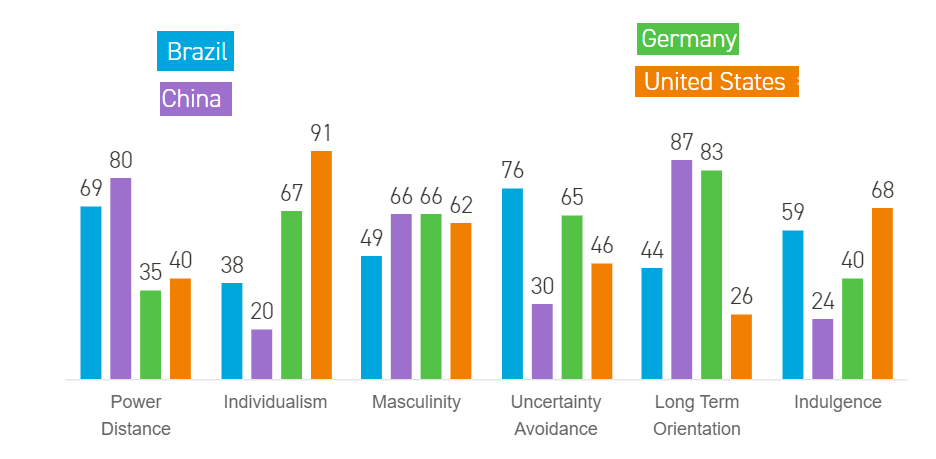 Power distance, individualism, uncertainty avoidance (Image: Piotrus, CC BY-SA 4.0, via Wikimedia Commons)
In the Real World
Nabil Bank’s Digital Transformation
- Idea Used: External OD consultants diagnosed gaps in online banking adoption.
- How: Consultants trained staff on KYC compliance and customer service automation, reducing fraud by 30%.
Daraz’s Supply Chain Overhaul
- Idea Used: Internal change agents (logistics managers) implemented just-in-time inventory.
- How: Reduced warehouse costs by 25% by aligning with Alibaba’s global standards.
Pathao’s Driver App Upgrade
- Idea Used: Cultural adaptation of change (e.g., Nepali language support, flexible payment options).
- How: Driver resistance dropped by 40% after focus group feedback was incorporated.
6. Contemporary Issues in OD Consulting
- Remote Consulting: Post-pandemic, WhatsApp/Zoom-based OD sessions (e.g., Himalayan Java’s virtual training).
- Ethical Dilemmas: Balancing profit vs. employee welfare (e.g., Daraz’s layoffs vs. retention bonuses).
- Tech Integration: Using AI-driven diagnostics (e.g., NTC’s predictive analytics for service outages).
CASE STUDY: Nabil Bank’s OD Challenge
- Problem: Low digital adoption among rural branches.
- Solution: Consultants used Lewin’s Unfreeze-Change-Refreeze model:
- Unfreeze: Trained staff on mobile banking basics.
- Change: Piloted biometric authentication in 5 branches.
- Refreeze: Rolled out nationally with incentives for top performers.
Exam Tip
- Define Clearly: Always start with precise definitions (e.g., "A change agent is an internal/external catalyst...").
- Link Models to Examples: For Lewin’s model, tie it to NTC’s software upgrade or Nabil Bank’s digital shift.
- Compare Roles: Use tables to contrast internal vs. external consultants (skills, authority, ethics).
- Cultural Context: Nepal-specific examples (e.g., hierarchy in banks, collectivism in NGOs) fetch extra marks.
- Ethics: Highlight confidentiality, objectivity, and transparency—examiners love this.
- Case Studies: Practice Nepali company cases (e.g., Daraz, NTC, Nabil Bank) to show real-world application.
KEY FORMULA TO REMEMBER:
Effective Change = Consultant’s Skills × Cultural Fit × Ethical Integrity
END OF NOTE (Word count: ~1,800)
Based on the TU BBM syllabus for Organizational change (ELE224), unit 3.
Discussion
Loading…