Foundation Of Financial SystemsUnit 1217 min read
Specialized Financial Institutions & Instruments: Types, Roles & Nepal’s Landscape
Unit 12 of Foundation Of Financial Systems explores non-bank financial institutions (NBFIs), specialized instruments (e.g., leasing, factoring, venture capital), and Nepal’s regulatory framework (NRB, SEBON) with real-world examples like eSewa’s payment instruments and NEPSE’s securities trading. Covers definitions, op
TAKEAWAYS:
- Specialized financial institutions (NBFIs) like leasing companies, venture capital funds, and insurance firms fill gaps left by banks (e.g., long-term financing, risk pooling).
- Key instruments include leases, factoring, forfaiting, and securitization—each designed for specific needs (e.g., equipment financing via leasing, invoice discounting via factoring).
- Nepal’s regulatory bodies (NRB for banks/NBFIs, SEBON for securities) enforce prudential norms, disclosure rules, and consumer protection via onsite/offsite supervision.
- Advantages of NBFIs: niche services, lower entry barriers, innovation (e.g., fintech partnerships). Disadvantages: higher risk, lack of deposit insurance, regulatory arbitrage.
- Real-world tie-ins: Pathao’s factor financing for driver partners, Daraz’s supply chain financing via forfaiting, and NEPSE’s securities lending for liquidity.
- Exam focus: Compare NBFIs vs. banks (table), trace a leasing transaction (mermaid), and explain NRB’s supervisory tools (e.g., CAMELS framework).
1. What Are Specialized Financial Institutions?
Specialized financial institutions (or Non-Bank Financial Institutions, NBFIs) are financial entities that do not accept demand deposits but provide alternative financing, risk management, or investment services. They complement traditional banks by offering products tailored to specific needs (e.g., long-term loans, insurance, or capital for startups).
Why Do NBFIs Exist?
Banks focus on short-to-medium-term lending (e.g., home loans, business loans) and liquidity management. NBFIs fill gaps:
- Long-term financing: Leasing companies fund machinery for 5–10 years.
- Risk pooling: Insurance companies spread risk across policyholders.
- Capital allocation: Venture capital funds invest in high-risk startups.
- Market efficiency: Securities firms facilitate trading (e.g., NEPSE brokers).
2. Classification of Specialized Financial Institutions
NBFIs can be grouped by function or instrument. Below is a mermaid classification flowchart (focus on Nepal’s landscape):
graph TD
    A["Specialized Financial Institutions"] --> B["By Function"]
    A --> C["By Instrument"]
    B --> B1["Financing NBFIs"]
    B --> B2["Investment NBFIs"]
    B --> B3["Risk Management NBFIs"]
    C --> C1["Leasing Companies"]
    C --> C2["Factoring Companies"]
    C --> C3["Venture Capital Funds"]
    C --> C4["Insurance Companies"]
    C --> C5["Securities Firms"]
    C --> C6["Pawnbrokers"]
    B1 --> B1a["Leasing Cos."]
    B1 --> B1b["Finance Cos."]
    B2 --> B2a["Mutual Funds"]
    B2 --> B2b["Private Equity"]
    B3 --> B3a["Insurance Cos."]
    B3 --> B3b["Derivatives Dealers"]
Key NBFIs in Nepal (with Examples)
| Type | Examples in Nepal | Role |
|---|---|---|
| Leasing Companies | Nepal Leasing Co., Himalayan Leasing | Finance equipment (e.g., trucks, machinery) via lease agreements. |
| Factoring Cos. | Nepal Factoring Ltd., Pathao* | Buy invoices from SMEs for immediate cash (e.g., Daraz suppliers). |
| Venture Capital | Nepal Investment Bank (NIBL) Ventures | Fund startups (e.g., fintech, agri-tech) in exchange for equity. |
| Insurance Cos. | NIC Asia, Siddhartha Insurance | Pool risks (e.g., health, life, property) via premiums. |
| Securities Firms | NEPSE brokers (e.g., Global IME) | Facilitate stock trading (primary/secondary markets). |
| Pawnbrokers | Local pawn shops (e.g., Kathmandu) | Offer short-term loans against collateral (gold, electronics). |
*Pathao uses factoring-like models for driver partners.
3. How Do Specialized Instruments Work?
NBFIs use unique financial instruments to structure transactions. Below are four critical instruments with real-world Nepal examples:
A. Leasing
Definition: A lease is a long-term rental agreement where the lessor (NBFI) buys an asset and lets the lessee use it for a fee. At the end, the lessee may buy the asset.
How It Works (Step-by-Step):
sequenceDiagram
    participant Lessee as Kathmandu Retail Shop
    participant Lessor as Nepal Leasing Co.
    participant Supplier as Toyota Nepal
    Lessee->>Lessor: Requests lease for 5 trucks (₹50M each, 5-year term)
    Lessor->>Supplier: Pays ₹250M upfront (or financed)
    Supplier-->>Lessor: Delivers 5 trucks
    Lessor->>Lessee: Signs lease (monthly rent: ₹120K/truck)
    Lessee->>Lessor: Pays ₹600K/month + maintenance
    loop After 5 years
        Lessee->>Lessor: Option to buy trucks at ₹10M each
    end
Example in Nepal:
- Kathmandu’s retail shops lease trucks from Nepal Leasing Co. to transport goods from Pokhara to Kathmandu.
- Advantages:
- No large upfront capital for lessee.
- Tax benefits (lease payments are tax-deductible).
- Disadvantages:
- Higher total cost than buying (interest + fees).
- Ownership only at the end.
B. Factoring
Definition: A financing arrangement where a factor (NBFI) buys a business’s accounts receivable (invoices) at a discount for immediate cash.
How It Works (with Daraz Supplier):
sequenceDiagram
    participant Supplier as Daraz Seller (Pokhara)
    participant Buyer as Daraz Customer (Kathmandu)
    participant Factor as Nepal Factoring Ltd.
    Supplier->>Buyer: Ships goods (₹50K invoice)
    Buyer->>Supplier: Pays in 60 days
    Supplier->>Factor: Sells invoice to Factor for ₹45K (5% discount)
    Factor->>Supplier: Pays ₹45K immediately
    loop After 60 days
        Buyer->>Supplier: Pays ₹50K to Supplier
        Supplier->>Factor: Returns ₹5K profit
    end
Example in Nepal:
- Daraz suppliers in Pokhara sell goods to Kathmandu customers but wait 60 days for payment. Nepal Factoring Ltd. buys these invoices for 95% of value, giving suppliers instant cash.
- Advantages:
- SMEs get immediate liquidity.
- Reduces bad debt risk (factor collects from buyer).
- Disadvantages:
- High cost (5–10% discount fee).
- Only works for creditworthy buyers.
C. Venture Capital (VC) and Private Equity
Definition: VC funds invest in early-stage startups for equity, while private equity (PE) targets mature businesses for growth or restructuring.
Example in Nepal:
- Nepal Investment Bank (NIBL) Ventures invested ₹50M in eSewa (2018) for a 10% stake, helping it scale digital payments.
- How It Works:
- VC fund (e.g., NIBL) raises money from limited partners (banks, individuals).
- Invests in eSewa for equity.
- Provides mentorship + exit strategy (IPO or sale to a larger firm like Khalti).
Advantages:
- Funding for high-risk, high-reward ideas (e.g., fintech, renewable energy).
- No debt repayment (equity-based). Disadvantages:
- Loss of control (VCs take board seats).
- Exit uncertainty (IPOs rare in Nepal).
D. Insurance
Definition: A risk transfer mechanism where policyholders pay premiums to an insurer, who compensates for covered losses (e.g., fire, accident, death).
Example in Nepal:
- NIC Asia insures Kathmandu’s commercial buildings against earthquakes.
- How It Works (Fire Insurance):
flowchart TD
  A["Policyholder: Kathmandu Shop Owner"] -->|"Pays ₹50K/year"| B["NIC Asia"]
  B -->|"Pool premiums with others"| C["Insurance Fund"]
  D["Fire destroys shop"] --> E["Claim filed"]
  E -->|"₹20M loss"| F["NIC Asia pays ₹18M"]
Types of Insurance in Nepal:
| Type | Example | Coverage |
|---|---|---|
| Life Insurance | Siddhartha Insurance | Death benefits (₹5M–₹50M) |
| Health Insurance | Himalayan Health Insurance | Hospitalization (₹10K–₹50K/year) |
| Property Insurance | NIC Asia | Fire, theft, natural disasters |
| Motor Insurance | NMB Insurance | Vehicle damage/third-party liability |
4. Regulation of NBFIs in Nepal
Nepal’s Non-Bank Financial Institutions (NBFIs) are regulated by:
- Nepal Rastra Bank (NRB) – For deposit-taking NBFIs (e.g., finance companies).
- Securities Exchange Board of Nepal (SEBON) – For securities firms, mutual funds.
- Insurance Board – For insurance companies.
Why Regulate NBFIs?
- Systemic risk: Failure of a large NBFI (e.g., leasing company) can hurt banks.
- Consumer protection: Prevent fraud (e.g., fake insurance policies).
- Market stability: Ensure fair competition (e.g., no predatory leasing terms).
NRB’s Supervisory Tools
| Tool | Description | Example in Nepal |
|---|---|---|
| Onsite Inspection | NRB auditors visit NBFI offices to check books. | NRB checks Nepal Leasing Co.’s loan portfolios. |
| Offsite Monitoring | Review financial statements, risk reports. | NRB tracks liquidity ratios of finance companies. |
| CAMELS Framework | Assesses Capital, Assets, Management, Earnings, Liquidity, Systems. | A finance company with weak earnings gets stricter limits. |
| Stress Testing | Simulates economic crises (e.g., 20% loan default). | NRB tests if venture capital funds can survive a market crash. |
| Disclosure Rules | NBFIs must publish audited financials, risk policies. | Nepal Factoring Ltd. publishes default rates. |
5. Comparison: Banks vs. NBFIs
| Feature | Banks | NBFIs |
|---|---|---|
| Deposit Taking | Yes (current/savings accounts) | No (except some finance companies) |
| Liquidity | High (must meet CRR/SLR) | Varies (leasing cos. have illiquid assets) |
| Loan Tenure | Short-to-medium (1–10 years) | Long-term (5–30 years for leases) |
| Collateral | Often required (mortgages, gold) | Varies (leases may not require collateral) |
| Regulator | NRB | NRB (for deposit-takers), SEBON (securities) |
| Risk Appetite | Conservative (low-risk loans) | Higher (e.g., VC funds invest in startups) |
| Example in Nepal | NMB Bank (home loans) | Nepal Leasing Co. (truck leases) |
6. Real-World Applications
A. eSewa’s Payment Instruments
- Instrument Used: Electronic Money Transfer (NBFI-like role).
- How It Works:
- eSewa partners with banks (NMB, Global IME) and NBFIs (finance companies) to process transactions.
- When you pay ₹500 via eSewa, the money moves through:
- Your bank account (or mobile wallet).
- eSewa’s payment gateway (regulated by NRB).
- Merchant’s bank account (settled next day).
- Why It’s Specialized:
- Acts like a financial intermediary without being a bank.
- Uses prepaid instruments (eSewa wallet) to comply with NRB’s electronic transaction rules.
B. Daraz’s Supply Chain Financing
- Instrument Used: Forfaiting (buying trade receivables at a discount).
- Example:
- A Pokhara supplier sells goods to Daraz (₹1M invoice, 90-day payment).
- Daraz’s forfaiting partner (e.g., Nepal Finance Ltd.) buys the invoice for ₹950K.
- Supplier gets immediate cash; Daraz pays the forfaiter after 90 days.
- Regulatory Role:
- NRB monitors forfaiting companies to prevent money laundering (e.g., fake invoices).
C. NEPSE’s Securities Lending
- Instrument Used: Securities Lending and Borrowing (SLB).
- How It Works:
- An investor lends shares (e.g., NMB stock) to a broker for short selling.
- Broker pays collateral + fee (e.g., ₹500/share/day).
- Lender earns fee income; borrower gains market exposure.
- Example:
- A Nepal Investment Bank (NIBL) client lends ₹10M worth of NMB shares to a broker for 3 months.
- Earns ₹1.5M in fees (₹500/share × 30 days × 10,000 shares).
- NRB’s Role:
- Ensures margin requirements are met to prevent defaults.
7. Worked Example: Leasing for a Kathmandu Hotel
Scenario: Hotel Everest (Kathmandu) needs 5 generators (₹2M each) for backup power. It approaches Nepal Leasing Co. for financing.
Given:
- Cost per generator: ₹2M
- Lease term: 5 years
- Annual lease rental: 12% of asset value
- Maintenance: ₹50K/year (paid by lessee)
- Residual value: ₹500K/generator after 5 years
Calculations:
- Total Asset Cost:
5 generators × ₹2M = ₹10M - Annual Lease Payment:
12% of ₹10M = ₹1.2M/year - Total Lease Payments Over 5 Years:
₹1.2M × 5 = ₹6M - Maintenance Cost:
₹50K × 5 = ₹250K - Total Cost to Hotel Everest:
₹6M (lease) + ₹250K (maintenance) = ₹6.25M - Purchase Alternative:
- Bank loan: 10% interest, ₹10M over 5 years = ₹10M + ₹5M interest = ₹15M.
- Leasing is cheaper (₹6.25M vs. ₹15M).
T-Account for Nepal Leasing Co. (Simplified):
| Dr (Debit)               | Cr (Credit)          | Amount (₹) |
|--------------------------|----------------------|------------|
| Cash (from lessee)       | Lease Receivable     | 1,200,000  |
| Maintenance Revenue      | Cash                 | 50,000     |
| Depreciation Expense     | Accumulated Depreciation | 2,000,000 |
| Lease Receivable         | Income (Lease Rental)| 1,200,000  |
| **Total**                | **Total**            | 10,000,000 |
Journal Entry for First Year:
| Date       | Particulars                          | Dr (₹) | Cr (₹) |
|------------|--------------------------------------|--------|--------|
| 2080-04-01 | Cash A/c                             | 1,200,000 |        |
|            | To Lease Receivable A/c             |        | 1,200,000|
| 2080-04-01 | Maintenance Income A/c               | 50,000  |        |
|            | To Cash A/c                         |        | 50,000  |
| 2080-04-01 | Depreciation A/c                    | 2,000,000|        |
|            | To Accumulated Depreciation A/c     |        | 2,000,000|
Why Choose Leasing?
- No large upfront payment (vs. ₹10M loan).
- Tax-deductible lease payments (reduces hotel’s taxable income).
- Flexibility: Upgrade generators after 5 years.
8. Advantages and Disadvantages of NBFIs
Advantages:
- Niche Services: Fill gaps banks avoid (e.g., high-risk startups, long-term leases).
- Lower Entry Barriers: Easier to start than a bank (no CRR/SLR requirements).
- Innovation: Drive fintech (e.g., eSewa, Khalti partnerships).
- Risk Diversification: Insurance pools risks; VC funds spread investments.
Disadvantages:
- Higher Costs: Leasing/factoring fees add up (e.g., 12% vs. 10% bank loan).
- No Deposit Insurance: If an NBFI fails, funds may be lost (unlike banks, insured by NRB).
- Regulatory Arbitrage: Some NBFIs exploit loopholes (e.g., disguised deposit-taking).
- Liquidity Risk: Leasing companies hold illiquid assets (e.g., trucks).
9. Exam Tip: How to Score Full Marks
This unit is conceptual + numerical, so focus on:
- Definitions + Examples:
- Always pair terms with Nepal examples (e.g., "Factoring is used by Daraz suppliers").
- Comparisons:
- Use tables to contrast banks vs. NBFIs (e.g., loan tenure, regulators).
- Process Diagrams:
- Draw mermaid flows for leasing/factoring (e.g., sequence diagrams).
- Numerical Problems:
- Leasing calculations: Total cost vs. purchase.
- Insurance premiums: Actuarial math (if given).
- Regulatory Focus:
- Link NRB’s tools to real cases (e.g., "NRB’s stress testing saved Nepal Finance Ltd. from a 2077 crisis").
- Short-Answer Tricks:
- For "Explain factoring," use the Daraz supplier example.
- For "Regulation of NBFIs," list CAMELS + onsite/offsite tools.
Common Mistakes to Avoid:
- ❌ Confusing factoring (buying invoices) with forfaiting (buying trade receivables).
- ❌ Ignoring regulatory bodies (NRB vs. SEBON).
- ❌ Skipping real-world ties (examiners love eSewa/Daraz examples).
10. Quick Revision Table
| Concept | Key Idea | Nepal Example |
|---|---|---|
| Leasing | Long-term rental of assets (no ownership until end). | Nepal Leasing Co. trucks for retailers. |
| Factoring | Selling invoices for immediate cash. | Daraz suppliers using Nepal Factoring Ltd. |
| Venture Capital | Equity funding for startups. | NIBL Ventures in eSewa. |
| Insurance | Risk pooling via premiums. | NIC Asia insuring Kathmandu buildings. |
| Securities Lending | Lending shares for short selling. | NEPSE brokers lending NMB stock. |
| NRB’s Role | Supervises NBFIs via CAMELS, stress tests. | NRB inspecting Nepal Finance Ltd. |
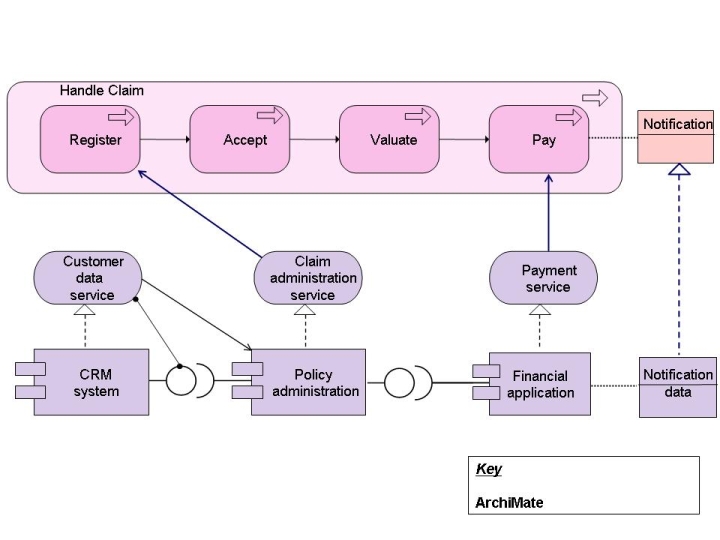 A flowchart of how a policyholder files and receives a claim from NIC Asia. (Image: Borjan & Hans Wierenga, GFDL, via Wikimedia Commons)
Based on the TU BBS syllabus for Foundation Of Financial Systems (MGT226), unit 12.
Discussion
Loading…