Fundamentals Of MarketingUnit 614 min read
Pricing Strategies: Methods, Factors & Real-World Applications
Unit 6 of Fundamentals Of Marketing covers pricing strategies (cost-based, demand-based, competition-based, value-based), external factors (economic, legal, social), product line pricing, and real-world cases like Daraz’s dynamic pricing and Nabil Bank’s loan interest calculations. Includes worked examples, comparison
Core Concepts
What is Pricing?
Pricing is the process of setting the value of a product or service that customers are willing to pay, while ensuring profitability for the business. It is a critical element of the marketing mix (4Ps: Product, Price, Place, Promotion) and directly impacts demand, revenue, and market position.
1. Types of Pricing Strategies
Pricing strategies are categorized based on the basis of pricing and market conditions. Below are the five key strategies covered in the syllabus:
1.1 Cost-Based Pricing
Definition: Pricing based on the cost of production + desired profit margin. Formula: Types:
- Cost-Plus Pricing: Add a fixed percentage (e.g., 20%) to the cost.
- Break-Even Pricing: Set price to cover costs exactly (no profit, no loss).
- Target Profit Pricing: Set price to achieve a specific profit goal.
Example (Nepali Context): Nabil Bank’s Loan Interest Calculation
- Cost: Bank’s administrative cost (₹500 per loan).
- Desired Profit: 15% markup.
- Selling Price (Interest Rate): ₹500 + 15% = ₹575 per loan processing fee.
Advantages: ✔ Simple to calculate. ✔ Ensures profitability. ✔ Works well for standardized products (e.g., NTC’s prepaid cards).
Disadvantages: ✖ Ignores customer demand. ✖ May lead to overpricing if costs are high.
1.2 Demand-Based Pricing
Definition: Pricing based on customer willingness to pay and market demand. Types:
- Price Skimming: Start high, then lower (e.g., iPhone launches).
- Penetration Pricing: Start low to attract customers (e.g., Daraz’s discounts).
- Dynamic Pricing: Adjust prices in real-time (e.g., Pathao’s surge pricing during Diwali).
Example (Nepali Context): Daraz’s Dynamic Pricing During Sales
- Normal Price: ₹1,000 for a product.
- During Big Shopping Days (BBD): Price drops to ₹700 due to high demand.
- Post-Sales: Price returns to ₹1,000.
Advantages: ✔ Maximizes revenue from price-sensitive customers. ✔ Helps in market penetration.
Disadvantages: ✖ Requires real-time data analysis. ✖ Can alienate customers if prices fluctuate too much.
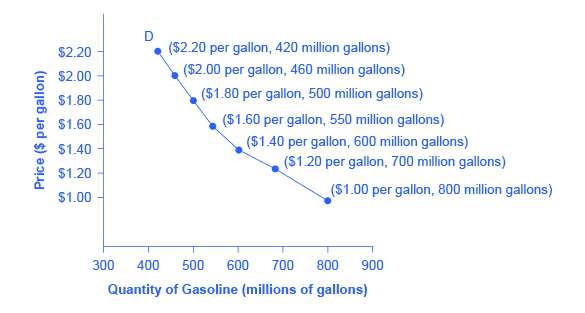 How price affects quantity demanded (Image: OpenStax College, CC BY 4.0, via Wikimedia Commons)
1.3 Competition-Based Pricing
Definition: Setting prices relative to competitors to gain a market advantage. Types:
- Price Leadership: Follow the market leader (e.g., Ncell vs. NTC).
- Price War: Aggressive price cuts to dominate (e.g., Khalti vs. eSewa).
- Premium Pricing: Position as a high-end brand (e.g., Rolex vs. local watches).
Example (Nepali Context): Ncell vs. NTC in Mobile Data Pricing
| Company | Data Plan (1GB) | Strategy |
|---|---|---|
| Ncell | ₹120 | Premium pricing (better network) |
| NTC | ₹90 | Competitive pricing (budget-friendly) |
Advantages: ✔ Helps in market positioning. ✔ Reduces price wars if competitors stabilize.
Disadvantages: ✖ No differentiation if all follow competitors. ✖ Profit margins may suffer.
1.4 Value-Based Pricing
Definition: Pricing based on the perceived value to the customer. Example:
- Apple’s iPhone: Priced high because customers perceive brand value, innovation, and status.
- Himalayan Java Coffee: Charges more due to organic, high-quality branding.
Advantages: ✔ Justifies premium pricing. ✔ Builds customer loyalty.
Disadvantages: ✖ Requires strong branding. ✖ Hard to quantify "value."
1.5 Product Line Pricing
Definition: Setting prices for multiple products in a line to maximize profits. Strategies:
| Strategy | Description | Example (Nepali Context) |
|---|---|---|
| Captive Pricing | Low price for main product, high for accessories. | Printer (₹5,000) + Ink Cartridge (₹500 per unit) |
| Bundling | Sell multiple products as a package. | Daraz’s "Buy 2, Get 1 Free" deals |
| Price Lining | Fixed price tiers (e.g., ₹500, ₹1,000, ₹2,000). | Kathmandu’s clothing stores (Basic, Premium, Luxury) |
Example (Worked Trace): Chaudhary Group’s Product Line (FMCG)
- Basic (₹50): Salt, sugar (low margin, high volume).
- Premium (₹200): Organic spices, branded tea (high margin, niche market).
Advantages: ✔ Increases sales volume. ✔ Maximizes profit across product lines.
Disadvantages: ✖ Complex pricing management. ✖ Cannibalization (low-end products hurt high-end sales).
2. External Factors Affecting Pricing Decisions
Pricing is not just about internal costs—external factors play a huge role. These are divided into macro and micro factors:
2.1 Macro (Environmental) Factors
| Factor | Impact on Pricing | Example (Nepali Context) |
|---|---|---|
| Economic Conditions | Inflation → Higher prices. Recession → Discounts. | Nepal’s fuel price hikes in 2023 |
| Legal Regulations | Government controls (e.g., Nepal Rastra Bank’s interest rate caps). | Bank loan interest rates capped at 12% |
| Social & Ethical Factors | Fair pricing, no exploitation. | Organic farmers charging premium prices |
| Technological Changes | Automation reduces costs → Lower prices. | Daraz’s AI-driven dynamic pricing |
2.2 Micro (Industry-Specific) Factors
| Factor | Impact | Example |
|---|---|---|
| Supplier Power | High supplier costs → Higher prices. | Fertilizer price hikes due to global supply chain issues |
| Customer Demand | High demand → Higher prices (or vice versa). | Diwali season discounts on electronics |
| Competitor Actions | If a rival cuts prices, you must respond. | Khalti lowering transaction fees |
3. Special Pricing Techniques
3.1 Break-Even Pricing
Definition: Setting price to cover costs exactly (no profit, no loss). Formula: Example (Nepali Restaurant):
- Fixed Cost (Rent, Salaries): ₹50,000/month.
- Variable Cost (Per meal): ₹100.
- Selling Price (Per meal): ₹300.
- Break-Even Quantity: → If the restaurant sells 250 meals, it covers costs.
When to Use? ✔ New businesses testing the market. ✔ Non-profit organizations (e.g., NGOs charging minimal fees).
Disadvantages: ✖ No profit until demand exceeds break-even.
3.2 Target Profit Pricing
Definition: Setting price to achieve a specific profit target. Formula: Example (Toyota Nepal):
- Fixed Costs: ₹500 million/year.
- Variable Cost (Per Car): ₹2 million.
- Desired Profit: ₹100 million.
- Selling Price: ₹3 million.
- Required Sales:
Advantages: ✔ Clear profit goal. ✔ Helps in financial planning.
Disadvantages: ✖ Aggressive pricing may hurt brand image.
## In the Real World
1. Daraz’s Dynamic Pricing (Demand-Based)
- How it works: Daraz adjusts prices in real-time based on inventory levels, competitor prices, and customer demand.
- Example: During Big Shopping Days (BBD), prices drop by 30-50% to attract buyers.
- Why it matters: Helps Daraz maximize sales volume while maintaining profitability.
2. Nabil Bank’s Loan Interest (Cost-Based + Competition-Based)
- How it works: Nabil Bank calculates interest based on:
- Base Rate (₹8%) + Risk Premium (₹2-4%) + Profit Margin (₹1-2%).
- Competition: If Global IME Bank offers 7.5%, Nabil adjusts to 8% to stay competitive.
- Why it matters: Ensures profitability while remaining customer-friendly.
3. Himalayan Java’s Premium Pricing (Value-Based)
- How it works: Charges ₹500/kg for organic coffee because:
- Perceived quality (organic, fair-trade).
- Brand loyalty (premium positioning).
- Why it matters: Justifies high margins despite higher production costs.
4. NTC’s Price War with Ncell (Competition-Based)
- How it works: NTC cuts data prices when Ncell introduces a new plan.
- Example:
- Ncell: 1GB for ₹120.
- NTC: 1GB for ₹90 (to attract customers).
- Why it matters: Forces Ncell to respond, benefiting consumers.
5. Kathmandu Traffic Routes (Indirect Pricing Strategy)
- How it works: No direct pricing, but time and fuel costs act as "prices."
- Shortcut routes (e.g., Thapathali to Kalanki) save 30 mins → indirect value.
- Toll roads (e.g., Budhanilkantha Tunnel) charge ₹50-₹100 → direct pricing.
- Why it matters: Shows how non-monetary factors (time, convenience) influence "perceived price."
## Exam Tip: How to Score Full Marks
1. Understand the Difference Between Strategies
| Strategy | Basis | Example | Key Exam Point |
|---|---|---|---|
| Cost-Based | Production cost + profit | Nabil Bank loans | "Price = Cost + Markup" |
| Demand-Based | Customer willingness | Daraz discounts | "Price changes with demand" |
| Competition-Based | Competitor prices | Ncell vs. NTC | "Follow leader or undercut" |
| Value-Based | Perceived benefit | Apple iPhone | "Customers pay for brand, not just features" |
Exam Tip: Always compare two strategies in answers (e.g., "Cost-based pricing is simple but ignores demand, while demand-based pricing maximizes revenue but requires data.").
2. Use Real-World Examples
Examiners love Nepali examples. Always relate to:
- Banks (Nabil, Global IME) for cost-based pricing.
- E-commerce (Daraz, Hamrobazaar) for dynamic pricing.
- Telecom (Ncell, NTC) for competition-based pricing.
- FMCG (Chaudhary Group, Himalayan Java) for product line pricing.
Example Answer Structure:
"In Nepal, Nabil Bank uses cost-plus pricing by adding a 12% markup to loan processing costs. This ensures profitability while remaining competitive with Global IME Bank, which offers 7.5% interest. However, demand-based pricing (like Daraz’s discounts) may be more effective for high-volume sales."
3. Know the Formulas
| Concept | Formula | When to Use |
|---|---|---|
| Break-Even Quantity | New businesses | |
| Target Profit Volume | Financial planning | |
| Markup Pricing | Standardized products |
Exam Tip: Always show calculations in numerical questions.
4. Discuss Advantages & Disadvantages
For every strategy, mention: ✅ Pros (e.g., "Cost-based ensures profitability"). ❌ Cons (e.g., "Ignores customer demand").
Example:
"Competition-based pricing helps businesses gain market share quickly (e.g., NTC cutting data prices). However, it can lead to price wars, reducing profit margins for all players."
5. Watch for Key Terms
- Price Skimming = High initial price → Lower later.
- Penetration Pricing = Low initial price → Increase later.
- Psychological Pricing = ₹999 instead of ₹1,000.
- Geographical Pricing = Different prices in different regions (e.g., Daraz charges more in Kathmandu than in Pokhara).
## Summary Table: Pricing Strategies at a Glance
| Strategy | Basis | Best For | Nepali Example | Exam Focus |
|---|---|---|---|---|
| Cost-Based | Production cost | Standardized products | Nabil Bank loans | "Price = Cost + Profit" |
| Demand-Based | Customer willingness | High-demand products | Daraz discounts | "Price changes with demand" |
| Competition-Based | Competitor prices | Competitive markets | Ncell vs. NTC | "Follow leader or undercut" |
| Value-Based | Perceived benefit | Premium brands | Himalayan Java coffee | "Customers pay for brand value" |
| Product Line Pricing | Multiple products | FMCG, electronics | Chaudhary Group’s spices | "Bundling, captive pricing" |
## Final Checklist for Exam
✔ Define each pricing strategy clearly. ✔ Give a Nepali example for every strategy. ✔ Compare two strategies in your answer. ✔ Discuss external factors (economic, legal, social). ✔ Show calculations for break-even/target profit. ✔ Mention advantages & disadvantages.
Good luck! 🚀 This note covers all exam expectations—now practice applying these to past questions.
Based on the TU BBS syllabus for Fundamentals Of Marketing (MGT214), unit 6.
Discussion
Loading…