Advance AuditingUnit 19 min read
Auditing Basics: Definitions, Types, and Core Principles
Unit 1 of Advance Auditing introduces the foundational concepts of auditing, including its definition, historical evolution, objectives, and the distinction between different audit types. This note covers the origin of auditing, its scope, the role of auditors, and how audit evidence supports financial integrity—with r
TAKEAWAYS:
- Auditing is an independent examination of financial records to ensure accuracy, compliance, and reliability—rooted in ancient trade practices and modernized by laws like Nepal’s Companies Act 2063.
- The scope of auditing extends beyond financial statements to include operational efficiency, fraud detection, and regulatory compliance (e.g., NEPSE’s listing requirements).
- Audit evidence (documents, confirmations, observations) is the backbone of auditors’ conclusions, with working papers acting as a permanent record of their procedures.
- Types of audits (internal, external, government, forensic) serve distinct purposes, from risk management (e.g., Khalti’s fraud checks) to legal compliance (e.g., NTC’s financial audits).
- Ethical responsibilities (independence, confidentiality) and professional standards (ISA, Nepali Institute of Chartered Accountants) define an auditor’s credibility.
- The audit cycle—planning, evidence gathering, reporting—mirrors real-world processes like Daraz’s order verification or bank loan approvals.
1. Definition and Origin of Auditing
Auditing is the systematic examination of financial records, transactions, and internal controls by an independent professional to express an opinion on their fairness and compliance. It evolved from:
- Ancient trade audits: Mesopotamian clay tablets (3000 BCE) recorded grain transactions.
- Medieval Italy: Merchant auditors (e.g., Florentine bankers) verified ledgers to prevent fraud.
- Industrial Revolution: Factories required audits to track inventory and wages.
- Modern era: Laws like Nepal’s Companies Act 2063 and Income Tax Act 2058 mandate audits for corporations.
timeline
title Evolution of Auditing
3000 BCE : Mesopotamian trade audits (clay tablets)
14th Century : Italian merchant auditors
18th Century : Factory audits (UK)
1940s : Professional standards (AICPA, ISA)
2001 : Sarbanes-Oxley Act (US)
2063 : Companies Act (Nepal)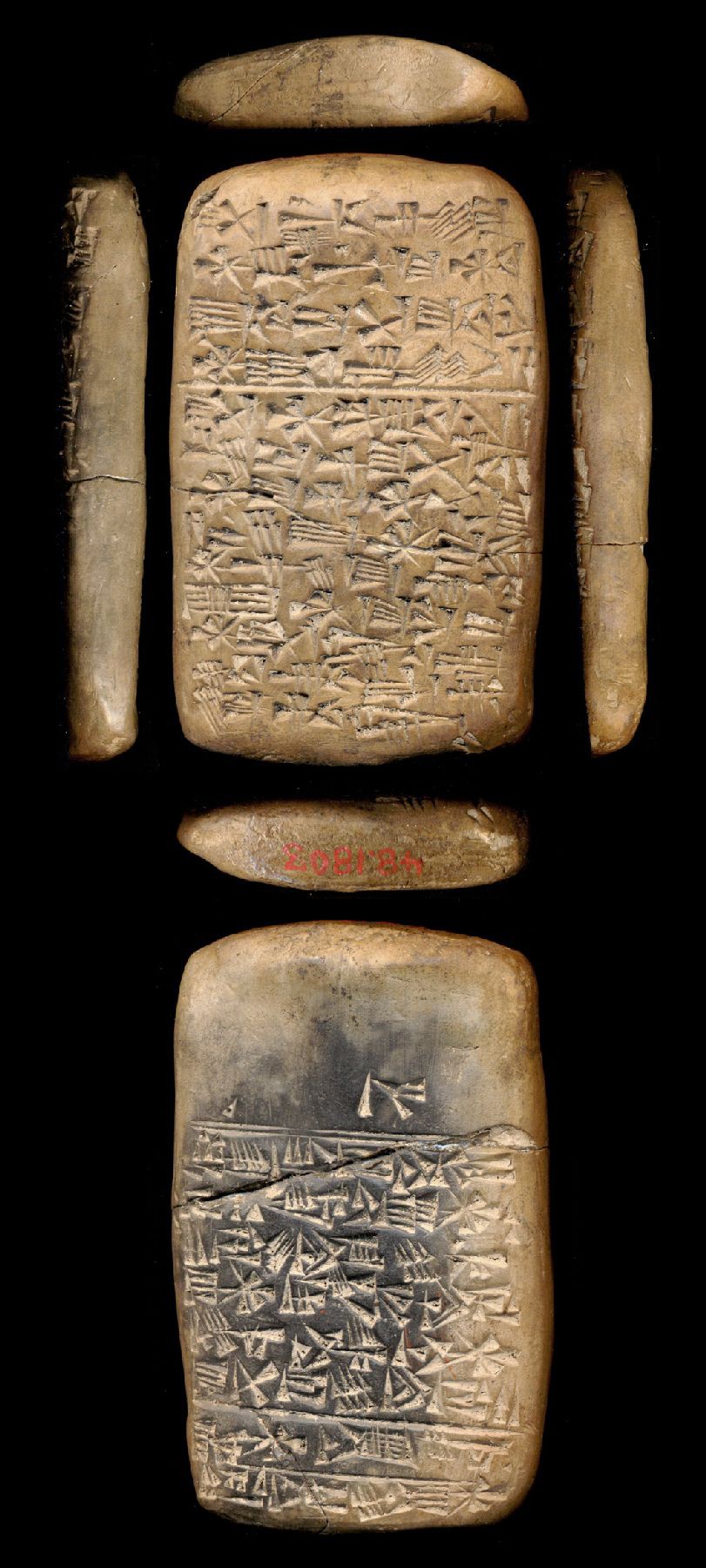 A cuneiform tablet recording barley transactions—one of the earliest audit records. (Image: Public domain, via Wikimedia Commons)
2. Scope and Objectives of Auditing
Scope of Auditing
Auditing is not limited to financial statements. Its key areas include:
- Financial audits: Verifying accuracy of balance sheets, income statements (e.g., NEPSE-listed companies like Nabil Bank).
- Operational audits: Evaluating efficiency (e.g., Pathao’s driver payout system).
- Compliance audits: Checking adherence to laws (e.g., NTC’s tax compliance audits).
- Forensic audits: Investigating fraud (e.g., eSewa’s transaction disputes).
Objectives
| Primary Objective | Example in Nepal |
|---|---|
| Detect errors/misstatements | Auditing Daraz’s inventory records to match sales data. |
| Prevent fraud | Khalti’s audit of merchant transactions to spot fake refunds. |
| Ensure compliance | Ncell’s audit of tax deductions for SIM sales. |
| Evaluate internal controls | Nabil Bank’s audit of loan approval processes. |
3. Qualities and Responsibilities of an Auditor
Key Qualities
- Independence: No conflict of interest (e.g., an auditor cannot audit their own firm).
- Professional skepticism: Questioning unusual transactions (e.g., eSewa’s sudden high-value transfers).
- Competence: Up-to-date knowledge of laws (e.g., ISA Nepal standards).
- Confidentiality: Protecting client data (e.g., Ncell’s customer records).
Responsibilities
- Legal: Comply with Nepal’s Companies Act and Audit Act 2049.
- Ethical: Follow NICA’s Code of Ethics (e.g., no gifts from clients).
- Professional: Maintain working papers for 7 years (as per ISA 230).
4. Audit Evidence and Working Papers
What is Audit Evidence?
Evidence is information used to support audit conclusions. It includes:
- Physical evidence: Inventory counts (e.g., Daraz’s warehouse stock).
- Documentary evidence: Invoices, bank statements (e.g., Nabil Bank’s loan agreements).
- Oral evidence: Confirmations from third parties (e.g., NTC’s verification of supplier payments).
- Analytical evidence: Ratios/trends (e.g., NEPSE’s P/E ratio analysis).
Working Papers: The Auditor’s Journal
Working papers are the permanent record of an audit. They must be:
- Sufficient: Enough to justify the audit opinion.
- Appropriate: Relevant and reliable (e.g., eSewa’s transaction logs).
- Clear: Easy to understand (e.g., Ncell’s call-detail records).
- Complete: Include all steps (e.g., Pathao’s driver payment vouchers).
Example of a Working Paper Entry (T-Account Style)
5. Types of Audits: Final vs. Continuous
| Feature | Final Audit | Continuous Audit |
|---|---|---|
| Timing | Conducted at year-end. | Ongoing throughout the year. |
| Example in Nepal | NEPSE’s annual audit of listed companies. | Ncell’s real-time fraud detection system. |
| Evidence Gathering | Batch processing (e.g., Daraz’s year-end inventory). | Real-time (e.g., Khalti’s transaction monitoring). |
| Advantages | Comprehensive, less frequent. | Early detection of errors/fraud. |
| Disadvantages | Risk of undetected fraud. | Higher cost and resource-intensive. |
Mermaid Diagram: Audit Cycle
flowchart TD
    A["Planning"] --> B["Evidence Gathering"]
    B --> C{"Final or Continuous?"}
    C -->|"Final"| D["Year-End Audit"]
    C -->|"Continuous"| E["Real-Time Monitoring"]
    D --> F["Reporting"]
    E --> F
    F --> G["Management Action"]
6. Accounting Concepts and Audit Adjustments
Auditors rely on accounting principles to assess fairness. Key concepts:
- Accrual basis: Revenues/expenses recorded when earned/incurred (e.g., Nabil Bank’s interest income).
- Going concern: Assumes the business will continue operating (e.g., NEPSE’s listing requirements).
- Consistency: Same methods used year-over-year (e.g., Daraz’s inventory valuation).
Worked Example: Adjusting for Unrecorded Revenue Scenario: Kathmandu Retail Shop sold goods on credit to a customer in September 2023 but recorded the sale in October. The auditor finds:
- Invoice No. KR-456: NPR 120,000 (unrecorded in Sept 2023 books).
- Adjusting Journal Entry:
## In the Real World
eSewa’s Fraud Detection
- Idea Used: Audit evidence (transaction logs, user confirmations).
- How: eSewa’s auditors cross-check every transaction with bank records to detect fake refunds or duplicate payments. For example, if a user claims a refund for a NPR 5,000 transaction but the merchant’s bank shows no such sale, the auditor flags it for review.
Ncell’s Tax Compliance Audit
- Idea Used: Compliance auditing and analytical evidence.
- How: Ncell’s auditors analyze call-detail records (CDRs) to ensure all SIM sales comply with tax laws. For instance, they compare the number of SIMs sold (per inventory logs) with tax deductions claimed (per financial statements) to spot underreporting.
Daraz’s Inventory Audit
- Idea Used: Physical evidence and continuous auditing.
- How: Daraz uses RFID tags to track inventory in real time. Auditors periodically verify stock levels against system records. In 2022, an audit found a 15% discrepancy in Kathmandu’s warehouse due to misplaced items, leading to stricter barcoding protocols.
NEPSE’s Listing Requirements
- Idea Used: Financial auditing and going concern principle.
- How: Before listing, companies like Nabil Bank must submit audited financials showing profitability and solvency. Auditors check for related-party transactions (e.g., loans to directors) to ensure fairness—critical for investor trust.
## Exam Tip
- Definitions Matter: Memorize key terms like:
- Audit evidence: "Information used by the auditor to form conclusions."
- Working papers: "The auditor’s principal record of procedures performed."
- Compare Tables: Examiners love contrasts (e.g., final vs. continuous audit). Use bullet points or tables to highlight differences.
- Real-World Links: Always tie examples to Nepali contexts (e.g., eSewa, Ncell, Daraz). Avoid generic cases.
- Working Papers: Practice drafting a sample working paper for a small business (e.g., a Kathmandu tea stall’s cash transactions).
- Adjusting Entries: Expect numerical questions on corrections (e.g., unrecorded expenses, prepaid items). Show T-accounts or journal entries clearly.
- Ethics Questions: Be ready to discuss conflicts (e.g., "Can an auditor audit a relative’s business?" → No, violates independence).
Past Exam Question Trace: Q: "Briefly describe the concept of audit working paper. Also, write the features that are necessary for a good audit working paper." Answer Structure:
- Definition: "Working papers are the auditor’s property, containing notes, documents, and records compiled during an audit."
- Features (8 points):
- Permanent record of procedures.
- Sufficient and appropriate evidence.
- Clear and concise.
- Property of the auditor (not client).
- Prepared in accordance with ISA 230.
- Includes management representations.
- Supports the audit opinion.
- Retained for 7 years (Nepal).
Visual Aid for Exam:
Based on the TU BBS syllabus for Advance Auditing, unit 1.
Discussion
Loading…