Business Research MethodsUnit 312 min read
Literature Review & Theoretical Framework: Concepts, Methods & Applications
Unit 3 of Business Research Methods explores the systematic review of existing literature and construction of theoretical frameworks, covering definitions, processes, types, and real-world applications in business research, with visual tools for understanding.
TAKEAWAYS:
- Literature review is a critical analysis of existing research to identify gaps, trends, and theories relevant to your study.
- A theoretical framework provides the conceptual foundation for your research by linking theories to research questions.
- Types of literature reviews include narrative, systematic, and meta-analysis, each serving distinct purposes in research.
- Theoretical frameworks can be inductive (derived from data) or deductive (derived from existing theories).
- Real-world applications of literature review and theoretical frameworks are seen in market research, policy formulation, and business strategy.
1. Understanding Literature Review
1.1 Definition and Purpose
A literature review is a comprehensive examination of existing research on a specific topic. It helps researchers:
- Identify gaps in current knowledge.
- Understand theoretical and methodological trends.
- Avoid duplicating previous work.
- Build on existing theories and findings.
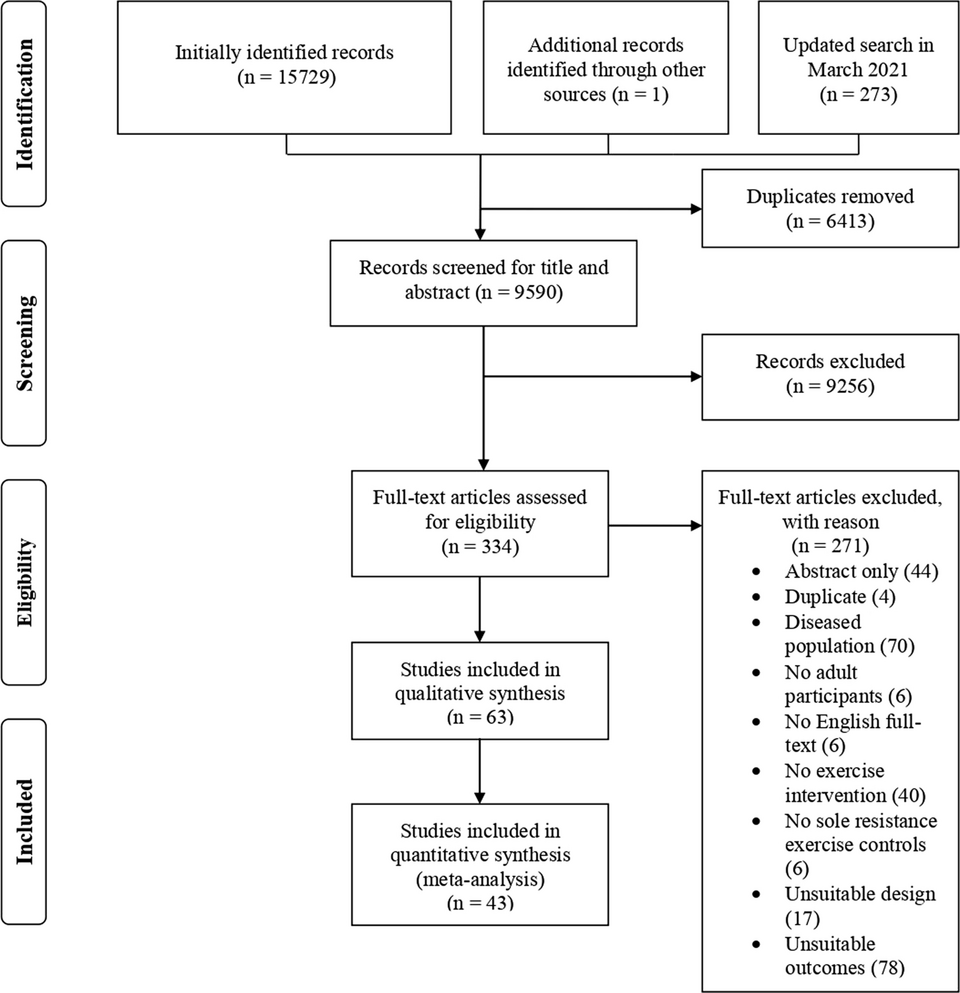 A visual representation of the steps involved in conducting a literature review. (Image: Authors of the study: Moritz Schumann, Joshua F. Feuerbacher, CC BY 4.0, via Wikimedia Commons)
flowchart TD
    A["Identify Research Topic"] --> B["Search Databases"]
    B --> C["Screen Sources"]
    C --> D["Evaluate Quality"]
    D --> E["Synthesize Findings"]
    E --> F["Identify Gaps"]
    F --> G["Formulate Research Questions"]
1.2 Types of Literature Reviews
| Type | Description | Example |
|---|---|---|
| Narrative Review | Summarizes existing literature without strict methodological criteria. | A general overview of customer satisfaction trends in e-commerce. |
| Systematic Review | Follows a structured methodology to minimize bias and ensure reproducibility. | A review of studies on the impact of digital payment systems on financial inclusion in Nepal. |
| Meta-Analysis | Statistically combines results from multiple studies to derive conclusions. | Analyzing the average effect size of marketing strategies on brand loyalty across studies. |
| Scoping Review | Maps the key concepts, sources, and gaps in a research area. | Exploring the scope of blockchain technology in supply chain management. |
1.3 Steps in Conducting a Literature Review
- Define the Scope: Narrow down the research topic and objectives.
- Search for Sources: Use academic databases (e.g., Google Scholar, JSTOR, ScienceDirect).
- Screen and Select: Evaluate sources based on relevance, quality, and recency.
- Synthesize Information: Organize findings thematically or chronologically.
- Identify Gaps: Determine what is missing or needs further exploration.
- Write the Review: Present findings logically and critically.
2. Theoretical Framework
2.1 Definition and Importance
A theoretical framework is a structured set of concepts, assumptions, and relationships that guide research. It:
- Provides a conceptual foundation for the study.
- Links research questions to existing theories.
- Helps in interpreting and explaining findings.
mindmap
  root((Theoretical Framework))
    Concepts["Key Concepts: Motivation, Leadership, Organizational Culture"]
    Assumptions["Assumptions: Employees are motivated by intrinsic and extrinsic factors"]
    Relationships["Relationships: Leadership Style --> Employee Motivation --> Performance"]
    Research Questions["How does leadership style influence employee motivation in Nepalese SMEs?"]
    Theories["Theories: Maslow's Hierarchy of Needs, Herzberg's Two-Factor Theory"]
2.2 Types of Theoretical Frameworks
| Type | Description | Example |
|---|---|---|
| Inductive | Derived from data collected during the research. | Developing a theory on customer behavior based on survey data from Daraz users. |
| Deductive | Based on existing theories or models. | Using Maslow’s Hierarchy of Needs to study employee motivation in Nabil Bank. |
| Mixed | Combines inductive and deductive approaches. | Using Herzberg’s Two-Factor Theory to analyze qualitative interviews with Pathao drivers. |
2.3 Constructing a Theoretical Framework
- Identify Key Variables: Define the variables relevant to your research (e.g., leadership style, employee motivation).
- Select Theories: Choose theories that explain the relationships between variables.
- Develop Hypotheses: Formulate testable statements based on the theories.
- Visualize the Framework: Create a diagram to represent the relationships.
- Justify Choices: Explain why specific theories and variables were selected.
## In the Real World
eSewa and Digital Payment Adoption
- Idea Used: Literature review and theoretical framework.
- How? Researchers reviewed studies on digital payment adoption (e.g., Technology Acceptance Model, TAM) to understand why eSewa succeeded in Nepal. The theoretical framework linked TAM to user behavior, explaining how perceived ease of use and usefulness drove adoption.
Nabil Bank’s Loan Default Prediction
- Idea Used: Systematic literature review and deductive theoretical framework.
- How? Nabil Bank used a literature review to identify key factors (credit score, income stability) influencing loan defaults. The theoretical framework applied the Probit Model to predict defaults based on these factors, reducing risk.
Daraz’s Supply Chain Optimization
- Idea Used: Meta-analysis and inductive theoretical framework.
- How? Daraz analyzed multiple studies on supply chain efficiency to identify gaps. Their theoretical framework combined Just-in-Time (JIT) inventory and Agile Supply Chain theories to optimize delivery times in Nepal.
3. Relationship Between Literature Review and Theoretical Framework
- Literature Review provides the evidence and context for your research.
- Theoretical Framework provides the structure and logic to explain relationships.
- Together, they ensure your research is grounded in theory and supported by evidence.
| Aspect | Literature Review | Theoretical Framework |
|---|---|---|
| Purpose | Summarizes existing research. | Provides a conceptual model for the study. |
| Focus | Descriptive and critical analysis of past studies. | Explanatory and predictive relationships between variables. |
| Output | A written review of sources. | A diagram or model linking theories to research questions. |
| Role in Research | Builds the foundation for the study. | Guides data collection, analysis, and interpretation. |
| Example in Nepal | Reviewing studies on tourism impacts in Pokhara. | Using the Tourism Life Cycle Model to analyze Pokhara’s tourism trends. |
4. Worked Example: Kathmandu Traffic Congestion Study
Research Question: How does traffic management policy influence congestion in Kathmandu?
Literature Review Process
- Sources Reviewed:
- Studies on traffic congestion in Kathmandu (2015–2023).
- Global traffic management policies (e.g., Singapore’s Electronic Road Pricing).
- Theories on urban planning (e.g., Gravity Model of Traffic Flow).
- Key Findings:
- Poor public transport infrastructure worsens congestion.
- Lack of enforcement of traffic rules increases delays.
- Electronic toll systems reduce congestion in other cities.
Theoretical Framework
- Theory: Gravity Model of Traffic Flow (predicts traffic based on origin-destination patterns).
- Variables:
- Independent: Traffic management policies (e.g., odd-even scheme).
- Dependent: Congestion levels (measured in hours of delay).
- Hypothesis: Implementation of stricter traffic policies will reduce congestion in Kathmandu by 20% within 2 years.
flowchart LR
    A["Traffic Management Policies"] --> B["Public Transport Availability"]
    A --> C["Enforcement of Traffic Rules"]
    B --> D["Traffic Flow Patterns"]
    C --> D
    D --> E["Congestion Levels"]
    E --> F["20% Reduction in Delay"]
5. Common Challenges and Solutions
| Challenge | Solution |
|---|---|
| Overwhelming amount of literature | Use Boolean operators (AND, OR, NOT) in database searches. Limit to recent, high-impact sources. |
| Lack of relevant theories | Combine multiple theories or use inductive approaches. |
| Bias in selected sources | Include diverse perspectives (e.g., academic, industry reports, government data). |
| Difficulty in visualizing framework | Use mind maps or flowcharts to simplify relationships. |
## Exam Tip
For Short Notes (5 marks):
- Focus on definitions, importance, or types (e.g., "Importance of Review of Literature").
- Use bullet points or short paragraphs with key examples.
- Example answer for "Importance of Review of Literature":
The review of literature is crucial in research as it:
- Identifies research gaps to avoid redundancy.
- Provides context by summarizing past findings.
- Strengthens credibility by building on established knowledge.
- Guides methodology by informing data collection techniques.
- Enhances theoretical contribution by linking new research to existing theories. Example: A study on eSewa’s success would review digital payment adoption theories (e.g., TAM) to explain user behavior.
For Theoretical Framework Questions:
- Define it clearly (e.g., "A theoretical framework is a structured set of concepts...").
- Draw a diagram (if allowed) to show relationships between variables.
- Link to real-world examples (e.g., Nabil Bank’s loan default model).
- Justify your choices (e.g., "Herzberg’s Two-Factor Theory was chosen because...").
Avoid Common Mistakes:
- ❌ Descriptive summary only: Ensure your literature review is critical (evaluate sources).
- ❌ Overcomplicating the framework: Keep it simple and focused on your research question.
- ❌ Ignoring gaps: Always highlight what is missing in existing research.
Final Note: Mastering this unit is about connecting theory to practice. Always ask: "How does this concept apply to a real business problem in Nepal?" Whether it’s eSewa’s growth, Daraz’s logistics, or Nabil Bank’s risk management, literature review and theoretical frameworks are the tools that turn raw data into actionable insights.
Based on the TU BBS syllabus for Business Research Methods (MGT221), unit 3.
Discussion
Loading…