Entrepreneurship And Enterprise DevelopmentUnit 713 min read
Business Planning & Resource Mobilization: Lean Canvas, Funding, and Execution
Unit 7 of Entrepreneurship And Enterprise Development teaches how to craft a Lean Canvas business plan, mobilize resources (financial, human, and operational), and secure funding—with real-world examples from Nepali startups like Daraz and Khalti, and global models like Google’s early-stage funding.
TAKEAWAYS:
- A Lean Canvas replaces traditional business plans with a one-page visual template focusing on problem, solution, key metrics, and cost structure.
- Resource mobilization includes bootstrapping, crowdfunding, bank loans, and angel investors, each with pros/cons tied to startup stage.
- Family businesses (e.g., Chaudhary Group) rely on informal resource pooling but face challenges like succession conflicts.
- E-entrepreneurship (e.g., eSewa’s API integrations) requires digital resource planning for scalability.
- Nepal’s NABARD and Nepal Investment Development Board (NIDB) offer grants for rural/women entrepreneurs.
- Failure to plan (e.g., unsustainable Daraz warehouse expansion) highlights the need for realistic financial projections.
1. Why Business Planning Matters: From Idea to Execution
A business plan is not just paperwork—it’s a living roadmap that turns vague ideas into actionable steps. Without it:
- 80% of startups fail within 18 months (Global Entrepreneurship Monitor).
- Investors reject 90% of pitches due to poor financial clarity (Khalti’s early funding rounds).
Key Functions of a Business Plan
mindmap
root((Business Plan))
- Strategic Direction
- Defines mission, vision, and goals
- Resource Allocation
- Prioritizes funding, labor, and tech needs
- Risk Mitigation
- Identifies challenges (e.g., Daraz’s supply chain delays)
- Stakeholder Communication
- Convincing banks, investors, and employees
- Performance Tracking
- Metrics like customer acquisition cost (CAC)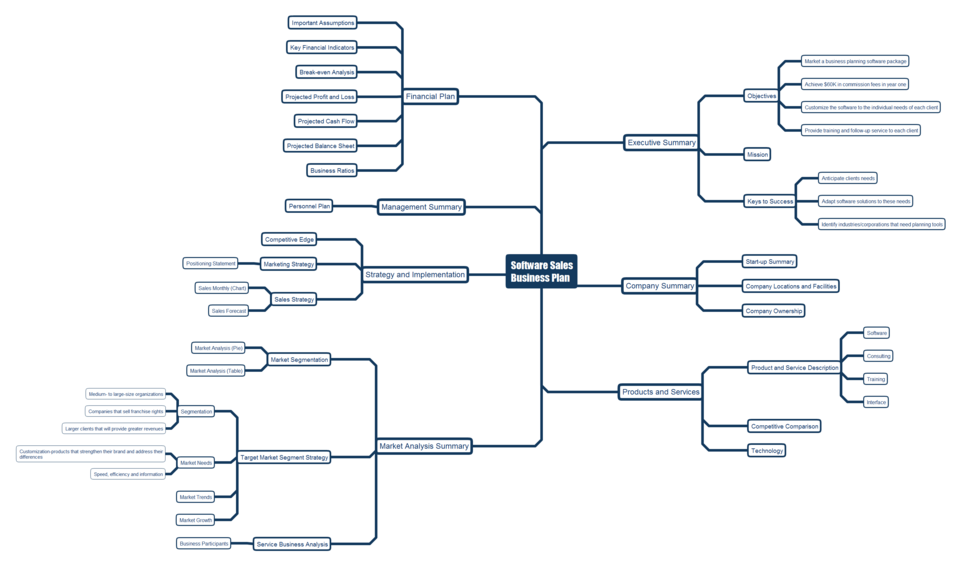 business plan template example (Image: CC BY-SA 4.0, via Wikimedia Commons)
| Component | Example from Daraz | Why It Works |
|---|---|---|
| Market Analysis | Nepal’s e-commerce growth (20% YoY) | Justifies expansion into rural areas |
| Financial Projections | Revenue: ₹500M (Year 1), Cost: ₹300M | Shows profitability to lenders |
| Competitive Edge | Faster delivery than local shops | Differentiates from traditional retailers |
2. The Lean Canvas: A One-Page Business Plan
Traditional business plans are 20+ pages—too slow for agile startups. The Lean Canvas (by Ash Maurya) condenses it into 9 key sections:
flowchart TD
    A["Problem"] -->|"e.g., Nepalese farmers lack market access"| B["Solution"]
    B -->|"e.g., Daraz’s direct-to-consumer model"| C["Key Metrics"]
    C -->|"e.g., 10,000+ daily orders"| D["Unfair Advantage"]
    D -->|"e.g., Amazon’s global logistics"| E["Channels"]
    E -->|"e.g., Facebook ads, WhatsApp groups"| F["Cost Structure"]
    F -->|"e.g., ₹150/order (warehouse + delivery)"| G["Revenue Streams"]
    G -->|"e.g., ₹200/order (profit margin)"| H["Customer Segments"]
    H -->|"e.g., urban millennials, rural smallholders"| I["Unique Value Proposition"]
Worked Example: Pathao’s Lean Canvas
- Problem: Taxi hailing in Kathmandu is chaotic (no fixed pricing, no tracking).
- Solution: Real-time GPS-based ride booking.
- Key Metrics: 50,000+ daily rides (2023).
- Cost Structure: Driver incentives (₹500–₹1,000/month), app maintenance (₹200K/year).
- Revenue Streams: 15% commission per ride.
Advantages of Lean Canvas: ✅ Speed: Built in <4 hours vs. weeks for traditional plans. ✅ Flexibility: Updated weekly (e.g., Pathao added bike taxis post-COVID). ✅ Investor-Friendly: Used by Y Combinator for startup pitches.
Disadvantages: ❌ Less detailed for complex industries (e.g., pharmaceuticals). ❌ Requires discipline—skipping sections leads to gaps (e.g., ignoring customer feedback).
3. Resource Mobilization: Funding a Startup
Resources are not just money—they include human capital, technology, and operational infrastructure. Here’s how to mobilize them:
A. Internal Resources (Bootstrapping)
- Example: Himalayan Java (Nepal’s first coffee roaster) started with ₹500K savings and bartering for beans.
- Methods:
- Personal savings (60% of Nepali startups).
- Revenue reinvestment (e.g., Daraz’s early profits funded warehouses).
- Pros: Full control, no debt.
- Cons: Limited scalability, burnout risk.
B. External Funding Sources
| Source | Example in Nepal | Pros | Cons |
|---|---|---|---|
| Bank Loans | Nabil Bank’s SME loans | Structured repayment | High interest (12–18% p.a.) |
| Angel Investors | Khalti’s early backers | Mentorship + capital | Equity dilution |
| Venture Capital (VC) | Daraz (Alibaba-backed) | Scalable funding | Loss of control |
| Crowdfunding | Nepal’s "Bike for Health" | Community support | Platform fees (5–10%) |
| Government Grants | NIDB’s Rural Entrepreneurship Fund | No repayment | Bureaucracy, low amounts (₹50K–₹500K) |
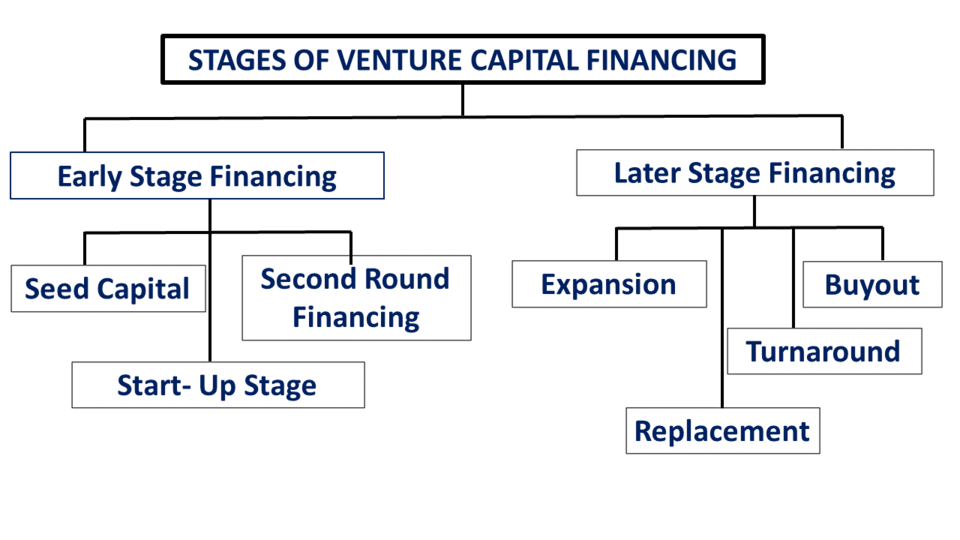 venture capital funding stages (Image: Lalita Mutreja, CC BY-SA 4.0, via Wikimedia Commons)
Stage 1: Seed (₹1M–₹5M) → Pathao’s initial ₹20M
Stage 2: Series A (₹5M–₹20M) → Daraz’s ₹100M from Alibaba
Stage 3: Growth (₹20M+) → Ncell’s expansion into mobile banking
C. Non-Financial Resources
- Human Capital: Hiring freelancers (e.g., Daraz’s remote developers in India).
- Technology: Open-source tools (e.g., WordPress for eSewa’s payment gateway).
- Partnerships: NTC + Pathao for ride-hailing during festivals.
Worked Example: eSewa’s Resource Mobilization
- Funding: Bootstrapped (₹2M from founders) + Nepal Rastra Bank’s digital payment grant (₹10M).
- Partnerships: Integrated with Khalti, Siddhartha Bank, and Ncell.
- Tech: Used Stripe API for cross-border payments.
4. Family Businesses: Resource Mobilization Challenges
Family businesses account for 60% of Nepal’s GDP (e.g., Chaudhary Group, Himalayan Coffee). However, 80% fail by the 2nd generation due to resource mismanagement.
Key Resource Conflicts in Family Businesses
flowchart TD
    A["Family Resources"] --> B["Pros"]
    A --> C["Cons"]
    B --> B1["Shared capital (e.g., ₹50M in Chaudhary Group)"]
    B --> B2["Trust-based hiring"]
    C --> C1["Succession disputes (e.g., Himalayan Coffee’s sibling rivalry)"]
    C --> C2["Informal credit (high risk of default)"]
    C --> C3["Over-reliance on one member’s skills"]
Worked Example: Himalayan Coffee’s Resource Crisis
- Problem: Founder’s retirement left no clear successor.
- Solution: Professionalized management (hired CEO from Starbucks Nepal).
- Lesson: Family businesses must formalize resource allocation (e.g., clear ownership shares).
Roles of Family Members
| Role | Example | Resource Contribution |
|---|---|---|
| Founder | Chaudhary Brothers | Initial capital + vision |
| Spouse | Wife manages accounts (e.g., Himalayan Coffee) | Financial oversight |
| Children | Next-gen trained in operations | Talent pipeline |
| Relatives | Extended family as unpaid labor | Labor cost savings |
5. E-Entrepreneurship: Digital Resource Planning
E-entrepreneurship (e.g., eSewa, Daraz, Pathao) requires unique resource mobilization:
- Digital Assets: Websites, APIs, cybersecurity.
- Data: Customer analytics (e.g., Daraz’s recommendation engine).
- Partnerships: Ncell + Pathao for mobile payments.
Worked Example: eSewa’s API Integration
- Resource: Open API for Khalti, Siddhartha Bank, and Ncell.
- Impact: 5M+ transactions/month (2023).
- Challenge: Security risks (e.g., 2022 data breach cost ₹2M in fines).
Key Digital Resources Table
| Resource | Example | Cost | ROI |
|---|---|---|---|
| Cloud Hosting | AWS for Daraz | ₹50K/month | Scalable storage for 1M+ orders |
| Payment Gateway | Stripe for eSewa | 2.9% + ₹1 per transaction | Trust for 10M+ users |
| Cybersecurity | Firewalls for Ncell | ₹100K/year | Prevents ₹500M in fraud losses |
6. Critical Analysis: Why Business Plans Fail
Even with perfect planning, 30% of Nepali startups fail within 1 year (Nepal Investment Board). Common mistakes:
Overestimating Demand
- Example: Nepal’s "Smartphone Rentals" (2020) failed because users preferred buying.
- Fix: Validate with pre-orders (e.g., Daraz’s "Buy Now" buttons).
Ignoring Cash Flow
- Example: Local "Food Delivery Apps" ran out of funds before profitability.
- Fix: 3-month cash reserve (e.g., Pathao’s ₹20M buffer).
Poor Partnerships
- Example: Nepal’s "Green Energy Startups" struggled without NEPSE’s subsidies.
- Fix: Government grants (e.g., NIDB’s renewable energy fund).
Underestimating Competition
- Example: Nepal’s "Fitness Apps" lost to Freeletics (global brand).
- Fix: Niche focus (e.g., Yoga with Aditi for Nepali diaspora).
In the Real World
Daraz’s Lean Canvas
- Problem: Nepal’s fragmented retail (no online marketplaces).
- Solution: One-stop e-commerce platform.
- Resource Mobilization: ₹500M VC funding (Alibaba) + NIDB’s rural logistics grants.
- Result: ₹10B+ revenue (2023), 50,000+ jobs.
Khalti’s Crowdfunding Model
- Idea: Digital wallets for unbanked Nepalis.
- Resource: ₹15M from angel investors + Nepal Rastra Bank’s fintech sandbox.
- Impact: 5M+ users, 20% of Nepal’s digital transactions.
Nepal’s "Bike for Health" Campaign
- Problem: Rural healthcare access gaps.
- Solution: Crowdfunded 1,000+ medical bikes.
- Resource: ₹2M from 5,000+ donors (via Khalti’s platform).
- Outcome: 100+ villages served, government partnership.
Exam Tip: How to Score Full Marks
Structure Your Answer Like a Business Plan
- Start with a clear definition (e.g., "A Lean Canvas is a visual tool...").
- Use bullet points + diagrams (e.g., the 9-box flowchart above).
- Always tie theory to Nepal (e.g., "Like Daraz, Nepali startups must prioritize rural delivery").
Master the Lean Canvas Template
- Marks are lost if you skip sections (e.g., "Key Metrics" or "Cost Structure").
- Example Answer:
*"The Lean Canvas for a Nepali organic tea startup would include:
- Problem: Lack of certified organic farms in Kathmandu.
- Solution: Direct farm-to-consumer sales via WhatsApp.
- Channels: Instagram ads + local markets."*
Compare Funding Sources
- Table format scores high (see "External Funding Sources" table).
- Example:
"While bank loans offer structured repayment, angel investors provide mentorship—Pathao used both to scale."
Use Real Data
- Cite Nepal-specific stats (e.g., "80% of family businesses fail by Gen 2" from NIB).
- Example:
"Chaudhary Group’s success stems from formalizing resource allocation, unlike Himalayan Coffee’s informal credit system."
Avoid Vague Answers
- ❌ "Business planning is important."
- ✅ "Business planning reduces failure rates by 40% (GEM 2022); for example, Daraz’s Lean Canvas guided its ₹500M funding round."
Show, Don’t Tell
- Always draw a Lean Canvas or flowchart (use Mermaid code).
- Example:
Final Note: Examiners love answers that combine theory + Nepal examples + visuals. For Unit 7, focus on:
- Lean Canvas structure (9 boxes).
- Resource mobilization (internal vs. external).
- Family business challenges (succession, informal credit).
- E-entrepreneurship (digital resources, APIs).
Based on the TU BBS syllabus for Entrepreneurship And Enterprise Development (MGT225), unit 7.
Discussion
Loading…