Financial AccountingUnit 216 min read
Accounting Cycle & Process: Steps, Journal-Ledger-Trial Balance Flow
Unit 2 of Financial Accounting explains the accounting cycle—the step-by-step process of recording, summarizing, and reporting financial transactions—using journal entries, ledgers, trial balances, and adjustments. Learn how businesses like Nepal Investment Bank or Daraz systematically track transactions from raw data
TAKEAWAYS:
- The accounting cycle is a 9-step process that starts with transactions and ends with financial statements, repeating every accounting period.
- Source documents (invoices, receipts) → Journal entries (debit/credit) → Ledger postings (T-accounts) → Trial balance → Adjustments → Adjusted trial balance → Financial statements (Income Statement, Balance Sheet).
- Double-entry bookkeeping ensures every transaction affects at least two accounts (e.g., Cash increases while Inventory decreases).
- Adjusting entries (accruals, deferrals) correct timing mismatches (e.g., unearned revenue, prepaid expenses).
- Closing entries transfer temporary accounts (Revenue, Expenses) to Retained Earnings and reset them to zero.
- Errors in the cycle (omissions, misclassifications) can be detected via trial balance discrepancies or adjusted entries.
1. What is the Accounting Cycle?
The accounting cycle is the complete process of identifying, recording, summarizing, and communicating financial transactions for a business over a specific period (usually a fiscal year). It ensures financial data is accurate, consistent, and useful for decision-making.
Why is it important?
- Helps businesses track income, expenses, and assets.
- Ensures compliance with accounting standards (e.g., Nepalese Accounting Standards, IFRS).
- Provides financial statements for stakeholders (investors, banks, government).
2. The 9 Steps of the Accounting Cycle
Here’s the step-by-step flow of the accounting cycle, visualized as a Mermaid diagram below:
flowchart TD
    A["1. Identify Transactions"] --> B["2. Journalize Transactions"]
    B --> C["3. Post to Ledger"]
    C --> D["4. Prepare Unadjusted Trial Balance"]
    D --> E["5. Record Adjusting Entries"]
    E --> F["6. Prepare Adjusted Trial Balance"]
    F --> G["7. Prepare Financial Statements"]
    G --> H["8. Record Closing Entries"]
    H --> I["9. Prepare Post-Closing Trial Balance"]
    I -->|"Repeat"| A
Step-by-Step Explanation
| Step | Process | Key Output |
|---|---|---|
| 1. Identify Transactions | Gather source documents (invoices, receipts, bank statements). | Transaction list |
| 2. Journalize Transactions | Record transactions in the general journal (debit/credit format). | Journal entries |
| 3. Post to Ledger | Transfer journal entries to ledger accounts (T-accounts). | Updated ledger |
| 4. Unadjusted Trial Balance | Summarize ledger balances to check debit = credit. | Trial balance sheet |
| 5. Adjusting Entries | Correct timing mismatches (e.g., prepaid rent, accrued salaries). | Adjusted journal entries |
| 6. Adjusted Trial Balance | Recheck debit = credit after adjustments. | Adjusted trial balance |
| 7. Financial Statements | Prepare Income Statement, Balance Sheet, Cash Flow Statement. | Financial reports |
| 8. Closing Entries | Transfer temporary accounts (Revenue, Expenses) to Retained Earnings. | Zeroed temporary accounts |
| 9. Post-Closing Trial Balance | Verify only permanent accounts (Assets, Liabilities, Equity) remain. | Final trial balance |
3. Key Concepts in the Accounting Cycle
A. Source Documents
These are physical or digital records that prove a transaction occurred. Examples:
- Invoice (from suppliers like Daraz or Nepal Investment Bank).
- Receipt (for cash payments).
- Bank Statement (for bank transactions).
- Cheque (for large payments).
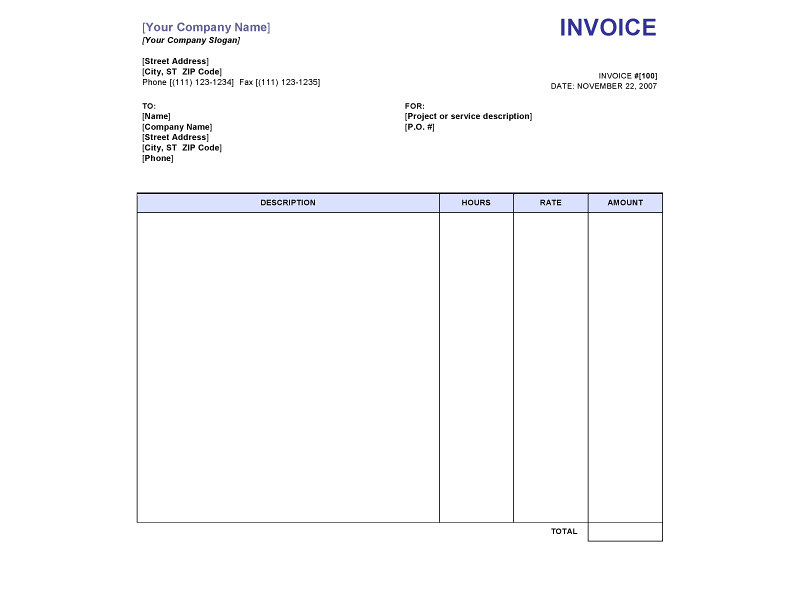 Example of a supplier invoice from a Nepali business (Image: Namira22, CC BY-SA 4.0, via Wikimedia Commons)
B. Journalizing Transactions (Double-Entry System)
Every transaction affects at least two accounts (debit and credit). Example:
- Transaction: Bought inventory for Rs. 50,000 (cash).
- Debit: Inventory (Asset ↑) Rs. 50,000
- Credit: Cash (Asset ↓) Rs. 50,000
Journal Entry Table:
| Date | Particulars | L.F. | Dr (Rs.) | Cr (Rs.) |
|---|---|---|---|---|
| 2079/10/01 | Inventory A/c | Dr. | 50,000 | |
| To Cash A/c | 50,000 | |||
| (Purchased inventory) |
C. Posting to Ledger (T-Accounts)
After journalizing, entries are posted to ledger accounts (T-accounts). Example:
D. Trial Balance
A list of all ledger accounts to ensure debit = credit. If not, there’s an error (omission, misclassification).
Example Trial Balance (Unadjusted):
| Account | Dr (Rs.) | Cr (Rs.) |
|---|---|---|
| Cash | 200,000 | |
| Inventory | 50,000 | |
| Accounts Payable | 30,000 | |
| Capital | 220,000 | |
| Total | 250,000 | 250,000 |
E. Adjusting Entries
Adjustments correct timing differences between cash basis and accrual basis accounting.
Common Adjustments:
- Accrued Expenses (e.g., unpaid salaries).
- Prepaid Expenses (e.g., rent paid in advance).
- Unearned Revenue (e.g., advance payments from customers).
- Depreciation (e.g., machinery wear and tear).
Example Adjustment:
- Transaction: Rs. 20,000 rent paid in 2079/10/01 for 12 months (adjust for 1 month used).
- Adjusting Entry:
Date Particulars Dr (Rs.) Cr (Rs.) 2079/10/31 Rent Expense A/c 1,667 To Prepaid Rent A/c 1,667 (Adjustment for rent)
- Adjusting Entry:
F. Financial Statements
After adjustments, prepare:
- Income Statement (Revenue – Expenses = Net Profit).
- Balance Sheet (Assets = Liabilities + Equity).
- Cash Flow Statement (Cash inflows/outflows).
Example Income Statement (Simplified):
| Particulars | Amount (Rs.) |
|---|---|
| Revenue | 500,000 |
| Less: Expenses | |
| - Rent Expense | (20,000) |
| - Salary Expense | (100,000) |
| Net Profit | 380,000 |
G. Closing Entries
Transfer temporary accounts (Revenue, Expenses) to Retained Earnings and reset them to zero.
Example Closing Entry:
| Date | Particulars | Dr (Rs.) | Cr (Rs.) |
|---|---|---|---|
| 2079/10/31 | Revenue A/c | 500,000 | |
| To Income Summary A/c | 500,000 | ||
| 2079/10/31 | Income Summary A/c | 380,000 | |
| Expenses A/c | 120,000 | ||
| To Retained Earnings A/c | 260,000 |
4. Real-World Applications
A. eSewa & Khalti (Digital Payments)
- Concept Used: Cash and Bank Transactions (Step 2 & 3 of the cycle).
- How?
- When you pay electricity bills via eSewa, the transaction is recorded in:
- Journal: Debit Electricity Expense, Credit Cash/Bank.
- Ledger: Updated in Expense Account and Bank Account.
- Adjusting Entry: If eSewa charges a transaction fee, it’s recorded as:
Date Particulars Dr (Rs.) Cr (Rs.) 2079/10/05 Electricity Expense A/c 1,500 eSewa Fee A/c 20 To Bank A/c 1,520
- When you pay electricity bills via eSewa, the transaction is recorded in:
B. Daraz (E-Commerce Order Processing)
- Concept Used: Journalizing Sales & Inventory (Steps 1-4).
- How?
- When a customer buys a phone for Rs. 20,000:
- Journal Entry:
Date Particulars Dr (Rs.) Cr (Rs.) 2079/10/01 Cash A/c 20,000 To Sales A/c 20,000 - Ledger Posting:
- Cash Account: Debit ↑ Rs. 20,000
- Sales Account: Credit ↑ Rs. 20,000
- Inventory Account: Debit ↓ Rs. 20,000 (cost of goods sold)
- Adjusting Entry (if COGS not recorded earlier):
Date Particulars Dr (Rs.) Cr (Rs.) 2079/10/31 COGS A/c 15,000 To Inventory A/c 15,000
- Journal Entry:
- When a customer buys a phone for Rs. 20,000:
C. Nepal Investment Bank (Loan Interest Calculation)
- Concept Used: Adjusting Entries for Accrued Interest (Step 5).
- How?
- If a customer takes a loan of Rs. 1,000,000 at 10% annual interest, but only pays interest at year-end:
- Adjusting Entry (monthly):
Date Particulars Dr (Rs.) Cr (Rs.) 2079/10/31 Interest Expense A/c 8,333 To Accrued Interest A/c 8,333 (1,000,000 × 10% ÷ 12 months)
- Adjusting Entry (monthly):
- If a customer takes a loan of Rs. 1,000,000 at 10% annual interest, but only pays interest at year-end:
5. Worked Example: Kathmandu Retail Shop
Scenario:
- Shop Name: Kathmandu Electronics
- Transactions in October 2079:
- Started with Cash: Rs. 500,000, Inventory: Rs. 300,000.
- 10/01: Bought additional inventory for Rs. 100,000 (cash).
- 10/15: Sold inventory for Rs. 200,000 (cash).
- 10/31: Paid rent for November (Rs. 20,000) in advance.
- 10/31: Unearned revenue: Received Rs. 50,000 for future services.
Step-by-Step Solution
1. Journal Entries
| Date | Particulars | Dr (Rs.) | Cr (Rs.) |
|---|---|---|---|
| 2079/10/01 | Inventory A/c | 100,000 | |
| To Cash A/c | 100,000 | ||
| 2079/10/15 | Cash A/c | 200,000 | |
| To Sales A/c | 200,000 | ||
| 2079/10/31 | Prepaid Rent A/c | 20,000 | |
| To Cash A/c | 20,000 | ||
| 2079/10/31 | Cash A/c | 50,000 | |
| To Unearned Revenue A/c | 50,000 |
2. Ledger Postings (T-Accounts)
3. Unadjusted Trial Balance
| Account | Dr (Rs.) | Cr (Rs.) |
|---|---|---|
| Cash | 630,000 | |
| Inventory | 400,000 | |
| Sales | 200,000 | |
| Prepaid Rent | 20,000 | |
| Unearned Revenue | 50,000 | |
| Capital | 800,000 | |
| Total | 1,050,000 | 1,050,000 |
4. Adjusting Entries
COGS (Cost of Goods Sold):
- Assume Rs. 120,000 of inventory was sold.
Date Particulars Dr (Rs.) Cr (Rs.) 2079/10/31 COGS A/c 120,000 To Inventory A/c 120,000
- Assume Rs. 120,000 of inventory was sold.
Rent Expense (1 month used):
Date Particulars Dr (Rs.) Cr (Rs.) 2079/10/31 Rent Expense A/c 20,000 To Prepaid Rent A/c 20,000 Unearned Revenue (1/3 earned in October):
Date Particulars Dr (Rs.) Cr (Rs.) 2079/10/31 Unearned Revenue A/c 16,667 To Revenue A/c 16,667
5. Adjusted Trial Balance
| Account | Dr (Rs.) | Cr (Rs.) |
|---|---|---|
| Cash | 630,000 | |
| Inventory | 280,000 | |
| COGS | 120,000 | |
| Rent Expense | 20,000 | |
| Revenue | 216,667 | |
| Prepaid Rent | 0 | |
| Unearned Revenue | 33,333 | |
| Capital | 800,000 | |
| Total | 1,050,000 | 1,050,000 |
6. Financial Statements (Simplified)
Income Statement:
Particulars Amount (Rs.) Revenue 216,667 Less: COGS (120,000) Less: Rent Expense (20,000) Net Profit 76,667 Balance Sheet:
Assets Liabilities + Equity Cash: 630,000 Unearned Revenue: 33,333 Inventory: 280,000 Capital: 800,000 Total Assets 910,000
6. Common Errors & How to Detect Them
| Error Type | Cause | Detection Method |
|---|---|---|
| Omission | Forgetting to record a transaction. | Trial balance debit ≠ credit. |
| Incorrect Debit/Credit | Wrong account classification. | Review journal entries. |
| Transposition Error | Swapping digits (e.g., Rs. 120 vs. Rs. 210). | Difference divisible by 9. |
| Compensating Errors | Two errors cancel each other. | Adjusted trial balance. |
7. Exam Tip: How to Score Full Marks
- Understand the Cycle: Memorize the 9 steps and their order.
- Practice Journal Entries: Always debit first, credit second.
- Adjusting Entries: Focus on accruals (unpaid) and deferrals (prepaid).
- Trial Balance: Ensure debit = credit before proceeding.
- Real-World Link: Relate examples to Nepali businesses (e.g., Ncell billing, Daraz sales).
- Diagrams: Draw T-accounts and flowcharts in exams (if allowed).
- Common Mistakes:
- Forgetting closing entries.
- Misclassifying revenue vs. capital.
- Ignoring adjusting entries for accruals/deferrals.
8. Quick Revision Table
| Step | Key Action | Output |
|---|---|---|
| 1. Transactions | Collect invoices, receipts. | Source documents |
| 2. Journalize | Record in journal (debit/credit). | Journal entries |
| 3. Ledger | Post to T-accounts. | Updated ledger |
| 4. Trial Balance | Check debit = credit. | Trial balance sheet |
| 5. Adjustments | Correct accruals/deferrals. | Adjusted journal entries |
| 6. Adjusted TB | Recheck debit = credit. | Adjusted TB |
| 7. Financial Statements | Prepare IS, BS, CFS. | Final reports |
| 8. Closing Entries | Transfer temp. accounts to RE. | Zeroed temp. accounts |
| 9. Post-Closing TB | Verify only permanent accounts. | Final TB |
9. Summary
- The accounting cycle is a structured process to ensure financial accuracy.
- Double-entry bookkeeping is non-negotiable (every debit has a credit).
- Adjusting entries bridge the gap between cash and accrual accounting.
- Real-world applications (eSewa, Daraz, banks) rely on this cycle for transparency and compliance.
Final Tip: Practice with real transactions (e.g., your mobile recharge, rent payment) to master the cycle!
Based on the TU BCA syllabus for Financial Accounting (CAAC152), unit 2.
Discussion
Loading…