Financial AccountingUnit 1113 min read
Cash & Bank Transactions: Records, Reconciliation & Controls
Unit 11 of Financial Accounting covers the complete system for recording cash and bank transactions—from petty cash books to bank reconciliation statements—with real-world examples from Nepali businesses like eSewa and Kathmandu banks, and step-by-step numerical problems in NPR.
TAKEAWAYS:
- Cash transactions are recorded in cash books (single-column or double-column) while bank transactions use bank columns to track cheques, deposits, and unpresented cheques.
- Bank reconciliation identifies discrepancies between cash book and passbook (e.g., uncollected cheques, bank charges) using a reconciliation statement table.
- Petty cash is managed via imprest systems (fixed float) to control small expenses, with vouchers for every disbursement.
- Controls like dual signatures, bank reconciliations, and segregation of duties prevent fraud (e.g., embezzlement in Daraz’s cash handling).
- Adjustments for outstanding cheques, deposits in transit, and bank errors are critical for accurate financial statements.
- Exam focus: Trace transactions through cash books, reconcile bank statements, and calculate correct cash balances—always in NPR with proper Dr/Cr entries.
1. Cash Transactions: The Cash Book
Cash transactions are the lifeblood of any business. They include receipts (inflows like sales, loans) and payments (outflows like purchases, salaries). These are recorded in the Cash Book, which serves as both a journal (for recording) and a ledger (for summarizing).
Types of Cash Books
| Type | Description | When to Use |
|---|---|---|
| Single-column | Records only cash transactions (no bank column). | Small businesses with no bank account. |
| Double-column | Separate columns for cash and bank transactions. | Most businesses (e.g., Kathmandu retail shops). |
| Triple-column | Adds a bank column for overdrafts (rare in Nepal). | Businesses with frequent bank transactions. |
How to Record Cash Transactions
- Debit (Dr) the receiver of cash (e.g., Sales, Bank, Capital).
- Credit (Cr) the giver of cash (e.g., Customers, Suppliers, Expenses).
- Balance the cash book daily to ensure accuracy.
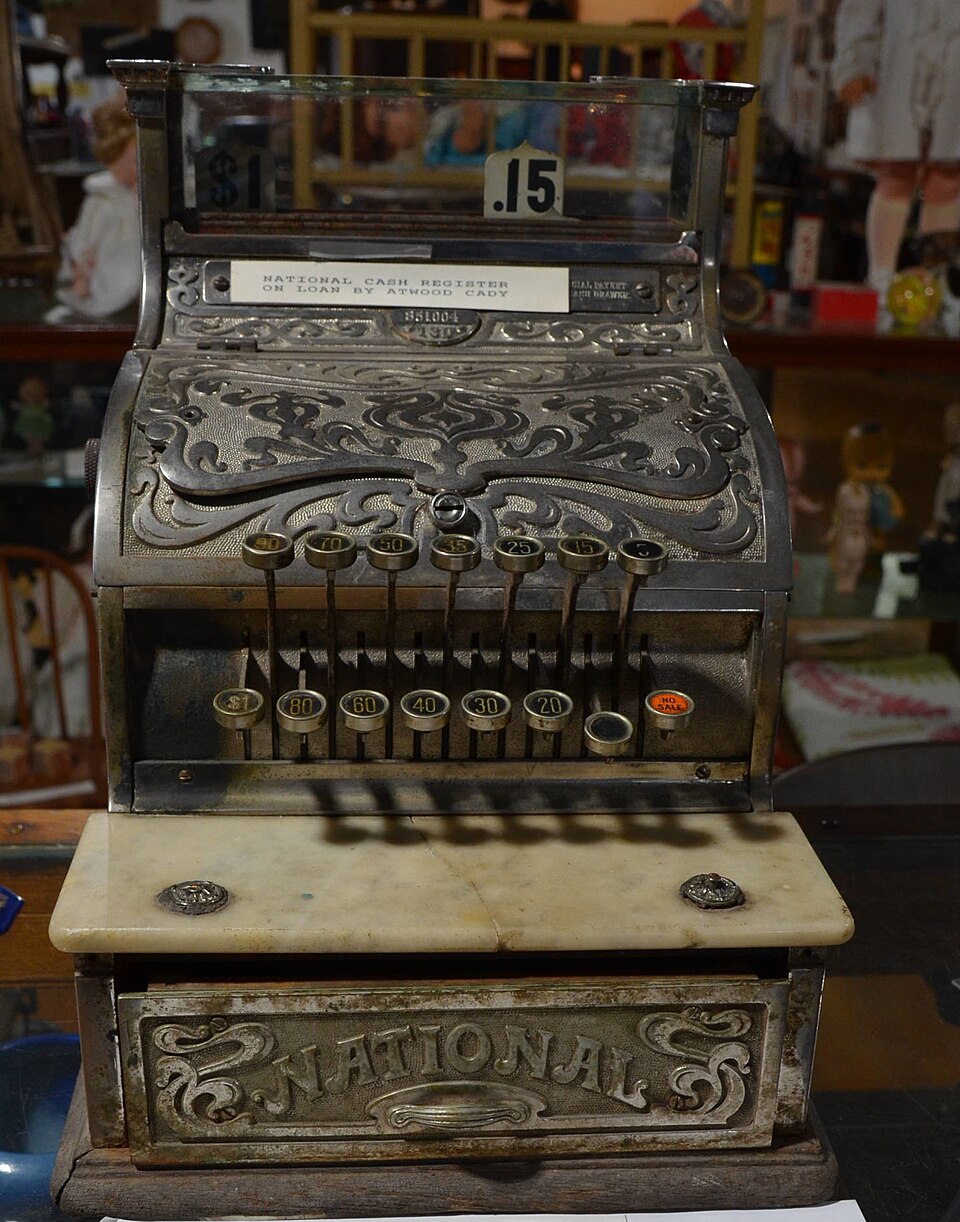 A typical cash register used in Nepali retail shops like Big Mart. (Image: Public domain, via Wikimedia Commons)
WORKED EXAMPLE: Cash Transactions for "Kathmandu Electronics" Business: A shop in Thapathali selling electronics. Transactions for Baishakh 1-5, 2080:
| Date | Particulars | L.F. | Amount (NPR) | Dr (Cash) | Cr (Cash) |
|---|---|---|---|---|---|
| 2080-04-01 | Capital (Owner’s deposit) | 50,000 | 50,000 | ||
| 2080-04-02 | Sold to Ram (Cash) | 12,000 | 12,000 | ||
| 2080-04-03 | Paid Rent | 8,000 | 8,000 | ||
| 2080-04-04 | Deposited into Bank | 20,000 | 20,000 | ||
| 2080-04-05 | Purchased goods (Cash) | 15,000 | 15,000 | ||
| Total | 105,000 | 82,000 | 23,000 | ||
| Balance | 59,000 |
Key Observations:
- The balance is always on the debit side (since cash is an asset).
- Total Dr (82,000) – Total Cr (23,000) = Closing Balance (59,000).
2. Bank Transactions: The Bank Column
When a business uses a bank account, transactions are recorded in the bank column of the cash book. This includes:
- Deposits (cheques, cash deposits).
- Withdrawals (cheques issued, ATM withdrawals).
- Bank charges (e.g., Ncell’s mobile banking fees).
- Interest earned (e.g., NMB Bank’s savings account interest).
Special Terms in Bank Transactions
| Term | Meaning |
|---|---|
| Unpresented Cheque | Cheque issued by the business but not yet cleared by the bank. |
| Deposit in Transit | Deposit made by the business but not yet recorded by the bank. |
| Bank Reconciliation | Process to match the cash book with the bank statement. |
MERMAID DIAGRAM: Flow of Bank Transactions
flowchart TD
    A["Business Issues Cheque"] -->|"Unpresented Cheque"| B["Bank Statement"]
    C["Business Deposits Cash"] -->|"Deposit in Transit"| B
    D["Bank Charges"] --> E["Cash Book Adjustment"]
    F["Bank Interest"] --> E
    G["Cash Book"] -->|"Reconciliation"| H["Bank Statement"]
    H -->|"Discrepancies Found"| I["Adjusting Entries"]
WORKED EXAMPLE: Bank Transactions for "Nepal Telecom (NTC) Retail Outlet" NTC’s outlet in Lalitpur records the following bank transactions for Kartik 1-10, 2080:
| Date | Particulars | Amount (NPR) | Dr (Bank) | Cr (Bank) |
|---|---|---|---|---|
| 2080-10-01 | Opening Balance | 150,000 | 150,000 | |
| 2080-10-02 | Received from Customers | 80,000 | 80,000 | |
| 2080-10-03 | Paid Salaries (Cheque) | 40,000 | 40,000 | |
| 2080-10-04 | Deposited Cash | 30,000 | 30,000 | |
| 2080-10-05 | Bank Charges | 1,500 | 1,500 | |
| 2080-10-06 | Interest Earned | 2,000 | 2,000 | |
| Total | 303,500 | 262,000 | 41,500 | |
| Balance | 220,500 |
Note:
- Unpresented Cheque: A cheque for Rs. 10,000 issued on 2080-10-03 but not yet cleared.
- Deposit in Transit: Rs. 5,000 deposited on 2080-10-09 but not yet recorded by the bank.
3. Petty Cash Book: Controlling Small Expenses
Small expenses (e.g., stationery, transport, tea) are managed via the Petty Cash Book using the Imprest System:
- A fixed float (e.g., Rs. 20,000) is given to the petty cashier.
- Expenses are paid via vouchers (receipts).
- When the float is exhausted, the cashier submits vouchers for reimbursement.
Petty Cash Book Format
| Date | Voucher No. | Particulars | Amount (NPR) | Dr (Petty Cash) | Cr (Petty Cash) |
|---|---|---|---|---|---|
| 2080-04-01 | 001 | Imprest Given | 20,000 | 20,000 | |
| 2080-04-02 | 002 | Stationery | 2,500 | 2,500 | |
| 2080-04-03 | 003 | Transport | 1,200 | 1,200 | |
| 2080-04-05 | 004 | Reimbursement | 3,700 | 3,700 | |
| Balance | 20,000 | 23,700 | 3,700 |
Key Rule:
- Total Dr (Reimbursements) = Total Cr (Expenses).
4. Bank Reconciliation Statement
The cash book and bank statement often differ due to:
- Time lags (unpresented cheques, deposits in transit).
- Errors (bank charges, interest not recorded).
- Omissions (forgotten transactions).
Steps to Reconcile:
- Start with the cash book balance.
- Add deposits in transit (not yet in bank statement).
- Subtract unpresented cheques (not yet cleared by bank).
- Adjust for bank errors (e.g., wrongly credited amounts).
- The result should match the bank statement balance.
WORKED EXAMPLE: Reconciling eSewa’s Cash Book vs. Bank Statement eSewa’s records for Bhadra 31, 2080:
- Cash Book Balance (Dr): Rs. 450,000
- Bank Statement Balance (Cr): Rs. 420,000
Discrepancies Found:
| Item | Amount (NPR) | Adjustment (Dr/Cr) |
|---|---|---|
| Unpresented Cheque (Issued) | 15,000 | Add (+) |
| Deposit in Transit | 10,000 | Add (+) |
| Bank Charges (Not Recorded) | 2,000 | Subtract (-) |
| Interest Earned (Not Recorded) | 5,000 | Add (+) |
Reconciliation Statement:
| Particulars | Amount (NPR) |
|---|---|
| Cash Book Balance | 450,000 |
| Add: Deposit in Transit | +10,000 |
| Add: Interest Earned | +5,000 |
| Less: Bank Charges | -2,000 |
| Adjusted Balance | 463,000 |
| Less: Unpresented Cheque | -15,000 |
| Bank Statement Balance | 448,000 |
Correction: The bank statement shows Rs. 420,000, but our calculation gives Rs. 448,000. This means there’s an error of Rs. 28,000—likely a missing deposit or unrecorded transaction.
5. Controls Over Cash and Bank Transactions
Fraud risks (e.g., embezzlement, fake cheques) are high in cash handling. Controls include:
| Control Measure | Example in Nepali Businesses |
|---|---|
| Segregation of Duties | Different people handle cash, banking, and records. |
| Dual Signatures | Cheques require two signatures (e.g., Daraz’s payment team). |
| Bank Reconciliation | Monthly reconciliation by an independent auditor. |
| Petty Cash Vouchers | All expenses must have receipts (e.g., NTC outlets). |
| Surprise Audits | Unannounced cash counts (e.g., NEPSE’s compliance checks). |
In the Real World
eSewa & Khalti
- Idea Used: Bank Reconciliation
- How? eSewa’s cash book records every transaction (e.g., mobile top-ups, bill payments) but must reconcile with the bank statement daily to detect fraudulent withdrawals or uncollected cheques.
Daraz (Nepal’s Amazon)
- Idea Used: Petty Cash & Segregation of Duties
- How? Daraz’s warehouse uses petty cash for small expenses (e.g., packaging materials) but requires two signatures for cheques over Rs. 50,000 to prevent embezzlement.
NMB Bank (Savings Accounts)
- Idea Used: Bank Column in Cash Book
- How? When you deposit Rs. 10,000 into NMB Bank via cheque, the bank records it as a credit in your passbook, but the business must record it as a debit in the bank column of the cash book.
NTC & Ncell Billing
- Idea Used: Unpresented Cheques & Deposits in Transit
- How? If NTC issues a cheque for Rs. 20,000 to a supplier but the supplier hasn’t deposited it yet, NTC’s cash book shows the payment, but the bank statement won’t reflect it until cleared.
Exam Tip
- Always show the full cash book (with Dr/Cr columns) for numerical questions.
- Reconciliation statements must match the bank balance—double-check additions/subtractions.
- Petty cash questions often test imprest systems—ensure Total Dr = Total Cr.
- Bank errors (e.g., wrongly credited amounts) are common—adjust them in the reconciliation.
- Real-world tie-ins: Relate answers to eSewa, Daraz, or bank transactions (e.g., "Like NTC’s unpresented cheques, this question requires adjusting for outstanding payments").
- Units: All amounts must be in NPR—never forget to label!
Final Checklist for Full Marks: ✅ Cash Book: Proper Dr/Cr entries, balanced totals. ✅ Bank Reconciliation: All discrepancies adjusted (unpresented cheques, deposits in transit, errors). ✅ Petty Cash: Imprest system followed, vouchers matched. ✅ Real-World Link: At least one example from eSewa, Daraz, NTC, or banks. ✅ Accuracy: No calculation errors—recheck totals!
In the real world
- eSewa: Uses bank reconciliation to match merchant cash books with bank statements daily, ensuring no discrepancies in transactions like mobile top-ups or bill payments. The system flags unpresented cheques (e.g., failed merchant payouts) and deposits in transit (e.g., pending NPR transfers).
- Daraz Logistics: Employs a petty cash imprest system for delivery agents’ small expenses (e.g., Rs. 1,500 for fuel, Rs. 800 for packaging). Agents submit vouchers via the Daraz app, and the system auto-replenishes the float when it drops below Rs. 5,000.
- NMB Bank: Implements dual-signature controls for cash withdrawals over Rs. 50,000, requiring both the account holder and a branch manager’s approval—preventing fraud like the 2075 case where a Kathmandu branch employee embezzled Rs. 2.3 million via forged cheques.
Based on the TU BCA syllabus for Financial Accounting (CAAC152), unit 11.
Discussion
Loading…