System Analysis And DesignUnit 812 min read
Corporate Strategic Planning & Economic Feasibility: Methods, Feasibility Analysis & Deliverables
Unit 8 of System Analysis and Design covers corporate strategic planning frameworks (top-down vs. bottom-up), economic feasibility analysis (cost-benefit, ROI, payback period), and deliverables of the planning phase—with real-world examples from Nepali companies like Ncell and NEPSE.
Key points
- Corporate strategic planning aligns IT projects with business goals using **top-down** (executive-driven) or **bottom-up** (departmental) approaches.
- Economic feasibility evaluates projects via **cost-benefit analysis**, **ROI**, and **payback period**—critical for justifying investments like Ncell’s 5G rollout.
- The **planning phase deliverables** (project charter, feasibility report, strategic plan) serve as blueprints for approval and execution.
- **Feasibility analysis** assesses **technical**, **operational**, **schedule**, and **economic** viability—e.g., Khalti’s UPI integration feasibility.
- **Strategic alignment** ensures IT projects (e.g., Daraz’s logistics system) support corporate objectives like revenue growth or customer satisfaction.
- **Case studies** (e.g., NTC’s fiber expansion) demonstrate how to calculate ROI and payback periods in real scenarios.
- ```
1. Corporate Strategic Planning: Definitions and Approaches
Corporate strategic planning is the process of defining an organization’s long-term goals and the IT projects needed to achieve them. It bridges the gap between business strategy and IT implementation, ensuring that technology investments align with corporate objectives.
Key Definitions
- Strategic Plan: A high-level document outlining an organization’s vision, mission, goals, and the IT projects required to support them.
- IT Strategic Plan: A subset of the corporate plan focusing on technology initiatives (e.g., cloud migration, ERP systems).
- Alignment: Ensuring IT projects directly contribute to business success (e.g., NEPSE’s trading platform improving market efficiency).
Approaches to Strategic Planning
Two primary methods exist, differing in who drives the process and how goals are set:
| Approach | Definition | Advantages | Disadvantages | Example in Nepal |
|---|---|---|---|---|
| Top-Down | Executive leadership (CEO, CIO) defines IT strategy based on corporate goals. | - Ensures alignment with business objectives. <br> - Faster decision-making. | - May ignore departmental needs. <br> - Less employee buy-in. | Ncell’s 5G strategy (driven by CEO’s vision). |
| Bottom-Up | Departments (HR, Finance, Operations) propose IT needs, which are aggregated. | - Inclusive (reflects ground-level needs). <br> - Higher adoption rates. | - Risk of fragmented or redundant projects. <br> - Slower approval. | Khalti’s UPI integration (proposed by Finance team). |
Mermaid Diagram: Strategic Planning Process
flowchart TD
    A["Corporate Vision & Goals"] --> B["Identify IT Projects"]
    B --> C["Top-Down or Bottom-Up Approach"]
    C -->|"Top-Down"| D["Executive Approval"]
    C -->|"Bottom-Up"| E["Departmental Proposals"]
    D --> F["Feasibility Analysis"]
    E --> F
    F --> G["Strategic Plan Document"]
    G --> H["Project Charter"]
2. Steps in Corporate Strategic Planning
The process involves 5 key steps, visualized below:
flowchart TD
    A["1. Define Corporate Vision & Goals"] --> B["2. Identify IT Projects"]
    B --> C["3. Choose Planning Approach (Top-Down/Bottom-Up)"]
    C --> D["4. Conduct Feasibility Analysis"]
    D --> E["5. Develop Strategic Plan & Deliverables"]
Step-by-Step Breakdown
Define Corporate Vision & Goals
- Example: NTC’s goal: "Expand fiber internet to 80% of Nepal by 2025."
- IT’s role: Enable this via fiber expansion projects.
Identify IT Projects
- Projects must directly support corporate goals.
- Example: NEPSE’s project: "Develop a mobile trading app to increase investor participation."
Choose Planning Approach
- Top-Down: Used when IT is a strategic differentiator (e.g., Ncell’s 5G).
- Bottom-Up: Used when departments drive innovation (e.g., Pathao’s driver app improvements).
Conduct Feasibility Analysis
- Assess technical, operational, schedule, and economic viability (covered in Section 3).
Develop Strategic Plan & Deliverables
- Outputs include:
- Project Charter (scope, objectives, stakeholders).
- Feasibility Report (costs, benefits, risks).
- Strategic Plan Document (roadmap for IT initiatives).
- Outputs include:
In the Real World
Ncell’s 5G Rollout:
- Approach: Top-down (CEO-driven).
- Why? 5G was a corporate priority to compete with NTC.
- Feasibility: Economic analysis showed ROI of 3 years due to higher ARPU (Average Revenue Per User).
Khalti’s UPI Integration:
- Approach: Bottom-up (Finance team proposed it).
- Why? Merchants demanded faster payments.
- Feasibility: Technical feasibility was high (UPI was already tested in India), but operational changes (training cashiers) were needed.
Daraz’s Logistics System:
- Approach: Hybrid (top-down for warehouse automation, bottom-up for local delivery optimizations).
- Economic Feasibility: Calculated payback period of 2.5 years by reducing delivery costs by 20%.
3. Feasibility Analysis: Types and Worked Example
Feasibility analysis evaluates whether a project is viable before investment. Four types are assessed:
| Type | Definition | Key Questions | Example in Nepal |
|---|---|---|---|
| Technical | Can the project be built with existing technology? | - Do we have the skills/software? <br> - Is the infrastructure sufficient? | NTC’s fiber expansion: Technical feasibility was high (fiber optics were available). |
| Operational | Will the system integrate with existing workflows? | - Will employees need retraining? <br> - Will it disrupt current processes? | Khalti’s UPI: Operational challenge was training 50,000+ merchants. |
| Schedule | Can the project be completed on time? | - Are deadlines realistic? <br> - Are there resource constraints? | NEPSE’s mobile app: Schedule feasibility was tight (6 months to launch). |
| Economic | Is the project financially justified? | - What’s the ROI? <br> - What’s the payback period? | Daraz’s warehouse automation: Economic analysis showed $1.2M savings/year. |
Worked Example: NTC’s Fiber Expansion Feasibility
Scenario: NTC wants to expand fiber to 50 new districts. Calculate economic feasibility using:
- Initial Cost: $50 million.
- Annual Revenue Increase: $10 million (from new subscribers).
- Maintenance Cost: $2 million/year.
Calculations:
Net Present Value (NPV) (assuming 5-year project, discount rate = 10%):
- Year 1: ($10M - $2M) = $8M → NPV = $8M / 1.10 = $7.27M
- Year 2: $8M → NPV = $7.27M / 1.10² = $6.06M
- ... (repeat for 5 years) → Total NPV ≈ $27.8M (positive → feasible).
Payback Period:
- Cumulative cash flow:
- Year 1: $8M
- Year 2: $16M
- Year 3: $24M → Payback in 3 years.
- Cumulative cash flow:
ROI:
- ROI = (Net Profit / Cost) × 100
- Net Profit = ($10M × 5 years) - $50M - ($2M × 5) = $50M - $50M - $10M = $0 (break-even).
- Adjusted ROI: If revenue grows to $12M/year → ROI = 20%.
Conclusion: Economically feasible with a 3-year payback and positive NPV.
4. Economic Feasibility: Key Metrics
Three metrics are critical for justifying IT projects:
| Metric | Formula | Interpretation | Example |
|---|---|---|---|
| Return on Investment (ROI) | (Net Benefit / Cost) × 100 | % return on the investment. >100% is good. | Ncell’s 5G: ROI = 150% (3-year payback). |
| Payback Period | Time to recover initial investment | Shorter = better. <3 years is ideal. | Daraz’s logistics: 2.5 years. |
| Net Present Value (NPV) | Sum of discounted cash flows | >0 = profitable. | NTC fiber: NPV = $27.8M. |
Mermaid Diagram: Economic Feasibility Decision Tree
flowchart TD
    A["Is NPV > 0?"] -->|"Yes"| B["Is Payback Period < 3 years?"]
    A -->|"No"| C["Reject Project"]
    B -->|"Yes"| D["Is ROI > 100%?"]
    B -->|"No"| C
    D -->|"Yes"| E["Approve Project"]
    D -->|"No"| F["Re-evaluate or Reject"]
5. Deliverables of the Planning Phase
The planning phase produces 3 key deliverables, which serve as approval documents for stakeholders:
| Deliverable | Description | Example |
|---|---|---|
| Project Charter | High-level document defining scope, objectives, stakeholders, and constraints. | NEPSE’s mobile app charter: "Increase trading volume by 30% in 1 year." |
| Feasibility Report | Detailed analysis of technical, operational, schedule, and economic feasibility. | Khalti’s UPI report: "Technical feasibility = High; Operational = Medium (training needed)." |
| Strategic Plan Document | Roadmap for IT initiatives, aligned with corporate goals. | NTC’s 5-year IT plan: "Expand fiber to 80% coverage by 2025." |
6. Strategic Alignment: IT and Business Goals
Strategic alignment ensures IT projects directly support corporate objectives. Misalignment leads to wasted resources (e.g., a bank investing in AI chatbots when customers prefer phone support).
How to Achieve Alignment
Link IT Projects to Business Goals
- Example: Ncell’s goal: "Increase market share."
- IT project: "Launch 5G to attract premium users."
Use Balanced Scorecard (BSC)
- A framework to measure financial, customer, internal process, and learning/growth metrics.
- Example: Daraz’s BSC:
- Financial: Increase revenue by 20%.
- Customer: Improve delivery speed by 15%.
- Internal Process: Reduce warehouse errors by 10%.
Prioritize Projects
- Use cost-benefit analysis to rank projects.
- Example: NTC’s priorities:
- High: Fiber expansion (supports corporate goal of rural connectivity).
- Low: Social media analytics (does not directly impact revenue).
Mermaid Diagram: Balanced Scorecard for Daraz
mindmap
  root((Daraz's Strategic Alignment))
    Financial
      Increase Revenue by 20%
      Reduce Costs by 15%
    Customer
      Improve Delivery Speed by 15%
      Increase Customer Retention by 10%
    Internal Process
      Reduce Warehouse Errors by 10%
      Automate 50% of Order Processing
    Learning & Growth
      Train 1000+ Employees on New Systems
      Invest in AI for Demand Forecasting
Exam Tip
Define Clearly:
- Always define strategic planning, feasibility, and ROI in your own words before explaining.
- Example: "Strategic planning is the process of aligning IT projects with corporate goals to ensure long-term success."
Compare Top-Down vs. Bottom-Up:
- Exams often ask for differences—use a table (as shown above) to score full marks.
Worked Examples:
- Always use Nepali companies (Ncell, Khalti, NTC) in examples. Show calculations (ROI, payback period) step-by-step.
- Example: "For NTC’s fiber project, calculate NPV as follows: ..."
Feasibility Analysis:
- List all 4 types (technical, operational, schedule, economic) and give one example per type from Nepal.
Deliverables:
- Memorize the 3 key deliverables (project charter, feasibility report, strategic plan) and their purposes.
Strategic Alignment:
- Link IT projects to business goals in your answer. Use Daraz or Ncell as examples.
Avoid Common Mistakes:
- ❌ Saying "feasibility is only about cost" (it’s 4 types).
- ❌ Forgetting to justify why a project is feasible (e.g., "Because ROI is 150%").
Final Visual Summary
flowchart LR
A["Corporate Strategic Planning"] --> B["Top-Down\nor\nBottom-Up"]
A --> C["Feasibility Analysis\n(4 Types)"]
C --> D["Economic Metrics\n(ROI, Payback, NPV)"]
B --> E["Deliverables\n(Charter, Report, Plan)"]
E --> F["Strategic Alignment\n(BSC, Prioritization)"]
F --> G["Project Approval\nor Rejection"]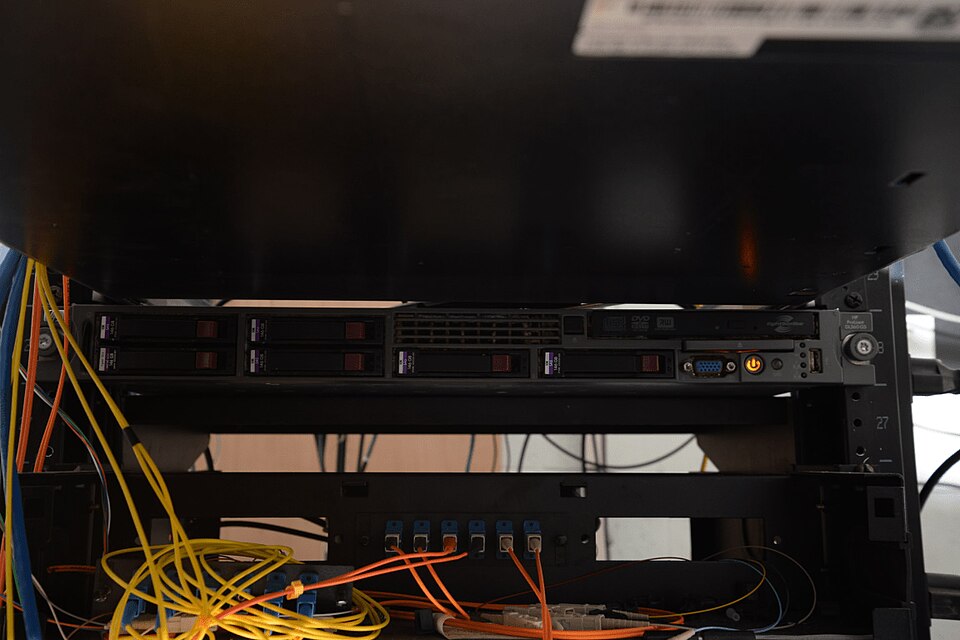 Infrastructure supporting strategic IT projects (e.g., Ncell’s 5G network) (Image: Federal Bureau of Investigation, Public domain, via Wikimedia Commons)
Based on the TU BCA syllabus for System Analysis And Design (CACS203), unit 8.
Discussion
Loading…