System Analysis And DesignUnit 212 min read
Project Management & Feasibility: Skills, Phases, Tools & Economic Checks
Unit 2 of System Analysis and Design covers project management frameworks (PMBOK, Agile, Waterfall), feasibility analysis (technical, operational, economic), project planning (WBS, Gantt charts), risk management, and economic feasibility metrics (NPV, ROI, BCR). Includes real-world case studies from Nepali tech firms a
Core Concepts
1. Software Project Management: The Big Picture
Software project management (SPM) is the application of knowledge, skills, tools, and techniques to project activities to meet project requirements. It ensures that projects are completed on time, within budget, and to the required quality standards.
Key Roles and Responsibilities of a Project Manager
A project manager (PM) is the leader of the project team and is responsible for:
- Planning: Defining project scope, objectives, and deliverables.
- Organizing: Assigning tasks, resources, and timelines.
- Leading: Motivating the team and resolving conflicts.
- Controlling: Monitoring progress, quality, and budget.
classDiagram
    class ProjectManager {
        +Plan scope and objectives
        +Assign tasks and resources
        +Monitor progress and risks
        +Control budget and quality
        +Communicate with stakeholders
    }
    class TeamMember {
        +Execute tasks
        +Report progress
        +Collaborate with peers
    }
    class Stakeholder {
        +Provide requirements
        +Review deliverables
        +Approve milestones
    }
    ProjectManager "1" --> "*" TeamMember : Manages
    ProjectManager "1" --> "*" Stakeholder : Communicates
Skills of a Project Manager
| Skill Category | Key Skills |
|---|---|
| Technical Skills | Understanding SDLC, tools (Jira, Trello), and methodologies (Agile, Waterfall). |
| Leadership Skills | Team motivation, conflict resolution, and decision-making. |
| Communication Skills | Stakeholder management, reporting, and negotiation. |
| Organizational Skills | Time management, resource allocation, and risk assessment. |
2. Project Management Methodologies
Different methodologies are used based on project needs. Here’s a comparison:
| Methodology | Description | Advantages | Disadvantages |
|---|---|---|---|
| Waterfall | Linear, sequential phases (requirements → design → implementation → testing). | Simple, well-documented, easy to manage. | Inflexible, late changes are costly. |
| Agile | Iterative, incremental development (sprints, continuous feedback). | Flexible, customer-focused, early delivery. | Requires active stakeholder involvement. |
| Spiral | Combines iterative development with risk analysis. | Risk-driven, flexible, high-quality deliverables. | Complex, requires expert risk assessment. |
| Hybrid | Mix of Waterfall and Agile (e.g., Agile for development, Waterfall for testing). | Balances structure and flexibility. | Complex to manage. |
3. Feasibility Analysis: Is the Project Worth It?
Feasibility analysis evaluates whether a project is viable in terms of technical, operational, economic, and legal aspects.
Types of Feasibility
- Technical Feasibility
- Can the project be built with existing technology?
- Example: Can a mobile app for eSewa integrate with Nepal’s payment gateway (NPCI)?
- Tools: Feasibility study reports, prototype testing.
Operational Feasibility
- Will the system be used by stakeholders?
- Example: Will NTC employees adopt a new billing software?
- Tools: User surveys, stakeholder interviews.
Economic Feasibility
- Is the project cost-effective?
- Metrics: Net Present Value (NPV), Return on Investment (ROI), Benefit-Cost Ratio (BCR).
- Example: Should Nepal Rastra Bank invest in a new fraud detection system?
- Cost: ₹50 lakh for development.
- Benefits: ₹1 crore saved annually from fraud.
- NPV Calculation:
Where:
- = Cash flow at time ,
- = Discount rate (e.g., 10%),
- = Initial investment.
Legal Feasibility
- Does the project comply with laws (e.g., GDPR for data privacy)?
- Example: Does Khalti’s new loan service comply with Nepal’s financial regulations?
4. Project Planning: Breaking Down the Work
Work Breakdown Structure (WBS)
A WBS divides the project into smaller, manageable tasks. Example for a Daraz order processing system:
1.0 System Requirements
   1.1 Gather user stories
   1.2 Define system scope
2.0 System Design
   2.1 Database schema
   2.2 API design
3.0 Development
   3.1 Frontend (React)
   3.2 Backend (Node.js)
4.0 Testing
   4.1 Unit testing
   4.2 Integration testing
5.0 Deployment
   5.1 Server setup (AWS)
   5.2 User training
Gantt Charts
Visualize project timelines. Example: Developing a Pathao driver app in 6 months.
| Task                | Jan | Feb | Mar | Apr | May | Jun |
|---------------------|-----|-----|-----|-----|-----|-----|
| Requirements        |  X  |  X  |     |     |     |     |
| Design              |     |  X  |  X  |     |     |     |
| Development         |     |     |  X  |  X  |  X  |     |
| Testing             |     |     |     |  X  |  X  |  X  |
| Deployment          |     |     |     |     |     |  X  |
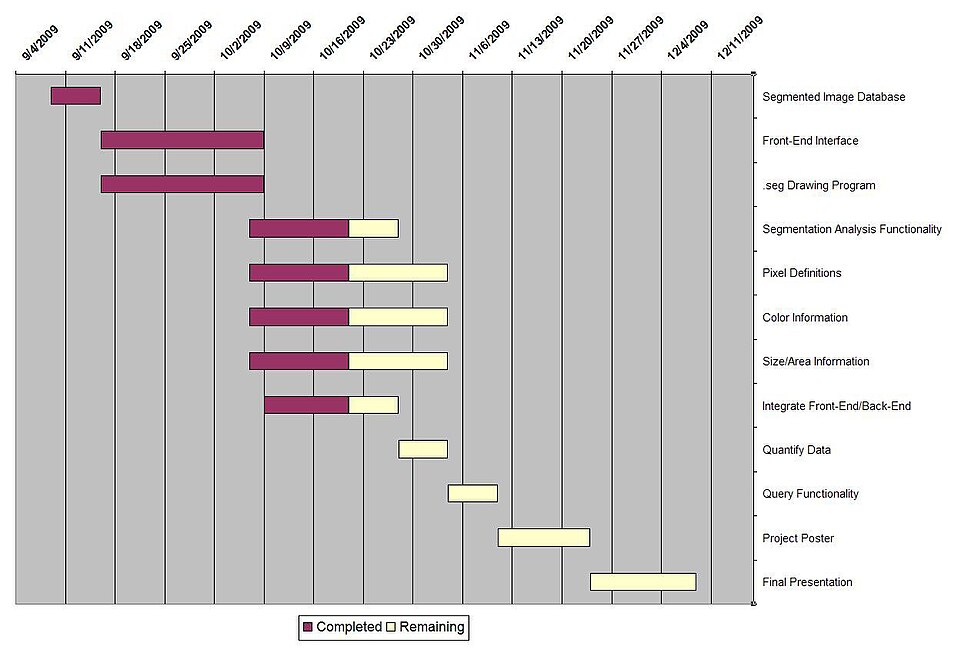 Example Gantt chart for a 6-month software project (Image: Alex Thompson and Derrek Harrison, Public domain, via Wikimedia Commons)
5. Risk Management in Projects
Risks are uncertainties that can impact project success. Common risks in Nepali tech projects:
- Technical Risks: Integration failures (e.g., Nepal Stock Exchange (NEPSE) trading system downtime).
- Schedule Risks: Delays due to unclear requirements (e.g., eSewa API changes).
- Budget Risks: Cost overruns (e.g., NTC fiber optic expansion).
Risk Management Process:
- Identify: List potential risks (e.g., cyberattacks on Khalti).
- Analyze: Assess impact and probability (e.g., high impact, medium probability).
- Plan: Develop mitigation strategies (e.g., backup servers, penetration testing).
- Monitor: Track risks and update plans.
6. Economic Feasibility: Crunching the Numbers
Key Metrics
| Metric | Formula | Interpretation |
|---|---|---|
| NPV | Positive NPV = profitable project. | |
| ROI | Higher ROI = better investment. | |
| BCR | BCR > 1 = viable project. | |
| Payback Period | Time to recover initial investment. | Shorter payback = faster return. |
Worked Example: Ncell’s New Customer Portal
- Initial Cost (C₀): ₹20 lakh
- Annual Benefit (C₁ to C₅): ₹8 lakh/year for 5 years
- Discount Rate (r): 12%
- NPV Calculation:
In the Real World
eSewa’s Project Management
- Agile Methodology: eSewa uses 2-week sprints to release features like UPI integration. Their PMs prioritize user feedback (e.g., adding Khalti QR support).
- Feasibility Check: Before launching a new payment gateway, eSewa evaluates technical feasibility (API compatibility) and economic feasibility (transaction fees vs. user adoption).
NTC’s Fiber Optic Expansion
- Waterfall Approach: NTC uses a structured plan for rolling out fiber in Kathmandu, Pokhara, and Biratnagar. Each phase (design → construction → testing) must be completed before moving to the next.
- Risk Management: NTC identifies risks like land acquisition delays and mitigates them by negotiating early with local governments.
Daraz’s Order Processing System
- Gantt Charts: Daraz’s PMs use Gantt charts to track tasks like inventory integration, payment gateway setup, and driver app updates. Delays in one task (e.g., Khalti API issues) can cascade into shipping delays.
- Economic Feasibility: Daraz calculates ROI for expanding to new cities (e.g., Dhangadi). If the cost to set up a warehouse is ₹50 lakh and projected sales are ₹1.5 crore/year, the ROI is 300%, making it highly viable.
Exam Tip
- Define Clearly: Always define terms like feasibility analysis, WBS, and Gantt charts before using them in answers.
- Use Diagrams: For questions on DFDs, Gantt charts, or risk matrices, draw them neatly. Even if not asked, include a simple diagram to illustrate your answer.
- Worked Examples: For economic feasibility, show calculations (e.g., NPV, ROI) step-by-step. Examiners love detailed numerical examples.
- Real-World Links: Relate answers to Nepali companies (e.g., NTC’s fiber project, eSewa’s Agile sprints). This shows practical understanding.
- Compare Methodologies: For questions on Waterfall vs. Agile, use a comparison table with pros/cons.
- Feasibility Checklist: For feasibility analysis, list all 4 types (technical, operational, economic, legal) and give a brief example for each.
Past Exam Questions Solved
Question: Explain the roles and responsibilities of a software project manager.
Answer: A software project manager (PM) has five key roles:
- Leader: Motivates the team, resolves conflicts, and ensures collaboration.
- Planner: Defines the project scope, timeline (using Gantt charts), and budget.
- Organizer: Assigns tasks via WBS, allocates resources, and sets milestones.
- Controller: Monitors progress (using tools like Jira), tracks risks, and ensures quality.
- Communicator: Bridges gaps between developers, stakeholders, and clients.
Visual:
Question: Describe the steps in feasibility analysis.
Answer: Feasibility analysis follows 5 steps:
- Define Objectives: Clarify project goals (e.g., "Automate NEPSE trading system").
- Gather Data: Collect technical specs, user requirements, and cost estimates.
- Evaluate Feasibility:
- Technical: Can the system be built? (e.g., Does NEPSE’s legacy system support APIs?)
- Operational: Will users adopt it? (e.g., Will traders prefer a new UI?)
- Economic: Is it cost-effective? (e.g., NPV > 0?)
- Legal: Does it comply with laws? (e.g., SEBON regulations for NEPSE).
- Risk Assessment: Identify risks (e.g., data migration failures) and mitigation plans.
- Recommendation: Approve, modify, or reject the project based on findings.
Final Checklist for Exams
- Can you draw a Gantt chart for a sample project?
- Can you calculate NPV/ROI for a given scenario?
- Can you compare Agile vs. Waterfall in a table?
- Can you list 4 feasibility types with examples?
- Can you explain the PM’s role using a state diagram?
Based on the TU BCA syllabus for System Analysis And Design (CACS203), unit 2.
Discussion
Loading…