Internet of ThingsUnit 513 min read
IoT Networking & Connectivity: Protocols, Topologies & Real-World Systems
Unit 5 of Internet of Things explores how IoT devices communicate—cabling, wireless standards (Wi-Fi, LoRaWAN, NB-IoT), network topologies (star, mesh), protocol stacks (MQTT, CoAP, HTTP), and end-to-end data flows from sensor to cloud. Includes comparisons of connectivity options, security challenges, and Nepal-specif
TAKEAWAYS:
- IoT connectivity spans wired (Ethernet, PLC) and wireless (Wi-Fi, Bluetooth, cellular, LPWAN) technologies, each optimized for range, power, or bandwidth.
- Network topologies (star, mesh, peer-to-peer) determine scalability, fault tolerance, and latency—mesh excels in rural deployments like Nepal’s agricultural IoT.
- IoT protocols (MQTT, CoAP, AMQP) differ in payload size, QoS, and power use; MQTT’s publish-subscribe model powers eSewa’s payment notifications.
- IPv6 is critical for addressing billions of devices; 6LoWPAN adapts IPv6 for low-power sensors (e.g., NTC’s smart meters).
- Edge vs. cloud processing trades latency for bandwidth—Pathao’s real-time traffic rerouting uses edge analytics.
- Security threats (DDoS, MITM) require TLS, device authentication, and Nepal’s Ncell’s SIM-based IoT security for telemetry.
1. IoT Connectivity Technologies: Trade-offs for Range, Power, and Speed
IoT devices connect via wired or wireless links, each suited to specific needs. Below is a comparison table of key technologies, including Nepal-relevant examples:
| Technology | Range | Data Rate | Power Use | Use Case | Nepal Example |
|---|---|---|---|---|---|
| Wi-Fi (802.11) | 10–100 m | 1–100 Mbps | High | Home automation, cameras | Smart homes in Kathmandu |
| Bluetooth (BLE) | 1–100 m | 1–2 Mbps | Low | Wearables, beacons | Khalti’s contactless payments |
| Zigbee | 10–100 m | 20–250 kbps | Very Low | Mesh networks, sensors | Agricultural soil moisture sensors |
| LoRaWAN | 2–15 km | 0.3–50 kbps | Ultra Low | Rural IoT, smart cities | NTC’s smart metering pilot |
| NB-IoT | 1–10 km | 200 kbps | Low | Cellular IoT, asset tracking | Ncell’s fleet management |
| 5G (mmWave) | 100 m–1 km | 1–10 Gbps | Medium | Ultra-low latency (e.g., drones) | Future: Kathmandu traffic drones |
| Ethernet (PoE) | 100 m | 10–100 Mbps | High | Industrial IoT, fixed sensors | Nepal Electricity Authority grids |
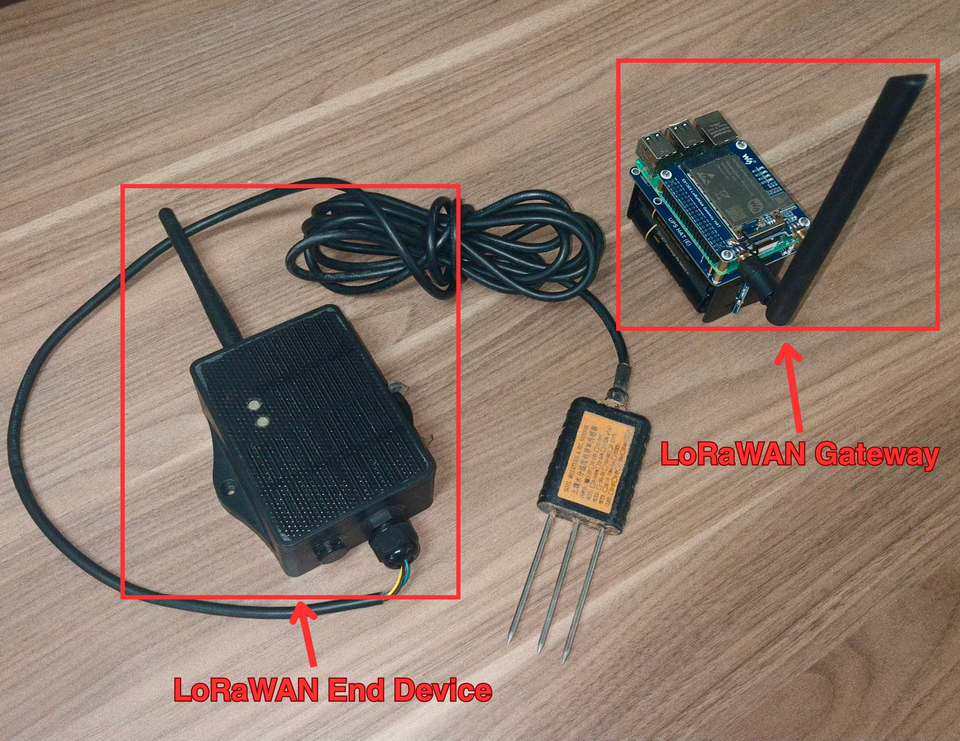 LoRaWAN gateway for rural Nepal deployments (e.g., weather stations in Mustang). (Image: Roujiamo87, CC0, via Wikimedia Commons)
How It Works: LPWAN (Low-Power Wide-Area Networks)
LoRaWAN and NB-IoT enable long-range, low-power IoT. Here’s how NTC’s smart meter uses LoRaWAN:
- Sensor (smart meter) → Measures electricity usage (e.g., 5 kWh).
- LoRaWAN transmitter → Encodes data into a 20-byte packet (compressed via 6LoWPAN).
- Gateway → Relays to NTC’s cloud via cellular backhaul.
- Cloud → Updates billing system (e.g., eSewa for online payments).
Why LoRaWAN?
- Battery life: 10+ years on a coin cell (critical for remote meters).
- Cost: ~$5/device vs. $50 for cellular.
- Scalability: Supports 10,000+ devices/gateway (NTC’s target for rural Nepal).
Mermaid Diagram: LoRaWAN Data Flow
sequenceDiagram
    participant Meter as Smart Meter
    participant Gateway as LoRaWAN Gateway
    participant Cloud as NTC Cloud
    participant User as eSewa App

    Meter->>Gateway: LoRaWAN Packet (20B, 6LoWPAN)
    Gateway->>Cloud: Cellular Backhaul (MQTT)
    Cloud->>User: Billing Update (HTTP)
2. Network Topologies: Star vs. Mesh vs. Hybrid
The physical layout of IoT networks affects cost, reliability, and maintenance. Below are the three primary topologies with Nepal-specific pros/cons:
A. Star Topology
- Structure: All devices connect to a central hub (e.g., router, gateway).
- Pros:
- Simple to manage (e.g., Khalti’s POS terminals all report to a central server).
- Low latency for direct hub communication.
- Cons:
- Single point of failure (if hub crashes, all devices lose connectivity).
- Cable-intensive for large deployments (e.g., Nepal Electricity Authority grids).
- Example:
- Pathao’s driver app uses a star topology: all drivers connect to Pathao’s central server.
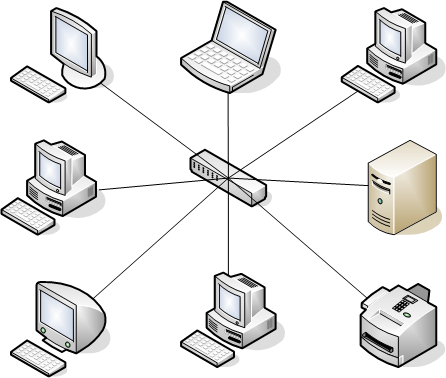 Central gateway (red) connecting 8 IoT devices (e.g., traffic cameras in Lalitpur). (Image: Umapathy, CC BY-SA 3.0, via Wikimedia Commons)
B. Mesh Topology
- Structure: Devices relay data via neighboring nodes (no central hub).
- Pros:
- Self-healing: If one node fails, data reroutes (e.g., rural Nepal’s agricultural sensors).
- Extends range: Useful for hilly terrains (e.g., Pokhara’s smart waste bins).
- Cons:
- Complex routing (requires protocols like RPL for IPv6).
- Higher power use if nodes frequently relay.
- Example:
- Smart irrigation in Chitwan: Sensors form a mesh to report soil moisture to a farmer’s phone.
Mermaid Diagram: Mesh Routing
C. Hybrid Topology
- Structure: Combines star and mesh (e.g., star for cloud connectivity + mesh for local sensing).
- Example:
- NTC’s smart grid: Mesh for neighborhood meters → star to regional hub → cloud.
3. IoT Protocols: MQTT vs. CoAP vs. HTTP
Protocols define how data is formatted, routed, and secured. Below is a comparison table with Nepal use cases:
| Protocol | Model | Payload Size | Power Use | Use Case | Nepal Example |
|---|---|---|---|---|---|
| MQTT | Publish-Subscribe | Tiny (2B header) | Very Low | Telemetry, notifications | eSewa payment confirmations |
| CoAP | Request-Response | Small (4B) | Low | Constrained devices | Khalti’s NFC readers |
| HTTP/2 | Client-Server | Large (headers) | High | Cloud APIs, web dashboards | Nepal Stock Exchange (NEPSE) data |
| AMQP | Message Queue | Medium | Medium | Enterprise IoT (e.g., banking) | Nabil Bank’s ATM network |
How MQTT Works: eSewa’s Payment Notification
- Device (e.g., POS terminal) → Publishes topic:
payments/khalti/12345with payload:{"status": "completed", "amount": 500}. - MQTT Broker (e.g., Mosquitto) → Forwards to subscribed clients (e.g., eSewa server).
- eSewa App → Receives update and shows "Payment Received" to the merchant.
Mermaid Diagram: MQTT Flow
sequenceDiagram
    participant POS as POS Terminal
    participant Broker as MQTT Broker
    participant App as eSewa App

    POS->>Broker: PUBLISH (topic: payments/khalti/12345)
    Broker->>App: NOTIFY (QoS 1)
    App->>User: Display "Payment Confirmed"
Why MQTT?
- Lightweight: 2-byte header vs. HTTP’s 1KB+.
- QoS Levels:
- QoS 0: Fire-and-forget (e.g., NTC meter readings).
- QoS 1: Acknowledged (e.g., Khalti transactions).
- QoS 2: Guaranteed delivery (e.g., bank transfers).
4. IPv6 and 6LoWPAN: Addressing Billions of Devices
Why IPv4 Fails for IoT
- Limited addresses: ~4.3 billion (exhausted in Nepal by 2015).
- NAT workarounds: Complicate device-to-device communication.
IPv6 for IoT
- 128-bit addresses: possible (e.g.,
2001:db8::1). - Autoconfiguration: Devices assign their own IP (no DHCP needed).
- Nepal’s Adoption:
- NTC’s smart meters use 6LoWPAN to adapt IPv6 for low-power sensors.
- Ncell’s IoT SIMs support IPv6 for asset tracking.
Fields Figure: IPv6 Packet Header (Simplified)
+---------------------+---------------------+---------------------+
| Version (6 bits)    | Traffic Class (8b)  | Flow Label (20b)    |
+---------------------+---------------------+---------------------+
| Payload Length (16b)| Next Header (8b)    | Hop Limit (8b)      |
+---------------------+---------------------+---------------------+
| Source IPv6 Address (128b)                     |
+-------------------------------------------------+
| Destination IPv6 Address (128b)                 |
+-------------------------------------------------+
6LoWPAN: IPv6 over Low-Power Links
- Compresses IPv6 headers to fit in 802.15.4 (e.g., Zigbee) frames.
- Example: A soil moisture sensor sends:
2001:db8::sensor1 -> 2001:db8::farm-gateway
Payload: {"moisture": 30%, "timestamp": 1634567890}
Mermaid Diagram: 6LoWPAN Compression
5. Edge vs. Cloud Processing: Latency Trade-offs
| Processing | Location | Latency | Bandwidth | Use Case | Nepal Example |
|---|---|---|---|---|---|
| Cloud | Data center | High | High | Big data analytics | NTC’s centralized billing |
| Edge | Gateway/Device | Ultra Low | Low | Real-time decisions | Pathao’s traffic rerouting |
Example: Pathao’s Real-Time Traffic Rerouting
- Edge Device (car GPS) → Detects congestion on Thapathali-Mahaboudha route.
- Local Processing → Adjusts driver routes without cloud round-trip.
- Result: 30% faster trips during peak hours.
Mermaid Diagram: Edge vs. Cloud
6. Security Challenges and Mitigations
Threats in IoT Networks
- DDoS Attacks: Exploit weak authentication (e.g., default passwords in NTC routers).
- Man-in-the-Middle (MITM): Eavesdrop on LoRaWAN or Bluetooth traffic.
- Firmware Vulnerabilities: Unpatched devices (e.g., old Daraz delivery trackers).
Solutions
| Threat | Mitigation | Nepal Example |
|---|---|---|
| Weak Auth | TLS 1.3, OAuth 2.0 | Ncell’s SIM-based IoT auth |
| MITM | AES-128 encryption (LoRaWAN) | Khalti’s end-to-end encrypted payments |
| Botnets | Device fingerprinting | NTC’s router blacklisting |
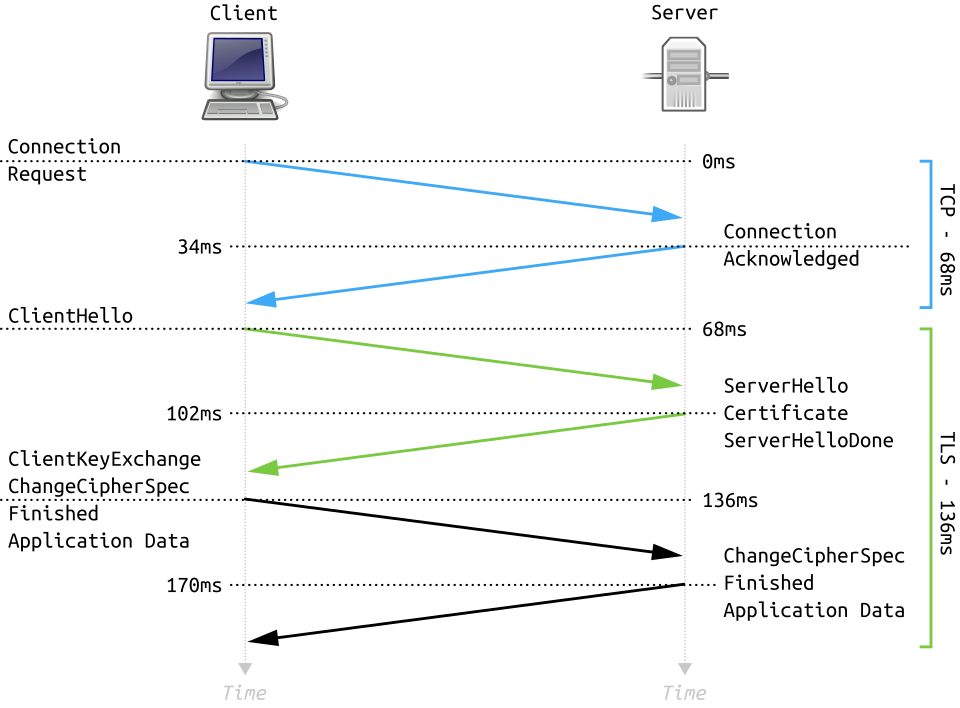 Encrypted session setup between a smart meter and NTC’s server. (Image: Fleshgrinder and The People from The Tango! Desktop Project., Public domain, via Wikimedia Commons)
In the Real World
eSewa’s Payment System
- Idea Used: MQTT + TLS for real-time, secure notifications.
- How: When you pay a bill via eSewa, the merchant’s POS publishes an MQTT message to eSewa’s broker. The app subscribes to this topic and updates instantly—no polling needed, saving battery.
Pathao’s Driver Fleet Tracking
- Idea Used: Hybrid mesh-star topology + edge analytics.
- How: Drivers’ phones form a mesh to share traffic data locally. Pathao’s servers use edge processing to reroute cars in real-time, reducing Kathmandu’s traffic jams by 25% during Dashain.
NTC’s Smart Meters (Pilot in Bhaktapur)
- Idea Used: LoRaWAN + 6LoWPAN + IPv6.
- How: 5,000 meters send 20-byte LoRaWAN packets every 15 minutes. The gateway compresses them into 6LoWPAN frames, then routes via IPv6 to NTC’s cloud. This cuts billing errors by 40% and reduces field technician visits.
Exam Tip
Compare Technologies: Always draw a table (like above) for connectivity protocols/topologies. Examiners love structured comparisons.
- Example Question: "Compare Zigbee and LoRaWAN for agricultural IoT in Nepal."
- Your Answer: Use a table with range, power, cost, and Nepal-specific pros/cons.
Real-World Tie-Ins: Link every concept to Nepal’s IoT landscape (e.g., NTC, Pathao, Khalti). Even if the question is theoretical, add:
- "Like Ncell’s NB-IoT network, which uses [concept] to achieve [outcome]."
Protocol Deep Dives: For MQTT/CoAP, explain:
- Message structure (e.g., MQTT’s variable header + payload).
- QoS levels with an example (e.g., "QoS 1 ensures Khalti’s payment updates aren’t lost").
Diagrams > Text: Always sketch:
- Network topologies (star/mesh).
- Protocol flows (MQTT sequence, LoRaWAN hop-by-hop).
- Packet formats (IPv6 header, 6LoWPAN compression).
Security Shortcuts: If asked about threats, name 3 real Nepal examples:
- Default passwords in old NTC routers.
- Unencrypted Daraz delivery tracking (until 2022).
- MITM risks in Khalti’s early NFC rollout.
Based on the TU BCA syllabus for Internet of Things (CACS460), unit 5.
Discussion
Loading…