Society and Ethics in ITUnit 312 min read
Anonymity, Security, Privacy & Civil Liberties in IT
Unit 3 of Society and Ethics in IT explores the tension between personal freedoms (anonymity, privacy) and societal needs (security, civil liberties), analyzing how IT systems balance these through encryption, surveillance laws, and digital rights frameworks—with case studies from Nepal’s eSewa and global tech giants.
Core Concepts & Definitions
1. Anonymity vs. Pseudonymity vs. Privacy
These terms are often confused but serve distinct purposes in digital spaces:
| Term | Definition | Example in Nepal | Example Worldwide |
|---|---|---|---|
| Anonymity | The state of being not identifiable by anyone, even system administrators. | A user posting on an anonymous forum like Khabarhub’s comment section (no name tied to IP). | Tor network: Routes traffic so your real IP is hidden from websites. |
| Pseudonymity | Using a fake identity (e.g., username) while still being traceable by admins. | A Daraz seller using "Shop_XYZ" instead of their real name but linked to their account. | Reddit usernames: You can post under "User123" but Reddit knows your email/IP if needed. |
| Privacy | The right to control who accesses your personal data (even if identifiable). | eSewa users hiding their transaction history from others but visible to eSewa. | Apple’s "Sign in with Apple": Hides your email from apps unless you choose to share. |
Why it matters: Anonymity is hard to enforce in digital systems (e.g., ISPs log IPs, cookies track you). Pseudonymity is a compromise (e.g., WhatsApp encrypts messages but knows your phone number). Privacy is a legal right (e.g., Nepal’s Right to Information Act, 2064).
2. Security: Protecting Data from Unauthorized Access
Security is the technical safeguard that enables (or breaks) anonymity and privacy. Key mechanisms:
A. Encryption: The Lock on Your Data
How it works: Encryption converts data into unreadable ciphertext using an algorithm and a key. Only someone with the key can decrypt it.
flowchart TD
    A["Plaintext (e.g., 'My password is 123')"] -->|"Encryption Algorithm (AES-256)"| B["Ciphertext (e.g., 'ؤ¥#$%^&')"]
    B -->|"Decryption (with private key)"| C["Plaintext"]
Real-world examples:
- WhatsApp: Uses Signal Protocol for end-to-end encryption. Even WhatsApp can’t read your messages.
- eSewa: Encrypts transaction data during transfer (though servers may store logs).
- Ncell’s "Secure Login": Uses TLS/SSL to encrypt data between your phone and Ncell’s servers.
Weaknesses:
- Key management: If you lose your encryption key (e.g., forgotten password), data is lost forever.
- Backdoors: Governments can force companies to weaken encryption (e.g., Nepal’s 2018 cybersecurity law requiring data localization).
B. Surveillance vs. Security: A Delicate Balance
Surveillance is the monitoring of individuals/groups, often by governments or corporations. It conflicts with privacy but is justified for security.
| Type of Surveillance | How It Works | Nepal Example | Global Example |
|---|---|---|---|
| Mass Surveillance | Collecting data on everyone (e.g., CCTV, metadata logs). | NTC’s internet throttling: Logs all user IPs to manage bandwidth. | China’s Social Credit System: Tracks citizens’ behavior for "trust scores." |
| Targeted Surveillance | Monitoring specific individuals (e.g., suspects). | Police using ANPR cameras to track stolen vehicles in Kathmandu. | NSA’s PRISM program: Spied on individuals like Edward Snowden. |
| Self-Surveillance | Users voluntarily share data (e.g., social media). | Facebook (Meta) in Nepal: Users tag locations, but ads target them. | Google Maps: Tracks your location history unless you opt out. |
Ethical Dilemma:
- Pro-security argument: Surveillance stops crimes (e.g., Pathao’s fraud detection uses AI to flag suspicious rides).
- Pro-privacy argument: Mass surveillance chills free speech (e.g., journalists in Nepal avoiding topics for fear of being monitored).
3. Privacy: Legal and Ethical Frameworks
Privacy is not just about hiding data—it’s about consent, control, and legal protection.
A. Key Privacy Laws in Nepal
- Right to Information Act, 2064 (2007)
- Grants citizens access to government-held data but does not explicitly protect digital privacy.
- Electronic Transactions Act, 2063 (2008)
- Recognizes digital signatures and data protection but lacks strong enforcement.
- Nepal’s Data Protection Bill (Draft, 2022)
- Proposes GDPR-like rules (e.g., user consent for data collection, right to be forgotten).
- Status: Still under debate—Nepal lacks a dedicated data protection authority (unlike India’s DPDP Act).
B. Global Privacy Standards
| Law/Standard | Country/Region | Key Provisions |
|---|---|---|
| GDPR (General Data Protection Regulation) | EU | Mandates explicit consent, data minimization, and right to erasure. |
| CCPA (California Consumer Privacy Act) | USA | Allows users to opt out of data sales and see what data companies collect. |
| PDPA (Personal Data Protection Act) | India | Requires data localization (storing data within India) and user consent. |
How Nepal Compares:
- Weak enforcement: No heavy fines for violations (unlike GDPR’s €20M or 4% of revenue).
- Lack of transparency: Many Nepali apps (e.g., Khalti, eSewa) don’t disclose how they share data with foreign servers.
4. Civil Liberties in the Digital Age
Civil liberties (e.g., freedom of speech, assembly) are threatened when:
- Governments censor the internet (e.g., blocking websites).
- Corporations control access (e.g., Netflix geo-blocking in Nepal).
- Algorithms discriminate (e.g., banks denying loans based on social media activity).
Case Study: Nepal’s Internet Shutdowns
Example: During protests (e.g., 2015 fuel price hike), NTC throttled or shut down internet to prevent coordination.
- Impact on civil liberties: Violated freedom of expression (Article 17 of Nepal’s Constitution).
- Technical method: Deep packet inspection (DPI) to block VoIP (e.g., WhatsApp calls) and social media.
flowchart TD
    A["Protesters use WhatsApp to organize"] --> B["Government orders NTC to block VoIP"]
    B --> C["NTC uses DPI to filter traffic"]
    C --> D["WhatsApp calls fail, but SMS works"]
    D --> E["Protesters switch to SMS or VPNs"]
Ethical Question: Is shutting down the internet necessary for security or an abuse of power?
5. Anonymity Tools: How to Stay Hidden Online
| Tool/Method | How It Works | Nepal Example | Limitations |
|---|---|---|---|
| VPN (Virtual Private Network) | Routes traffic through a remote server, masking your IP. | NordVPN/Piasa VPN: Used by Nepali journalists to bypass geo-blocks. | Some VPNs log data; free VPNs may sell it. |
| Tor Browser | Bounces traffic through 3+ volunteer nodes, hiding your path. | Accessing blocked sites (e.g., during lockdowns). | Slow speeds; exit nodes can be monitored. |
| Anonymous Email | Uses burner emails (e.g., ProtonMail) or disposable addresses. | Avoiding spam when signing up for Daraz/Khalti promotions. | ProtonMail stores metadata (though encrypted). |
| Cryptocurrency | Bitcoin/Litecoin can hide transactions (if used with privacy coins like Monero). | Darknet markets (illegal in Nepal) or donations to NGOs. | Not anonymous: Blockchain is public; exchanges require KYC. |
Worked Example: Using Tor to Access Blocked Content in Nepal
- Problem: During the 2021 COVID-19 lockdown, some news sites (e.g., Republica) were blocked.
- Solution: A journalist uses Tor Browser to access the site.
- Tor routes their request through 3 nodes: Kathmandu → Singapore → Berlin → Republica’s server.
- Republica’s server sees the request as coming from Berlin, not Nepal.
- Risk: If the exit node (Berlin) is compromised, an attacker could see the request.
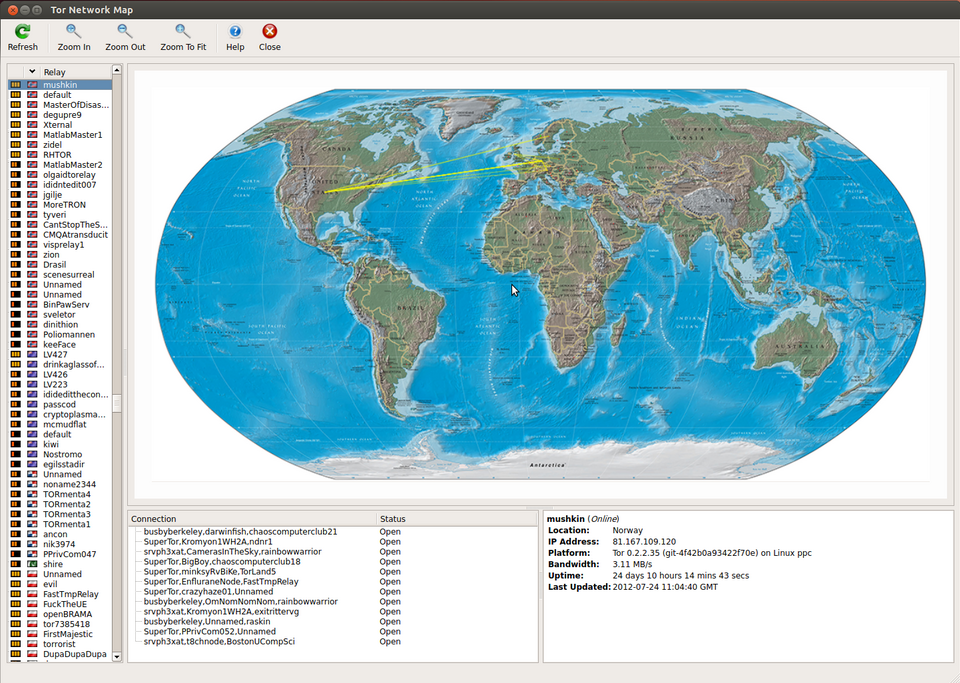 How Tor routes traffic through 3+ nodes to hide user identity (Image: Tor Project, CC BY 3.0 us, via Wikimedia Commons)
6. Ethical Dilemmas: When Security vs. Privacy Collide
Scenario 1: Contact Tracing Apps (COVID-19)
- Pro-security: Apps like Nepal’s "Swasthya App" track COVID-19 cases to alert users.
- Pro-privacy: Users worry about government misuse of location data.
- Compromise: Apps use bluetooth signals (not GPS) to avoid tracking individuals continuously.
Scenario 2: Facial Recognition in Banks
- Use case: Nabil Bank uses facial recognition for ATM logins.
- Privacy concern: What if the data is hacked or sold?
- Ethical question: Is convenience worth the risk of losing biometric privacy?
In the Real World
eSewa’s Privacy vs. Security Trade-off
- Idea used: Pseudonymity + encryption.
- How it works: Your name is linked to your eSewa ID, but transactions are encrypted. However, eSewa logs all transactions for fraud detection.
- Real impact: If a hacker breaches eSewa’s database, they get user IDs + transaction histories (not full names).
Khalti’s Data Sharing with Foreign Servers
- Idea used: Data localization laws vs. cloud storage.
- How it works: Khalti stores user data on AWS servers in the US, violating Nepal’s draft data localization rules.
- Real impact: If the US government requests Khalti’s data (e.g., under FISA), Nepal has no legal recourse.
Pathao’s Driver Surveillance
- Idea used: Targeted surveillance for safety.
- How it works: Pathao uses GPS tracking + AI to monitor driver behavior (e.g., sudden braking).
- Ethical issue: Drivers argue this is invasive, but Pathao claims it reduces accidents.
Exam Tip
This unit is conceptual but application-heavy. Exams test:
- Definitions: Differentiate anonymity, pseudonymity, privacy (expect 2-mark questions).
- Case studies: Relate concepts to Nepal’s laws (e.g., Right to Information Act) or apps (e.g., eSewa, Khalti).
- Ethical dilemmas: Analyze surveillance trade-offs (e.g., "Is NTC’s internet throttling justified?").
- Tools: Explain how VPNs/Tor work and their limitations (often in short-answer questions).
Common pitfalls:
- Confusing encryption (security) with anonymity (hiding identity).
- Ignoring legal context (e.g., GDPR vs. Nepal’s weak data laws).
- Overlooking real-world examples—examiners love eSewa, Khalti, or NTC as case studies.
High-scoring strategy:
- Use bullet points for comparisons (e.g., surveillance types).
- Draw diagrams for processes (e.g., Tor routing, encryption flow).
- Link to Nepal in every answer (e.g., "Like NTC’s throttling, China’s Great Firewall...").
Showing how traffic hops through 3+ nodes to obscure origin (Image: Tor Project, CC BY 3.0 us, via Wikimedia Commons)
Based on the TU BIT syllabus for Society and Ethics in IT (BIT358), unit 3.
Discussion
Loading…