Society and Ethics in ITUnit 19 min read
IT, Society & Ethics: Scope, Importance & Evolution
Unit 1 of Society and Ethics in IT introduces the dynamic relationship between information technology and society, covering its historical evolution, societal impact, and ethical dimensions. This note explores definitions, key concepts, real-world applications, and the role of IT in shaping modern life.
What is Information Technology (IT)?
Information Technology (IT) refers to the use of computers, software, networks, and other digital tools to store, process, and transmit information. It encompasses hardware, software, telecommunications, and data management systems that enable businesses, governments, and individuals to function efficiently.
Key Components of IT
classDiagram
class Hardware {
+Physical components (CPU, RAM, storage)
}
class Software {
+Programs (OS, applications)
}
class Networks {
+Internet, LAN, WAN
}
class Data {
+Databases, cloud storage
}
Hardware --> Software : Runs on
Software --> Networks : Communicates via
Networks --> Data : Transmits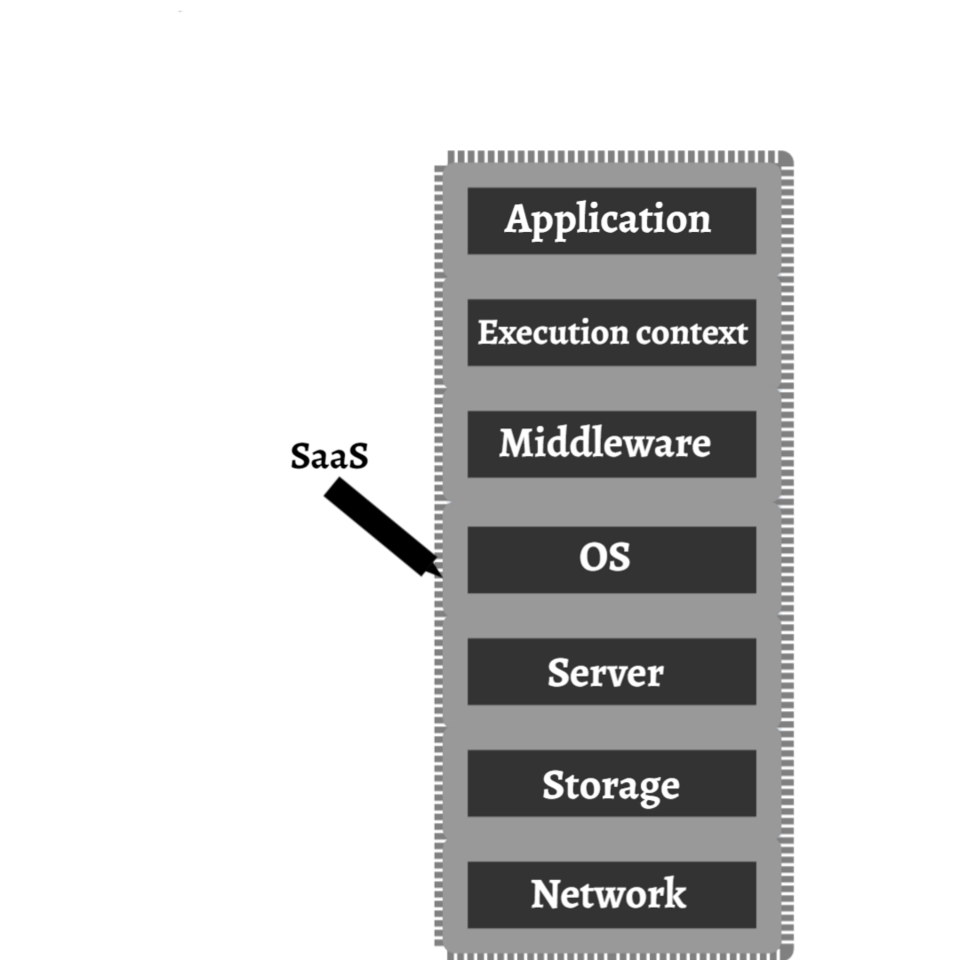 The structure of system software, application software, and firmware. (Image: Z1KA Original: UsPixeltoo, CC BY-SA 4.0, via Wikimedia Commons)
The Role of IT in Society
IT has revolutionized nearly every aspect of modern life, from communication to governance. Below are key areas where IT plays a critical role:
1. Communication & Connectivity
- Email & Messaging: Platforms like WhatsApp and Khalti rely on IT to enable instant communication and financial transactions.
- Social Media: Facebook and YouTube use IT to connect billions globally, influencing culture, politics, and business.
- Video Conferencing: Tools like Zoom and Google Meet leverage IT for remote work and education.
2. Business & E-Commerce
- Online Shopping: Daraz and Amazon use IT for inventory management, secure payments, and logistics tracking.
- Digital Banking: Nepal Rastra Bank (NRB) and Nabil Bank employ IT for online transactions, ATMs, and fraud detection.
- Supply Chain Management: Companies like Unilever use IT to optimize production and distribution globally.
3. Governance & Public Services
- E-Governance: eSewa and Nepal Government’s online services streamline tax payments, license renewals, and citizen services.
- Traffic Management: NTC (Nepal Telecommunications) and smart traffic systems use IT to reduce congestion in Kathmandu.
- Healthcare: Hospitals like Kathmandu Model Hospital use IT for patient records, telemedicine, and diagnostic tools.
4. Education & Research
- Online Learning: Tribhuvan University’s e-learning platforms and Coursera provide digital education.
- Research & AI: Google’s AI tools and Nepal’s weather forecasting models rely on IT for data analysis.
5. Entertainment & Media
- Streaming Services: Netflix and YouTube use IT to deliver content globally.
- Gaming: Steam and mobile games depend on IT for graphics, networking, and user interactions.
The Evolution of IT
IT has evolved through several generations, each introducing transformative technologies:
| Generation | Time Period | Key Technologies | Impact |
|---|---|---|---|
| 1st Gen | 1940s–1950s | Vacuum tubes, punch cards | Bulky computers for military/academia (e.g., ENIAC) |
| 2nd Gen | 1950s–1960s | Transistors, assembly language | Smaller machines, batch processing (e.g., IBM 1401) |
| 3rd Gen | 1960s–1970s | Integrated circuits, high-level languages | Personal computing begins (e.g., Apple I) |
| 4th Gen | 1970s–1990s | Microprocessors, GUI, internet | PCs, smartphones, and the World Wide Web (e.g., Ncell’s early mobile services) |
| 5th Gen | 1990s–Present | AI, IoT, cloud computing, quantum computing | Smart cities, autonomous vehicles, Nepal’s digital payment systems |
IT and Society: A Two-Way Relationship
IT does not exist in isolation—it interacts with society in complex ways:
1. Positive Impacts
- Economic Growth: IT creates jobs (e.g., Pathao’s gig economy) and boosts productivity.
- Access to Information: Google and Wikipedia democratize knowledge.
- Healthcare Advancements: AI diagnostics (e.g., Kathmandu University Hospital’s tools) improve patient care.
- Environmental Sustainability: Smart grids (e.g., Nepal Electricity Authority’s IT systems) optimize energy use.
2. Negative Impacts
- Digital Divide: Rural areas in Nepal lack IT infrastructure, widening inequality.
- Privacy Concerns: Facebook-Cambridge Analytica scandal exposed data misuse.
- Job Displacement: Automation (e.g., Daraz’s warehouse robots) replaces manual labor.
- Cybercrime: Phishing attacks on Nepalese banks (e.g., Global IME Bank hacks) threaten security.
Ethical Dimensions of IT
Ethics in IT ensures technology is used responsibly. Key ethical concerns include:
- Privacy: How companies like Google collect and use user data.
- Accessibility: Ensuring IT is usable by people with disabilities (e.g., screen readers in eSewa).
- Accountability: Who is responsible when AI makes a mistake (e.g., self-driving car accidents)?
- Digital Rights: Freedom of speech vs. cyberbullying (e.g., Facebook hate speech in Nepal).
The Future of IT and Society
Emerging trends like AI, IoT, and blockchain will further shape society:
- AI in Healthcare: Nepal’s AI-driven disease prediction models.
- Smart Cities: Kathmandu’s traffic management systems using IoT sensors.
- Cryptocurrency: Nepal’s exploration of digital rupee via blockchain.
In the Real World
eSewa’s Ethical Dilemma
- Idea Used: Data Privacy & Security
- How? eSewa handles sensitive financial data (e.g., bank details, transaction history). If hacked, it violates user privacy and ethical trust. eSewa must comply with Nepal’s Payment System Regulations to protect users.
Pathao’s Algorithmic Bias
- Idea Used: Fairness in AI
- How? Pathao’s ride-hailing algorithm might favor certain areas (e.g., Thapathali over Bhaktapur) due to data bias. This raises ethical questions about equitable service delivery.
Nepal Stock Exchange (NEPSE) Fraud Detection
- Idea Used: Ethical Use of Big Data
- How? NEPSE uses AI to detect fraudulent trading patterns. However, over-reliance on AI could lead to false accusations against innocent traders, highlighting the need for human oversight.
Exam Tip
This unit is conceptual but application-heavy. Expect:
- Short Definitions: Be ready to define IT, its components, and societal impacts in 2–3 sentences.
- Comparisons: Questions may ask you to compare generations of IT or positive vs. negative impacts.
- Case Studies: Relate IT concepts to Nepalese examples (e.g., eSewa, Ncell, Daraz).
- Ethical Scenarios: Analyze real-world dilemmas (e.g., AI bias, data privacy).
- Diagrams: Sketch flowcharts (e.g., IT’s societal impact) or timelines (e.g., IT evolution).
Key Formula to Remember:
- Moore’s Law: The observation that computer processing power doubles every 2 years, driving IT advancements.
Worked Example: Analyzing IT’s Role in Nepal’s Traffic System
Scenario: Kathmandu’s traffic congestion costs $1.5 billion annually (World Bank). The Nepal Traffic Police uses IT-based solutions like:
- Smart Traffic Lights: Adjust timings based on real-time data.
- Mobile Apps: Kathmandu Metro’s route optimization.
- AI Predictive Analytics: Forecast congestion hotspots.
Ethical Questions:
- Privacy: Do CCTV cameras (used for traffic monitoring) violate citizen privacy?
- Equity: Does the system benefit all areas equally, or just Lalitpur and Thapathali?
- Accountability: Who is responsible if AI misclassifies a traffic violation?
Solution:
- Privacy: Use anonymized data and clear public notifications.
- Equity: Expand IT infrastructure to rural roads (e.g., Pokhara’s smart traffic project).
- Accountability: Implement human-AI review systems for disputes.
Summary Table: IT’s Societal Impact
| Aspect | Positive Impact | Negative Impact | Ethical Consideration |
|---|---|---|---|
| Communication | Instant global connectivity (WhatsApp) | Cyberbullying, misinformation | Free speech vs. harm reduction |
| Business | E-commerce growth (Daraz) | Job displacement (automation) | Worker retraining programs |
| Governance | Efficient services (eSewa) | Digital divide (rural exclusion) | Subsidized IT access for marginalized groups |
| Healthcare | Telemedicine (KUH) | Data breaches (patient records) | GDPR-like regulations in Nepal |
| Education | Online learning (TU’s e-platforms) | Cheating via AI tools | Proctoring ethics |
Final Thoughts
IT is a double-edged sword—it empowers societies but also introduces ethical challenges. As future IT professionals, you must:
- Understand the technology’s societal role.
- Anticipate ethical dilemmas.
- Advocate for responsible innovation.
Based on the TU BIT syllabus for Society and Ethics in IT (BIT358), unit 1.
Discussion
Loading…