Introduction to TelecommunicationsUnit 612 min read
Switching Systems: Circuits, Packets, Messages & ATM
Unit 6 of Introduction to Telecommunications explores how calls, data, and signals are routed in networks—circuit switching (telephony), packet switching (internet), message switching (email), and ATM. Learn their architectures, protocols, and real-world trade-offs in Nepal’s telecom (NTC, Ncell) and global systems (Wh
What is Switching?
Switching is the process of establishing, maintaining, and terminating connections between two or more communication endpoints (e.g., phones, computers, servers). It determines how data travels from sender to receiver, balancing speed, cost, and reliability.
Types of Switching Systems
Switching systems are classified based on how connections are established and managed. The four primary types are:
classDiagram
    class SwitchingSystem {
        +<<abstract>> establishConnection()
        +<<abstract>> transmitData()
        +<<abstract>> terminateConnection()
    }
    class CircuitSwitching {
        +dedicatedPath()
        +real-time()
        +voice/data
    }
    class PacketSwitching {
        +store-and-forward()
        +best-effort()
        +internet
    }
    class MessageSwitching {
        +store-and-forward()
        +delay-tolerant()
        +email
    }
    class ATM {
        +fixed-length cells()
        +QoS guarantees()
        +broadband
    }
    SwitchingSystem <|-- CircuitSwitching
    SwitchingSystem <|-- PacketSwitching
    SwitchingSystem <|-- MessageSwitching
    SwitchingSystem <|-- ATM
1. Circuit Switching
Definition & How It Works
Circuit switching establishes a dedicated physical path between two devices for the entire duration of communication. Once connected, the path remains reserved until the call ends.
Key Features
- Dedicated Path: No sharing with other users (like a private phone line).
- Real-Time: Suitable for voice and video (low latency).
- Three-Phase Process:
- Connection Establishment (handshake).
- Data Transmission (continuous flow).
- Connection Termination (release).
Example: Telephone Network (NTC/Ncell)
When you call someone in Nepal:
- Your phone sends a dial tone (connection request).
- The local exchange (switch) finds the route to the recipient’s exchange.
- A physical circuit (copper/wireless) is reserved for the call.
- Once the call ends, the circuit is released for others.
Worked Example: Call Routing in Kathmandu
- Scenario: You call a friend in Pokhara via Ncell.
- Path:
Your Phone → Ncell Base Station → Ncell Switch (Kathmandu) → Fiber Optic Cable → Ncell Switch (Pokhara) → Friend’s Phone - Time: ~1 second to establish (delay due to switching nodes).
- Cost: You pay for the duration, not data volume.
Advantages & Disadvantages
| Advantages | Disadvantages |
|---|---|
| Guaranteed bandwidth | Wastes resources (idle time) |
| Low latency (real-time) | Expensive for bursty traffic |
| Simple to implement | No sharing (inefficient) |
Real-World Use Cases
- Traditional Telephony (NTC, Ncell): All voice calls in PSTN (Public Switched Telephone Network).
- ISDN (Integrated Services Digital Network): Older digital phone lines.
- Emergency Services (Police, Ambulance): Require uninterrupted, dedicated circuits.
2. Packet Switching
Definition & How It Works
Packet switching breaks data into small packets, each with a header (address + control info). Packets take independent paths to the destination and are reassembled at the receiver.
Key Features
- Store-and-Forward: Each router processes packets before forwarding.
- No Dedicated Path: Packets may take different routes (dynamic).
- Best-Effort Delivery: No guarantee of order or speed (unless QoS is applied).
Example: Internet (WhatsApp, Daraz, YouTube)
When you send a message on WhatsApp:
- Your phone splits the message into packets (e.g., 1500 bytes each).
- Each packet takes a different route via routers (e.g., Ncell → Internet Gateway → Google Servers).
- Packets may arrive out of order but are reassembled by WhatsApp’s server.
Worked Example: Downloading a Daraz Order
- Scenario: You order a book from Daraz (Nepal).
- Packet Journey:
Your Laptop → NTC Router → Daraz Server (AWS Cloud) → Delivery Partner’s App - Delay: If a packet is lost, TCP (Transport Layer) retransmits it.
- Cost: You pay for data volume, not connection time.
Advantages & Disadvantages
| Advantages | Disadvantages |
|---|---|
| Efficient (shared medium) | Variable delay (jitter) |
| Scalable (internet) | Packet loss possible |
| Flexible (supports bursty traffic) | Needs error correction |
Real-World Use Cases
- Internet (All Apps): WhatsApp, YouTube, Daraz, eSewa.
- Corporate Networks: Banks (NMB, Global IME) use packet switching for transactions.
- IoT Devices: Smart meters (NTC) send small data packets.
3. Message Switching
Definition & How It Works
Message switching stores entire messages at intermediate nodes before forwarding. Used where delay is acceptable (e.g., emails).
Key Features
- Store-and-Forward: Entire message is processed before sending.
- Asynchronous: No real-time requirement.
- High Delay Tolerance: Suitable for non-urgent data.
Example: Email (Gmail, Rediffmail)
When you send an email:
- Your device sends the full email to your ISP’s mail server (e.g., NTC).
- The server stores it until the recipient’s server is ready.
- The recipient’s server downloads and delivers the email.
Worked Example: Sending a Job Application via Email
- Scenario: You email your resume to a company in Nepal.
- Path:
Your Gmail → NTC Mail Server → Company’s Email Server (e.g., @company.com.ne) - Delay: Could take minutes to hours (depends on server load).
- Cost: Minimal (only data transfer cost).
Advantages & Disadvantages
| Advantages | Disadvantages |
|---|---|
| No simultaneous connection needed | High delay |
| Efficient for small messages | Not real-time |
| Simple implementation | Vulnerable to server failures |
Real-World Use Cases
- Email Services: Gmail, Rediffmail, Ncell Mail.
- Fax Machines: Older systems used message switching.
- SNMP (Network Management): Some alerts are sent via message switching.
4. Asynchronous Transfer Mode (ATM)
Definition & How It Works
ATM is a hybrid switching technique that uses fixed-length cells (53 bytes) for high-speed data, voice, and video. It combines circuit switching’s QoS with packet switching’s efficiency.
Key Features
- Fixed-Length Cells: 5-byte header + 48-byte payload.
- Virtual Circuits: Logical paths (like circuit switching) but with statistical multiplexing.
- QoS Support: Guaranteed bandwidth for real-time services.
Example: Broadband Internet (NTC Fiber, Ncell 4G)
When you stream a movie on YouTube:
- Your request is split into ATM cells.
- Cells take priority routes to avoid buffering.
- The server ensures smooth playback by managing cell flow.
Worked Example: ATM in NTC’s Fiber Network
- Scenario: You download a 2GB file via NTC Fiber.
- Cell Processing:
- Data split into ~42,000 cells (2GB / 48 bytes).
- Cells sent via virtual circuits with priority tags.
- Lost cells are retransmitted if needed.
Advantages & Disadvantages
| Advantages | Disadvantages |
|---|---|
| High speed (53-byte cells) | Complex implementation |
| QoS guarantees | Expensive hardware |
| Supports multimedia | Less common today (replaced by MPLS) |
Real-World Use Cases
- Older Broadband (NTC, Worldlink): Used ATM for VoIP and video.
- MPLS Networks: Modern ATM-like systems in corporate WANs.
- Financial Transactions: Some banks use ATM for secure data transfer.
Comparison of Switching Systems
| Feature | Circuit Switching | Packet Switching | Message Switching | ATM |
|---|---|---|---|---|
| Connection Type | Dedicated | Shared | Shared | Virtual Circuit |
| Delay | Low (real-time) | Variable | High | Low (QoS) |
| Efficiency | Poor (idle time) | High | Medium | High |
| Use Case | Voice calls (NTC) | Internet (WhatsApp) | Broadband (NTC Fiber) | |
| Cost | High (per minute) | Low (per byte) | Low | Medium |
In the Real World
Ncell & NTC Voice Calls
- What it uses: Circuit switching for all traditional phone calls.
- How it works: When you call a friend, Ncell reserves a dedicated path (even if you’re silent). This is why you pay per minute, not per word spoken.
- Example: If you call during a peak hour (6–9 PM), Ncell’s switches may get congested, leading to busy signals because circuits are fully occupied.
WhatsApp & Internet Calls (VoIP)
- What it uses: Packet switching (with some ATM-like QoS for calls).
- How it works: Your voice is digitized into packets, sent via the internet, and reassembled in real-time. If packets are lost, WhatsApp retransmits them silently.
- Example: During load shedding, if your internet is unstable, packets may be dropped, causing choppy audio in calls.
eSewa & Online Payments
- What it uses: Packet switching (TCP/IP) for transactions + message switching for receipts.
- How it works:
- When you pay a bill, eSewa sends a secure packet to the bank (NMB, Standard Chartered).
- The bank processes the payment (packet switching).
- A confirmation message is stored and forwarded to your email (message switching).
- Example: If you pay an electricity bill via eSewa, the system uses packet switching for the transaction and message switching for the bill receipt email.
Exam Tip
- Define Clearly: Always start with the definition of each switching type (circuit, packet, message, ATM).
- Draw Diagrams:
- Circuit switching: Show a dedicated path (like a phone call).
- Packet switching: Show packets taking different routes (like internet traffic).
- ATM: Draw a 53-byte cell structure (header + payload).
- Compare & Contrast: Exams often ask for differences between circuit and packet switching. Use the table above as a reference.
- Real-World Examples:
- Circuit: "NTC voice calls use circuit switching because..."
- Packet: "WhatsApp uses packet switching because..."
- ATM: "NTC’s old broadband used ATM for..."
- Worked Examples: Always solve numerical problems (e.g., "If a circuit is reserved for 5 minutes at Rs. 2/min, what’s the cost?").
- Common Mistakes to Avoid:
- Confusing packet switching (internet) with message switching (email).
- Forgetting that ATM uses fixed-length cells.
- Not mentioning QoS when discussing ATM.
Key Formulas (If Applicable)
Circuit Switching Cost: Example: A 3-minute call at Rs. 1.5/min = .
Packet Delay: Example: If a packet takes 1ms to process, 2ms to transmit, and 10ms to propagate, total delay = 13ms.
Visual Summary
flowchart TD
A["Switching Systems"] --> B["Circuit Switching"]
A --> C["Packet Switching"]
A --> D["Message Switching"]
A --> E["ATM"]
B --> B1["Dedicated Path\n(NTC Calls)"]
C --> C1["Store-and-Forward\n(Internet)"]
D --> D1["Full Message\n(Email)"]
E --> E1["Fixed Cells\n(NTC Fiber)"]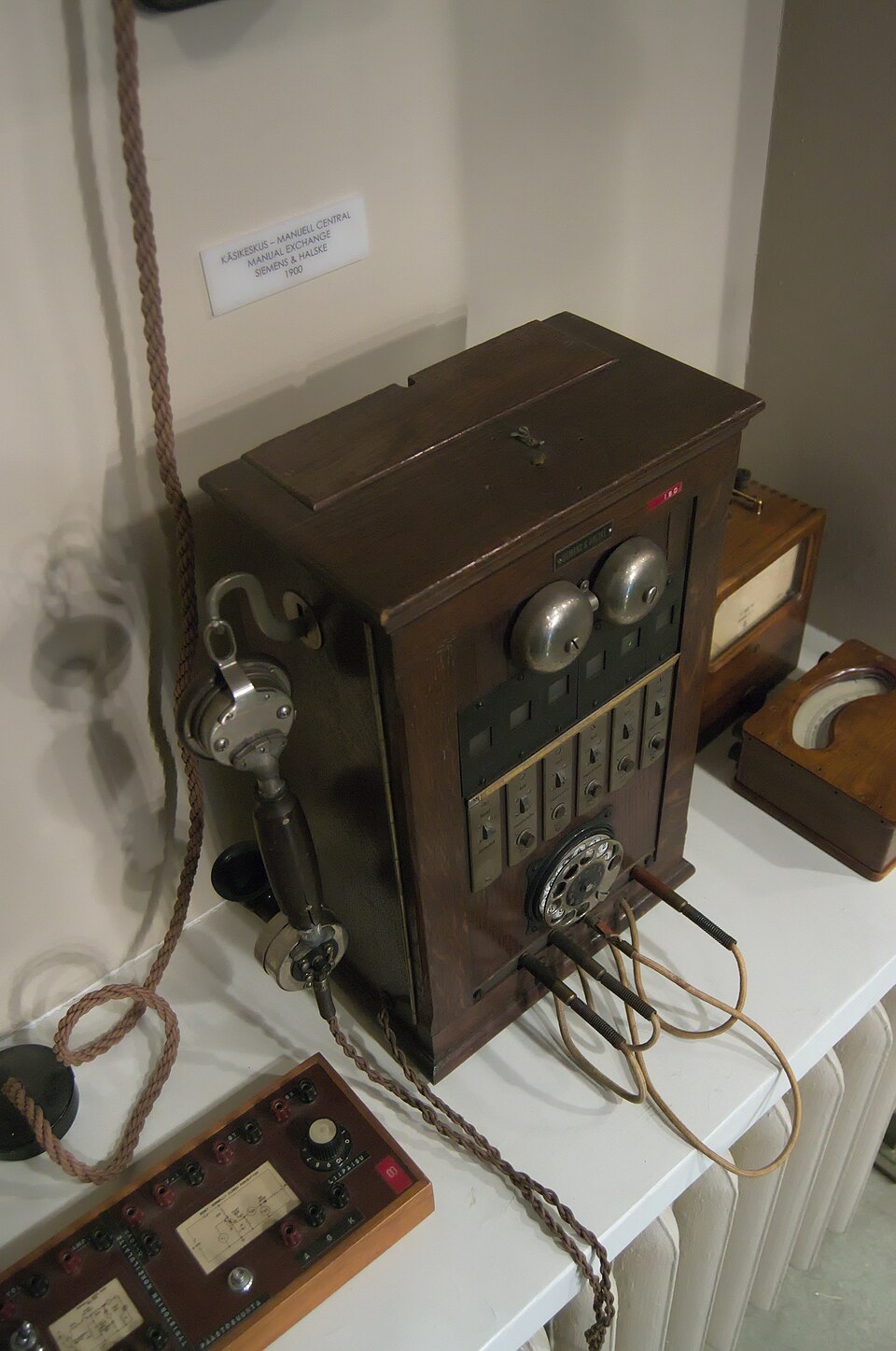 A vintage manual circuit switch used in early telephony (shows how calls were manually routed before automation). (Image: Antti Leppänen, CC BY 4.0, via Wikimedia Commons)
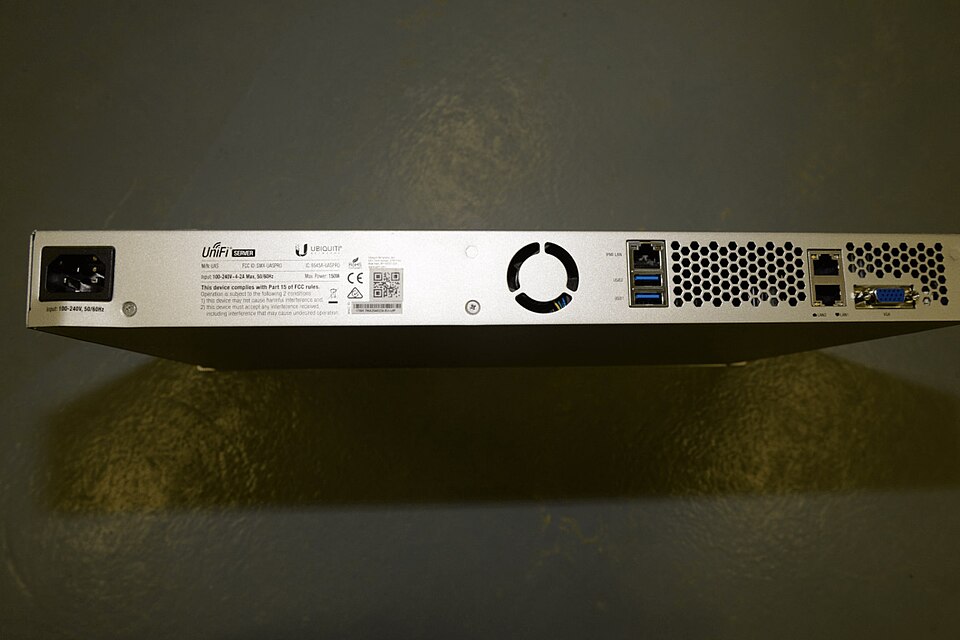 A modern packet-switching router (shows how data packets are forwarded based on IP addresses). (Image: Federal Bureau of Investigation, Public domain, via Wikimedia Commons)
Based on the TU BIT syllabus for Introduction to Telecommunications, unit 6.
Discussion
Loading…