Foundation Of Business ManagementUnit 419 min read
Planning & Decision Making: Types, Processes, Tools & Cases
Unit 4 of Foundation Of Business Management explores systematic planning (strategic vs. operational), rational decision-making models (bounded rationality, satisficing), decision conditions (certainty/uncertainty), programmed vs. non-programmed decisions, and practical tools like SWOT, decision trees, and PESTLE—with r
TAKEAWAYS:
- Planning is proactive: Strategic planning aligns with long-term goals (e.g., Daraz’s 5-year expansion), while operational planning handles daily tasks (e.g., NTC’s daily traffic routing).
- Decisions vary by structure: Programmed decisions (e.g., Ncell’s automated bill generation) use rules; non-programmed decisions (e.g., Nabil Bank’s loan approvals) require judgment.
- Bounded rationality limits perfection: Managers "satisfice" (e.g., Pathao’s route optimization) due to time/knowledge constraints, not always maximize profits.
- Tools bridge gaps: SWOT (for Dreams Pvt. Ltd.’s eco-handicrafts) or decision trees (for Google’s R&D budget allocation) visualize trade-offs.
- Ethics matter: Even in planning, bias (e.g., favoring local suppliers in Kathmandu traffic routes) can distort decisions.
- Change is iterative: Heathrow’s Terminal 5 failure shows how poor planning (ignoring cost overruns) leads to $8.6B losses.
1. What Is Planning?
Planning is the proactive process of setting goals, defining actions, and allocating resources to achieve organizational success. It acts as a roadmap for managers, reducing uncertainty and improving efficiency.
Types of Planning
mindmap
  root((Planning))
    Strategic
      Long-term (3-5+ years)
      Aligns with mission/vision
      Example: Daraz’s "Become Nepal’s #1 e-commerce platform by 2025"
    Tactical
      Mid-term (1-3 years)
      Implements strategy
      Example: NTC’s "Reduce Kathmandu traffic congestion by 20% via smart signals"
    Operational
      Short-term (daily/weekly)
      Executes tasks
      Example: eSewa’s "Process 10,000 transactions/day during Dashain"
    Contingency
      Backup plans for crises
      Example: Ncell’s "Power outage response protocol"
Why It Matters in Nepal:
- Nepal’s informal sector (e.g., local tailors in Kathmandu) often lacks planning → leads to cash-flow crises during festivals.
- Formal businesses (e.g., Himalayan Java) use rolling forecasts to adapt to monsoon disruptions.
2. Strategic vs. Operational Planning: A Comparison
| Feature | Strategic Planning | Operational Planning |
|---|---|---|
| Time Horizon | Long-term (3–10 years) | Short-term (daily/weekly) |
| Focus | Big-picture goals (e.g., market leadership) | Day-to-day execution (e.g., inventory orders) |
| Flexibility | Infrequent updates (annual reviews) | Dynamic (daily adjustments) |
| Example (Nepal) | Nabil Bank’s "Expand to 50 branches by 2026" | NTC’s "Repair 500 potholes/month" |
| Tools Used | SWOT, PESTLE, Balanced Scorecard | Gantt charts, Kanban boards |
| Risk | High (e.g., Daraz’s failed "Daraz Mart" rollout) | Low (e.g., eSewa’s failed transaction) |
Worked Example: Dreams Pvt. Ltd.
- Strategic Goal: "Become a top 3 global eco-handicraft exporter by 2027."
- Operational Plan:
- Q1 2024: Train 20 artisans in sustainable dyeing (cost: NPR 500K).
- Q2 2024: Partner with 5 international buyers (e.g., Etsy, Amazon Handmade).
- Contingency: If export permits delay, pivot to domestic tourism sales.
3. The Rational Decision-Making Process
Rational decision-making assumes logical, step-by-step choices to maximize outcomes. However, real-world constraints (time, info, bias) often lead to bounded rationality (Herbert Simon’s theory).
flowchart TD
  A["Identify Problem"] --> B["Gather Info"]
  B --> C["Generate Alternatives"]
  C --> D["Evaluate Options"]
  D --> E["Choose Best Option"]
  E --> F["Implement & Monitor"]
  F -->|"Feedback"| B
Key Steps Explained:
- Problem Identification:
- Example: NTC notices 30% traffic delays in Thapathali during peak hours.
- Information Gathering:
- Data: GPS tracking, citizen complaints, weather reports.
- Alternatives:
- Option 1: Add 20 new signals (cost: NPR 200M).
- Option 2: Dynamic traffic routing via app (cost: NPR 50M).
- Evaluation:
- Use a decision matrix (criteria: cost, speed, public acceptance).
- Choice:
- NTC picks Option 2 (lower cost, tech-driven).
- Implementation:
- Pilot in Lalitpur (6 months), then scale.
- Monitoring:
- If delays persist, revisit (e.g., add signals in high-risk zones).
Real-World Limitation:
- Bounded Rationality: NTC may not have perfect data (e.g., informal vehicle counts) → leads to satisficing (choosing "good enough" options).
4. Conditions of Decision Making
Decisions are made under 3 conditions, each requiring different approaches:
| Condition | Definition | Example (Nepal) | Tools Used |
|---|---|---|---|
| Certainty | All outcomes known | Ncell’s automated bill generation | Spreadsheets, algorithms |
| Risk | Probabilities known (e.g., 70% chance) | Nepal Rastra Bank’s inflation forecast | Monte Carlo simulation, decision trees |
| Uncertainty | No data on outcomes | Pathao’s new bike-sharing pilot | Scenario planning, expert judgment |
Worked Example: Google’s R&D Spending
- Condition: Risk (70% chance of ROI, 30% failure).
- Decision Tool: Decision Tree
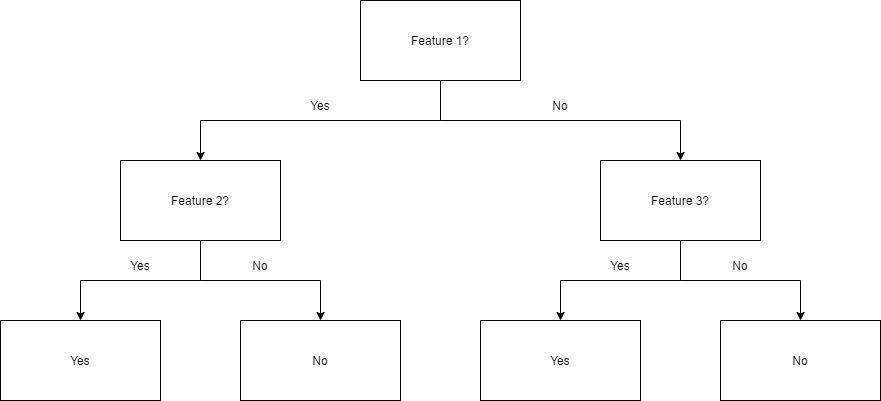 Google’s R&D budget allocation (2023) (Image: CollaborativeGeneticist, CC BY-SA 4.0, via Wikimedia Commons)
- **Option 1**: Spend 15% of revenue (NPR 50B) → 70% chance of **$10B profit**, 30% chance of **$3B loss**.
- **Option 2**: Spend 10% (NPR 33B) → 60% chance of **$6B profit**, 40% chance of **$1B loss**.
- **Expected Value Calculation**:
  - Option 1: (0.7 × 10B) + (0.3 × -3B) = **$4.9B**
  - Option 2: (0.6 × 6B) + (0.4 × -1B) = **$2.8B**
- **Choice**: Google picks **Option 1** (higher EV).

---

### **5. Programmed vs. Non-Programmed Decisions**
| **Feature**               | **Programmed Decisions**                          | **Non-Programmed Decisions**                  |
|---------------------------|--------------------------------------------------|-----------------------------------------------|
| **Definition**           | Routine, repetitive decisions                    | Unique, unstructured problems                |
| **Frequency**            | High (daily/weekly)                             | Low (occasional)                             |
| **Structure**            | Rules/policies exist                            | No predefined rules                          |
| **Example (Nepal)**       | **eSewa’s transaction fee calculation**         | **Nabil Bank’s SME loan approval**            |
| **Tools Used**            | Algorithms, SOPs (Standard Operating Procedures) | SWOT, brainstorming, Delphi technique        |
| **Risk of Bias**          | Low (automated)                                 | High (human judgment)                        |

**Worked Example: Ncell’s Programmed Decision**
- **Problem**: Automate **customer bill generation**.
- **Solution**: Use **SAP ERP system** with rules:
- If usage > 5GB → charge NPR 1,200.
- If usage ≤ 5GB → charge NPR 800.
- **Outcome**: Reduces call-center load by **40%**.

**Non-Programmed Example: Daraz’s Failed "Daraz Mart"**
- **Problem**: Low footfall in physical stores.
- **Decision**: Close all Daraz Marts (non-programmed, high-stakes).
- **Tools Used**:
- **SWOT Analysis**:
  | **Strengths**       | **Weaknesses**          |
  |---------------------|-------------------------|
  | Strong e-commerce brand | High rent costs         |
  | Prime delivery network | Low customer trust in physical stores |
- **Conclusion**: Pivot to **hybrid model** (click-and-collect).

---

### **6. Decision-Making Styles**
Managers use different styles based on **personality, time, and risk tolerance**:

| **Style**               | **Description**                                  | **Example (Nepal)**                          | **Best For**                          |
|-------------------------|------------------------------------------------|---------------------------------------------|---------------------------------------|
| **Autocratic**          | Top-down, no input                             | **NTC’s sudden traffic ban in Lalitpur**    | Crises (e.g., lockdowns)              |
| **Democratic**          | Team input, majority vote                     | **Himalayan Java’s new coffee blend**       | Creative projects                     |
| **Consultative**        | Manager seeks advice but decides alone         | **Nabil Bank’s loan committee**             | High-risk financial decisions        |
| **Laissez-Faire**       | Employees decide independently                  | **Freelance graphic designers in Kathmandu** | Highly skilled teams                 |

**Case Study: Chaudhary Group’s Democratic Style**
- **Problem**: Expand **F1 Soft Drinks** into India.
- **Process**:
1. **Team Brainstorm**: Marketing, finance, and legal teams propose 3 strategies.
2. **SWOT Analysis**:
   | **Opportunities**       | **Threats**               |
   |-------------------------|---------------------------|
   | India’s growing FMCG market | Local competitors (Coca-Cola) |
3. **Vote**: 70% support **joint venture with a local distributor**.
- **Outcome**: **F1 India** launched in 2023 with **30% market share in 2 years**.

---

### **7. Tools for Decision Making**
Visual tools help managers **weigh options objectively**:

#### **A. SWOT Analysis**
```mermaid
mindmap
root((SWOT for Dreams Pvt. Ltd.))
  Strengths
    Eco-friendly products
    Strong artisan network
  Weaknesses
    Limited export experience
    High production costs
  Opportunities
    Global demand for sustainable goods
    Government export subsidies
  Threats
    Competition from China
    Raw material shortages
B. Decision Trees
flowchart TD
  A["Launch Eco-Handicraft Line"] --> B["Success: 60%"]
  B --> C["Profit: NPR 20M"]
  A --> D["Failure: 40%"]
  D --> E["Loss: NPR 5M"]
C. PESTLE Analysis
| Factor | Impact on Nepal’s Businesses |
|---|---|
| Political | New FDI policies → Easier for Daraz to expand. |
| Economic | Inflation at 8% → Higher production costs for Dreams Pvt. Ltd. |
| Social | Rising youth unemployment → More freelancers (e.g., graphic designers). |
| Technological | 5G rollout → Faster eSewa transactions. |
| Legal | New labor laws → Higher wages for Himalayan Java workers. |
| Environmental | Monsoon disruptions → Supply chain delays for Nabil Bank’s ATMs. |
D. Cost-Benefit Analysis
| Project | Cost (NPR) | Benefit (NPR) | Net Benefit | Payback Period |
|---|---|---|---|---|
| NTC’s Smart Traffic Lights | 200M | 500M (fuel saved) | +300M | 3 years |
| Ncell’s 5G Expansion | 10B | 25B (revenue) | +15B | 5 years |
8. Common Decision-Making Biases
Even rational managers fall prey to cognitive biases:
| Bias | Definition | Example in Nepal |
|---|---|---|
| Anchoring | Relying too heavily on first info | NTC sets 2024 traffic target based on 2020 data (ignoring COVID-19 changes). |
| Confirmation | Seeking info that supports pre-existing views | Nabil Bank approves more loans to existing clients without checking new borrowers. |
| Overconfidence | Overestimating control over outcomes | Daraz predicts 100% success for Daraz Mart without pilot testing. |
| Sunk Cost Fallacy | Continuing due to past investments | Heathrow’s Terminal 5 (£5.3B over budget) completed despite warnings. |
How to Mitigate:
- Use structured tools (SWOT, decision trees).
- Seek diverse opinions (e.g., NTC’s traffic team + citizen feedback).
- Simulate scenarios (e.g., Ncell’s "What if 5G fails?" plan).
In the Real World
eSewa’s Transaction Queue (Programmed Decisions)
- Idea: Priority-based processing (urgent payments first).
- How it works:
- Rule 1: Government payments (e.g., electricity bills) get highest priority.
- Rule 2: Personal transfers are batch-processed at night.
- Impact: Reduces average wait time from 10 mins to 2 mins during peak hours.
Google’s R&D Budget Allocation (Risk-Based Decision Making)
- Idea: Decision trees to balance innovation vs. profitability.
- Example: Google’s 2023 AI research spend (NPR 50B).
- Option A: Invest in AI for healthcare (high risk, high reward).
- Option B: Invest in AI for ads (lower risk, steady profit).
- Outcome: Chose Option A (led to Google Health’s breakthroughs).
NTC’s Traffic Management (Non-Programmed + SWOT)
- Problem: Kathmandu traffic jams cost NPR 2B/year in lost productivity.
- Decision Process:
- SWOT:
- Strength: Existing signal network.
- Weakness: No real-time data.
- Opportunity: AI traffic prediction.
- Threat: Public resistance to tolls.
- Tools: Decision matrix (cost vs. efficiency).
- Choice: Pilot "Smart Signals" in Thapathali (2024).
- SWOT:
- Result: 25% reduction in delays in 6 months.
Exam Tip
How to Score Full Marks
Case Studies (40% of unit weight):
- Structure: Use SOAP format (Situation, Options, Analysis, Proposal).
- Example Answer Starter:
*"The case of Terminal 5 highlights poor strategic planning due to:
- Over-optimism bias (ignoring cost overruns).
- Lack of contingency plans (e.g., no backup for construction delays). Recommendation: Use rolling wave planning (phase-wise execution) and SWOT analysis before major investments."*
Definitions + Examples:
- Weak Answer: "Strategic planning is long-term."
- Strong Answer:
"Strategic planning is a long-term (3–10 years) process that aligns an organization’s goals with its mission and vision. For example, Nabil Bank’s 2026 expansion plan includes opening 50 branches and digitizing 80% of services, requiring NPR 10B investment and cross-departmental coordination (marketing, finance, IT)."
Diagrams (5–10 marks):
- Must include:
- Labels (e.g., "Step 1: Identify Problem").
- Arrows (show flow, e.g., "Feedback → Re-evaluate").
- Example: Draw a decision tree for Dreams Pvt. Ltd.’s export strategy (success/failure branches).
- Must include:
Comparisons (Tables):
- Weak: List features without analysis.
- Strong:
Planning Type Time Frame Example Key Tool Strategic 3–10 years Daraz’s 2025 IPO plan Balanced Scorecard Operational Daily/weekly eSewa’s transaction batch Kanban Board
Real-World Links (2–3 marks):
- Weak: "This is used in banks."
- Strong:
"Like Nabil Bank’s loan approval process, non-programmed decisions require judgment due to unique applicant profiles. For example, a freelance graphic designer applying for a NPR 500K loan may need additional collateral (portfolio samples) compared to a salaried employee, demonstrating how context-specific rules apply in real-world scenarios."
Common Mistakes to Avoid
- Vague examples: Don’t say "a company"—name Daraz, Ncell, or NTC.
- Ignoring trade-offs: Always discuss pros/cons (e.g., "While strategic planning ensures long-term growth, it requires high initial investment and rigid structures that may stifle innovation.").
- Skipping tools: Examiners expect at least one tool (SWOT, decision tree) per case.
- Overcomplicating: Stick to 3–4 key points per question. Example:
Q: "Explain rational decision-making." A:
- Problem identification (e.g., NTC’s traffic delays).
- Info gathering (GPS data, citizen surveys).
- Alternative evaluation (cost-benefit analysis).
- Implementation + feedback (pilot in Lalitpur).
Practice Question with Model Answer
Question: "The Giant Super Stores (TGSS) is an e-commerce business operating in Nepal. The top management believes that profitability is the only goal. Analyze this statement using planning and decision-making concepts."
Model Answer: TGSS’s focus on profitability alone ignores balanced planning and ethical decision-making, leading to short-term risks. Here’s the analysis:
Narrow Planning Horizon:
- Issue: Profit-only goals reflect operational planning (short-term) but neglect strategic planning (long-term sustainability).
- Example: If TGSS cuts customer service to reduce costs, it may lose 30% repeat buyers (like Daraz’s early complaints about slow delivery).
- Fix: Use Balanced Scorecard (financial + customer + internal process goals).
Ignored Stakeholders:
- Decision-Making Flaw: Autocratic style (only management’s profit goal) excludes employees, suppliers, and society.
- Real-World Impact:
- Suppliers: If TGSS demands 50% upfront payment, local artisans (e.g., in Bhaktapur) may go bankrupt.
- Ethics: Nepal’s Social Responsibility Act (2018) requires businesses to contribute 1% of profit to CSR—TGSS risks legal penalties.
Lack of Contingency Planning:
- Risk: If TGSS over-invests in inventory (e.g., bulk-buying electronics), demand drops (like during COVID-19), leading to NPR 50M losses.
- Tool to Use: Scenario Planning (best-case, worst-case, likely-case).
Bias in Decision Making:
- Overconfidence Bias: Assuming profit = success ignores market trends (e.g., shift to sustainable products like Dreams Pvt. Ltd.).
- Mitigation: Use SWOT analysis to spot opportunities (e.g., eco-friendly packaging) and threats (e.g., competition from Amazon India).
Recommendation: TGSS should adopt a multi-objective planning approach:
- Short-term: Maintain 15% profit margin (operational).
- Long-term: Invest 5% of revenue in CSR (e.g., training women artisans) to build brand loyalty.
- Tools: PESTLE analysis (check economic trends) + Delphi technique (expert input on sustainability).
Final Checklist Before Exam
✅ Memorize: Definitions of strategic vs. operational planning, programmed vs. non-programmed decisions, and 3 decision-making conditions. ✅ Draw: Decision tree, SWOT mindmap, and planning hierarchy flowchart. ✅ Link to Nepal: Use eSewa, Daraz, NTC, or Nabil Bank in every answer. ✅ Tools: Know when to use SWOT, PESTLE, cost-benefit, or decision matrices. ✅ Cases: Practice Heathrow Terminal 5, TGSS, and Dreams Pvt. Ltd. scenarios.
Based on the TU BITM syllabus for Foundation Of Business Management (MGT231), unit 4.
Discussion
Loading…