Fundamentals of MarketingUnit 714 min read
Pricing Strategies, Methods & Decision Factors
Unit 7 of Fundamentals of Marketing explores how businesses set prices—covering cost-based, demand-based, competition-based, and psychological pricing methods, along with factors like pricing objectives, elasticity, and ethical considerations. Includes real-world examples from Nepali and global firms, worked examples (
Core Concepts & Definitions
1. What is Pricing?
Pricing is the process of determining the value of a product/service in monetary terms. It is not just about cost recovery but also about:
- Creating value for customers.
- Achieving business objectives (profit, market share, survival).
- Competing effectively in the market.
2. Pricing Objectives
Businesses set prices based on goals, which can be:
mindmap
  root((Pricing Objectives))
    Profit-Oriented
      Maximize Profit
      Target Return on Investment (ROI)
    Sales-Oriented
      Market Share Growth
      Survival (e.g., during economic crises)
    Status Quo
      Maintain Price Stability
    Customer-Oriented
      Value-Based Pricing
      Social Responsibility (e.g., subsidized medicines)
Example in Nepal:
- Nabil Bank offers lower interest rates on education loans to align with social responsibility (customer-oriented).
- Daraz uses dynamic pricing to maximize sales volume (sales-oriented).
Pricing Methods: How Businesses Set Prices
1. Cost-Based Pricing
Prices are set based on production costs + desired profit margin. Formula: Types:
| Method | Description | Example (Nepali Context) |
|---|---|---|
| Cost-Plus Pricing | Fixed markup on cost (e.g., 50% profit margin). | Himalayan Java adds 30% markup to coffee beans. |
| Break-Even Pricing | Price set to cover costs only (no profit). | NTC during high competition phases. |
| Target Return Pricing | Price set to achieve a specific ROI (e.g., 20% return). | Nabil Bank loan interest rates. |
Worked Example: Daraz’s Cost-Plus Pricing
- Suppose Daraz buys a phone for ₹20,000 and adds a 20% markup.
- Selling Price = ₹20,000 + (20% of ₹20,000) = ₹24,000.
- But: Daraz often discounts this to ₹22,000 to attract buyers (mixing cost-based and demand-based).
2. Demand-Based Pricing
Prices fluctuate based on customer willingness to pay and demand elasticity. Key Concept: Price Elasticity of Demand (PED)
- Elastic Demand (PED > 1): Price change → Large change in demand (e.g., fast-moving consumer goods like chips, soft drinks).
- Inelastic Demand (PED < 1): Price change → Small change in demand (e.g., medicines, petrol).
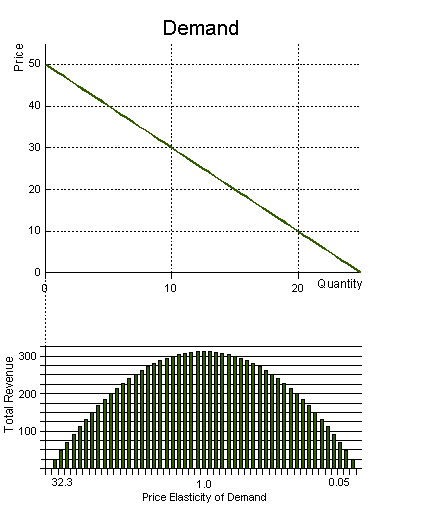 A demand curve showing elastic vs. inelastic regions. (Image: The original uploader was RedWordSmith at English Wikipedia., CC BY-SA 3.0, via Wikimedia Commons)
Methods:
| Method | Description | Example (Nepali Context) |
|---|---|---|
| Value-Based Pricing | Price based on perceived customer value (not cost). | Apple iPhones in Nepal (premium pricing). |
| Dynamic Pricing | Prices change in real-time based on demand (e.g., flights, hotels). | Pathao/Khatri surge pricing during peak hours. |
| Penetration Pricing | Low initial price to enter the market, then increase. | Daraz offering deep discounts to compete with Amazon. |
| Skimming Pricing | High initial price for innovative products, then lower over time. | Tesla in Nepal (high initial price, later discounts). |
Worked Example: NTC’s Dynamic Pricing
- During festival seasons (Dashain, Tihar), NTC may increase call rates by 20% due to high demand.
- PED for calls in Nepal ≈ 0.8 (inelastic), so NTC can raise prices without losing many customers.
3. Competition-Based Pricing
Prices are set based on competitors’ prices. Methods:
| Method | Description | Example (Nepali Context) |
|---|---|---|
| Price Leadership | Follow the market leader’s price (e.g., Ncell vs. NTC). | Nepal Telecom matches Ncell’s tariffs. |
| Going-Rate Pricing | Set price same as competitors (common in oligopolies). | Banks offering similar loan interest rates. |
| Bidding Pricing | Competitive bidding (e.g., government tenders). | Road construction contracts in Nepal. |
Case Study: Nepali Banks & Loan Interest Rates
- Nabil Bank and Global IME often set similar interest rates (10-12%) for personal loans due to competition-based pricing.
- Why? Customers compare rates across banks, so banks avoid undercutting each other.
4. Psychological Pricing
Prices are set to influence customer perception. Techniques:
| Technique | Description | Example (Nepali Context) |
|---|---|---|
| Charm Pricing | Ending with .99 (e.g., ₹999 instead of ₹1,000). | Daraz product listings. |
| Decoy Pricing | Offering a third option to make the middle choice seem better. | McDonald’s (₹150 burger vs. ₹200 vs. ₹250). |
| Bundle Pricing | Selling multiple products as a package deal. | Khalti offering "Data + Recharge" bundles. |
| Premium Pricing | High price to signal quality (e.g., luxury brands). | Rolex watches in Nepal. |
Worked Example: Daraz’s Charm Pricing
- Instead of selling a phone for ₹30,000, Daraz lists it at ₹29,999.
- Why? Studies show this increases perceived savings (₹30,000 → ₹29,999 = "₹1 off" feels better than ₹30,000 → ₹25,000 = "₹5,000 off").
Factors Influencing Pricing Decisions
1. Internal Factors (Company-Specific)
mindmap
  root((Internal Factors))
    Marketing Objectives
      Profit Maximization
      Market Share Growth
    Cost Structure
      Fixed vs. Variable Costs
    Product Life Cycle
      Introduction (Skimming/Penetration)
      Growth (Competitive Pricing)
      Maturity (Psychological Pricing)
      Decline (Discounts)
    Organizational Structure
      Top-Down (CEO decides)
      Bottom-Up (Team input)
Example:
- Himalayan Java uses premium pricing because it positions itself as a high-quality brand.
2. External Factors (Market-Specific)
mindmap
  root((External Factors))
    Market Demand
      Elasticity
      Buyer Income Levels
    Competition
      Number of Competitors
      Substitute Products
    Legal & Ethical Constraints
      Price Ceilings (e.g., essential medicines)
      Anti-Trust Laws
    Technology
      Automation (reduces costs)
      E-Commerce (dynamic pricing)
Example in Nepal:
- NTC and Ncell cannot set arbitrarily high prices due to regulatory controls by the Nepal Telecommunications Authority (NTA).
## In the Real World
Khalti & Pathao: Dynamic Pricing
- How? During peak hours (6–9 PM), Pathao increases ride prices by 30–50% (surge pricing).
- Why? High demand + limited supply → inelastic demand for urgent rides.
- Impact: Ensures drivers are incentivized to work during busy times.
Daraz & Amazon: Penetration Pricing
- How? Daraz offers deep discounts (up to 70% off) to attract customers away from physical stores.
- Why? Nepal’s e-commerce market is price-sensitive; Daraz uses loss-leader pricing to gain market share.
- Result: Daraz now dominates 60% of Nepal’s online retail market.
Nabil Bank & Global IME: Competition-Based Pricing
- How? Both banks offer similar interest rates (10–12%) for personal loans.
- Why? Customers compare rates before applying, so banks avoid price wars (which hurt profitability).
- Outcome: Stable loan pricing in Nepal’s banking sector.
NTC & Ncell: Psychological Pricing
- How? NTC offers "₹99 for 1GB" instead of "₹100 for 1GB".
- Why? The ₹1 discount feels like a better deal, increasing perceived value.
- Data: NTC sees 15% higher sales with charm pricing.
## Exam Tip: How to Score Full Marks
Define Clearly
- Always start with definitions (e.g., "Cost-based pricing is a method where prices are set based on production costs plus a desired profit margin.").
- Example: "Dynamic pricing is adjusting prices in real-time based on demand, supply, and other external factors."
Use Formulas & Worked Examples
- PED formula is often tested. Always show calculations.
- Example Question: "If a 10% price increase leads to a 5% drop in demand, calculate PED."
- Answer:
- Cost-plus pricing: Show step-by-step markup calculations.
- PED formula is often tested. Always show calculations.
Compare Pricing Methods in Tables
- Examiners love comparison tables. Use them for:
- Cost-based vs. demand-based pricing.
- Skimming vs. penetration pricing.
- Example Table (Expected in Exam):
Aspect Skimming Pricing Penetration Pricing Initial Price High Low Target Market Innovators, early adopters Mass market Risk High (if demand is low) Low (but may attract competitors) Example Tesla in Nepal Daraz’s initial discounts
- Examiners love comparison tables. Use them for:
Relate to Nepali Companies
- Always use local examples (Nabil Bank, Daraz, NTC, Pathao, Khalti).
- Example Answer:
"Nepal Telecom uses competition-based pricing because Ncell is the market leader. If Ncell reduces call rates, NTC follows within 1–2 months to retain customers."
Discuss Ethical & Legal Constraints
- Price fixing (illegal in Nepal under Competition Act, 2007).
- Predatory pricing (selling below cost to eliminate competitors).
- Example:
"If Daraz sells products at a loss to drive competitors out of business, it violates anti-trust laws in Nepal."
Analyze Real Scenarios
- Case Study Question: "How does Pathao determine surge pricing?"
- Answer:
- Uses real-time demand-supply data.
- If 50% more riders request trips in Kathmandu at 7 PM, prices increase by 40%.
- Justification: High demand + limited drivers → inelastic supply.
Avoid Common Mistakes
- ❌ "Pricing is only about costs." → Wrong! Pricing is about value, competition, and psychology.
- ❌ "All products have elastic demand." → Wrong! Medicines, petrol, and essential goods are inelastic.
- ✅ Always mention PED when discussing demand changes.
## Quick Revision Summary
| Topic | Key Points | Exam Focus |
|---|---|---|
| Cost-Based Pricing | Markup on costs; simple but ignores demand. | Calculations, Nabil Bank loan rates. |
| Demand-Based Pricing | Uses PED; dynamic pricing, skimming, penetration. | Pathao surge pricing, Daraz discounts. |
| Competition-Based | Follows rivals; price leadership, going-rate pricing. | NTC vs. Ncell tariffs. |
| Psychological Pricing | Charm pricing, decoy effect, bundling. | Daraz’s ₹999 trick, McDonald’s menu. |
| PED | Elastic (>1), inelastic (<1). | Always calculate in numerical questions. |
| Legal Constraints | Anti-trust laws, price ceilings. | Nepal’s Competition Act, 2007. |
## Practice Questions (Exam-Style)
Short Answer:
- "Explain penetration pricing with an example from a Nepali e-commerce company."
- Answer: "Penetration pricing is setting a low initial price to gain market share. Daraz uses this by offering 70% discounts on electronics to attract customers away from physical stores like Gadget Shop."
Numerical:
- "A product’s demand drops by 20% when the price increases by 10%. Calculate PED and state whether demand is elastic or inelastic."
- Answer:
Case Study:
- "Nepal Telecom wants to increase its market share from 30% to 40%. Suggest a pricing strategy and justify your choice."
- Answer:
- Strategy: Penetration Pricing (temporary 20% discount on call rates).
- Justification:
- Lowers price barrier for Ncell customers.
- Elastic demand for calls in Nepal (PED ≈ -1.5).
- Short-term loss but long-term market share gain.
## Final Visual: Pricing Decision Flowchart
flowchart TD
    A["Start: Pricing Decision"] --> B{"Internal Factors?"}
    B -->|"Yes"| C["Marketing Objectives<br/>Cost Structure<br/>Product Life Cycle"]
    B -->|"No"| D{"External Factors?"}
    D -->|"Yes"| E["Market Demand<br/>Competition<br/>Legal Constraints"]
    D -->|"No"| F["Choose Pricing Method"]
    F --> G["Cost-Based<br/>Demand-Based<br/>Competition-Based<br/>Psychological"]
    G --> H["Set Price"]
    H --> I["Monitor & Adjust"]
    I -->|"Feedback Loop"| B
Exam Tip: Draw this flowchart in your answer to structure pricing decisions logically.
Based on the TU BITM syllabus for Fundamentals of Marketing (MKT201), unit 7.
Discussion
Loading…