Mathematics IIUnit 1010 min read
Review & Problem-Solving: Linear Algebra & Abstract Algebra
Unit 10 of Mathematics II synthesizes core concepts from linear algebra (vector spaces, matrices, transformations) and abstract algebra (groups, rings, fields) through comprehensive review, problem-solving strategies, and exam-focused techniques, ensuring students master computational and theoretical integration.
Unit 10: Review and Problem Solving
This unit consolidates all prior units (1–9) into a cohesive framework, emphasizing:
- Conceptual integration (e.g., how eigenvalues link to linear transformations).
- Problem-solving heuristics (e.g., when to use LU decomposition vs. least squares).
- Common pitfalls (e.g., misapplying determinants in rank calculations).
- Exam strategies (e.g., structuring proofs for abstract algebra).
- Applications (e.g., projections in machine learning, groups in cryptography).
1. Core Concepts Recap
1.1 Linear Algebra Review
Key Definitions & Theorems
| Topic | Definition/Theorem | Example/Use Case |
|---|---|---|
| Vector Space | Set with operations satisfying 8 axioms (closure, associativity, etc.). | , polynomial spaces. |
| Basis & Dimension | Basis: linearly independent spanning set. Dimension: cardinality of basis. | has basis . |
| Linear Transformation | s.t. . | Rotation matrices, differential operators. |
| Eigenvalues/Eigenvectors | . | Stability analysis in dynamical systems. |
| Rank & Nullity | . | Solving . |
| Orthogonality | Vectors are orthogonal if . | Gram-Schmidt process, QR decomposition. |
How It Works: Linear Independence Test
To check if vectors in are linearly independent:
- Form a matrix with vectors as columns.
- Compute . If , the vectors are independent. Example: Conclusion: Linearly independent.
1.2 Abstract Algebra Review
Groups, Rings, Fields
| Structure | Axioms | Example |
|---|---|---|
| Group | Closure, associativity, identity, inverses. | , . |
| Ring | Group under , distributivity of over . | . |
| Field | Ring with multiplicative inverses for non-zero elements. | . |
How It Works: Subgroup Test
To verify is a subgroup of :
- Closure: Check all products . Example: .
- Identity: .
- Inverses: . Conclusion: is a subgroup.
2. Problem-Solving Strategies
2.1 Linear Algebra Problems
Strategy 1: Solving
- Augmented Matrix: Write .
- Row Reduction: Use Gaussian elimination to reach RREF.
- Interpret:
- Unique solution if .
- No solution if .
- Infinite solutions if .
Example: Solve .
- RREF: .
- Solution: (infinite solutions).
Strategy 2: Eigenvalue Problems
- Compute (characteristic equation).
- Solve for .
- For each , solve .
Example: Find eigenvalues of .
- .
- Solutions: .
2.2 Abstract Algebra Problems
Strategy 1: Proving Isomorphisms
- Bijection: Show is bijective.
- Homomorphism: Show .
- Inverse: Show preserves the operation.
Example: Prove defined by is an isomorphism.
- Bijection: is surjective (every element in is hit) and injective (since is finite).
- Homomorphism: .
Strategy 2: Field Extensions
- Idea: Adjoin roots of irreducible polynomials to extend fields.
- Example: Extend to by adjoining .
3. Common Pitfalls & Corrections
3.1 Linear Algebra
| Mistake | Correction |
|---|---|
| Assuming all square matrices are invertible. | Check . Example: has . |
| Confusing rank and nullity. | Use . |
| Ignoring linear independence in basis. | A basis must be both spanning and independent. |
3.2 Abstract Algebra
| Mistake | Correction |
|---|---|
| Forgetting identity in group definition. | Always verify . |
| Assuming all subgroups are normal. | Check for normality. |
| Misapplying Lagrange’s theorem. | Only applies to finite groups: divides . |
4. Applications & Connections
4.1 Linear Algebra in Real World
mindmap
  root((Linear Algebra Applications))
    Computer Graphics
      Rotation Matrices
      Projections
    Machine Learning
      Principal Component Analysis (PCA)
      Singular Value Decomposition (SVD)
    Engineering
      Circuit Analysis
      Structural Mechanics
    Economics
      Input-Output Models
      Leontief Matrices
Example: PCA
- Uses eigenvalues/eigenvectors of covariance matrices to reduce dimensionality.
- Step 1: Compute covariance matrix .
- Step 2: Find eigenvalues and eigenvectors .
- Step 3: Project data onto top eigenvectors.
4.2 Abstract Algebra in Cryptography
- RSA Encryption: Relies on properties of (group of units modulo ).
- Public key: , where is coprime to .
- Private key: .
- Elliptic Curve Cryptography (ECC): Uses group structure on elliptic curves over finite fields.
5. Exam Tips
5.1 Linear Algebra
- For proofs:
- Start with definitions (e.g., "Let be linearly independent...").
- Use contradiction for independence: assume and show all .
- For computations:
- Show all steps in row reduction or eigenvalue calculations.
- Label intermediate matrices (e.g., ).
- Common exam questions:
- Prove a set is a subspace.
- Find the inverse of a matrix using adjugate.
- Diagonalize a matrix.
5.2 Abstract Algebra
- For group/ring problems:
- Clearly state which axioms you’re verifying.
- Example: "Since is closed under and contains , it satisfies subgroup axioms."
- For isomorphisms:
- Draw a commutative diagram if helpful.
- Example:
diagram td
  G --> H
  phi[/phi/] --> psi[/psi/]
  G' --> H'
- Common exam questions:
- Show is a group.
- Find all subgroups of .
- Prove a ring homomorphism.
5.3 General Strategies
- Time management:
- Spend 1–2 minutes planning proofs (bullet points).
- Leave 5 minutes to review calculations.
- Notation:
- Use for final answers (e.g., ).
- Abstract vs. Computational:
- Abstract questions (e.g., "Prove is a subgroup") often require definitions.
- Computational questions (e.g., "Find eigenvalues") require step-by-step calculations.
6. Practice Problems
Linear Algebra
- Vector Spaces: Show is a subspace of .
- Eigenvalues: Find eigenvalues and eigenvectors of .
- Linear Transformations: Let be defined by . Show is linear and find its matrix representation.
Abstract Algebra
- Groups: Prove is not a group.
- Rings: Show is a ring.
- Fields: Determine whether is a field.
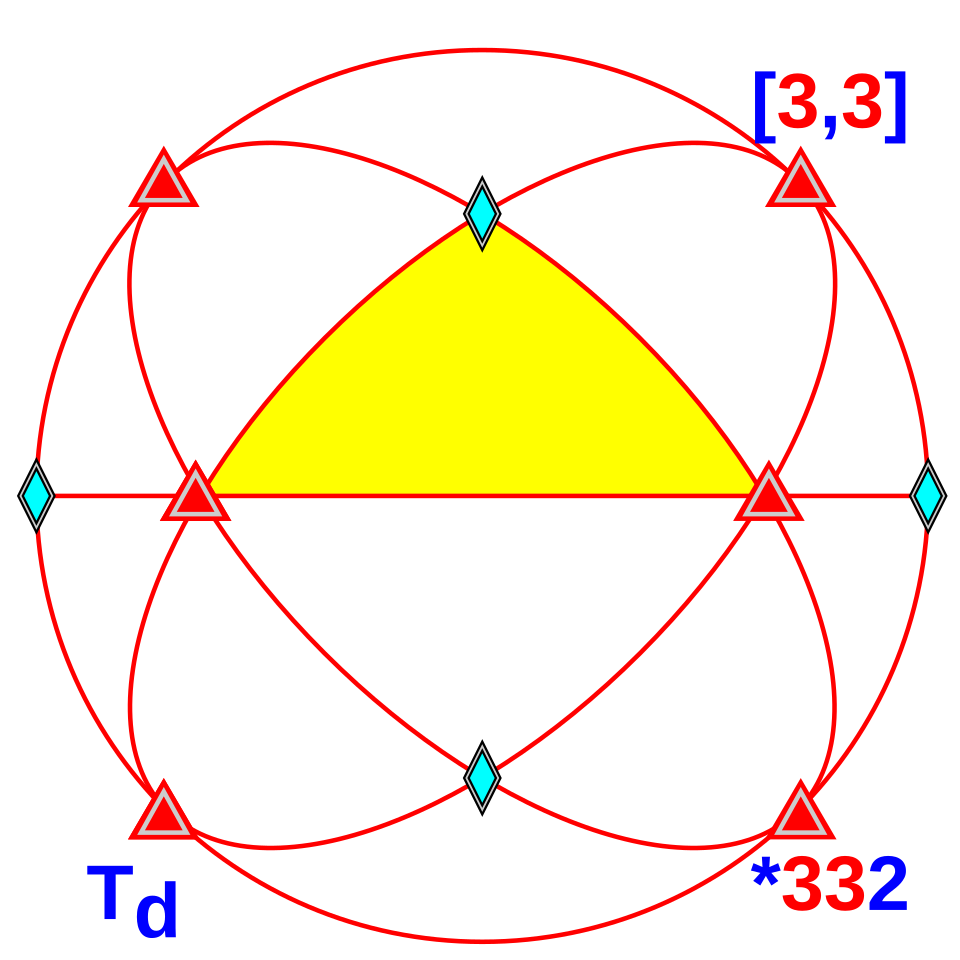 The dihedral group symmetries of a square, showing abstract algebra’s geometric applications. (Image: Д.Ильин: vectorization, CC0, via Wikimedia Commons)
Based on the TU BSc CSIT syllabus for Mathematics II (MTH168), unit 10.
Discussion
Loading…