System Analysis and DesignUnit 1212 min read
Modern Approaches & Project Management in SAD
Unit 12 of System Analysis and Design covers modern methodologies (Agile, DevOps, Scrum), project management frameworks (PMBOK, PRINCE2), and key skills/tools (CASE tools, Gantt charts, risk management) with real-world applications in Nepalese tech companies.
TAKEAWAYS:
- Modern approaches (Agile, DevOps) replace traditional SDLC for faster, iterative development.
- Project managers use PMBOK’s 5 phases (initiation, planning, execution, monitoring, closure) to deliver projects on time.
- CASE tools (e.g., Visual Paradigm, Lucidchart) automate modeling and documentation.
- Risk management identifies threats (e.g., budget overruns, scope creep) and mitigation strategies.
- Agile vs. Waterfall: Agile prioritizes flexibility; Waterfall follows rigid phases.
- Exam focus: Compare methodologies, explain project phases, and apply concepts to real cases (e.g., eSewa’s Agile rollout).
Modern Approaches in System Analysis and Design
Modern approaches emphasize adaptability, collaboration, and continuous delivery. Traditional SDLC (Waterfall) is rigid, while modern methods like Agile, DevOps, and Scrum prioritize iterative development, customer feedback, and automation.
1. Agile Methodology
Agile breaks projects into small, manageable sprints (2–4 weeks). Key principles:
- Customer collaboration over contracts.
- Working software over comprehensive documentation.
- Responding to change over following a plan.
Example: eSewa’s Agile Development eSewa, Nepal’s leading digital payment platform, uses Scrum (an Agile framework) to release updates weekly. Their team:
- Sprint Planning: Prioritizes features (e.g., QR code payments, merchant dashboards).
- Daily Standups: Developers sync on progress (e.g., "Yesterday I fixed the API timeout bug").
- Sprint Review: Tests features with real users before full deployment.
- Retrospective: Analyzes what worked (e.g., "The new OTP system reduced fraud by 30%").
stateDiagram-v2
    [*] --> Sprint_Planning: Start
    Sprint_Planning --> Daily_Standup: Plan tasks
    Daily_Standup --> Development: Work in sprint
    Development --> Sprint_Review: Test increment
    Sprint_Review --> Retrospective: Reflect
Retrospective --> [*]: End sprintAdvantages:
- Faster delivery (e.g., eSewa’s QR feature launched in 6 weeks vs. 6 months in Waterfall).
- Early feedback reduces rework. Disadvantages:
- Requires disciplined teams.
- Less predictable timelines for stakeholders.
2. DevOps: Bridging Development and Operations
DevOps integrates development, testing, and deployment using automation (CI/CD pipelines). Tools:
- Jenkins: Automates builds and tests.
- Docker: Containerizes apps for consistency.
- Kubernetes: Manages cloud deployments.
Example: Daraz’s DevOps Pipeline Daraz, Nepal’s Amazon-like marketplace, uses DevOps to handle millions of daily orders:
- Code Commit → Jenkins triggers automated tests.
- Docker Container ensures the app runs identically in dev/staging/production.
- Kubernetes scales servers during sales (e.g., Dashain discounts).
- Monitoring Tools (e.g., Prometheus) alert if order processing slows.
flowchart LR
    A["Developer Commits Code"] --> B["Jenkins: Build & Test"]
    B --> C["Docker: Containerize"]
    C --> D["Kubernetes: Deploy"]
    D --> E["Monitor: Alerts & Logs"]
Key Metrics:
| Metric | Daraz’s Goal | Impact |
|---|---|---|
| Deployment Frequency | 10+ per day | Faster feature releases |
| Mean Time to Recovery | <5 minutes | Minimizes downtime |
| Change Failure Rate | <1% | Reduces bugs in production |
3. Scrum Framework
Scrum is an Agile subset with roles, events, and artifacts:
- Roles:
- Product Owner: Defines priorities (e.g., "Add UPI payments for eSewa").
- Scrum Master: Removes obstacles (e.g., "Unblock the API access for the team").
- Development Team: Builds the increment.
- Artifacts:
- Product Backlog: Prioritized feature list.
- Sprint Backlog: Tasks for the current sprint.
- Increment: Shippable product at sprint end.
Example: Pathao’s Scrum for Ride-Hailing Pathao, Nepal’s Uber competitor, uses Scrum to improve its app:
- Sprint Goal: "Reduce driver app crashes by 50% in 3 weeks."
- Daily Standup: "Yesterday I debugged the GPS lag issue; today I’ll test the new battery optimization."
- Sprint Review: Drivers test the updated app; feedback leads to fixes.
Project Management Frameworks
Project management ensures projects meet scope, time, and budget goals. Two dominant frameworks:
1. PMBOK (Project Management Body of Knowledge)
PMBOK divides projects into 5 phases:
flowchart TD
    A["Initiation"] --> B["Planning"]
    B --> C["Execution"]
    C --> D["Monitoring & Controlling"]
D --> E["Closure"]| Phase | Key Activities | Example: NTC’s Fiber Expansion |
|---|---|---|
| Initiation | Define project scope, stakeholders, and charter. | NTC identifies need for fiber in Kathmandu Valley. |
| Planning | Create WBS, timelines, budgets, risk plans. | NTC plans 12-month rollout with 500 km fiber. |
| Execution | Develop, test, and deploy deliverables. | Contracts vendors; lays cables in phases. |
| Monitoring | Track progress vs. plan; manage risks (e.g., delays due to land acquisition). | Uses Gantt charts to adjust timelines. |
| Closure | Handover to operations; document lessons learned. | Trains NTC staff; publishes post-mortem. |
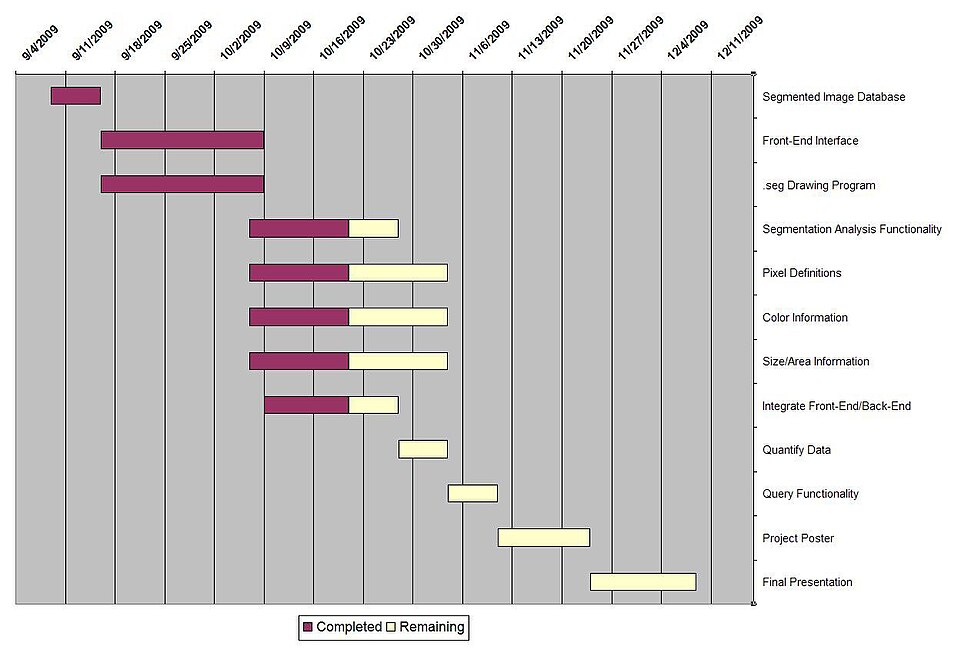 A sample Gantt chart for NTC’s fiber project. (Image: Alex Thompson and Derrek Harrison, Public domain, via Wikimedia Commons)
2. PRINCE2 (Projects IN Controlled Environments)
PRINCE2 focuses on processes and governance:
- 7 Principles: (e.g., "Continued business justification").
- 7 Themes: (e.g., "Risk management").
- 7 Processes: (e.g., "Starting Up a Project").
Comparison: PMBOK vs. PRINCE2
| Feature | PMBOK | PRINCE2 |
|---|---|---|
| Focus | Technical project management | Process-driven governance |
| Flexibility | Adaptable to any industry | Structured for large projects |
| Certification | PMP (Project Management Professional) | PRINCE2 Practitioner |
| Use Case | IT projects (e.g., eSewa app) | Government/enterprise (e.g., NEPSE reforms) |
Project Initiation and Planning
1. Project Identification and Selection
Organizations choose projects based on:
- Strategic Alignment: Does it support business goals? (e.g., Ncell’s 5G rollout aligns with digital Nepal vision).
- Feasibility: Technical, economic, and operational viability.
- ROI: Expected return vs. cost (e.g., Khalti’s UPI integration cost $500K but added 200K users).
Example: NEPSE’s Digital Transformation NEPSE (Nepal Stock Exchange) selected a blockchain-based trading system because:
- Problem: Manual settlement caused delays.
- Solution: Blockchain reduces settlement time from 3 days to 10 minutes.
- Feasibility: Partnered with IBM; pilot tested with 50 brokers.
2. Baseline Project Plan
A baseline plan is the approved version of scope, schedule, and budget. It includes:
- Work Breakdown Structure (WBS): Hierarchical task list.
- Critical Path: Longest sequence of tasks (e.g., "Design → Develop → Test" for eSewa’s new feature).
- Milestones: Key deliverables (e.g., "API v1.0 ready by Dec 15").
Example: Daraz’s Mobile App Redesign
| Task | Duration | Dependencies | Owner |
|---|---|---|---|
| User Research | 2 weeks | None | UX Team |
| Wireframing | 3 weeks | User Research | Design Team |
| API Integration | 4 weeks | Backend Team | Dev Team |
| Beta Testing | 2 weeks | Wireframing + API | QA Team |
Project Manager’s Skills and Activities
1. Key Skills
| Skill | Description | Example: eSewa PM |
|---|---|---|
| Leadership | Inspires and motivates teams. | "Let’s hit the Dec 1 deadline!" |
| Communication | Bridges gaps between tech and business teams. | Explains API changes to merchants. |
| Risk Management | Identifies threats (e.g., cyberattacks) and mitigation plans. | "Backup databases daily." |
| Stakeholder Mgmt | Manages expectations of users, executives, and developers. | "The CEO wants the feature by Q1." |
| Technical Knowledge | Understands tools (e.g., Jira, Trello) and methodologies (Agile, Waterfall). | Configures Jira for sprint tracking. |
Most Important Skill: Communication
- Why? Miscommunication causes 50% of project failures (Standish Group).
- Example: A Pathao PM must explain to drivers why their app crashes during peak hours.
2. Activities During Planning
- Define Scope: What’s included/excluded? (e.g., "This project adds UPI but not credit cards").
- Create WBS: Break into tasks (see Daraz example above).
- Schedule: Use Gantt charts or tools like Microsoft Project.
- Budget: Estimate costs (e.g., $20K for developers, $10K for servers).
- Risk Plan: Identify risks (e.g., "Vendor delay") + contingencies (e.g., "Backup vendor on standby").
Modern Tools: CASE Tools
Computer-Aided Software Engineering (CASE) tools automate modeling, coding, and documentation. Examples:
- Visual Paradigm: Diagrams (DFDs, ERDs, UML).
- Lucidchart: Collaborative flowcharts (e.g., NTC’s network topology).
- Jira: Agile project tracking (used by Khalti).
- GitLab: Version control + CI/CD (used by Daraz).
Example: Using Lucidchart for NTC’s Network Design
- Draw Topology: Map fiber routes from Kathmandu to Pokhara.
- Simulate Failures: Test what happens if a cable is cut.
- Share with Stakeholders: Executives approve the design.
erDiagram
    NTC ||--o{ Fiber_Cable : "deploys"
    Fiber_Cable ||--o{ Node : "connects"
    Node ||--|| Switch : "uses"
    Switch }|--|| Router : "routes_to"
In the Real World
eSewa’s Agile Rollout
- Idea Used: Scrum sprints for iterative development.
- How: eSewa’s team releases small features (e.g., "QR payments") every 2 weeks, gathering user feedback to refine the product. This reduced the time to launch the QR feature from 6 months (Waterfall) to 6 weeks (Agile).
Pathao’s DevOps for Ride-Hailing
- Idea Used: CI/CD pipelines for real-time updates.
- How: Pathao uses Jenkins + Docker to deploy driver/app updates instantly. During Dashain, when rides surge 300%, Kubernetes auto-scales servers to prevent crashes.
NTC’s PMBOK for Fiber Expansion
- Idea Used: Critical Path Method (CPM) to schedule tasks.
- How: NTC identified that land acquisition was the longest task (8 weeks). They parallelized cable-laying and tower installation to meet the 12-month deadline.
Exam Tip
Compare Methodologies:
- Waterfall: Linear, document-driven (e.g., traditional bank core systems).
- Agile: Iterative, customer-focused (e.g., eSewa, Pathao).
- DevOps: Automation-focused (e.g., Daraz’s CI/CD).
Project Phases:
- Memorize PMBOK’s 5 phases and PRINCE2’s 7 processes. Use the NTC fiber example to explain monitoring/closure.
CASE Tools:
- Know Visual Paradigm (diagrams), Jira (Agile), and GitLab (CI/CD). Relate them to real companies (e.g., "Khalti uses Jira for sprint tracking").
Risk Management:
- Always link risks to mitigation strategies. Example:
- Risk: "Developer quits mid-project."
- Mitigation: "Cross-train team members on critical modules."
- Always link risks to mitigation strategies. Example:
Worked Examples:
- eSewa: Agile + Scrum.
- Daraz: DevOps + CI/CD.
- NTC: PMBOK + Critical Path.
- NEPSE: Feasibility study for blockchain.
Short Notes:
- CASE Tools: "Automate modeling/documentation (e.g., Lucidchart for DFDs)."
- Baseline Plan: "Approved scope/schedule/budget as a reference point."
Based on the TU BSc CSIT syllabus for System Analysis and Design (CSC315), unit 12.
Discussion
Loading…