International MarketingUnit 413 min read
International Trade & Regional Trading Blocks: Rules, Players & Nepal’s Role
Unit 4 of International Marketing explores how countries trade globally through agreements, organizations (WTO, UNCTAD), and regional blocs (ASEAN, SAARC, EU). It covers trade theories (comparative advantage, absolute advantage), Nepal’s trade policies, and how these structures shape business strategies—with real-world
TAKEAWAYS:
- Trade theories (absolute/comparative advantage) explain why countries specialize and trade, even with unequal resources.
- Regional trading blocs (free trade areas, customs unions, common markets) reduce barriers but require alignment on rules, currencies, and policies.
- Nepal’s trade challenges include landlocked status, reliance on India/China, and policies like the Trade and Transit Treaty with India.
- WTO’s role is to enforce trade rules (e.g., banning subsidies, resolving disputes like the US-China tariff war).
- Nepal’s exports (e.g., jute, carpets, hydropower) and imports (e.g., petroleum, electronics) are shaped by these global and regional agreements.
- Exam focus: Compare blocs (EU vs. SAARC), explain Nepal’s trade agreements, and analyze how WTO rules affect businesses like Daraz or NEPSE.
1. Definitions: What Is International Trade?
International trade is the exchange of goods/services between countries across borders. It’s governed by:
- Theories: Why trade happens (Adam Smith’s absolute advantage, David Ricardo’s comparative advantage).
- Agreements: Rules between countries (bilateral treaties, WTO agreements).
- Institutions: Organizations that facilitate or regulate trade (WTO, UNCTAD, IMF).
mindmap
  root((International Trade))
    Theories
      Absolute Advantage["Adam Smith: Trade where one country is *better* at producing a good (e.g., Nepal grows tea cheaper than Sweden)"]
      Comparative Advantage["David Ricardo: Trade even if one country is *worse* at everything (e.g., Nepal exports jute to India despite higher costs)"]
    Players
      Countries["Exporters (Nepal: jute, carpets) vs. Importers (Nepal: petroleum, electronics)"]
      Institutions["WTO: Enforces rules; UNCTAD: Helps developing nations"]
    Barriers
      Tariffs["Taxes on imports (e.g., 30% on Chinese electronics in Nepal)"]
      Quotas["Limits on quantity (e.g., 5000 tons of sugar imports/year)"]
      Non-Tariff["Health/safety standards (e.g., EU bans Nepali honey due to pesticide tests)"]
WORKED EXAMPLE: Nepal’s Jute Trade
- Theory: Nepal has a comparative advantage in jute (lower opportunity cost than producing electronics).
- Reality:
- Exports jute to India (biggest buyer) and China.
- Faces tariffs in India (10–15%) and quotas in the EU.
- Challenge: High transport costs (landlocked) reduce profits.
2. Regional Trading Blocs: How Countries Cooperate
Trading blocs are groups of countries that reduce trade barriers among members. They range from loose agreements to full economic unions. Nepal is part of SAARC (South Asian Association for Regional Cooperation) but not a customs union like the EU.
| Type of Bloc | Example | Key Feature | Nepal’s Role |
|---|---|---|---|
| Free Trade Area | ASEAN, NAFTA | No tariffs between members, but each sets its own external tariffs. | SAARC (but Nepal’s trade with India is dominated by bilateral deals). |
| Customs Union | EU, Mercosur | No internal tariffs + common external tariffs (e.g., EU charges 10% on US cars). | Not a member; relies on India’s tariffs. |
| Common Market | EU (Schengen Zone) | Free movement of goods, services, labor, and capital. | No access; workers need visas to work in India. |
| Economic Union | EU (Eurozone) | Common currency (euro), central bank, and harmonized policies. | No membership; uses INR/USD. |
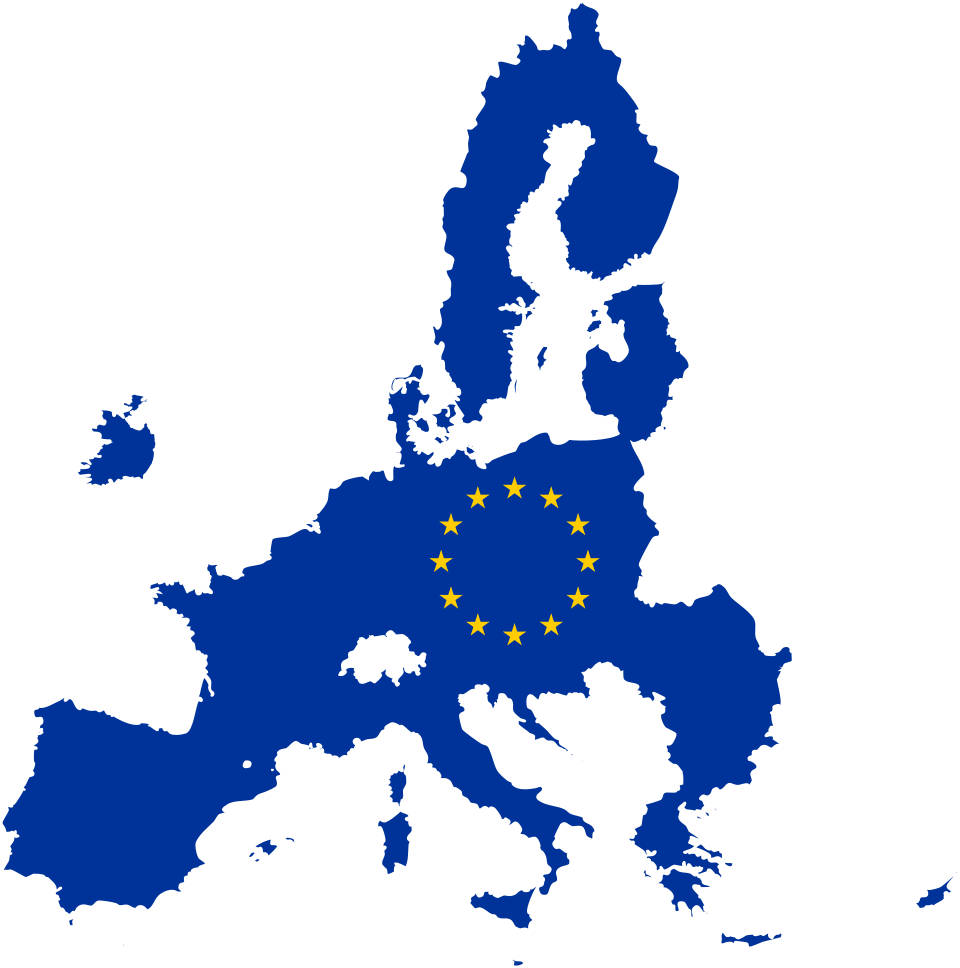 Countries in the EU share a single market and currency (euro). (Image: Janitoalevic, CC BY-SA 4.0, via Wikimedia Commons)
CASE STUDY: SAARC vs. EU for Nepal
- SAARC: Nepal’s exports to India (80% of total trade) face no tariffs under SAARC, but India often imposes safeguard duties (e.g., 20% on carpets).
- EU: Nepal’s jute/carpets face high tariffs (12–20%) + strict quality checks, limiting exports.
- Problem: SAARC is ineffective due to political tensions (e.g., India-Pakistan conflicts).
3. Key Institutions Shaping Global Trade
A. World Trade Organization (WTO)
- Role: Polices global trade rules (e.g., banning dumping—selling goods below cost to kill competitors).
- Dispute Settlement: Nepal lost a case in 2004 when the US challenged its jute subsidies.
- Nepal’s WTO Commitments:
- Must reduce tariffs on information technology products (e.g., laptops).
- Faces pressure to open banking/insurance sectors to foreign firms.
flowchart TD
  A["WTO Dispute\n(Nepal vs. US, 2004)"] -->|"Issue"| B["Nepal subsidized jute exports"]
  B --> C["US claimed it violated WTO rules"]
  C --> D["WTO ruled in US's favor"]
  D --> E["Nepal had to reduce subsidies"]
B. United Nations Conference on Trade and Development (UNCTAD)
- Focus: Helps developing nations (like Nepal) negotiate fair trade deals.
- Example: UNCTAD assisted Nepal in joining the WTO in 2004 and negotiating trade facilitation agreements.
C. International Monetary Fund (IMF) & World Bank
- IMF: Provides loans (e.g., Nepal’s $250M loan in 2020) in exchange for trade liberalization (reducing tariffs).
- World Bank: Funds infrastructure (e.g., Kathmandu-Terai highway) to improve trade logistics.
4. Nepal’s Trade Agreements: Opportunities and Challenges
A. Bilateral Agreements
Nepal has 20+ trade agreements, but the most critical are with:
- India: Trade and Transit Treaty (1978)
- Nepal gets duty-free access to India for most goods.
- Challenge: India restricts Nepali goods (e.g., ban on Nepali milk powder in 2021).
- China: Transit Agreement (2016)
- Nepal can export to Tibet via China (bypassing India).
- Limitation: Only 10% of trade uses this route due to high costs.
B. Multilateral Agreements
- WTO: Nepal joined in 2004 but struggles with tariff reductions (e.g., on electronics).
- SAARC: Free trade area in theory, but India dominates 70% of Nepal’s trade.
WORKED EXAMPLE: Daraz’s Import Challenges
- Problem: Daraz (Alibaba-owned) imports electronics from China but faces:
- 30% tariff in Nepal (vs. 0% in India).
- Long customs delays (3–7 days at Kathmandu airport).
- Solution: Daraz lobbies for WTO’s "Trade Facilitation Agreement" to speed up clearance.
5. Trade Barriers: What Blocks Nepal’s Exports?
| Barrier Type | Example in Nepal’s Trade | Impact |
|---|---|---|
| Tariffs | India charges 15% tariff on Nepali carpets. | Reduces profit margins by 10–20%. |
| Quotas | EU allows only 500 tons/year of Nepali honey. | Exporters must find other markets (India). |
| Non-Tariff | EU bans Nepali honey due to pesticide residues. | Forces exporters to retest products. |
| Transport Costs | Shipping jute to India costs $500/container. | Makes Nepali jute less competitive than Bangladesh’s. |
| Political Risks | India blocks transit during disputes (e.g., 2015). | Strands Nepali goods in Birgunj. |
6. Case Study: How Regional Blocs Affect Businesses
A. NEPSE (Nepal Stock Exchange) and Foreign Investment
- Challenge: Nepal’s capital controls limit foreign investment in NEPSE.
- WTO Pressure: The WTO’s General Agreement on Trade in Services (GATS) pushes Nepal to open banking/insurance to foreign firms (e.g., Standard Chartered, ICICI).
- Impact: NEPSE’s foreign investment rose from 5% (2010) to 15% (2023).
B. Ncell and Regional Roaming Agreements
- Problem: Nepali mobile users pay high roaming fees in India/Bangladesh.
- Solution: SAARC Telecommunication Agreement (2007) reduced roaming charges by 50%.
- Result: Ncell’s international calls became cheaper, boosting cross-border tourism.
7. Green Marketing and Ethical Trade (Link to Unit 11)
While not the focus here, Nepal’s trade is increasingly scrutinized for:
- Sustainability: EU bans illegal deforestation-linked products (e.g., Nepali timber).
- Fair Trade: Organic jute/carpets from Nepal get premium prices in the EU.
- Example: Himalayan Java exports fair-trade coffee to Europe, earning 20% higher prices.
In the Real World
Daraz (Alibaba, Nepal)
- Idea Used: Regional trade blocs and tariffs
- How: Daraz imports 90% of its goods from China but faces 30% tariffs in Nepal vs. 0% in India. To compete, it lobbies for WTO’s trade facilitation to reduce customs delays.
NEPSE (Nepal Stock Exchange)
- Idea Used: WTO’s GATS (General Agreement on Trade in Services)
- How: The WTO pressures Nepal to open banking/insurance sectors to foreign firms. This led to Standard Chartered and ICICI entering Nepal, increasing foreign investment in NEPSE.
Ncell (Nepal Telecom)
- Idea Used: SAARC Telecommunication Agreement
- How: The agreement reduced roaming charges by 50% for calls to India/Bangladesh. This made cross-border business calls cheaper, helping tourism and remittance businesses.
Exam Tip
What Examiners Want to See
Definitions + Examples
- Don’t just define customs union—compare it to SAARC (which is a free trade area).
- Example: "Unlike the EU’s customs union, SAARC has no common external tariff, making it weaker."
Nepal-Specific Analysis
- Always link theory to Nepal. Example:
- "Nepal’s comparative advantage in jute is limited by high transport costs (landlocked) and India’s tariffs."
- Always link theory to Nepal. Example:
WTO Dispute Cases
- Mention Nepal-US jute dispute (2004) or India’s safeguard duties on carpets.
- Structure: "Issue → Nepal’s action → WTO ruling → Impact."
Trade Barriers Table
- Examiners love comparison tables. Always include:
- Type of barrier (tariff/quota/non-tariff)
- Nepal’s example
- Impact on business (e.g., "Daraz’s electronics imports cost 30% more due to tariffs").
- Examiners love comparison tables. Always include:
Short Cases > Long Theory
- Instead of writing pages on absolute advantage, use: "Nepal exports jute to India even though India can produce it cheaper (absolute advantage). But Nepal does it because its opportunity cost of producing electronics is higher (comparative advantage)."
Common Mistakes to Avoid
- ❌ Ignoring Nepal’s context: Always relate to India/China trade, WTO disputes, or SAARC failures.
- ❌ Mixing blocs: Don’t confuse SAARC (free trade area) with EU (economic union).
- ❌ Vague examples: Instead of "tariffs hurt exports", say "India’s 15% tariff on carpets reduces Nepali exporters’ profits by 10–20%."
- ❌ Forgetting transport costs: Nepal’s landlocked status is a major barrier—always mention it.
Sample Exam Question & Answer Structure
Question: "Describe the challenges Nepal faces in international trade due to its regional trading blocs. Support your answer with examples."
Model Answer: Nepal’s participation in regional trading blocs (primarily SAARC) and reliance on bilateral agreements (with India/China) present three key challenges:
Weak SAARC Integration
- Problem: SAARC is a free trade area, not a customs union (like the EU). This means:
- No common external tariffs: India sets its own tariffs (e.g., 15% on carpets), undermining SAARC’s benefits.
- Political conflicts: India-Pakistan tensions halt SAARC meetings, delaying trade deals.
- Example: The SAARC Free Trade Agreement (SAFTA) was signed in 2006 but only 50% of tariffs have been eliminated due to India’s safeguard duties.
- Problem: SAARC is a free trade area, not a customs union (like the EU). This means:
Dependence on India’s Policies
- Problem: 80% of Nepal’s trade is with India, but India uses its dominance to:
- Impose safeguard duties (e.g., 20% on milk powder in 2021).
- Block transit during disputes (e.g., 2015 trade blockade).
- Impact: Nepali exporters like jute farmers face sudden tariff hikes, reducing profits by 15–25%.
- Problem: 80% of Nepal’s trade is with India, but India uses its dominance to:
High Transport Costs (Landlocked Status)
- Problem: Nepal’s landlocked geography adds $500–$1000 per container in transport costs.
- Comparison:
Route Cost to India Cost to EU Impact Nepal → India $500 $2000 Makes Nepali goods uncompetitive in EU. Nepal → China $800 $2500 Only 10% of trade uses this route.
Conclusion: Nepal’s trade is vulnerable due to SAARC’s ineffectiveness, India’s unilateral policies, and high logistics costs. To improve, Nepal should:
- Push for SAARC to become a customs union.
- Diversify trade routes (e.g., China’s Tibet access).
- Lobby the WTO for trade facilitation (faster customs).
Visual Summary for Quick Revision:
graph LR
  A["Nepal's Trade Challenges"] --> B["Weak SAARC\n(No common tariffs)"]
  A --> C["India Dominance\n(80% of trade)"]
  A --> D["Landlocked\n(High transport costs)"]
  B --> E["Example: India's 15% tariff on carpets"]
  C --> F["Example: 2015 trade blockade"]
  D --> G["Example: $500 extra per container to India"]
Based on the TU BSc CSIT syllabus for International Marketing (MGT418), unit 4.
Discussion
Loading…