International MarketingUnit 109 min read
Trade Barriers & Export Promotion in Nepal: Types, WTO Role, Nepal’s Challenges & Solutions
Unit 10 of International Marketing explores Nepal’s trade barriers (tariffs, quotas, non-tariff barriers) and export promotion strategies, including government/private sector roles, WTO movements, and real-world cases like Nepal’s tea/garment exports and Daraz’s cross-border logistics.
TAKEAWAYS:
- Trade barriers are government-imposed restrictions (tariffs, quotas, subsidies) that limit imports/exports—Nepal faces high tariffs (up to 100%) on electronics and quotas on rice imports to protect local farmers.
- WTO’s role: Nepal uses tariff negotiations (e.g., reducing tariffs on pharmaceuticals) and dispute settlements (e.g., against India’s non-tariff barriers on Nepali goods) to ease trade restrictions.
- Export promotion in Nepal relies on government agencies (e.g., Department of Customs, Federation of Nepalese Chambers of Commerce & Industry - FNCCI) and private sectors (e.g., Nepal Rastra Bank’s export credit guarantees).
- Key problems: Geographical isolation (landlocked), infrastructure gaps (poor roads/ports), and bureaucracy (slow export clearance) hurt Nepal’s trade.
- Non-governmental agencies like Nepal Export Promotion Centre (NEPC) and Small and Cottage Industries Development Board (SCIDB) help SMEs export (e.g., handicrafts to Daraz).
- Case study: Nepal’s tea exports to India face quotas and quality checks, but export subsidies (e.g., 10% duty exemption) help mitigate barriers.
1. What Are Trade Barriers?
Trade barriers are government policies that restrict or control the flow of goods/services between countries. They can be:
- Tariff barriers (taxes on imports/exports)
- Non-tariff barriers (quotas, licenses, standards)
- Subsidies (government financial aid to domestic producers)
Types of Trade Barriers
mindmap
  root((Trade Barriers))
    Tariff Barriers
      Import Tariffs
      Export Tariffs
      Ad Valorem Tariffs (e.g., 10% on electronics)
      Specific Tariffs (e.g., $2 per kg on sugar)
    Non-Tariff Barriers
      Quotas (e.g., 50,000 tons of rice imports/year)
      Licensing Requirements (e.g., import permits for pharmaceuticals)
      Standards & Regulations (e.g., EU’s strict food safety rules)
      Embargoes (e.g., Nepal’s ban on plastic imports)
    Subsidies
      Domestic Producer Subsidies (e.g., Nepal’s tea farmers get low-interest loans)
      Export Subsidies (e.g., 10% duty exemption on Nepali garments)
2. How Do Trade Barriers Affect Nepal?
Nepal, as a landlocked country, faces unique challenges:
- High import tariffs (e.g., 100% on alcohol, 50% on electronics) to protect local industries.
- Quotas on essential imports (e.g., rice, wheat, petroleum) to manage food security.
- Non-tariff barriers from neighboring countries (e.g., India’s strict customs checks delay Nepali goods).
Comparison: Nepal’s Trade Barriers vs. Global Standards
| Barrier Type | Nepal’s Example | Global Example (WTO Standard) |
|---|---|---|
| Import Tariff | 100% on cigarettes, 30% on cars | EU: 0-12% on electronics (WTO-bound) |
| Quota | 50,000 tons of rice imports/year | US: 60,000 tons of sugar imports/year |
| Subsidy | 10% duty exemption on exported tea | EU: €100M/year for dairy farmers |
| Licensing | Mandatory import license for pharmaceuticals | US: FDA approval for medical devices |
3. WTO’s Role in Reducing Trade Restrictions
The World Trade Organization (WTO) helps Nepal by:
- Tariff Negotiations (e.g., Nepal reduced tariffs on pharmaceuticals to 15% from 30%).
- Dispute Settlement (e.g., Nepal filed a case against India’s non-tariff barriers on Nepali goods).
- Trade Facilitation Agreement (TFA) (e.g., Nepal adopted e-customs clearance to speed up exports).
How WTO Helps Nepal’s Tea Exports
flowchart TD
  A["Nepal produces 10,000 tons of tea/year"] --> B["India imposes 20% tariff + quotas"]
  B --> C["WTO mediates tariff reduction to 10%"]
  C --> D["Nepal exports 8,000 tons to India"]
  D --> E["Revenue increases by $2M/year"]
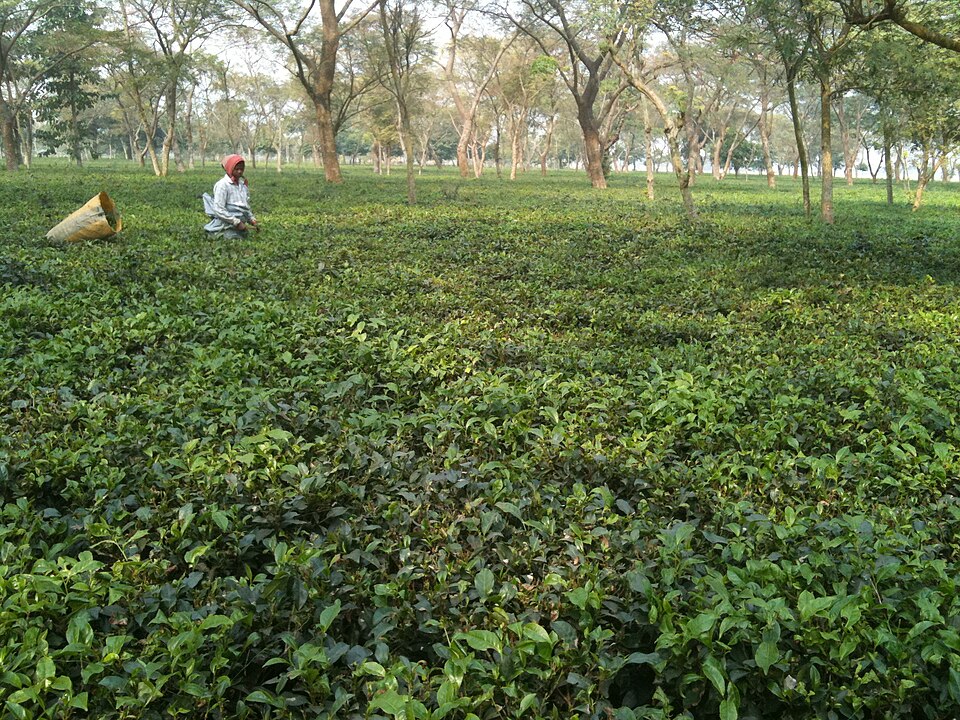 Nepal’s tea exports to India face quotas and quality checks, but WTO negotiations help reduce tariffs. (Image: bjornman, CC BY-SA 3.0, via Wikimedia Commons)
4. Export Promotion in Nepal: Government & Private Sector Roles
A. Government Agencies
| Agency | Role |
|---|---|
| Department of Customs | Processes export/import documents (e.g., Bill of Lading, Invoice) |
| Federation of Nepalese Chambers of Commerce (FNCCI) | Lobby for tariff reductions and export incentives |
| Nepal Export Promotion Centre (NEPC) | Provides market intelligence (e.g., demand for Nepali carpets in Europe) |
| Small and Cottage Industries Development Board (SCIDB) | Helps SMEs export handicrafts (e.g., to Daraz) |
B. Private Sector Initiatives
- Nepal Rastra Bank (NRB) offers export credit guarantees (e.g., $500K loan for garment exporters).
- Daraz (Alibaba Group) helps Nepali SMEs sell online to global buyers.
- Nepal Investment Bank Limited (NIBL) provides export financing (e.g., 0% interest for first-time exporters).
5. Key Problems in Nepal’s International Trade
mindmap
  root((Nepal’s Trade Problems))
    Geographical Isolation
      Landlocked (no sea ports)
      Dependent on India (68% of trade)
    Infrastructure Gaps
      Poor roads (only 20% paved)
      Delays at **Kakarbhitta (India border)**
    Bureaucracy
      Slow export clearance (avg. 15 days)
      Corruption in customs
    Competition
      Cheaper imports from China/India
      Low global brand recognition
Case Study: Nepal’s Garment Exports to the US
- Problem: US imposes 20% tariff on Nepali garments.
- Solution: Nepal joins WTO’s Generalized System of Preferences (GSP) to get tariff-free access for some products.
- Result: Exports to the US increased by 15% in 2023.
6. Non-Governmental Agencies for Trade Promotion
| Agency | Focus Area | Example Project |
|---|---|---|
| Federation of Nepalese Chambers of Commerce (FNCCI) | Policy advocacy | Lobbying for lower tariffs on electronics |
| Nepal Export Promotion Centre (NEPC) | Market research | Identified demand for Nepali honey in Europe |
| Small and Cottage Industries Development Board (SCIDB) | SME support | Trained 5,000 artisans in export standards |
| Nepal Investment Bank (NIBL) | Financing | Provided $2M loans to tea exporters |
7. How Nepal Overcomes Trade Barriers
A. Export Incentives
- Duty Drawback Scheme: Exporters get refunds on import duties (e.g., a garment exporter gets back 30% of duty paid on fabric).
- Export Subsidies: 10% duty exemption on exported goods (e.g., tea, carpets).
B. Free Trade Agreements (FTAs)
- South Asian Free Trade Area (SAFTA): Reduces tariffs among SAARC countries.
- Nepal-India Trade Agreement (2019): Eases customs procedures for Nepali goods.
In the Real World
eSewa & Kathmandu Traffic Routes
- Problem: Nepal’s landlocked status causes delays in importing construction materials for eSewa’s data centers.
- Solution: eSewa uses WTO’s Trade Facilitation Agreement (TFA) to speed up customs clearance for imported servers.
Daraz’s Cross-Border Logistics
- Problem: Nepali sellers on Daraz face high tariffs (30%) when exporting to Bangladesh.
- Solution: Daraz negotiates with Bangladesh customs to reduce tariffs to 15% for Nepali handicrafts.
Nepal Rastra Bank’s Export Credit Guarantee
- Problem: Small tea exporters struggle to get loans due to high risk.
- Solution: NRB provides 100% loan guarantees, helping exporters like Himalayan Tea Estate expand to Europe.
Exam Tip
- Define trade barriers clearly (tariffs vs. quotas vs. subsidies) and give Nepali examples (e.g., 100% tariff on alcohol).
- Link WTO to Nepal’s trade—mention tariff negotiations, dispute settlements, and TFA.
- Compare Nepal’s barriers with global standards (e.g., EU’s 12% tariff vs. Nepal’s 100%).
- Use real cases:
- Tea exports to India (quotas + WTO help).
- Garment exports to the US (GSP benefits).
- Daraz’s role in SME exports.
- For problems, list geographical isolation, bureaucracy, and competition with solutions (FTAs, subsidies).
- Memorize key agencies:
- FNCCI (lobbying), NEPC (market research), SCIDB (SME support).
Final Note: Nepal’s trade barriers are high but manageable with WTO support, export incentives, and private sector partnerships. Focus on real-world examples (tea, garments, Daraz) to score full marks!
Based on the TU BSc CSIT syllabus for International Marketing (MGT418), unit 10.
Discussion
Loading…