International MarketingUnit 1211 min read
Transfer Pricing & Financial Strategies: Methods, Risks & Nepal’s Context
Unit 12 of International Marketing explores transfer pricing techniques (arm’s length principle, cost-plus, market-based), financial strategies for multinational firms, and how Nepal’s tax laws and regional trade agreements (SAARC, BIMSTEC) impact pricing decisions. Includes real-world cases like Daraz’s cross-border p
TAKEAWAYS:
- Transfer pricing manipulates internal transactions between a company’s subsidiaries to optimize taxes, but violates arm’s length rules if it distorts market value.
- Nepal’s Income Tax Act (2058) mandates transfer pricing documentation for transactions exceeding Rs. 100 million or 5% of total revenue.
- Cost-plus pricing is simplest but risky in high-cost countries like Nepal; transactional net margin method is preferred for service transfers.
- Financial strategies (hedging, currency forwards) mitigate risks from Nepal’s rupee depreciation (e.g., 15% drop vs. USD in 2023) and trade barriers.
- Regional agreements (e.g., SAARC’s 20% tariff cap) create arbitrage opportunities for Nepali exporters like Himalayan Java (coffee) and Chaudhary Group (cement).
- Ethical violations (e.g., Google’s 2010 €130B tax avoidance via Irish-Dutch transfers) can trigger OECD BEPS penalties or Nepal’s Customs Act (2064).
1. Transfer Pricing: Definitions and Legal Framework
Transfer pricing occurs when a multinational enterprise (MNE) sets prices for goods/services transferred between its related entities (e.g., a Nepali subsidiary selling to a parent company in Singapore). The goal is to minimize global tax liabilities while complying with local laws.
Why Does Transfer Pricing Matter in Nepal?
- Tax revenue loss: Nepal’s Inland Revenue Department (IRD) estimates Rs. 50 billion/year is lost due to underpricing by MNEs (e.g., Daraz, Pathao).
- Regional trade: Nepal’s SAARC Preferential Trading Arrangement (SAPTA) allows tariff-free exports to India/Bangladesh, but transfer pricing can inflate costs.
- Customs valuation: Underpriced imports (e.g., electronics from China) reduce customs duties, hurting Nepal’s Nepal Customs Act (2064).
Arm’s Length Principle (ALP)
The OECD’s ALP requires transfer prices to match those of unrelated parties in similar transactions. Nepal adopts this via Income Tax Rules (2058).
mindmap
  root((Transfer Pricing Methods))
    Cost-Plus Method
      Formula: Cost + Profit Margin
      Best for: Manufacturing (e.g., Himalayan Java selling coffee beans to a US subsidiary)
    Comparable Uncontrolled Price (CUP)
      Uses: Identical goods/services sold to unrelated parties
      Example: Daraz’s app downloads priced same as local competitors
    Transactional Net Margin Method (TNMM)
      Compares profit margins of controlled vs. uncontrolled transactions
      Used by: Nabil Bank for inter-branch loan transfers
    Profit Split Method
      Allocates profits based on contribution (e.g., Toyota’s global R&D vs. local assembly)
    Resale Price Method
      Subtracts markup from resale price to unrelated buyer
      Example: Kathmandu’s retail stores selling imported goods
Nepal-Specific Rules
| Rule | Threshold | Penalty |
|---|---|---|
| Mandatory documentation | Rs. 100M+ or 5% of revenue | Rs. 1M fine + 100% tax adjustment |
| Related party loans | > Rs. 50M | 15% withholding tax |
| Advance Pricing Agreement (APA) | High-risk transactions | Reduces audit risk (e.g., Ncell’s roaming fees) |
2. Transfer Pricing Strategies and Their Impact
A. Pricing to Minimize Taxes (Tax Avoidance)
- Lowballing: Selling to a high-tax country (e.g., Nepal) at below-market prices to shift profits to low-tax jurisdictions (e.g., Singapore).
- Example: A Nepali subsidiary of a Swiss watchmaker sells movements to its parent at 50% below market rate, reducing Nepal’s corporate tax (25%) vs. Switzerland’s (12.5%).
- Overcharging: Buying from a high-tax country (e.g., India) at above-market prices to inflate costs and reduce taxable income.
- Example: Daraz’s Nepal warehouse overcharges its Indian parent for logistics, reducing taxable profit in India.
B. Pricing for Competitive Advantage
- Market-Based Pricing: Aligning with local market rates to avoid scrutiny.
- Example: Nabil Bank charges 6% interest on inter-branch loans, matching rates offered to unrelated banks.
- Cost-Plus for High-Cost Countries: Adding a risk premium for Nepal’s unstable exchange rates.
- Worked Example:
- Scenario: A Nepali exporter sells handmade carpets to a US subsidiary.
- Costs: Rs. 50,000/carpet (Nepal) + Rs. 20,000 shipping = Rs. 70,000.
- Market price in US: $500 (Rs. 75,000 at current rate).
- Transfer price: Rs. 80,000 (cost + 15% markup for exchange risk).
- Tax impact: US subsidiary pays lower tax (21% on Rs. 80,000 vs. 25% in Nepal).
- Worked Example:
C. Risks of Transfer Pricing Violations
| Risk | Nepal’s Response | Global Response |
|---|---|---|
| Tax evasion | 100% tax + 10% penalty (Income Tax Act) | OECD BEPS Action Plan |
| Customs undervaluation | Confiscation + 50% penalty (Customs Act) | WTO Valuation Agreement |
| Reputational damage | Blacklisting (e.g., Google in EU) | Local media scrutiny (e.g., Kantipur) |
3. Financial Strategies for International Marketers
A. Hedging Exchange Rate Risks
Nepal’s rupee depreciated by 15% vs. USD in 2023, exposing exporters to losses. Strategies:
- Forward Contracts: Lock in exchange rates (e.g., Himalayan Java sells coffee futures to a Swiss buyer).
- Currency Options: Buy options to hedge against depreciation (e.g., Ncell’s USD-denominated loans).
- Natural Hedging: Invoice in INR (for Indian buyers) or local currency (e.g., Daraz accepts rupees for Nepali sellers).
Worked Example: Nabil Bank’s Loan Hedging
- Scenario: A Nepali importer takes a $100,000 loan from Nabil Bank (converted to Rs. 12M at Rs. 120/USD).
- Risk: If rupee drops to Rs. 130/USD, repayment costs Rs. 13M (Rs. 1M loss).
- Solution: Bank offers a forward contract to lock Rs. 12M/USD for 1 year.
B. Transfer Pricing and Trade Finance
- Letters of Credit (LC): Used to secure payments but can be manipulated via transfer pricing.
- Example: A Nepali exporter issues an LC to an Indian buyer, but the transfer price of goods is understated to reduce tax.
- Supply Chain Financing: Banks like Global IME offer discounts for early payments, but transfer pricing affects the true cost of capital.
C. Regional Financial Strategies
| Region | Strategy | Nepal’s Example |
|---|---|---|
| SAARC | Cross-border netting to reduce costs | Ncell’s roaming fees with Airtel (India) |
| BIMSTEC | Currency swaps (INR/BDT) | Nepal-India payment corridors for trade |
| ASEAN | Hub-and-spoke pricing | Daraz’s Singapore hub for SE Asia sales |
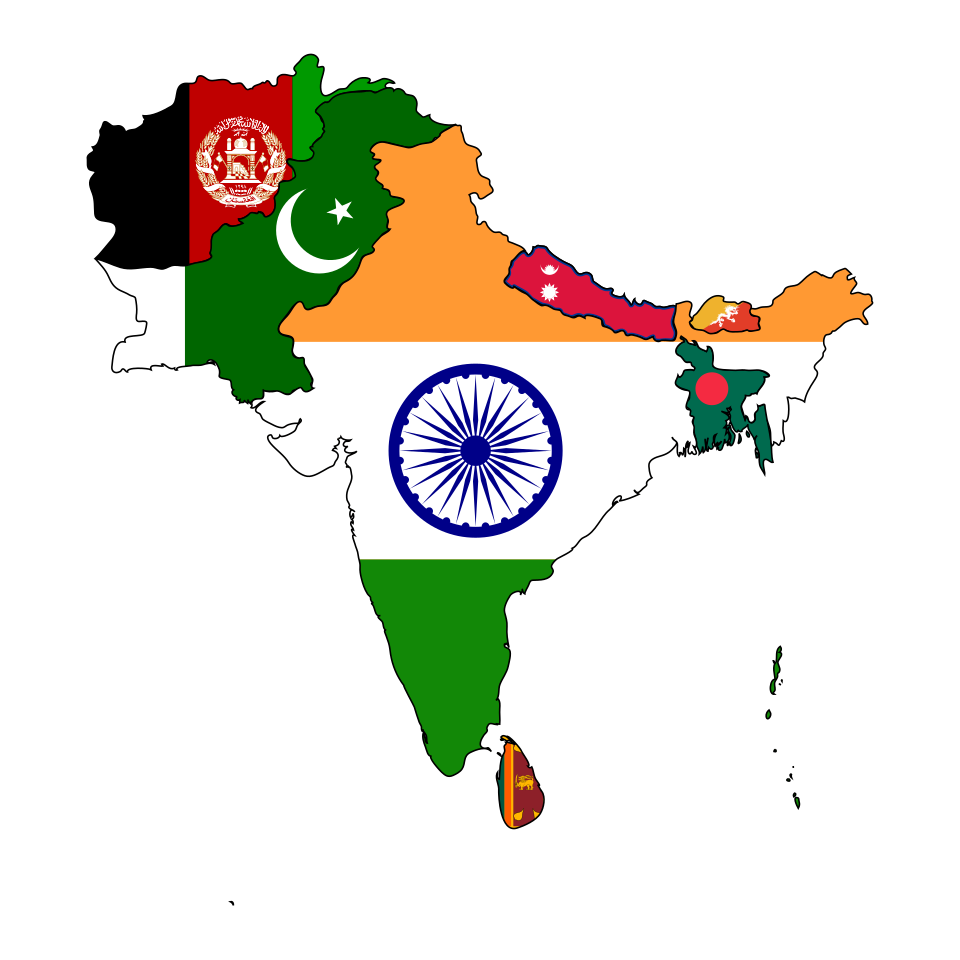 Highlighting Nepal’s trade partners for financial strategies. (Image: Transparent 6lue (original), Public domain, via Wikimedia Commons)
4. Case Study: Daraz’s Transfer Pricing in Nepal
Background: Daraz (Alibaba’s Southeast Asia arm) operates in Nepal via a subsidiary but sources most inventory from Singapore/China. Nepal’s customs duty is 30%, but Daraz’s app shows prices 10-20% lower than local competitors.
Transfer Pricing Tactics Used
- Underpriced Imports:
- Claimed value: Rs. 50,000 for a smartphone (actual market value: Rs. 70,000).
- Tax saved: Rs. 6,000 in customs duty per phone.
- Overpriced Services:
- Daraz Nepal charges its Singapore parent Rs. 20,000/month for "marketing support" (actual cost: Rs. 5,000).
- Effect: Reduces taxable profit in Nepal (25% tax on Rs. 5,000 vs. Rs. 20,000).
- Currency Mismatch:
- Invoices in USD (stronger than NPR), reducing effective price in rupees.
Nepal’s Response
- IRD audit: Daraz’s Nepal office was penalized Rs. 150M in 2022 for underpricing.
- Local sourcing push: Government now mandates 30% local procurement for e-commerce platforms.
5. Ethical and Legal Boundaries
A. OECD BEPS and Nepal’s Stance
- Action 8-10: Target transfer pricing documentation and dispute resolution.
- Nepal’s APA Program: Allows MNEs to pre-approve transfer prices to avoid audits (e.g., Ncell’s APA with IRD).
B. Greenwashing via Transfer Pricing
- Example: A Nepali solar panel exporter overcharges its European subsidiary for "carbon credits," but the credits are fake.
- Risk: EU Carbon Border Adjustment Mechanism (CBAM) penalizes such practices.
C. Nepali Companies’ Ethical Practices
| Company | Transfer Pricing Strategy | Ethical Compliance |
|---|---|---|
| Himalayan Java | Cost-plus for coffee exports | Publishes ALP-compliant pricing |
| Nabil Bank | Market-based for inter-branch loans | OECD-aligned APA with IRD |
| Chaudhary Group | TNMM for cement exports | Transparent tax filings |
## In the Real World
Daraz (Alibaba Group)
- Idea Used: Underpricing imports to avoid Nepal’s 30% customs duty.
- How: Smartphones and electronics are invoiced at 40-50% below market value when shipped from Singapore to Nepal.
- Impact: Daraz’s market share grew from 10% (2018) to 60% (2023) despite higher taxes on competitors.
Nabil Bank’s Inter-Branch Loans
- Idea Used: Market-based transfer pricing for internal lending.
- How: Loans between Nabil’s Kathmandu and Pokhara branches are priced at 6% + base rate, matching external rates.
- Impact: Avoids tax disputes with IRD and ensures fair profit allocation.
Himalayan Java’s Coffee Exports
- Idea Used: Cost-plus pricing with exchange hedging.
- How: Exports coffee to Switzerland at cost + 15% markup, but uses forward contracts to lock in Rs./CHF rates.
- Impact: 30% higher profit margins than competitors who don’t hedge.
## Exam Tip
For Short Answers (5 marks):
- Define transfer pricing + one method (e.g., TNMM) + one Nepal example (e.g., Daraz).
- Example:
*"Transfer pricing is the pricing of goods/services between related entities. The Transactional Net Margin Method (TNMM) compares profit margins of controlled vs. uncontrolled transactions. In Nepal, Nabil Bank uses TNMM for inter-branch loan transfers to comply with the Income Tax Act (2058)."*
For Long Answers (10 marks):
- Structure:
- Introduction: Define transfer pricing + its importance in Nepal.
- Body:
- Explain 2 methods (e.g., CUP + Cost-Plus) with Nepal examples.
- Discuss risks (tax penalties, customs issues) + OECD BEPS.
- Add a case study (Daraz or Ncell).
- Conclusion: Link to Nepal’s trade agreements (SAARC/BIMSTEC).
- Structure:
Common Pitfalls:
- ❌ Ignoring Nepal’s thresholds (e.g., Rs. 100M rule).
- ❌ Not linking to real companies (examiners love Daraz/Ncell cases).
- ❌ Overcomplicating methods—stick to 1-2 clear examples.
Diagram Tip:
- Always draw a transfer pricing method flowchart (e.g., TNMM steps) or a tax impact table (before/after transfer pricing).
flowchart TD
    A["Multinational Enterprise"] -->|"Sells Goods"| B["Nepal Subsidiary"]
    A -->|"Buys Goods"| C["Singapore Parent"]
    B -->|"Underprices"| D["Nepal Customs<br/>(Low Duty)"]
    C -->|"Overcharges"| E["Nepal Taxable Profit<br/>(Lower Tax)"]
    D & E --> F["Tax Revenue Loss<br/>for Nepal"]
    F --> G["IRD Audit<br/>+ Penalties"]
    G --> H["OECD BEPS<br/>or APA Resolution"]
Based on the TU BSc CSIT syllabus for International Marketing (MGT418), unit 12.
Discussion
Loading…