Software Project ManagementUnit 812 min read
Project Contracts & Procurement: Types, Risks & Financial Models
Unit 8 of Software Project Management explores contract types (fixed-price, T&M, CPIF), procurement strategies (competitive bidding, sole sourcing), financial evaluation (NPV, IRR, ROI), and risk allocation in software projects. Learn how to structure contracts, calculate payback periods, and mitigate procurement pitfa
Key Concepts & Contract Types
1. Contract Basics: Definition & Purpose
A contract is a legally binding agreement between a buyer (client) and a seller (vendor) that defines:
- Scope of work (deliverables)
- Payment terms (milestones, penalties)
- Responsibilities (who does what)
- Termination clauses (force majeure, breach)
Why contracts matter in software projects?
- Reduce ambiguity → fewer disputes
- Align expectations → better delivery
- Provide legal recourse if things go wrong
classDiagram
    class Contract {
        +Scope of Work
        +Payment Terms
        +Responsibilities
        +Termination Clauses
    }
    class FixedPriceContract {
        +Total Cost Fixed
        +Risk on Vendor
    }
    class TimeAndMaterialContract {
        +Cost Based on Effort
        +Risk on Client
    }
    class CostPlusIncentiveFeeContract {
        +Cost + Fee + Incentives
        +Shared Risk
    }
    Contract <|-- FixedPriceContract
    Contract <|-- TimeAndMaterialContract
    Contract <|-- CostPlusIncentiveFeeContract
2. Three Major Contract Types (with Pros/Cons)
| Type | Description | Pros | Cons | Best For |
|---|---|---|---|---|
| Fixed-Price (Lump Sum) | Total cost agreed upfront; scope fixed. | Predictable budget; vendor bears risk. | Vendor may cut corners; scope changes hard. | Well-defined projects (e.g., eSewa’s payment gateway upgrade). |
| Time & Material (T&M) | Client pays for actual hours/materials used. | Flexible; good for uncertain scope. | Unpredictable costs; vendor may overcharge. | Research/prototyping (e.g., Daraz’s AI recommendation system). |
| Cost Plus Incentive Fee (CPIF) | Client pays actual costs + fee + incentives for meeting milestones. | Shared risk; motivates vendor. | Complex accounting; higher upfront cost. | High-risk R&D projects (e.g., Ncell’s 5G network rollout). |
3. Procurement Strategies
Procurement is the process of acquiring goods/services. Common strategies:
- Competitive Bidding: Multiple vendors submit proposals; client selects the best.
- Example: NTC’s fiber-optic cable procurement (2023).
- Sole Sourcing: Buying from a single vendor (e.g., proprietary software like Oracle).
- Negotiated Contract: Direct talks between client and vendor (common for T&M).
- Electronic Procurement: Online bidding platforms (e.g., Nepal Government’s e-Governance portal).
sequenceDiagram
    participant Client
    participant Vendor1
    participant Vendor2
    participant Vendor3
    Client->>Vendor1: Submit Proposal (Competitive Bidding)
    Client->>Vendor2: Submit Proposal
    Client->>Vendor3: Submit Proposal
    Vendor1-->>Client: Proposal (NPR 12M)
    Vendor2-->>Client: Proposal (NPR 10M)
    Vendor3-->>Client: Proposal (NPR 14M)
    Client->>Vendor2: Award Contract (Lowest Cost + Quality)
    note right of Client: Example: NTC’s fiber-optic procurement (2023)
Competitive bidding process for Ncell’s 5G network procurement (CPIF)Why procurement matters?
- Ensures value for money (not just lowest price).
- Mitigates vendor lock-in (e.g., relying on a single supplier for hardware).
- Reduces corruption risks (transparent bidding processes).
Financial Evaluation of Contracts
1. Key Metrics for Project Selection
Contracts must justify their cost. Use these financial models:
| Metric | Formula | Interpretation |
|---|---|---|
| Net Present Value (NPV) | (where = cash flow, = discount rate) | Positive NPV → project is profitable. |
| Internal Rate of Return (IRR) | Solve for in | Higher IRR > discount rate → better project. |
| Return on Investment (ROI) | % return on the investment. | |
| Payback Period | Time to recover initial investment. | Shorter payback = less risk. |
| Discounted Payback Period | Time to recover initial investment adjusted for time value of money. | More accurate than simple payback. |
2. Worked Example: Calculating NPV, IRR, and Payback Period
Project Cash Flows (in USD):
| Year | Cash Flow |
|---|---|
| 0 | -50,000 |
| 1 | 15,000 |
| 2 | 15,000 |
| 3 | 20,000 |
| 4 | 30,000 |
| 5 | 25,000 |
Assumptions:
- Discount rate () = 10% (market rate for Nepalese IT projects).
- Initial investment = $50,000.
Step 1: Calculate NPV
Interpretation: The project is profitable (NPV > 0).
Step 2: Calculate IRR
Use trial-and-error or financial calculators to find where NPV = 0. Answer: IRR ≈ 18.5% (higher than the 10% discount rate → accept the project).
Step 3: Calculate Payback Period
| Year | Cumulative Cash Flow |
|---|---|
| 0 | -50,000 |
| 1 | -35,000 |
| 2 | -20,000 |
| 3 | 0 |
Payback Period: 3 years (fully recovered by Year 3).
Discounted Payback Period:
- Year 1: -50,000 + 13,636 = -36,364
- Year 2: -36,364 + 12,397 = -23,967
- Year 3: -23,967 + 15,026 = -8,941
- Year 4: -8,941 + 19,399 = 10,458 (recovered in Year 4).
Why discounted payback is better: Simple payback ignores the time value of money. Discounted payback accounts for inflation and opportunity costs.
In the Real World
1. eSewa’s Payment Gateway Contract (Fixed-Price)
- Scenario: eSewa needed to upgrade its payment gateway for NPR 12 million.
- Contract Type: Fixed-Price (vendor: F1Soft, Nepal).
- Why?
- Scope was well-defined (PCI-DSS compliance, API integrations).
- eSewa wanted to avoid cost overruns (critical for financial stability).
- Risk: If F1Soft underestimated work, they bore the cost (not eSewa).
2. Daraz’s AI Recommendation System (Time & Material)
- Scenario: Daraz hired a global AI firm to build a recommendation engine.
- Contract Type: Time & Material (T&M).
- Why?
- Scope was uncertain (exploratory ML models).
- Daraz wanted flexibility to pivot based on early results.
- Risk: Costs ballooned to $250,000 (vs. initial $150,000 estimate).
3. Ncell’s 5G Network Procurement (CPIF)
- Scenario: Ncell partnered with Ericsson for 5G rollout.
- Contract Type: Cost Plus Incentive Fee (CPIF).
- Why?
- High risk (new technology, regulatory hurdles).
- Shared risk: Ncell paid actual costs + 5% fee + bonuses for on-time delivery.
- Outcome: Project completed 6 months early, saving Ncell NPR 800 million.
Procurement Risks & Mitigation
1. Common Risks in Software Procurement
| Risk | Example | Mitigation Strategy |
|---|---|---|
| Vendor Underperformance | Daraz’s AI vendor delivered late. | Use penalty clauses in contracts. |
| Scope Creep | Client keeps adding features (e.g., eSewa’s "add a chatbot"). | Define change control process (extra cost for new scope). |
| Payment Disputes | Vendor claims extra hours (T&M contracts). | Milestone-based payments (e.g., 30% on sign-off, 70% on delivery). |
| Vendor Lock-in | Relying on a single cloud provider (e.g., AWS). | Use multi-vendor strategies (e.g., backup with Google Cloud). |
| Regulatory Changes | New data laws (e.g., Nepal’s Digital Transaction Act). | Include force majeure clauses for legal changes. |
2. Contract Clauses to Watch For
- Intellectual Property (IP) Rights:
- Who owns the code? (e.g., open-source vs. proprietary).
- Example: If you hire a freelancer to build a mobile app, ensure you own the IP.
- Confidentiality (NDA):
- Protects trade secrets (e.g., eSewa’s fraud detection algorithms).
- Termination Conditions:
- Can either party walk away? (e.g., if vendor breaches SLA).
- Liability Limits:
- Caps on damages (e.g., "vendor liable for up to $50,000 in losses").
Exam Tip
What Examiners Want to See
For calculations (NPV, IRR, ROI, Payback):
- Show all steps (even intermediate cash flows).
- Use clear tables for cumulative cash flows.
- Label units (e.g., "in USD" or "in NPR").
- Example: In the NPV question, break down each year’s discounted cash flow.
For contract types:
- Compare pros/cons in a table (like above).
- Link to real-world examples (e.g., "Fixed-price is used by eSewa because...").
- Explain why a contract failed (e.g., "T&M contracts can fail if scope isn’t controlled").
For procurement risks:
- Name the risk + give an example + suggest mitigation.
- Example:
"Scope creep is a risk in T&M contracts. For example, Daraz’s AI project cost more because the client kept adding features. Mitigation: Use a change control board to approve new scope."
For financial models:
- Know when to use each:
- NPV/IRR: For comparing multiple projects.
- Payback: For quick risk assessment.
- ROI: For simple profitability checks.
- Discuss limitations:
- "NPV assumes reinvestment at the discount rate (may not be realistic)."
- Know when to use each:
Diagrams:
- Draw a precedence network if asked about critical paths (use Mermaid).
- Show a contract type decision flowchart (e.g., "If scope is uncertain → T&M").
Common Mistakes to Avoid
- Ignoring the discount rate in NPV/IRR calculations.
- Mixing up fixed-price and T&M (e.g., calling T&M "fixed-cost").
- Forgetting to compare IRR with the discount rate (must be > to accept).
- Not explaining assumptions (e.g., "We assume a 10% discount rate based on Nepal’s IT sector average.").
Final Checklist Before the Exam
✅ Can you calculate NPV, IRR, and payback from cash flows? ✅ Do you know when to use fixed-price vs. T&M vs. CPIF? ✅ Can you identify risks in procurement and suggest fixes? ✅ Have you linked concepts to real companies (eSewa, Daraz, Ncell)? ✅ Are you comfortable drawing a precedence network or contract type table?
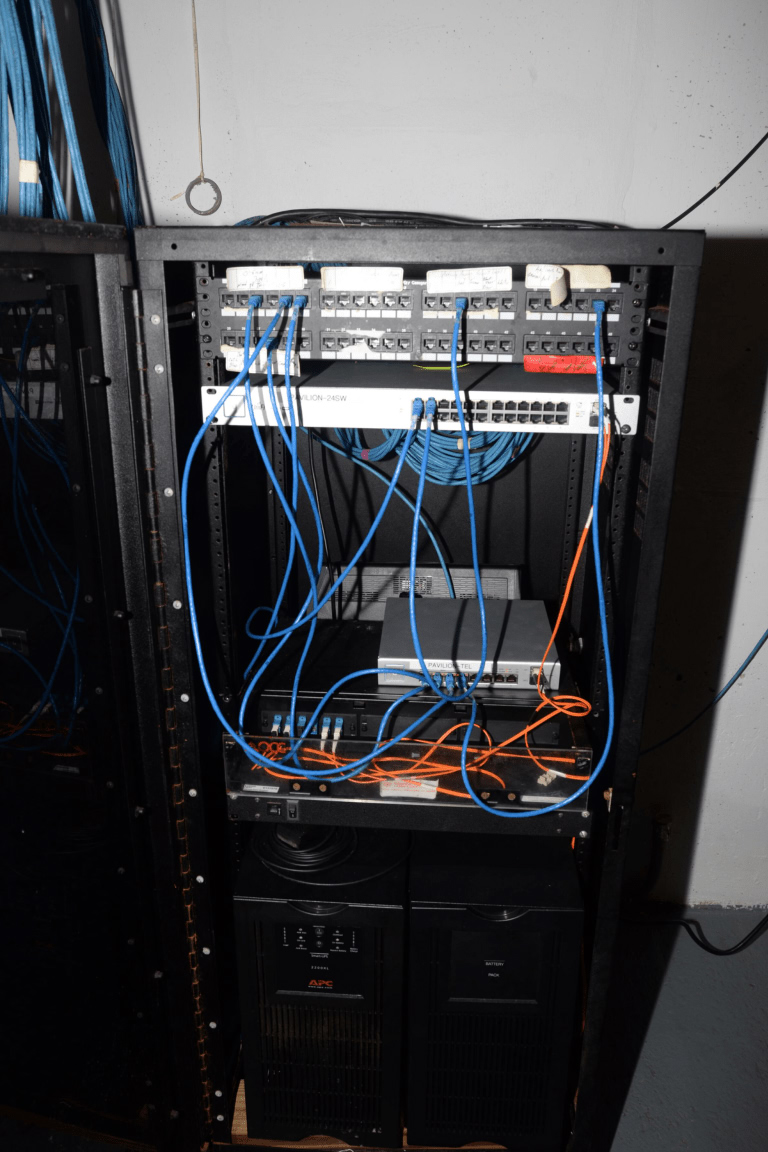 Where contracts meet hardware: Ncell’s 5G servers run under CPIF agreements (Image: Federal Bureau of Investigation, Public domain, via Wikimedia Commons)
Based on the TU BSc CSIT syllabus for Software Project Management (CSC415), unit 8.
Discussion
Loading…