Advanced Networking with IPv6Unit 611 min read
IPv4/IPv6 Transition: Mechanisms, Tunnels, Dual Stacks
Unit 6 of Advanced Networking with IPv6 covers how IPv4 and IPv6 networks coexist and migrate, focusing on dual-stack, tunneling (6to4, ISATAP, Teredo), translation (NAT64, DNS64), and real-world deployment challenges like eSewa’s payment routing and Ncell’s mobile data handoffs.
TAKEAWAYS:
- IPv4/IPv6 transition mechanisms enable backward compatibility while deploying IPv6, using techniques like dual-stack, tunneling, and translation.
- Dual-stack runs both protocols simultaneously on hosts/routers, while tunneling encapsulates IPv6 in IPv4 (or vice versa) for transport.
- Translation (NAT64/DNS64) bridges IPv4-only services (e.g., legacy web servers) to IPv6 clients without full IPv6 deployment.
- 6to4, ISATAP, and Teredo are tunneling protocols with trade-offs in scalability, security, and NAT traversal.
- Real-world examples include eSewa’s payment gateways (dual-stack for legacy bank integrations) and Ncell’s mobile networks (NAT64 for IPv4-only towers).
- Exam questions test mechanism selection, packet encapsulation traces, and configuration scenarios (e.g., configuring a 6to4 tunnel).
Core Concepts: Why Transition?
IPv4’s 32-bit address exhaustion (4.3 billion addresses) and IPv6’s 128-bit scalability (340 undecillion) demand coexistence. Transition mechanisms solve three key problems:
- Backward compatibility: IPv6-only devices must communicate with IPv4-only networks.
- Gradual deployment: Organizations cannot rip-and-replace overnight.
- Cost efficiency: Avoid deploying new infrastructure before IPv6 is widely adopted.
The Transition Spectrum
Transition methods fall into three categories:
mindmap
  root((IPv4/IPv6 Transition))
    Dual-Stack
      "Both protocols run side-by-side"
      "Hosts/routers support IPv4 and IPv6"
    Tunneling
      "Encapsulate IPv6 in IPv4 (or vice versa)"
      6to4["6to4: IPv6 over IPv4 (public anycast relays)"]
      ISATAP["ISATAP: IPv6 over IPv4 (private intranets)"]
      Teredo["Teredo: IPv6 over UDP (NAT traversal)"]
    Translation
      "Convert between IPv4 and IPv6"
      NAT64["NAT64: IPv4 <-> IPv6 address/port mapping"]
      DNS64["DNS64: Synthetic IPv4 addresses for IPv6 clients"]
1. Dual-Stack: Running Both Protocols
Definition: A host or router simultaneously supports IPv4 and IPv6, allowing communication with both networks. No translation or tunneling is needed between the two stacks.
How It Works
- Hosts: Applications bind to IPv4 or IPv6 sockets (e.g.,
socket(AF_INET6)in Linux). - Routers: Forward packets based on protocol (IPv4 or IPv6 headers).
- No encapsulation: Packets travel natively in their protocol.
Real-World Example: eSewa’s Payment Gateway
eSewa’s backend servers use dual-stack to:
- Accept IPv6 payments from modern mobile apps (Nepal Rastra Bank’s IPv6-enabled POS).
- Route legacy IPv4 transactions to older bank systems (e.g., NMB Bank’s IPv4-only servers).
- Worked Example:
- A user pays via Khalti (IPv6) → eSewa’s dual-stack server forwards the request to Global IME Bank (IPv4) using the IPv4 stack.
- Response travels back via IPv6 to the user’s device.
Advantages/Disadvantages
| Pros | Cons |
|---|---|
| Simple to implement | Requires dual-stack infrastructure |
| No packet overhead | IPv4 exhaustion still a risk |
| Full performance for both protocols | Legacy devices may not support IPv6 |
Configuration Example (Linux)
# Enable IPv6 on an interface
sudo ip -6 addr add 2001:db8::1/64 dev eth0

# Test connectivity to an IPv6-only server (e.g., Google DNS)
ping6 2001:4860:4860::8888
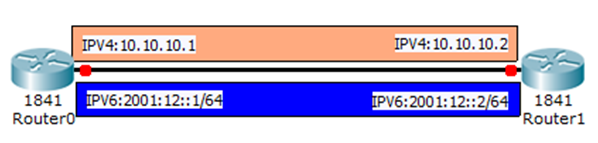 Dual-stack router forwarding IPv4 and IPv6 packets side-by-side. (Image: AKRAM.ABOU, CC BY-SA 3.0, via Wikimedia Commons)
2. Tunneling: Encapsulating IPv6 in IPv4
Definition: IPv6 packets are encapsulated inside IPv4 packets (or vice versa) to traverse IPv4-only networks. Used when full dual-stack isn’t feasible.
Three Key Tunneling Methods
A. 6to4 (RFC 3056)
- Purpose: Automatically create IPv6-over-IPv4 tunnels using anycast relays.
- How it works:
- IPv6 address format:
2002:<IPv4_address_in_hex>::/48(e.g.,2002:c058:6301::/48for IPv4192.88.99.1). - Packets are sent to 6to4 relays (e.g.,
192.88.99.1for Google’s relay). - Relays decapsulate and route IPv6 packets globally.
- IPv6 address format:
- Use Case: ISPs or enterprises with IPv4 infrastructure but needing IPv6 connectivity.
B. ISATAP (Intra-Site Automatic Tunnel Addressing)
- Purpose: IPv6-over-IPv4 tunneling within a private network (e.g., corporate intranet).
- How it works:
- IPv6 address format:
fe80::<IPv4_address>(e.g.,fe80::192.168.1.1). - Uses broadcast/multicast to discover ISATAP routers.
- Encapsulates IPv6 in IPv4 for internal routing.
- IPv6 address format:
- Use Case: Microsoft Windows networks transitioning to IPv6.
C. Teredo (RFC 4380)
- Purpose: IPv6-over-UDP for NAT traversal (e.g., home users behind NAT).
- How it works:
- Uses UDP port 3544 to bypass NAT.
- IPv6 address format:
2001:<32-bit_UDP_port>:<32-bit_UDP_port>:<32-bit_interface_ID>. - Relies on Teredo servers (e.g., Microsoft’s
tunnel.teredo.net).
- Use Case: Gamers or remote workers needing IPv6 behind NAT (e.g., Pathao drivers using IPv6 apps).
Comparison Table
| Feature | 6to4 | ISATAP | Teredo |
|---|---|---|---|
| Scope | Public internet | Private intranet | NAT traversal |
| Address Format | 2002::/16 |
fe80::/64 |
2001::/32 |
| Relay Needed | Yes (anycast) | No (router-based) | Yes (Teredo servers) |
| NAT Support | No | No | Yes |
| Security | Vulnerable to MITM | Secure (private) | Encrypted (optional) |
Worked Example: 6to4 Tunnel Setup
Scenario: A university lab (IPv4: 192.168.1.0/24) wants IPv6 connectivity.
- Assign a 6to4 IPv6 prefix:
2002:c0a8:100::/48(derived from192.168.1.0). - Configure a 6to4 relay (e.g., Google’s
192.88.99.1). - Encapsulate an IPv6 packet from
2002:c0a8:100::1to2001:db8::1:- IPv4 header:
192.88.99.1(relay) →192.168.1.100(lab router). - Payload: Original IPv6 packet (
2002:c0a8:100::1→2001:db8::1).
- IPv4 header:
3. Translation: Bridging IPv4 and IPv6
When full dual-stack or tunneling isn’t possible, translation converts addresses/ports between protocols.
A. NAT64 (Network Address Translation)
- Purpose: Allow IPv6-only clients to access IPv4-only servers (and vice versa).
- How it works:
- IPv6 address is translated to a synthetic IPv4 address (e.g.,
64:ff9b::192.0.2.1→192.0.2.1). - Ports are mapped to ensure return traffic reaches the correct client.
- Uses DNS64 to rewrite DNS responses (see below).
- IPv6 address is translated to a synthetic IPv4 address (e.g.,
Real-World Example: Ncell’s Mobile Data
Ncell’s 4G towers are mostly IPv4-only, but newer devices use IPv6. NAT64 enables:
- IPv6 smartphones → NAT64 → IPv4 tower → Internet.
- Worked Example:
- A user on an IPv6 phone visits
http://example.com(IPv4-only). - DNS64 returns
64:ff9b::192.0.2.46(synthetic IPv6 for192.0.2.46). - NAT64 translates the request to IPv4 and forwards it to the server.
- A user on an IPv6 phone visits
B. DNS64
- Purpose: Extend DNS to return synthetic IPv6 addresses for IPv4-only services.
- How it works:
- IPv6 client queries DNS for
example.com(A record). - DNS64 returns a AAAA record in the format
64:ff9b::<IPv4_address>. - Client sends traffic to NAT64, which translates it to IPv4.
- IPv6 client queries DNS for
NAT64/DNS64 Workflow
sequenceDiagram
    participant IPv6Client
    participant DNS64
    participant NAT64
    participant IPv4Server
    IPv6Client->>DNS64: Query AAAA for example.com
    DNS64-->>IPv6Client: Return 64:ff9b::192.0.2.46
    IPv6Client->>NAT64: Send packet to 64:ff9b::192.0.2.46
    NAT64->>IPv4Server: Translate to IPv4 (192.0.2.46)
    IPv4Server-->>NAT64: Reply
    NAT64-->>IPv6Client: Translate back to IPv6
Advantages/Disadvantages
| Pros | Cons |
|---|---|
| No need for dual-stack everywhere | Performance overhead |
| Works with legacy IPv4 services | Complex configuration |
| Enables gradual IPv6 adoption | Limited to TCP/UDP (not ICMP) |
4. Transition Mechanism Selection Guide
Choose a mechanism based on network scope, cost, and requirements:
| Scenario | Recommended Mechanism | Why? |
|---|---|---|
| Enterprise with IPv4 infrastructure | Dual-stack + 6to4 | Scalable, no NAT issues |
| Home user behind NAT | Teredo | NAT traversal support |
| Private corporate intranet | ISATAP | No public relays needed |
| Public ISP needing IPv6 | Dual-stack + native IPv6 | Future-proof, no tunneling overhead |
| Legacy IPv4-only services | NAT64 + DNS64 | Bridges IPv6 clients to IPv4 servers |
5. Real-World Deployment Challenges
Case Study: Nepal’s NTC and IPv6
Nepal Telecom (NTC) deployed IPv6 in phases:
- Dual-stack on core routers: Handled both IPv4 (for legacy NLDs) and IPv6 (for new 4G/5G).
- 6to4 for rural areas: Used anycast relays to provide IPv6 to IPv4-only villages.
- NAT64 for VoIP: Enabled IPv6 smartphones to call IPv4-only PSTN lines.
- Challenge: Some ISPs (e.g., Smart Telecom) resisted due to additional hardware costs.
Case Study: Daraz’s Global Logistics
Daraz’s Nepal warehouse uses:
- Dual-stack for internal tracking systems (IPv6 for IoT sensors, IPv4 for legacy ERP).
- NAT64 to connect IPv6-enabled delivery drones to IPv4 GPS servers.
- 6to4 for backup connectivity during IPv4 outages.
Exam Tip: How This Unit Is Tested
Mechanism Identification:
- Given a scenario (e.g., "A home user behind NAT wants IPv6"), select the correct transition method (Teredo).
- Common traps:
- Confusing 6to4 (public) with ISATAP (private).
- Forgetting NAT64 requires DNS64.
Packet Traces:
- Draw or describe how a packet travels through a tunnel (e.g., 6to4 encapsulation).
- Example question:
"Show the encapsulation of an IPv6 packet
2001:db8::1→2001:db8::2over a 6to4 tunnel. What is the outer IPv4 destination?" Answer: Outer IPv4 header uses192.88.99.1(6to4 relay) as destination.
Configuration Questions:
- Write commands to enable dual-stack or configure NAT64 (Linux/Cisco).
- Example:
# Enable NAT64 on Linux (using `dnsmasq`):
echo "port=53" >> /etc/dnsmasq.conf
echo "enable-ra" >> /etc/dnsmasq.conf
echo "dhcp-range=::100,constructor:eth0,ra-only" >> /etc/dnsmasq.conf
Comparison Tables:
- Compare 6to4 vs. ISATAP vs. Teredo (address format, use case, relay dependency).
- Compare NAT64 vs. Dual-Stack (performance, compatibility).
Scenario-Based:
- "Ncell wants to provide IPv6 to its IPv4-only towers. Which mechanism is best and why?"
- Answer: NAT64 + DNS64 (bridges IPv6 clients to IPv4 towers without dual-stack).
Top 3 Exam Pitfalls to Avoid
- Assuming all tunneling methods work behind NAT: Only Teredo supports NAT traversal.
- Ignoring DNS64 for NAT64: NAT64 alone won’t work without DNS64 rewriting AAAA queries.
- Overlooking security: Tunneling (e.g., 6to4) is vulnerable to MITM attacks unless encrypted (e.g., IPsec).
Based on the TU BSc CSIT syllabus for Advanced Networking with IPv6, unit 6.
Discussion
Loading…