Introduction To Social WorkUnit 1012 min read
Ecosystems in Social Work: Systems, Perspectives & Practice
Unit 10 of Introduction To Social Work explores the four practice systems (micro, mezzo, macro, and global), the ecosystem perspective, and how social workers analyze client environments (family, community, policy) to design interventions. Learn real-world applications, ethical dilemmas in systems work, and how Nepal’s
TAKEAWAYS
- Social work operates across four interconnected systems: micro (individual), mezzo (group/family), macro (community/organization), and global (policy/international).
- The ecosystem perspective views clients as part of nested environments (e.g., a child’s home → school → neighborhood → national child protection laws).
- Strengths-based assessment identifies resources in a client’s ecosystem (e.g., a single mother’s support network) to design interventions.
- Ethical dilemmas arise when systems conflict (e.g., confidentiality vs. child safety in a family case).
- Nepal’s decentralized social services (e.g., Child Welfare Centers, Women’s Development Committees) reflect mezzo and macro system interventions.
- Global social work addresses transnational issues like migration (e.g., Nepali migrant workers’ rights) or climate displacement.
1. The Four Practice Systems in Social Work
Social workers engage with clients at different levels, each requiring distinct skills and tools. These systems are interdependent—changes in one (e.g., a family’s income) ripple through others (e.g., school performance, community stigma).
graph TD
    A["Global System\n(Policies, Economy, Culture)"] -->|"Influences"| B["Macro System\n(Organizations, Communities, Laws)"]
    B -->|"Shapes"| C["Mezzo System\n(Groups, Families, Workplaces)"]
    C -->|"Impacts"| D["Micro System\n(Individual Client: Needs, Strengths, Trauma)"]
    D -->|"Affected by"| C
    C -->|"Supported by"| B
    B -->|"Driven by"| A
Key Definitions:
| System | Level | Focus | Example in Nepal | Tools/Interventions |
|---|---|---|---|---|
| Micro | Individual | Client’s psychology, behavior, health | A 12-year-old with depression in Kathmandu | Cognitive Behavioral Therapy (CBT), counseling |
| Mezzo | Group/Family | Relationships, support networks | A single mother struggling with childcare costs | Parenting workshops, community kitchens |
| Macro | Community/Org | Policies, institutions, advocacy | Lobbying for stronger child labor laws | Policy analysis, media campaigns |
| Global | International | Human rights, migration, climate | Nepali migrant workers’ rights in Gulf countries | Advocacy with ILO, cross-border NGOs |
2. The Ecosystem Perspective: Seeing the Whole Picture
The ecosystem perspective treats clients as part of interconnected systems (Bronfenbrenner’s ecological model). A problem in one system (e.g., poverty) is often a symptom of larger issues (e.g., lack of rural employment).
classDiagram
    class Client {
        +Name: "Rama, 8 years old"
        +Age: 8
        +Problem: "Malnutrition, frequent absences from school"
    }
    class Micro {
        +Family: "Single mother, daily wage worker"
        +Health: "Anemia, no access to school meals"
    }
    class Mezzo {
        +School: "No midday meal program"
        +Community: "Stigma around child labor"
    }
    class Macro {
        +Policy: "No universal school feeding scheme"
        +Economy: "Rural poverty, seasonal unemployment"
    }
    class Global {
        +Climate: "Droughts reduce agricultural income"
        +Global Aid: "Limited WFP support in remote areas"
    }
    Client --> Micro : "Directly affected by"
    Micro --> Mezzo : "Influences"
    Mezzo --> Macro : "Shaped by"
    Macro --> Global : "Driven by"
Worked Example: Rama’s Malnutrition
- Micro: Rama’s mother works 12-hour shifts; Rama skips meals.
- Mezzo: Her school has no midday meals, and neighbors mock her for being "weak."
- Macro: Nepal’s School Sector Reform Program (SSRP) lacks funding for rural schools.
- Global: Climate change reduces her family’s farm yield, worsening poverty. Intervention:
- Micro: Refer Rama to a nutrition program (e.g., UNICEF’s supplementary feeding).
- Mezzo: Organize a community kitchen at her school (partner with Local Level governments).
- Macro: Advocate for expanded SSRP funding in her district.
- Global: Lobby for climate-resilient agriculture support (e.g., FAO programs).
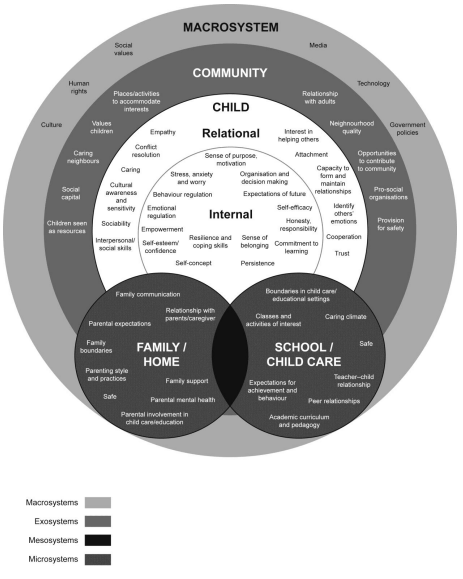 Shows micro to global layers with Rama’s case mapped (Image: U3097090, CC BY-SA 4.0, via Wikimedia Commons)
3. Ethical Dilemmas in Systems Work
When systems conflict, social workers face ethical tensions. Example:
- Scenario: A Child Welfare Officer (CWO) in Pokhara discovers a child is being trafficked but learns the family is undocumented. Reporting could lead to deportation.
- Dilemma:
- Confidentiality (protecting the family’s privacy) vs. Child protection (legal obligation to report).
- Macro system (immigration laws) vs. Micro system (child’s safety).
- Solution:
- Use harm reduction: Report anonymously to anti-trafficking units while linking the family to legal aid (e.g., Forum Asia’s migration support).
Real-World Link:
- eSewa’s digital exclusion: Many rural Nepalis lack internet access to use eSewa for payments. A social worker addressing digital poverty must balance:
- Micro: Teaching digital literacy vs. Macro: Advocating for universal internet subsidies.
4. Nepal’s Social Work Systems: Opportunities and Challenges
Nepal’s decentralized governance (after 2015 federalism) creates both opportunities and gaps in ecosystem-based practice.
| System | Opportunities | Challenges | Example |
|---|---|---|---|
| Micro | Strong NGO networks (e.g., INSEC) | Shortage of trained counselors in rural areas | Mental health clinics in Kathmandu vs. none in Dolpa |
| Mezzo | Local Level governments can fund community programs | Weak inter-agency coordination | Women’s Development Committees overlap with Child Welfare Centers |
| Macro | Social Security Act (2017) covers vulnerable groups | Implementation gaps (e.g., delayed pensions) | Senior citizens waiting for benefits in Chitwan |
| Global | Partnerships with UN agencies (UNICEF, ILO) | Donor dependency limits sustainability | Nepal’s child labor reduction relies on ILO funding |
5. Tools for Ecosystem Assessment
Social workers use systems-based tools to map clients’ environments:
| Tool | Purpose | Example in Nepal |
|---|---|---|
| Ecomap | Visualizes client’s support/networks | A divorced father’s ties to his children, employer, and temple group |
| Genogram | Maps family relationships/patterns | Tracking domestic violence cycles across generations |
| Community Needs Assessment | Identifies gaps in local services | Surveying LGBTQ+ youth access to healthcare in Lalitpur |
| Policy Analysis | Examines laws’ impact on clients | Analyzing how Nepal’s Labor Act 2017 protects migrant workers |
Worked Example: Daraz Delivery Worker’s Ecosystem
- Micro: Worker earns ₹500/day but has back pain.
- Mezzo: Daraz’s no union recognition → no healthcare.
- Macro: Nepal’s Labor Act lacks gig-worker protections.
- Global: Global South gig-economy trends favor platforms over workers. Intervention:
- Micro: Refer to physical therapy (partner with Red Cross).
- Mezzo: Organize worker collectives to negotiate with Daraz.
- Macro: Advocate for amended Labor Act (model: India’s gig-worker laws).
- Global: Join international gig-worker unions (e.g., Cleaners and Drivers Union).
6. Global Social Work: Nepal’s Connections
Nepal’s social work is shaped by global trends and international collaborations:
| Global Issue | Nepal’s Context | Social Work Role |
|---|---|---|
| Migration | 2 million Nepalis work in Gulf/Malaysia | Pre-departure counseling, anti-trafficking (e.g., Forum Asia) |
| Climate Migration | Melting glaciers displace communities (e.g., Solukhumbu) | Resettlement planning, psychological support |
| Digital Divide | 40% rural households lack internet | Digital literacy programs, advocacy for subsidized broadband |
In the Real World
Khalti’s Financial Inclusion
- Idea Used: Macro system intervention (digital payment policies) + Micro system (user education).
- How: Khalti partners with NGOs to teach rural women how to use mobile banking, reducing reliance on moneylenders. Social workers assess barriers (e.g., illiteracy) and design mezzo-level support groups.
Pathao’s Gig-Worker Dilemma
- Idea Used: Ecosystem perspective (worker’s health vs. platform profits).
- How: Social workers in Kathmandu study Pathao drivers’ injuries (micro) and advocate for insurance schemes (macro). They also train drivers in financial literacy (mezzo) to diversify income.
NTC’s Telecommunication Subsidies
- Idea Used: Global-to-micro policy impact.
- How: NTC’s rural internet subsidies (macro) enable telemedicine (mezzo) for remote villages. Social workers assess digital access gaps (e.g., elderly users) and design community tech hubs.
Exam Tip
- Define systems clearly: Always link your answer to micro, mezzo, macro, or global. Examiners love Nepal-specific examples (e.g., "Like the Child Welfare Centers operating at the mezzo level...").
- Use diagrams: Draw a simple ecosystem map (even on paper) to show connections. For example:
- Problem: Teen pregnancy in Sindhupalchowk.
- Systems:
- Micro: Lack of sex education.
- Mezzo: Stigma from school peers.
- Macro: No youth-friendly health clinics.
- Global: Cultural norms influenced by South Asian media.
- Ethical dilemmas: Expect 2-3 marks for a realistic scenario. Structure your answer as:
- Dilemma (conflict between values).
- Systems involved (e.g., "This pits the micro system’s confidentiality against the macro system’s child protection laws").
- Solution (e.g., "Collaborate with the District Child Rights Committee to balance both").
- Policy questions: For opportunities/challenges, use the SOAP framework:
- Strengths (e.g., "Federalism allows localized programs like Women’s Development Committees").
- Opportunities (e.g., "The Social Security Act 2017 can be expanded to cover gig workers").
- Analysis (e.g., "However, corruption at local levels delays fund disbursement").
- Proposals (e.g., "Strengthen audit mechanisms in Local Level governments").
Final Visual Summary:
mindmap
  root((Social Work Systems in Nepal))
    Micro
      "Individual client (e.g., trauma, health)"
      "Tools: CBT, counseling"
    Mezzo
      "Family/community (e.g., school, WDCs)"
      "Tools: Ecomaps, support groups"
    Macro
      "Policies/orgs (e.g., Labor Act, CWCs)"
      "Tools: Advocacy, policy analysis"
    Global
      "International (e.g., migration, climate)"
      "Tools: Cross-border NGOs, global campaigns"
    Ecosystem Perspective
      "Interconnected layers: Micro → Mezzo → Macro → Global"
      "Example: Rama’s malnutrition case"
    Ethical Dilemmas
      "Conflict between systems (e.g., confidentiality vs. child safety)"
      "Solution: Harm reduction + systemic change"
Based on the TU BSW syllabus for Introduction To Social Work, unit 10.
Discussion
Loading…