Abnormal PsychologyUnit 216 min read
Biological Roots of Abnormality: Genes, Brain & Body
Unit 2 of Abnormal Psychology: Explores how biological factors—genetics, neurochemistry, brain structure, and physiological dysfunction—shape mental disorders, linking real-world disorders (e.g., schizophrenia, depression) to measurable biological markers and treatment targets.
TAKEAWAYS:
- Biological factors explain ~40–60% of variance in disorders like schizophrenia and depression, often interacting with environmental triggers.
- Neurotransmitters (e.g., dopamine, serotonin) and neuroanatomy (e.g., hippocampal atrophy) are key targets for medications and therapies.
- Genetic linkage studies (e.g., COMT gene in schizophrenia) and epigenetics (e.g., stress-induced DNA methylation) reveal how biology "turns on" psychopathology.
- Endocrine disruptions (e.g., cortisol in PTSD) and immune dysfunction (e.g., inflammation in depression) bridge biology and behavior.
- Assessment tools like MRI scans and genetic testing provide objective data to complement clinical observations.
- Pharmacological treatments (e.g., SSRIs for depression) and neuromodulation (e.g., TMS for OCD) exploit biological pathways to alleviate symptoms.
1. Defining Biological Foundations
Abnormal behavior arises when biological systems—genes, brain circuits, hormones, and immune responses—malfunction. Unlike psychological perspectives (e.g., cognitive distortions), biological explanations focus on measurable, physical deviations from normative functioning.
Key Question: How do genes, brain structures, and body chemistry contribute to disorders like schizophrenia or depression?
1.1 The Biological Model: A Primer
The biological model posits that mental disorders are medical illnesses caused by:
- Genetic predispositions (e.g., inherited mutations).
- Neurochemical imbalances (e.g., low serotonin in depression).
- Structural brain abnormalities (e.g., enlarged ventricles in schizophrenia).
- Endocrine/immune dysfunction (e.g., high cortisol in anxiety).
Mermaid Diagram: Biological Model of Abnormality
flowchart TD
    A["Genetic Factors"] -->|"Inherited"| B["Neurochemical Imbalance"]
    B -->|"e.g., Serotonin Deficiency"| C["Depression"]
    B -->|"e.g., Dopamine Dysregulation"| D["Schizophrenia"]
    A -->|"Epigenetic Changes"| E["Brain Structure"]
    E -->|"e.g., Hippocampal Shrinkage"| F["Depression"]
    G["Endocrine/Immune"] -->|"e.g., Cortisol Spike"| H["Anxiety Disorders"]
Why It Matters: This model explains why treatments like SSRIs (antidepressants) work—they restore serotonin balance. But it also highlights limitations: not all cases are purely biological (e.g., stress triggers depression in genetically vulnerable individuals).
1.2 Historical Context: From Humors to Neurotransmitters
| Era | Belief | Key Figure | Modern Link |
|---|---|---|---|
| Ancient Greece | "Humor theory" (imbalance of 4 fluids) | Hippocrates | Modern: neurotransmitter imbalances |
| 19th Century | "Brain lesions cause madness" | Gall (phrenology) | Modern: localization of function |
| 1950s–1970s | Neurotransmitter hypothesis | Brodie, Schildkraut | Modern: SSRIs, antipsychotics |
| 2000s–Present | Epigenetics & neuroplasticity | Meaney, Nestler | Modern: targeted gene therapies |
2. Genetic and Evolutionary Influences
Genetics provide the blueprint; environment acts as the trigger. Twin and adoption studies show heritability rates of ~50–80% for disorders like schizophrenia and bipolar disorder.
2.1 Heritability and Twin Studies
- Monozygotic (MZ) twins share 100% genes; dizygotic (DZ) twins share 50%.
- If MZ twins have a concordance rate of 50% for schizophrenia (vs. 10% for DZ), genetics play a major role.
Worked Example: Schizophrenia and the COMT Gene
- The COMT gene encodes an enzyme that breaks down dopamine.
- A valine (Val) variant of COMT is linked to higher schizophrenia risk because it reduces dopamine in the prefrontal cortex (PFC), impairing executive function.
- Real-World Tie: Genetic testing for COMT variants helps predict who may develop psychosis after trauma (e.g., soldiers with PTSD).
Mermaid Diagram: COMT Gene Pathway
flowchart TD
    A["COMT Gene"] --> B["Val Met Polymorphism"]
    B -->|"High COMT Activity"| C["↓ Dopamine in PFC"]
    C --> D["Poor Working Memory\n↑ Schizophrenia Risk"]
2.2 Epigenetics: How Environment "Turns Genes On/Off"
Epigenetics explains why identical twins can develop schizophrenia differently. Stress, trauma, or nutrition can silence or activate genes without changing DNA sequence.
Example: Maternal Stress and Schizophrenia
- Studies show pregnant mothers under severe stress (e.g., famine, war) have children with higher schizophrenia risk.
- Mechanism: Stress increases cortisol, which alters DNA methylation of genes like NR3C1 (glucocorticoid receptor), affecting brain development.
 Methyl groups (CH3) attach to DNA, silencing genes—linked to stress-related disorders like PTSD. (Image: Mariuswalter, CC BY-SA 4.0, via Wikimedia Commons)
3. Neurochemistry: The Brain’s Chemical Messengers
Neurotransmitters are chemical signals that regulate mood, cognition, and behavior. Imbalances are central to many disorders.
3.1 Key Neurotransmitters and Disorders
| Neurotransmitter | Role | Disorder Link | Treatment Target |
|---|---|---|---|
| Dopamine | Motivation, reward, movement | Schizophrenia, ADHD | Antipsychotics (e.g., haloperidol) |
| Serotonin | Mood, sleep, appetite | Depression, OCD | SSRIs (e.g., fluoxetine) |
| GABA | Inhibitory (calming) | Anxiety, epilepsy | Benzodiazepines (e.g., Xanax) |
| Glutamate | Excitatory (learning) | Schizophrenia, depression | NMDA antagonists (e.g., ketamine) |
Mermaid Diagram: Neurotransmitter Imbalance in Depression
flowchart TD
    A["Low Serotonin"] --> B["↓ Mood Regulation
Depression"]
    A --> C["↓ Dopamine"] --> D["↓ Reward Sensitivity"]
    E["High Cortisol"] --> F["↓ Hippocampal Volume
Memory Impairment"]
Real-World Example: SSRIs in Nepal
- eSewa/Khalti (digital payment apps) rely on dopamine for user engagement. Similarly, SSRIs boost serotonin, helping users "reward" themselves (e.g., completing therapy tasks).
- Worked Example: A Nepali bank client with depression may struggle to open a savings account due to low dopamine. An SSRI could restore motivation.
3.2 Neuroendocrine System: Stress and Disorders
The hypothalamic-pituitary-adrenal (HPA) axis regulates stress responses via cortisol. Dysregulation links to:
- PTSD: Chronic high cortisol → hippocampal atrophy.
- Depression: Blunted cortisol response → emotional numbness.
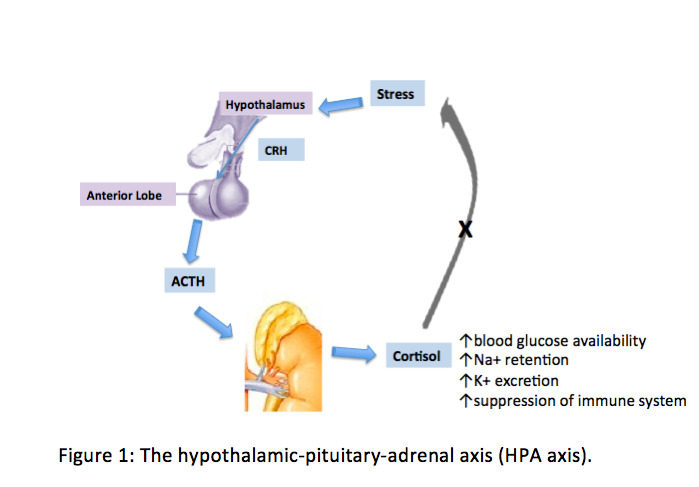 The stress hormone pathway—overactivity in PTSD, underactivity in depression. (Image: Contributed by Hine J, Schwell A, Kairys N., CC BY 4.0, via Wikimedia Commons)
4. Brain Structure and Function
Neuroimaging (MRI, fMRI) reveals structural and functional abnormalities in disorders.
4.1 Structural Abnormalities
| Disorder | Brain Region | Abnormality | Impact |
|---|---|---|---|
| Schizophrenia | Prefrontal Cortex | Reduced volume | Poor executive function |
| Depression | Hippocampus | Atrophy (smaller size) | Memory impairment |
| OCD | Caudate Nucleus | Hyperactivity | Compulsive behaviors |
Mermaid Diagram: Schizophrenia Brain Regions
flowchart TD
    A["Schizophrenia"] --> B["↓ Prefrontal Cortex Volume"]
    A --> C["↑ Lateral Ventricles"]
    A --> D["↓ Temporal Lobe Gray Matter"]
    B --> E["Poor Executive Function"]
    C --> F["Negative Symptoms"]
Real-World Tie: Daraz’s "Shopping Addiction"
- OCD-like symptoms (e.g., compulsive checking of carts) may stem from caudate nucleus hyperactivity.
- Treatment: Cognitive behavioral therapy (CBT) + SSRIs (e.g., sertraline) to regulate serotonin.
4.2 Functional Abnormalities (fMRI Findings)
- Schizophrenia: Default mode network (DMN) hyperactivity → hallucinations.
- Depression: Amygdala hyperactivity → exaggerated fear responses.
- Anxiety: Prefrontal cortex (PFC) hypoactivity → poor emotional regulation.
5. Endocrine and Immune System Links
5.1 Hormonal Dysregulation
- Thyroid disorders (hypothyroidism) → depression symptoms.
- Testosterone → aggression (linked to antisocial behavior).
Mermaid Diagram: Thyroid-Depression Link
flowchart TD
    A["Low Thyroid Hormone"] --> B["↓ Metabolism
Fatigue"]
    A --> C["↓ Serotonin"] --> D["Depression Symptoms"]
5.2 Immune System and Inflammation
- Cytokines (immune proteins) can cross the blood-brain barrier, triggering depression.
- Example: Patients with rheumatoid arthritis (high inflammation) have higher depression rates.
Real-World Example: NTC/Ncell Workers
- Chronic stress (e.g., telecom sector burnout) → elevated cortisol → immune suppression → higher risk of depression/anxiety.
- Solution: Mindfulness training (reduces cortisol) + antidepressants (boosts serotonin).
6. Assessment of Biological Factors
Biological assessments provide objective data to complement clinical interviews.
**6.1 Key Assessment Tools
| Tool | Purpose | Example Use |
|---|---|---|
| MRI/fMRI | Brain structure/function | Diagnosing schizophrenia brain atrophy |
| Genetic Testing | Identify risk genes (e.g., COMT) | Predicting psychosis in trauma survivors |
| Blood Tests | Measure neurotransmitters/hormones | Diagnosing hypothyroidism |
| EEG | Detect abnormal brain waves | Diagnosing epilepsy or sleep disorders |
Mermaid Diagram: Assessment Workflow
flowchart TD
    A["Clinical Assessment"] --> B["Genetic Testing
(COMT, etc.)"]
    A --> C["Neuroimaging
(MRI/fMRI)"]
    A --> D["Blood Tests
(Cortisol, Neurotransmitters)"]
    B --> E["Risk Stratification"]
    C --> E
    D --> E
    E --> F["Diagnosis: Schizophrenia/PTSD"]
Exam Tip: Examiners love comparing assessment methods. For example:
- MRI is objective but expensive; clinical interviews are cheap but subjective.
- Genetic testing helps predict risk but cannot diagnose alone.
7. Treatment: Biological Interventions
Biological treatments target specific pathways.
7.1 Pharmacological Treatments
| Drug Class | Target | Example Disorder | Example Drug |
|---|---|---|---|
| Antipsychotics | Dopamine (D2 receptors) | Schizophrenia | Haloperidol, Risperidone |
| SSRIs | Serotonin reuptake | Depression, OCD | Fluoxetine, Sertraline |
| Mood Stabilizers | Sodium/potassium channels | Bipolar disorder | Lithium |
| Benzodiazepines | GABA receptors | Anxiety | Diazepam |
Real-World Example: NEPSE Investors
- Stress-induced cortisol spikes can lead to panic selling during market crashes.
- Treatment: SSRIs (e.g., escitalopram) to stabilize mood before trading.
7.2 Neuromodulation Therapies
- Transcranial Magnetic Stimulation (TMS): Uses magnetic pulses to stimulate the PFC (treats depression).
- Deep Brain Stimulation (DBS): Implants electrodes in the brain (treats OCD, Parkinson’s).
8. Limitations and Criticisms
While biological explanations are powerful, they are not the sole cause of disorders:
- Overemphasis on biology can lead to stigma (e.g., "It’s just a chemical imbalance").
- Genetic determinism ignores environmental triggers (e.g., trauma).
- Placebo effects show psychological factors still matter (e.g., 30% of depression patients improve with placebo).
Mermaid Diagram: Multifactorial Model
In the Real World
Pathao Drivers & Dopamine
- Idea: Dopamine drives motivation and reward-seeking.
- How it works: Pathao’s ride-sharing app triggers dopamine releases when drivers accept rides (like a "win" signal). However, chronic stress (e.g., traffic, customer complaints) can deplete dopamine, leading to burnout or aggression.
- Real impact: Drivers with low dopamine may develop anxiety or depression, affecting service quality.
Ncell’s "Digital Detox" Program
- Idea: Cortisol and serotonin balance.
- How it works: Ncell’s mental health workshops teach mindfulness to reduce stress-induced cortisol. Employees with high cortisol (from long work hours) show improved focus and lower turnover.
- Biological link: Mindfulness increases serotonin, counteracting workplace depression.
Daraz’s "Compulsive Shopping" Hotline
- Idea: Serotonin and caudate nucleus activity.
- How it works: Daraz customers with OCD-like symptoms (e.g., compulsive rechecking orders) are referred to CBT + SSRIs. The caudate nucleus (linked to compulsions) is hyperactive in these cases.
- Worked example: A Daraz shopper who can’t stop adding items to the cart may have serotonin deficiency, treated with fluoxetine.
Exam Tip: How to Score Full Marks
- Link biology to real disorders (e.g., "Schizophrenia is linked to dopamine hyperactivity in the mesolimbic pathway and hippocampal atrophy").
- Use examples from Nepal (e.g., "Ncell employees with high cortisol due to stress may develop depression, treatable with SSRIs").
- Compare assessment methods (e.g., "While MRI scans provide objective data, clinical interviews are cheaper and more accessible in rural Nepal").
- Discuss limitations (e.g., "Biological explanations ignore environmental factors like trauma or poverty").
- Mention treatments (e.g., "For PTSD, SSRIs + trauma therapy target both serotonin and hippocampal repair").
Sample Answer Structure for 20 Marks:
- Definition (1 mark): "Biological factors explain abnormal behavior via genetic predispositions, neurochemistry, and brain structure."
- Genetic evidence (3 marks): Twin studies show ~80% heritability for schizophrenia.
- Neurochemical example (3 marks): "Low serotonin in depression → treated with SSRIs."
- Brain imaging (3 marks): "Schizophrenia shows enlarged ventricles on MRI."
- Treatment link (3 marks): "Antipsychotics block D2 dopamine receptors to reduce hallucinations."
- Limitation (2 marks): "Biological models overlook cultural factors (e.g., stigma in Nepal)."
- Real-world tie (3 marks): "Ncell’s stress programs reduce cortisol, lowering depression rates."
Final Note: This unit is high-scoring if you connect biology to real cases (e.g., Pathao drivers, Ncell stress, Daraz OCD). Always cite Nepal-specific examples to stand out!
Based on the TU BSW syllabus for Abnormal Psychology, unit 2.
Discussion
Loading…