Abnormal PsychologyUnit 1010 min read
Substance Use Disorders: Causes, Types, and Real-World Impact
Unit 10 of Abnormal Psychology explores substance-related and addictive disorders, covering their biological, psychological, and social causes, DSM-5 classifications, and real-world consequences in Nepal and globally. This note includes diagnostic criteria, treatment approaches, and case studies tied to local examples
Core Concepts: Definitions and Scope
What Are Substance-Related and Addictive Disorders?
Substance-related and addictive disorders (SRADs) are medical conditions characterized by compulsive use of substances (legal or illegal) despite harmful consequences. They involve:
- Intoxication: Temporary reversible changes in behavior/cognition due to substance use.
- Withdrawal: Physical/psychological symptoms when use stops (e.g., tremors, anxiety).
- Addiction: Chronic relapsing disorder with loss of control, craving, and tolerance (needing more for the same effect).
Key distinction:
- Substance Use Disorder (SUD): Covers alcohol, drugs, and medications (e.g., opioids, benzodiazepines).
- Gambling Disorder: Non-substance addiction included in DSM-5 (now classified under behavioral addictions).
How the DSM-5 Classifies SRADs
The Diagnostic and Statistical Manual of Mental Disorders, 5th Edition (DSM-5) groups SRADs by substance class and severity (mild/moderate/severe). Severity depends on number of symptoms (e.g., failed attempts to quit, social/interpersonal problems, risky use).
classDiagram
    class DSM5Classification {
        +Alcohol Use Disorder
        +Cannabis Use Disorder
        +Stimulant Use Disorder (e.g., cocaine, amphetamines)
        +Opioid Use Disorder (e.g., heroin, prescription painkillers)
        +Sedative/Hypnotic/Anxiolytic Use Disorder (e.g., benzodiazepines)
        +Tobacco Use Disorder
        +Inhalant Use Disorder
        +Hallucinogen Use Disorder
        +Other/Unknown Substance Use Disorder
    }
    class SeverityCriteria {
        +2-3 symptoms = Mild
        +4-5 symptoms = Moderate
        +6+ symptoms = Severe
    }
    DSM5Classification --> SeverityCriteria : "Severity based on symptoms"
Biological Foundations: How Addiction Works
The Brain’s Reward System
Addiction hijacks the mesolimbic dopamine pathway, a neural circuit that releases dopamine (the "pleasure chemical") in response to rewards. Key regions:
- Ventral Tegmental Area (VTA): Dopamine neurons fire when expecting a reward.
- Nucleus Accumbens (NAc): Receives dopamine signals, reinforcing behavior.
- Prefrontal Cortex (PFC): Normally regulates impulse control—weakened in addiction.
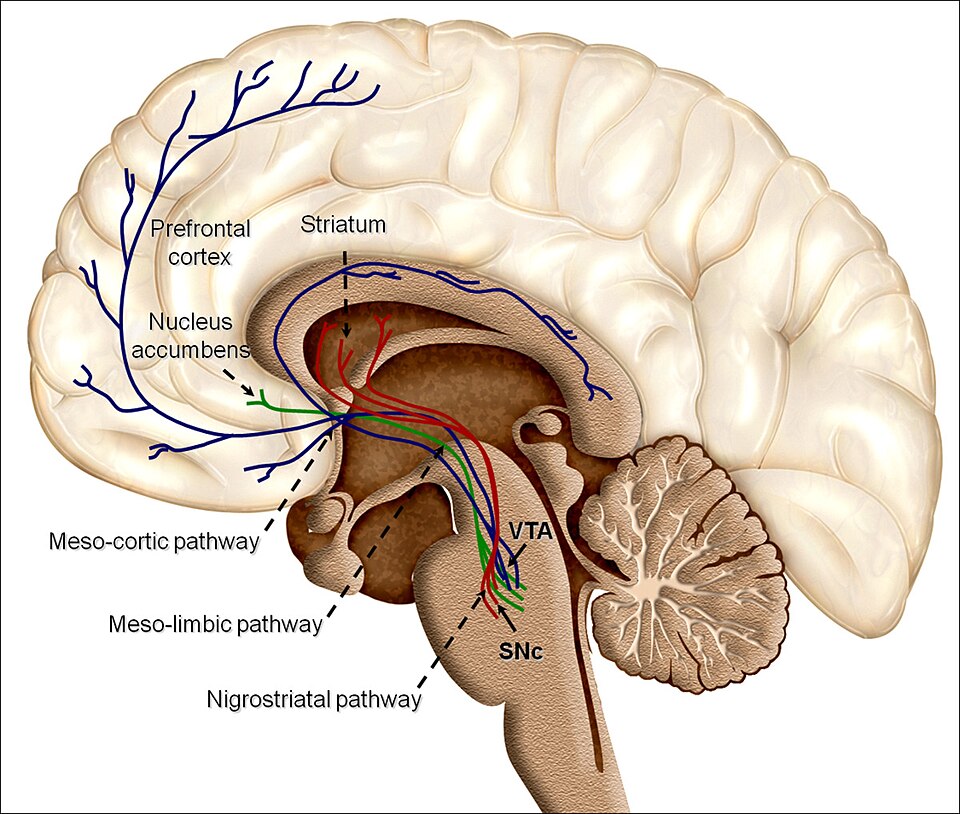 Dopamine release in VTA → NAc → PFC during substance use (highlight addiction’s effect on PFC). (Image: Oscar Arias-Carrión1, Maria Stamelou, Eric Murillo-Rodríguez, CC BY 2.0, via Wikimedia Commons)
Neurochemical Changes
- Tolerance: Brain adapts by reducing receptor sensitivity (e.g., needing more alcohol for the same "high").
- Withdrawal: Rebound effects when dopamine drops (e.g., depression, insomnia).
- Kindling: With repeated use, the brain becomes sensitized to stress, increasing relapse risk.
Example: A Daraz delivery worker using amphetamines to meet deadlines may develop tolerance, leading to risky behavior (e.g., accidents) and withdrawal anxiety when off the drug.
Types of Substances and Their Effects
1. Depressants
Examples: Alcohol, benzodiazepines (e.g., diazepam), barbiturates. Mechanism: Slow central nervous system (CNS) activity by enhancing GABA (inhibitory neurotransmitter).
| Effect | Short-Term | Long-Term | Withdrawal Symptoms |
|---|---|---|---|
| Cognitive | Slurred speech, impaired judgment | Memory loss (e.g., "blackouts") | Seizures, hallucinations |
| Behavioral | Aggression, sedation | Depression, violence | Anxiety, insomnia |
| Physical | Coordination problems | Liver disease, heart damage | Tremors, sweating, nausea |
Real-World Link: Ncell’s "Stay Safe" campaign warns about binge drinking among youth, linking it to alcohol use disorder (AUD) and accidents.
2. Stimulants
Examples: Cocaine, amphetamines (e.g., "yaba"), nicotine, caffeine. Mechanism: Increase dopamine/norepinephrine, boosting alertness and energy.
| Effect | Short-Term | Long-Term | Withdrawal Symptoms |
|---|---|---|---|
| Cognitive | Euphoria, hyperfocus | Paranoia, psychosis | Fatigue, depression |
| Behavioral | Talkativeness, impulsivity | Aggression, erratic behavior | Increased appetite, sleepiness |
| Physical | Increased heart rate, dilated pupils | Heart attack, stroke | Cravings, muscle pain |
Worked Example: A Khalti customer service agent using caffeine pills to stay awake during night shifts may develop amphetamine use disorder, leading to paranoia and job loss.
3. Hallucinogens
Examples: LSD, psilocybin (magic mushrooms), MDMA (ecstasy). Mechanism: Disrupt serotonin receptors, causing sensory distortions.
- Short-term: Hallucinations, synesthesia (e.g., "seeing sounds"), emotional swings.
- Long-term: HPPD (hallucinogen persisting perception disorder), anxiety.
- Withdrawal: Rare, but flashbacks (HPPD) can occur.
4. Opioids
Examples: Heroin, prescription painkillers (oxycodone, fentanyl). Mechanism: Bind to mu-opioid receptors, blocking pain and inducing euphoria.
| Risk | Detail |
|---|---|
| Overdose | Respiratory depression (fatal) |
| Tolerance | Need for higher doses |
| Withdrawal | "Flu-like" symptoms + severe cravings |
Real-World Link: Nepal’s opioid crisis (e.g., heroin in Kathmandu’s Thapathali area) is linked to prescription painkiller misuse after surgeries.
Psychosocial Factors: Why People Start Using
1. Biological Vulnerabilities
- Genetics: Family history of addiction increases risk by 40–60% (e.g., alcoholism).
- Neurobiology: Dopamine receptor gene variants (e.g., DRD2) predispose individuals.
2. Environmental Triggers
- Peer pressure: "Everyone’s doing it" (e.g., youth smoking in schools).
- Stress: Nepal’s economic instability (e.g., post-earthquake trauma) drives self-medication.
- Trauma: Childhood abuse → higher risk of substance abuse in adulthood.
3. Psychological Factors
- Mental health disorders: Depression/anxiety often co-occur with SUD.
- Personality traits: High impulsivity or sensation-seeking increase risk.
Treatment Approaches
1. Pharmacological Treatments
| Substance | Medication | How It Works |
|---|---|---|
| Alcohol | Naltrexone, Acamprosate | Blocks opioid receptors; stabilizes brain chemistry |
| Opioids | Methadone, Buprenorphine | Reduces withdrawal symptoms |
| Nicotine | Varenicline (Champix) | Mimics nicotine to reduce cravings |
| Stimulants | No FDA-approved meds | Therapy + support groups |
2. Behavioral Therapies
- Cognitive Behavioral Therapy (CBT): Identifies triggers and replaces maladaptive thoughts.
- Contingency Management: Rewards sobriety (e.g., vouchers for drug-free urine tests).
- Motivational Interviewing: Enhances readiness to change.
Example: eSewa’s "Digital Detox" program uses CBT principles to help users reduce internet addiction (a behavioral addiction).
In the Real World
Khalti’s Fraud Prevention System
- Idea Used: Behavioral addiction to gambling (e.g., scratch cards).
- How: Khalti limits transaction amounts for users flagged for problematic gambling, using algorithms to detect patterns like rapid withdrawals.
Ncell’s "Stay Connected, Stay Safe" Campaign
- Idea Used: Stimulant use (caffeine/nicotine) in youth.
- How: Ads show withdrawal symptoms (e.g., irritability, poor sleep) in students cramming for exams with energy drinks.
Daraz Delivery Workers and Amphetamine Use
- Idea Used: Stimulant tolerance and job performance.
- How: Workers use methamphetamine ("yaba") to meet delivery quotas, leading to paranoia and accidents. Daraz now offers mental health workshops with NGOs like Mental Health Nepal.
Exam Tip
How to Score Full Marks
- Define + Classify: Always start with DSM-5 criteria (e.g., "SUD is diagnosed by X symptoms").
- Compare Tables: For questions like "Compare depressants and stimulants", use a side-by-side table with effects, withdrawal, and examples.
- Link to Nepal: Use local examples (e.g., Ncell addiction ads, Daraz workers) to show real-world application.
- Biopsychosocial Model: Explain causes using all three layers (biological, psychological, social).
- Treatment Matching: For "How to treat opioid addiction", list both meds (methadone) and therapy (CBT).
Common Pitfalls:
- Forgetting withdrawal symptoms (examiners love these).
- Not mentioning co-occurring disorders (e.g., depression + alcoholism).
- Vague examples (e.g., "drugs" → specify heroin vs. cannabis).
Practice Question Breakdown
Question: "Describe the causes of substance-related disorders." Model Answer Structure:
- Biological (genetics, dopamine pathways) → IMAGE: Brain reward pathway.
- Psychological (trauma, mental illness) → Venn diagram of risk factors.
- Social (peer pressure, economic stress) → Nepal example: post-earthquake opioid use.
- Interplay: "Genetics may predispose, but stress triggers relapse" (biopsychosocial integration).
Visual Summary
flowchart TD
    A["Substance Use Disorder"] --> B["Biological: Dopamine Dysregulation"]
    A --> C["Psychological: Trauma/Mental Illness"]
    A --> D["Social: Peer Pressure/Stress"]
    B --> E["VTA → NAc Dopamine Surge"]
    C --> F["Childhood Abuse → Adult Addiction"]
    D --> G["Nepal: Economic Crisis → Self-Medication"]
    A --> H["Treatment: CBT + Meds"]
Based on the TU BSW syllabus for Abnormal Psychology, unit 10.
Discussion
Loading…