Adolescent And Juvenile DelinquencyUnit 314 min read
Theories of Juvenile Delinquency: Biological, Psychological & Social Explanations
Unit 3 of Adolescent And Juvenile Delinquency explores the three core theoretical frameworks—biological, psychological, and social—that explain why juveniles engage in delinquent behavior, including their definitions, key proponents, real-world applications, and limitations.
TAKEAWAYS:
- Biological theories link delinquency to genetics, brain function, and hormones, with examples like ADHD and testosterone levels.
- Psychological theories focus on personality traits (e.g., antisocial behavior) and cognitive distortions (e.g., moral reasoning deficits).
- Social theories emphasize environmental factors like peer pressure, family dynamics, and socioeconomic status.
- Each theory offers unique insights but must be combined for effective intervention strategies.
- Real-world applications include juvenile justice policies, school counseling programs, and community-based rehabilitation.
- Critically evaluating theories helps tailor prevention and correction strategies for Nepal’s context.
1. Biological Theories: The Body’s Role in Delinquency
Biological theories argue that delinquent behavior stems from physical, genetic, or neurological factors. These theories challenge the idea that delinquency is purely a moral or social issue, instead suggesting it may be innate or biologically influenced.
Key Biological Theories
| Theory | Proponent | Key Idea | Example in Nepal |
|---|---|---|---|
| Genetic Theory | Lombroso, Mednick | Delinquency is hereditary; criminal traits are passed down. | Studies show higher delinquency rates in families with a history of antisocial behavior. |
| Neurological Theory | Raine, Ellis | Brain abnormalities (e.g., prefrontal cortex dysfunction) increase aggression. | Juveniles with ADHD or autism spectrum disorders are overrepresented in juvenile justice. |
| Hormonal Theory | Money-Kyrle | High testosterone levels correlate with aggressive behavior. | Male adolescents (higher testosterone) commit more violent offenses than females. |
| Evolutionary Theory | Wilson, Daly | Aggression is an adaptive trait for survival in competitive environments. | Gang violence in urban slums may reflect evolutionary "survival of the fittest" logic. |
How It Works: The Brain and Delinquency
The prefrontal cortex (responsible for impulse control) is often underdeveloped in delinquent juveniles. Studies using fMRI scans show reduced activity in this region, leading to poor decision-making.
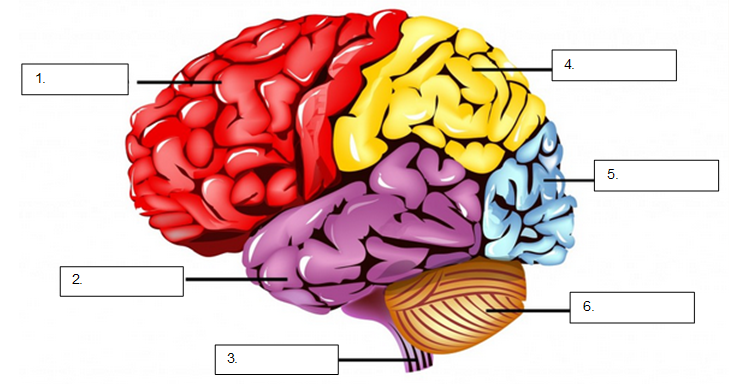 Prefrontal cortex and limbic system in juvenile delinquency (Image: ErMED14, CC BY-SA 4.0, via Wikimedia Commons)
Caption: The prefrontal cortex (blue) is critical for impulse control; dysfunction here is linked to delinquent behavior.
Prefrontal cortex and limbic system in juvenile delinquency (Image: ErMED14, CC BY-SA 4.0, via Wikimedia Commons)
Caption: The prefrontal cortex (blue) is critical for impulse control; dysfunction here is linked to delinquent behavior.
Worked Example: ADHD and Juvenile Delinquency
A 14-year-old boy in Kathmandu is frequently arrested for theft. His parents report he has difficulty sitting still, impulsivity, and poor attention in school. A psychologist diagnoses him with ADHD, a neurological disorder linked to:
- Impaired executive function (poor planning, high impulsivity).
- Higher risk of substance abuse (self-medication).
- Conflict with authority (e.g., teachers, police).
Solution:
- Stimulant medication (e.g., Ritalin) to improve focus.
- Behavioral therapy to teach impulse control.
- Structured school programs (e.g., special education classes).
2. Psychological Theories: The Mind’s Role in Delinquency
Psychological theories focus on individual mental processes, such as personality traits, cognitive distortions, and emotional regulation. These theories suggest that delinquency arises from internal psychological issues rather than external pressures.
Key Psychological Theories
| Theory | Proponent | Key Idea | Example in Nepal |
|---|---|---|---|
| Psychodynamic Theory | Freud, Erikson | Unresolved childhood conflicts (e.g., poor attachment) lead to delinquency. | A juvenile from an orphanage may steal due to unresolved abandonment issues. |
| Personality Theory | Eysenck, Cloninger | Traits like psychopathy or antisocial personality predict delinquency. | A juvenile who lacks remorse after hurting others may have conduct disorder (CD). |
| Cognitive Theory | Piaget, Kohlberg | Moral reasoning deficits (e.g., inability to empathize) drive delinquency. | A thief justifies stealing by saying, "They can afford it; I can’t." (Pre-conventional morality). |
| Behavioral Theory | Skinner, Bandura | Delinquency is learned through reinforcement (e.g., peer approval). | A juvenile joins a gang after seeing peers gain respect for violent acts. |
How It Works: The Role of Personality Traits
The Big Five Personality Traits (OCEAN model) help explain delinquency:
- Low Conscientiousness → Poor impulse control.
- High Neuroticism → Aggression when stressed.
- Low Agreeableness → Lack of empathy.
Caption: Low agreeableness and high neuroticism are strongly linked to delinquent behavior.
Worked Example: Conduct Disorder (CD) in a Juvenile
A 16-year-old girl in Pokhara sets fires in her neighborhood after being bullied at school. A psychologist assesses her for Conduct Disorder (CD), characterized by:
- Aggression toward people/animals.
- Destruction of property.
- Deceitfulness or theft.
- Serious violations of rules.
Why It Happens:
- Trauma response: She uses fire-setting to gain control after feeling powerless.
- Lack of empathy: She doesn’t consider the harm to others.
- Reinforcement: She may receive attention (even negative) for her actions.
Solution:
- Cognitive Behavioral Therapy (CBT) to challenge distorted thoughts.
- Anger management programs.
- Family therapy to address bullying and parental neglect.
3. Social Theories: The Environment’s Role in Delinquency
Social theories argue that delinquency is shaped by external factors, such as family, peers, school, and community. Unlike biological or psychological theories, these focus on societal influences.
Key Social Theories
| Theory | Proponent | Key Idea | Example in Nepal |
|---|---|---|---|
| Social Learning Theory | Bandura | Delinquency is learned through observation (e.g., violent media, peers). | A juvenile mimics gang behavior after watching movies glorifying crime. |
| Social Disorganization Theory | Shaw & McKay | Poor community conditions (e.g., poverty, lack of policing) breed delinquency. | Juveniles in Kathmandu’s slums (e.g., Balaju) have higher delinquency rates due to unemployment and gang activity. |
| Strain Theory | Merton, Agnew | Frustration from unmet goals (e.g., poverty, lack of opportunities) leads to delinquency. | A juvenile steals to afford smartphone (status symbol) despite family poverty. |
| Differential Association Theory | Sutherland | Delinquency is learned through association with criminal peers. | A juvenile joins a bike theft gang after friends encourage him. |
| Labeling Theory | Becker, Lemert | Society’s negative labels (e.g., "troublemaker") push juveniles into delinquency. | A juvenile labeled "bad" by teachers may act out to prove the label wrong. |
How It Works: The Role of Peers
Peers are the strongest predictor of juvenile delinquency. A study found that:
- Juveniles with delinquent friends are 5x more likely to engage in crime.
- Gang membership increases risk of violent offenses (e.g., robbery, assault).
Worked Example: Strain Theory in a Daraz Delivery Boy
A 17-year-old Daraz delivery boy in Lalitpur steals packages to supplement his income. His family earns Rs. 20,000/month, but he wants to buy a motorcycle (Rs. 200,000) to impress his peers.
Why It Happens (Strain Theory):
- Goal Blockage: He wants material success but lacks legal means.
- Frustration: His low income makes him feel powerless.
- Innovation: He steals (an innovative but illegal solution) to achieve his goal.
Solution:
- Vocational training (e.g., driving license) to increase earning potential.
- Financial literacy programs to manage money better.
- Mentorship to redirect aspirations toward legal goals.
In the Real World
1. eSewa and Digital Fraud Among Juveniles
- Idea Used: Social Learning Theory (observation and imitation).
- How It Works: Many juveniles learn online scams (e.g., fake eSewa transactions) by watching YouTube tutorials or joining WhatsApp fraud groups.
- Example: A 15-year-old in Bhaktapur impersonates an eSewa customer service agent to trick seniors into sharing OTPs.
- Prevention: eSewa now runs digital literacy campaigns in schools to teach safe online behavior.
2. Pathao Riders and Road Rage
- Idea Used: Strain Theory (frustration from unmet goals) + Psychological Traits (impulsivity).
- How It Works: Many Pathao riders (often young males) engage in reckless driving due to:
- Financial pressure (need to earn quickly).
- Lack of traffic rules enforcement (e.g., no helmets, speeding).
- Peer competition ("I’ll deliver faster than you!").
- Example: A 19-year-old rider hits a pedestrian after being yelled at by a customer for delay.
- Solution: Pathao now offers anger management workshops for riders.
3. Ncell and Cyberbullying Among Teens
- Idea Used: Social Disorganization Theory (lack of digital safety nets).
- How It Works: Cyberbullying (via Ncell’s WhatsApp/Instagram) leads to:
- Suicidal thoughts in victims.
- Revenge attacks (e.g., doxxing, fake news).
- Example: A 14-year-old girl in Pokhara commits suicide after nude photos of her were leaked on a group chat.
- Prevention: Ncell partners with child helplines and schools for online safety training.
Exam Tip
How to Score Full Marks in This Unit
- Define Clearly: Always start with precise definitions (e.g., "Conduct Disorder is a repetitive pattern of behavior in which the basic rights of others or major age-appropriate societal norms are violated.").
- Use Real Examples: Link theories to Nepali contexts (e.g., gangs in Kathmandu, school bullying in rural areas).
- Compare and Contrast: For questions like "Compare learning theories and personality trait theories," use a table to highlight differences.
- Critically Evaluate: Examiners love balanced answers. For example:
- "While biological theories explain delinquency as innate, they ignore environmental influences. Thus, a biopsychosocial approach is more effective."
- Link to Intervention: Always end with how the theory informs prevention/correction (e.g., "CBT helps juveniles with CD by correcting cognitive distortions.").
- Avoid Overgeneralization: Don’t say "All delinquents have ADHD"—instead, say "Some juveniles with ADHD may exhibit delinquent behavior due to impulse control issues."
Common Mistakes to Avoid
- ❌ Vague answers: "Delinquency is bad." → ✅ *"Juvenile delinquency is a pattern of behavior that violates laws or societal norms, often linked to conduct disorder (CD) or oppositional defiant disorder (ODD)."
- ❌ Ignoring Nepal’s context: Don’t just cite Western studies—relate to Kathmandu/Pokhara.
- ❌ Mixing theories: Don’t say "Freud’s psychodynamic theory explains gang violence" (it doesn’t—social learning theory does).
Final Summary Table
| Theory Type | Key Theories | Strengths | Weaknesses | Best For Explaining |
|---|---|---|---|---|
| Biological | Genetic, Neurological, Hormonal | Explains innate aggression | Ignores environmental factors | ADHD, psychopathy, violent offenses |
| Psychological | Psychodynamic, Personality, Cognitive | Focuses on individual mental health | Overlooks social influences | CD, ODD, moral reasoning deficits |
| Social | Social Learning, Strain, Differential Association | Explains peer/group influence | Hard to measure causation | Gang recruitment, cyberbullying |
Caption: From arrest to rehabilitation—how theories guide juvenile justice in Nepal.
Based on the TU BSW syllabus for Adolescent And Juvenile Delinquency, unit 3.
Discussion
Loading…