Psychology For Social WorkUnit 1113 min read
Sensation, Perception & Human Behavior Determinants
Unit 11 of Psychology For Social Work covers sensation vs. perception, their psychological processes, socio-cultural determinants of behavior, and real-world applications in social work—with visuals, comparisons, and exam-focused analysis.
TAKEAWAYS:
- Sensation is the raw input of stimuli via senses, while perception is the brain’s interpretation of that input.
- Socio-cultural determinants (e.g., family, religion, media) shape behavior more than individual psychology alone.
- Bottom-up processing (data-driven) vs. top-down processing (concept-driven) explains how we perceive the world.
- Emotions and motivations act as fundamental "determinants" of human behavior, influencing decisions and actions.
- Real-world examples (e.g., eSewa’s user interface design, NTC’s traffic signal perception) show how these concepts apply in Nepal.
1. Sensation vs. Perception: The Foundation of Human Experience
Definitions and Key Differences
Sensation is the initial stage where sensory receptors (eyes, ears, skin, etc.) detect raw stimuli from the environment. It is passive—your senses simply register what exists (e.g., light waves, sound waves, pressure). Perception, however, is the active process of organizing, interpreting, and giving meaning to those sensations. It is subjective—two people can sense the same thing but perceive it differently.
graph LR
    A["Sensation"] -->|"Raw Input"| B["Perception"]
    B -->|"Meaning"| C["Behavior/Response"]
Example:
- Sensation: Your eyes detect light bouncing off a red traffic light.
- Perception: Your brain interprets it as "STOP" (not just "red light").
How Sensation Works: The Sensory Process
Sensation involves transduction—converting physical stimuli into neural signals. For example:
- Vision: Light enters the eye → retina converts it to electrical signals → optic nerve sends it to the brain.
- Hearing: Sound waves vibrate the eardrum → cochlea converts vibrations to neural impulses.
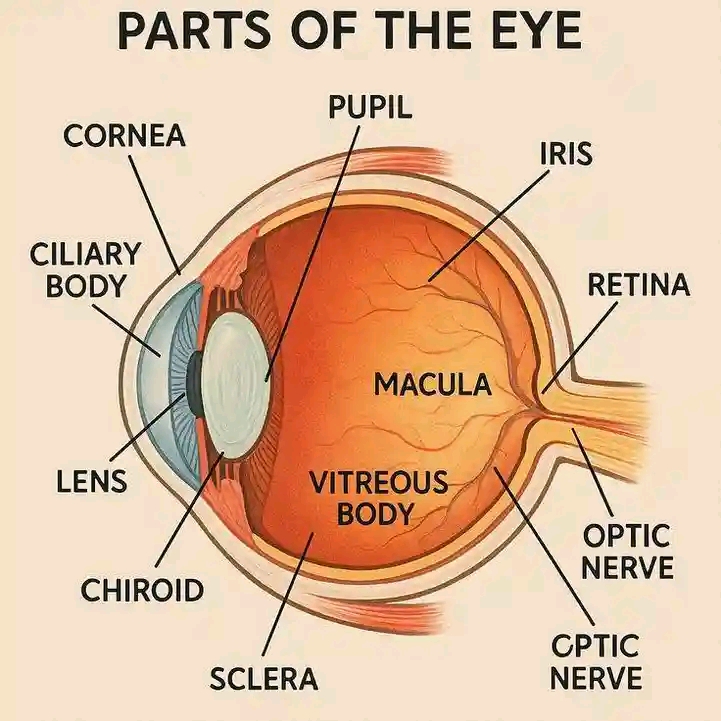 Shows how light is transduced into neural signals. (Image: Aliyu Mohammed Aliyu, CC0, via Wikimedia Commons)
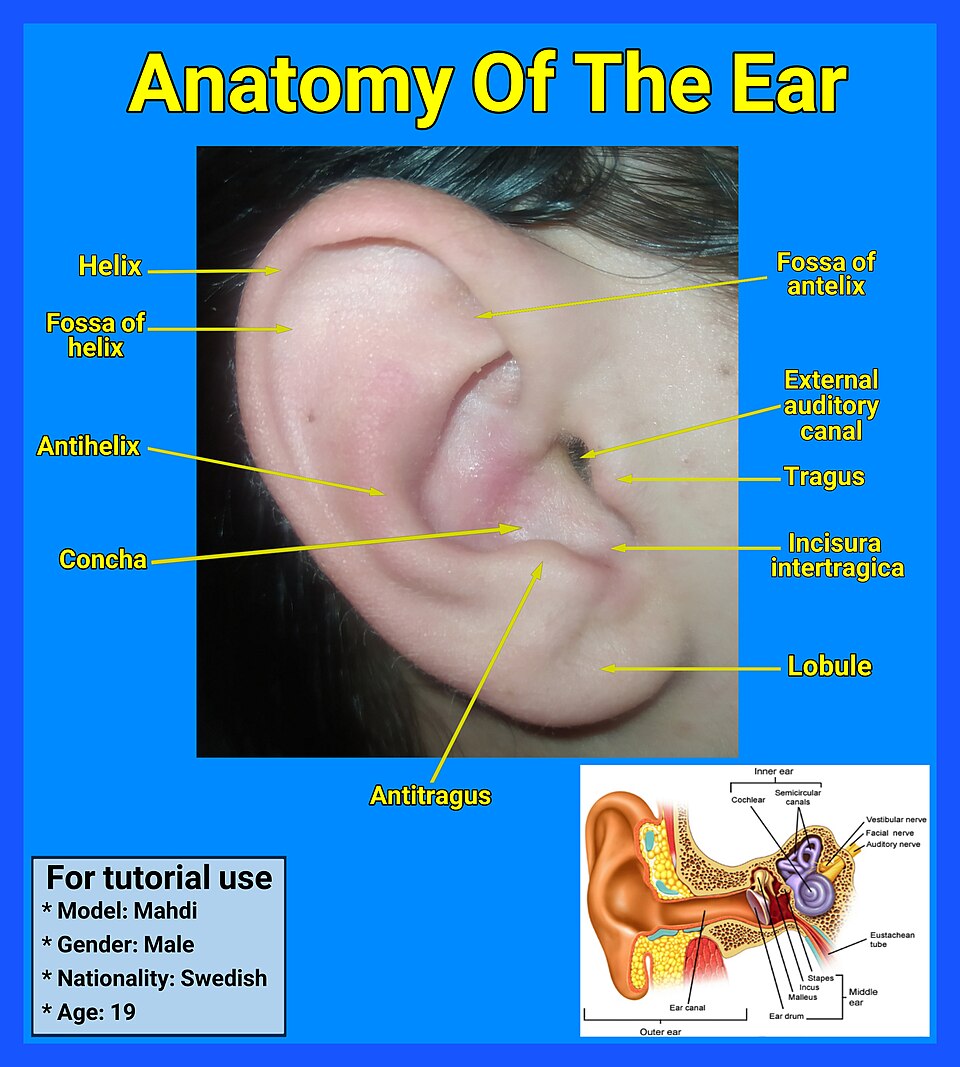 Illustrates how sound waves are converted to perceptions of pitch and volume. (Image: Hatuso1992, CC BY-SA 4.0, via Wikimedia Commons)
How Perception Works: Top-Down vs. Bottom-Up Processing
Perception is influenced by two key processes:
- Bottom-Up Processing (Data-Driven):
- Starts with sensory input and builds up to a perception.
- Example: Recognizing a face by analyzing individual features (eyes, nose, mouth).
- Top-Down Processing (Concept-Driven):
- Uses prior knowledge, expectations, or context to interpret sensations.
- Example: Seeing a blurry figure in the dark and assuming it’s a "person" based on past experiences.
Real-World Example: eSewa App
- Sensation: Your fingers touch the screen, and your eyes detect icons.
- Perception: Your brain interprets the "Pay Bill" button as a function to transfer money (top-down, based on prior use).
- Why it matters: Poor UI design (e.g., unclear icons) can lead to misperception, causing user frustration.
2. Determinants of Human Behavior: The Socio-Cultural Lens
Behavior is not just shaped by individual psychology—it is heavily influenced by socio-cultural determinants. These include:
- Family and Upbringing
- Culture and Ethnicity
- Religion and Spiritual Beliefs
- Media and Technology
- Economic Status
- Peer Groups and Social Norms
Comparison Table: Individual vs. Socio-Cultural Determinants
| Determinant | Individual Factors | Socio-Cultural Factors |
|---|---|---|
| Source | Biology, personality, cognition | Family, culture, media, laws |
| Example | A person with high anxiety avoids crowds | A community’s religious taboo against blood transfusions |
| Flexibility | Can change with therapy or effort | Often resistant to change (deeply rooted) |
| Social Work Application | Counseling for phobias | Advocating for cultural sensitivity in mental health care |
Five Key Socio-Cultural Determinants with Examples
Family Structure
- Example: In Nepal, joint families often prioritize collective decisions over individual desires. A social worker might see a client’s reluctance to speak up in family meetings due to cultural expectations of hierarchy.
- Visual:
IMAGE: traditional Nepali family structure diagram| Shows generational roles and decision-making.
Religion and Spirituality
- Example: In Hindu communities, widow remarriage was historically stigmatized. Social workers must understand these norms to provide sensitive support.
- Visual:
IMAGE: Hindu joint family and rituals labelled diagram| Highlights how rituals shape behavior.
Media Influence
- Example: Ads promoting thinness (e.g., in Kathmandu) can lead to body image issues among youth. Social workers address this by promoting media literacy.
- Visual:
IMAGE: social media influence on body image statistics| Shows correlation between exposure and self-esteem.
Economic Status
- Example: A Dalit family in Chitwan may face discrimination when accessing healthcare due to systemic caste biases. Social workers advocate for policy changes.
- Visual:
IMAGE: caste-based healthcare access in Nepal map| Illustrates disparities.
Peer Groups
- Example: Teenagers in Pokhara might start smoking because their friends do, despite knowing the health risks. Social workers use group therapy to challenge these norms.
- Visual:
IMAGE: peer pressure influence flowchart| Shows how group dynamics shape decisions.
3. Emotions and Motivations as Fundamental Dynamics of Behavior
Emotions: The Driving Force
Emotions are brief, intense reactions to stimuli that influence behavior. They serve three key functions:
- Adaptive: Fear keeps us safe (e.g., avoiding a snake).
- Social: Love and empathy build relationships.
- Cognitive: Anger can motivate problem-solving (e.g., standing up to injustice).
Example: Ncell Customer Service
- A customer feels anger when their call drops → they leave a negative review.
- A social worker analyzing this might design training to reduce frustration by improving service reliability.
Motivation: The "Why" Behind Behavior
Motivation is the internal or external drive that initiates and directs behavior. It can be:
- Intrinsic: Doing something for personal satisfaction (e.g., volunteering for passion).
- Extrinsic: Doing something for rewards (e.g., studying for a TU exam).
Real-World Example: Daraz Delivery System
- Motivation: Delivery boys are extrinsically motivated by bonuses for fast deliveries.
- Emotion: Stress from traffic (e.g., Kathmandu’s congestion) can reduce motivation.
- Social Work Link: Advocating for better working conditions (e.g., shorter shifts) to improve well-being.
How Emotions and Motivations Interact
flowchart TD
    A["Stimulus (e.g., seeing a beggar)"]
    B["Emotion (Empathy/Guilt)"]
    C["Motivation (Intrinsic: Help\nExtrinsic: Social approval)"]
    D["Behavior (Donate money/Time)"]
    A -->|"Triggers"| B
    B -->|"Influences"| C
    C -->|"Leads to"| D
Flowchart showing the interaction between stimulus, emotion, motivation, and behavior.4. Sensation and Perception in Everyday Life: Nepali Contexts
Case Study 1: NTC Traffic Signals
- Sensation: Drivers see red/yellow/green lights.
- Perception: A motorcyclist in Kathmandu might ignore a red light due to:
- Bottom-up: The light is faint (poor maintenance).
- Top-down: "Everyone else is going" (social norm).
- Social Work Application: Advocate for better infrastructure and public awareness campaigns.
Visual: IMAGE: Kathmandu traffic signal chaos labelled diagram | Shows real-world perception gaps.
Case Study 2: eSewa’s User Interface
- Sensation: Users touch buttons and see icons.
- Perception Issues:
- Older users may struggle with small fonts (affecting vision sensation).
- Low-literacy users might misinterpret symbols (e.g., confusing "Pay Bill" with "Transfer").
- Solution: Social workers can design inclusive UI training programs.
Visual: IMAGE: eSewa app interface with accessibility issues labelled | Highlights design flaws.
5. Short Notes (Exam-Focused)
I. Psychodynamics
- Definition: The study of how unconscious drives (e.g., desires, conflicts) influence behavior.
- Key Theorist: Sigmund Freud (id, ego, superego).
- Social Work Link: Helps explain why clients might resist change (e.g., fear of failure = unconscious conflict).
- Visual:
IMAGE: Freud's structural model of personality labelled| Shows id/ego/superego balance.
II. Sensation and Perception
- Sensation: Raw input (e.g., taste of dal).
- Perception: Interpretation (e.g., "This dal is spicy because my mom made it").
- Exam Tip: Always contrast with real examples (e.g., optical illusions in perception).
III. Learning
- Definition: A permanent change in behavior due to experience.
- Types:
- Classical Conditioning (Pavlov’s dogs).
- Operant Conditioning (Rewards/punishments, e.g., TU exam incentives).
- Observational Learning (Bandura’s Bobo doll—kids mimic aggression).
- Visual:
IMAGE: classical conditioning diagram (Pavlov)| Shows stimulus-response links.
## In the Real World
eSewa App (Nepal)
- Concept: Perception of trust is critical for digital payments.
- How it works: The app uses top-down processing—users perceive it as "safe" because it’s government-backed (even if they’ve never used it before).
- Social Work Link: Designing financial literacy programs to reduce misperceptions (e.g., "eSewa is a scam").
Pathao Delivery Riders (Nepal)
- Concept: Emotions and motivation drive performance.
- How it works: Riders feel stress from traffic but are extrinsically motivated by tips. Social workers can advocate for mental health support for gig workers.
NEPSE Stock Market (Nepal)
- Concept: Sensation vs. perception in decision-making.
- How it works: Investors sense market trends (e.g., rising graphs) but perceive them differently—some see "opportunity," others see "risk."
- Social Work Link: Financial counseling to reduce panic-selling during crashes.
## Exam Tip
For Definition Questions:
- Sensation: "The process by which sensory receptors detect stimuli (e.g., light, sound) and convert them into neural signals."
- Perception: "The brain’s organization and interpretation of sensory input to give it meaning (e.g., recognizing a face)."
- Socio-Cultural Determinants: "External factors like family, culture, and media that shape behavior beyond individual psychology."
For Comparison Questions (e.g., Sensation vs. Perception): Use a table with columns:
Aspect Sensation Perception Process Passive (input) Active (interpretation) Example Hearing a loud noise Interpreting it as "danger" or "music" Error Prone? Rare (biological limits) Common (illusions, biases) For Critical Analysis (e.g., Emotions/Motivations as Dynamics):
- Structure:
- Define emotions/motivations.
- Link to behavior (e.g., "Fear motivates avoidance").
- Critique: "While emotions drive quick reactions, motivations ensure long-term goals."
- Nepali Example: "In Kathmandu’s traffic, fear of accidents (emotion) may motivate safer driving (motivation)."
- Structure:
For Short Notes:
- Psychodynamics: Focus on unconscious drives and Freud’s id/ego/superego.
- Learning: Mention all three types (classical, operant, observational) with one example each.
Visuals in Exams:
- If asked to "illustrate," describe a real scenario (e.g., "Like a traffic signal where sensation is seeing red, but perception varies by experience").
- Never draw—use text-based examples (examiners can’t see your diagrams).
Final Reminder:
- Sensation = Raw data (eyes see colors, ears hear sounds).
- Perception = Meaning (brain labels colors as "danger" or "beautiful").
- Determinants = Context matters (family, culture, media shape behavior more than we think).
- Exam Strategy: Contrast, compare, and contextualize with Nepali examples.
Based on the TU BSW syllabus for Psychology For Social Work, unit 11.
Discussion
Loading…