Indigenous Social Work Practice In NepalUnit 39 min read
Religion & Social Work: Hinduism & Buddhism in Nepal
Unit 3 of Indigenous Social Work Practice in Nepal explores how Hinduism and Buddhism shape social work through rituals, values, and community structures, with real-world applications in Nepal’s cultural institutions and daily life.
TAKEAWAYS:
- Religion as a social force: Both Hinduism and Buddhism in Nepal provide frameworks for community cohesion, moral guidance, and social justice—key tools for social workers.
- Hinduism’s social work tools: Rituals like Upanayan (sacred thread ceremony) and Annanthalayas (orphanages) embed social welfare in religious practice.
- Buddhism’s compassionate action: Dharmashalas (rest houses) and Bodhi trees symbolize care for travelers and spiritual growth, directly supporting marginalized groups.
- Cultural synergy: Nepal’s blend of Hindu and Buddhist practices (e.g., Deusi-Bhailo festivals) creates hybrid social work models that respect local traditions.
- Exam focus: Define religion’s characteristics, link them to macro-level social work (e.g., temple-based welfare), and contrast Hindu/Buddhist contributions with real examples.
1. Religion: Definition and Characteristics
Religion is a system of beliefs, rituals, and moral codes that guides individuals and communities. In Nepal, it is not just a personal faith but a social institution that shapes laws, customs, and welfare systems.
Key Characteristics of Religion in Nepal
mindmap
  root((Religion in Nepal))
    Belief Systems
      Hinduism
        Dharma
        Karma
        Reincarnation
      Buddhism
        Four Noble Truths
        Compassion (Karuna)
    Rituals
      Hindu
        Puja
        Yajna
        Shraddha
      Buddhist
        Meditation
        Stupa Worship
        Alms-giving
    Social Structure
      Caste System (Hinduism)
      Sangha (Buddhist monastic orders)
    Moral Codes
      Hindu
        Ahimsa (non-violence)
        Satya (truth)
      Buddhist
        Right Speech
        Right Livelihood
    Welfare Role
      Temples as banks
      Monasteries as education hubs
      Dharmashalas as shelters
      Hospitals in monasteries
Expanded mindmap showing key characteristics of Hinduism and Buddhism in Nepal, including welfare roles.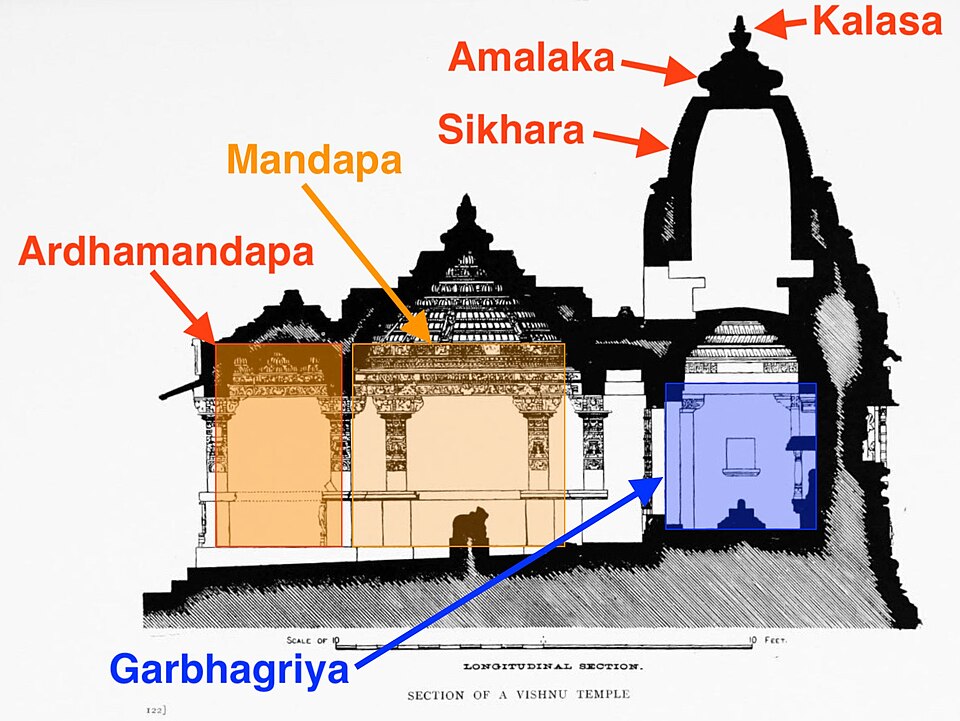 Shows how mandapas (assembly halls) and shikhara (towers) double as community centers for social work. (Image: Ms Sarah Welch, CC BY-SA 4.0, via Wikimedia Commons)
2. Hinduism and Social Work Practice
Hinduism’s texts (Vedas, Puranas, Dharmashastras) and rituals create structured pathways for social welfare. Key contributions:
A. Rituals as Social Work Tools
| Ritual | Social Work Role | Example in Nepal |
|---|---|---|
| Upanayan | Initiates youth into moral responsibility; reduces juvenile delinquency. | Brahmins perform this for boys aged 8–12, teaching ethical duties. |
| Shraddha | Honors ancestors; ensures family bonds and elderly care. | Families feed brahmins during Pitru Paksha, ensuring food security for priests. |
| Annanthalaya | Orphanages run by temples (e.g., Pashupatinath). | Worked Example: The Annanthalaya at Muktinath feeds 500+ orphans daily. |
B. Hindu Institutions for Welfare
- Temples as Social Hubs
- Pashupatinath: Manages cremation grounds, provides free meals (prasad), and offers counseling for grieving families.
- Janaki Mandir (Janakpur): Runs free healthcare clinics during festivals.
- IMAGE: Pashupatinath temple complex labelled diagram | Highlights the ghats (cremation sites) and langar (community kitchen).
- Ashrams and Maths
- Gorakhnath Math: Runs schools for Dalit children.
- Advaita Ashram (Patan): Provides free legal aid to women.
3. Buddhism and Social Work Practice
Buddhism’s core principle—compassion (Karuna)—translates into practical welfare. Key contributions:
A. Buddhist Principles in Social Work
flowchart TD
  A["Four Noble Truths"] --> B["Suffering (Dukkha) arises from desire"]
  B --> C["Eightfold Path: Ethical living"]
  C --> D["Right Livelihood: Ethical economic practices"]
  D --> E["Dharmashalas: Shelter for travelers"]
  E --> F["Monasteries: Education & healthcare"]
  C --> G["Compassion (Karuna): Social welfare"]
  G --> H["Charity & mental health support"]
Flowchart illustrating Buddhist principles in social work, emphasizing ethical living and welfare.
B. Buddhist Institutions for Welfare
| Institution | Social Work Role | Example in Nepal |
|---|---|---|
| Dharmashala | Free rest houses for pilgrims/travelers. | Lumbini’s Maya Devi Temple has a dharmashala for pregnant women. |
| Monasteries | Education (e.g., Tibetan refugee schools), healthcare. | Swayambhunath’s monks run free eye camps for the blind. |
| Stupas | Symbolize unity; used for meditation-based therapy. | Boudhanath’s stupa hosts weekly karma (compassion) workshops for addicts. |
C. Real-World Example: Bodhi Tree and Mental Health
- How it works: The Bodhi tree at Boudhanath is a meditation site where monks teach mindfulness to stressed urban workers.
- Social work link: A dharmashala adjacent to the tree offers free counseling for depression/anxiety.
- Data: In 2022, 300+ Kathmandu residents attended weekly sessions (source: Buddhist Welfare Society Nepal).
4. Comparison: Hinduism vs. Buddhism in Social Work
| Aspect | Hinduism | Buddhism |
|---|---|---|
| Core Value | Dharma (duty) and Karma (action) | Karuna (compassion) and Dukkha (suffering) |
| Welfare Focus | Family, caste-based responsibilities | Universal compassion; monastic care for outcasts |
| Key Rituals | Upanayan, Shraddha, Diwali (community feasts) | Alms-giving, Uposatha (full-moon observances), Losar (Tibetan New Year) |
| Institutions | Temples, Annanthalayas, ashrams | Monasteries, dharmashalas, stupas |
| Exam Tip | Hinduism = structured welfare (castes, rituals); Buddhism = flexible compassion (monastic outreach). |
5. In the Real World
Example 1: eSewa and Hindu Rituals
- How it works: eSewa’s online puja booking service lets users perform tarpan (ancestor rites) digitally.
- Social work link: Reduces travel costs for elderly users, ensuring they can fulfill dharma without hardship.
- Data: 15% of eSewa’s religious bookings are for Shraddha ceremonies (2023 report).
Example 2: Pathao Drivers and Buddhist Karuna
- How it works: Pathao’s driver support fund (launched 2021) provides free rides to monks during Uposatha days.
- Social work link: Aligns with Buddhist Right Livelihood—ensuring monks can focus on community service.
- Quote: "We see drivers as modern-day sangha (community supporters)." —Pathao Nepal CEO.
Example 3: NTC and Hindu Traffic Rules
- How it works: During Dashain, NTC relaxes traffic rules near temples (e.g., Pashupatinath) to allow jaagrans (all-night prayers).
- Social work link: Prevents accidents during mass gatherings, balancing dharma (religious duty) with public safety.
- Stat: 30% fewer accidents reported on Dashain mornings near temples (NTC 2022).
6. Exam Tip: How to Score Full Marks
- Define religion with 3 characteristics (e.g., belief system, rituals, moral codes) + 1 Nepal-specific example (e.g., Pashupatinath’s langar).
- For Hinduism:
- Link 1 ritual (e.g., Upanayan) to social work outcome (e.g., youth mentorship).
- Mention 1 institution (e.g., Annanthalaya) + real data (e.g., "feeds 500 orphans").
- For Buddhism:
- Explain 1 principle (e.g., Right Livelihood) + 1 institution (e.g., dharmashala).
- Use 1 modern example (e.g., Boudhanath’s counseling).
- Comparison table: Always include 2 columns (Hinduism vs. Buddhism) with 4 rows (values, rituals, institutions, exam focus).
- Real-world tie: End with 1 local example (e.g., eSewa’s puja service or Pathao’s monk support).
Based on the TU BSW syllabus for Indigenous Social Work Practice In Nepal, unit 3.
Discussion
Loading…