Fundamentals of Travel and TourismUnit 213 min read
Tourism Psychology & Tourist Motivation: Theories, Types & Real-World Applications
Unit 2 of Fundamentals of Travel and Tourism explores the psychological foundations of tourism, analyzing tourist motivation theories (Push-Pull, Maslow’s Hierarchy), tourist typologies (Cohen’s, Plog’s), and how these shape travel behavior—with Nepalese and global case studies (e.g., eSewa’s digital tourism push, Dara
TAKEAWAYS
- Tourist motivation blends push factors (personal needs) and pull factors (destination attractions), explained by Maslow’s Hierarchy and Plog’s Psychocentric-Allocentric models.
- Erick Cohen’s tourist typologies (organized mass, individual mass, explorer, drifter) classify travelers by behavior, critical for marketing (e.g., NTC’s adventure tourism vs. Kathmandu’s cultural tourists).
- Technology (e.g., WhatsApp for group travel planning, Google Maps for pull factors) and sustainability (e.g., eco-tourism in Annapurna) now dominate 21st-century motivations.
- Psychological dimensions (perception, expectations, satisfaction) explain why tourists choose destinations like Pokhara (nature pull) or Lumbini (cultural push).
- Real-world applications: Banks use Maslow’s Hierarchy to market luxury travel (e.g., NMB’s "VIP Himalayan Safaris"), while Pathao’s ride-hailing taps psychocentric tourists’ comfort needs.
Core Concepts: Definitions and Frameworks
1. Tourism Psychology: The Science Behind Travel Decisions
Tourism psychology studies why people travel, how they perceive destinations, and how emotions influence their choices. It bridges sociology, economics, and behavioral science to explain:
- Decision-making: Why a Nepali chooses Thailand (cost) over Europe (prestige).
- Satisfaction: How expectations (e.g., "Luxury hotel") vs. reality (e.g., "Budget hostel") shape reviews on TripAdvisor.
- Behavior: Why solo travelers (explorers) avoid crowded places like Thamel but flock to quieter Pokhara.
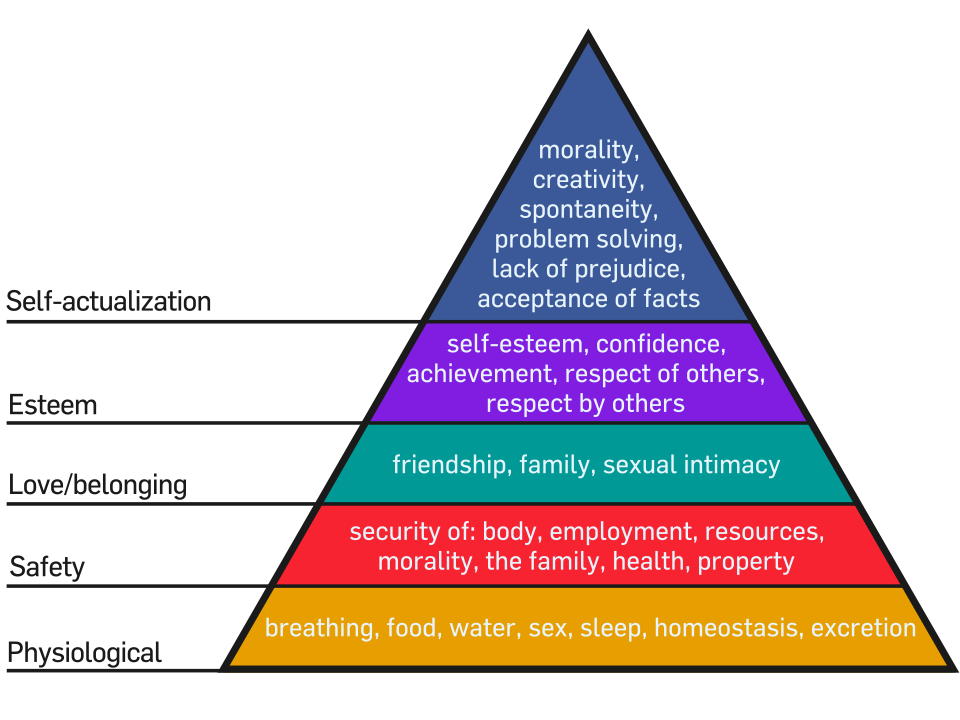 How travel fulfills self-actualization (e.g., trekking Everest Base Camp) and esteem (e.g., Instagram-worthy destinations). (Image: User:Factoryjoe, CC BY-SA 3.0, via Wikimedia Commons)
2. Tourist Motivation: Push vs. Pull Factors
Motivation is the driving force behind travel. It combines:
- Push Factors (internal needs):
- Physiological: Escape routine (e.g., Kathmandu’s traffic → Pokhara’s lakes).
- Safety: Stress relief (e.g., post-pandemic "reward trips" to Bali).
- Social: Family bonding (e.g., Daraz’s "Family Holiday Packages").
- Esteem: Status symbols (e.g., flying business class to Dubai).
- Self-actualization: Personal growth (e.g., yoga retreats in Rishikesh).
- Pull Factors (external attractions):
- Cultural: Temples (Pashupatinath), festivals (Indra Jatra).
- Natural: Himalayas, Chitwan National Park.
- Accessibility: Direct flights (Kathmandu–Doha via Qatar Airways).
- Infrastructure: 5-star hotels (e.g., Dwarikas Hotel), digital payments (eSewa).
WORKED EXAMPLE: Why Do Nepalis Book Daraz Tours to India?
| Push Factor | Pull Factor | Real-World Tie-In |
|---|---|---|
| Escape Kathmandu pollution | Cheaper medical tourism (e.g., Jaipur hospitals) | Ncell’s "Health Tour Packages" to India. |
| Social: Family visits | Cultural ties (e.g., Lumbini) | Khalti’s "Religious Pilgrimage Loans". |
| Esteem: Exotic destinations | "Cheaper than Europe" marketing | Daraz ads: "India in Your Budget". |
3. Theories of Tourist Motivation
A. Maslow’s Hierarchy Applied to Tourism
Abraham Maslow’s 5-tier needs pyramid explains why people travel at different life stages:
- Physiological: Survival needs → Budget travel (e.g., hostels in Thamel).
- Safety: Stability → Medical tourism (e.g., Nepal’s Ayurveda retreats).
- Social: Belonging → Group tours (e.g., NTC’s "Friends’ Trekking Package").
- Esteem: Recognition → Luxury travel (e.g., Shangri-La Hotel, Kathmandu).
- Self-actualization: Fulfillment → Adventure tourism (e.g., Annapurna Circuit).
B. Push-Pull Model (Dante P. F. B. Moutinho)
- Push: Internal desires (e.g., "I hate my job" → digital nomad visa in Portugal).
- Pull: Destination-specific attractions (e.g., "Bora Bora’s beaches" → Tahiti flights). Mermaid Diagram:
C. Plog’s Psychocentric-Allocentric Continuum
F. Stuart Plog classified tourists on a continuum from psychocentric (home-loving) to allocentric (adventure-seeking):
| Psychocentric (1–3) | Mid-Centric (4–6) | Allocentric (7–9) |
|---|---|---|
| Avoids change | Open to new experiences | Thrives on novelty |
| Prefers familiar (e.g., Pokhara lakes) | Tries new but safe (e.g., Chitwan safari) | Seeks extreme (e.g., paragliding in Mustang) |
| Example: Senior citizens on NTC’s "Heritage Walks" | Example: Backpackers using Pathao for transport | Example: Solo trekkers booking via TrekkingAgencies.com |
4. Tourist Typologies: Erick Cohen’s Classification
Erick Cohen’s 4 tourist types help businesses tailor experiences:
- Organized Mass Tourist:
- Behavior: Follows itineraries (e.g., NTC’s "7-Day Nepal Tour").
- Motivation: Convenience, safety.
- Example: Families booking via Daraz or eSewa.
- Individual Mass Tourist:
- Behavior: Independent but follows crowds (e.g., Thamel’s backpacker hostels).
- Motivation: Affordability, socializing.
- Explorer:
- Behavior: Seeks authenticity (e.g., homestays in Dolpo).
- Motivation: Cultural immersion.
- Drifter:
- Behavior: No fixed plans (e.g., hitchhiking the Himalayas).
- Motivation: Freedom, spontaneity.
WORKED EXAMPLE: How NEPSE Uses Cohen’s Typology
- Organized Mass: Institutional investors (e.g., banks buying NEPSE stocks for "stable" tourism ETFs).
- Explorer: Eco-tourists researching Annapurna permits via NTA’s website.
- Drifter: Digital nomads working remotely in Kathmandu’s coworking spaces (e.g., The Office).
5. Psychological Dimensions of Tourists
Three key psychological aspects influence travel:
- Perception:
- How tourists interpret destinations (e.g., "Kathmandu is chaotic" vs. "Kathmandu is vibrant").
- Example: WhatsApp groups for trekkers shape perceptions before arrival.
- Expectations:
- Pre-trip mental models (e.g., "Swiss hotels are pristine" vs. "Nepalese guesthouses are basic").
- Example: YouTube reviews of "Best Budget Hotels in Pokhara" set expectations.
- Satisfaction:
- Gap between expectations and experience (e.g., "My Airbnb was cleaner than the photos").
- Example: TripAdvisor’s "Expected vs. Actual" ratings for hotels.
In the Real World
eSewa’s Digital Push Factors
- Idea Used: Push-Pull Model + Technology
- How: eSewa’s "Travel Insurance" ads target safety needs (push) by offering quick online booking (pull). Example: A user stressed about flight delays (push) buys eSewa’s "Cancellation Cover" (pull).
Daraz’s Allocentric Marketing
- Idea Used: Plog’s Allocentric Tourists
- How: Daraz’s "Adventure Nepal" section promotes extreme sports (e.g., bungee jumping in Pokhara) to attract allocentric travelers. Ads show thrill-seekers with hashtags like #NoRegrets.
Ncell’s MICE Tourism Strategy
- Idea Used: Maslow’s Esteem + Social Needs
- How: Ncell partners with hotels to offer corporate retreat packages (e.g., "Executive Himalayan Retreat") targeting business travelers (esteem) and family reunions (social). Pull factors: 5-star resorts, private helicopters.
Pathao’s Psychocentric Ride-Hailing
- Idea Used: Plog’s Psychocentric Tourists
- How: Pathao’s fixed-price taxis (e.g., Kathmandu–Pokhara) cater to psychocentric tourists who avoid uncertainty. Push: "Avoid traffic stress"; Pull: "Door-to-door service."
NTC’s Organized Mass Tourism
- Idea Used: Cohen’s Organized Mass Tourist
- How: NTC’s "Nepal Discovery Tour" bundles flights, hotels, and guides—ideal for first-time visitors who want zero planning. Push: "Too busy to organize"; Pull: "All-inclusive package."
6. Technological and Environmental Influences on Motivation
A. Technology’s Role in Push-Pull Factors
| Technology | Push Factor Boosted | Pull Factor Boosted | Example |
|---|---|---|---|
| Social Media | Social needs (e.g., Instagram trips) | Cultural/natural attractions (e.g., #VisitNepal) | WhatsApp groups for trekking plans |
| Online Booking | Convenience (e.g., last-minute flights) | Accessibility (e.g., Agoda deals) | eSewa’s flight/hotel booking |
| VR/AR | Self-actualization (e.g., "test" destinations) | Natural/cultural pull | Google Earth’s "Explore Nepal" VR |
| Ride-hailing | Safety (e.g., avoiding taxis) | Infrastructure (e.g., Pathao’s app) | Pathao’s "Tourist-Friendly Routes" |
B. Environmental Concerns as Push Factors
- Climate Change: Pushes eco-conscious travel (e.g., "Carbon-neutral treks" via NTA).
- Over-tourism: Pushes alternative tourism (e.g., "Visit Mustang instead of Kathmandu").
- Example: Ncell’s "Green Travel" ads promote electric vehicle rentals in Pokhara.
7. Career Applications: How Psychology Shapes Tourism Jobs
Understanding tourist motivation helps professionals in:
- Tour Operators:
- Design Cohen-type packages (e.g., "Explorer: Upper Mustang Trek").
- Hotel Managers:
- Use Plog’s model to segment guests (e.g., luxury vs. budget rooms).
- Marketers:
- Craft push-pull ads (e.g., "Escape your routine" [push] + "Discover Pokhara" [pull]).
- Destination Planners:
- Balance psychocentric (e.g., heritage walks) and allocentric (e.g., paragliding) offers.
WORKED EXAMPLE: Job Profile – Tourism Psychologist
- Role: Analyzes why tourists choose Nepal vs. competitors (e.g., Thailand).
- Task: Survey Plog’s allocentric travelers to recommend new adventure routes (e.g., Upper Dolpo).
- Tool: Use Maslow’s Hierarchy to pitch luxury retreats to high-net-worth individuals.
Exam Tip
How to Score Full Marks on This Unit
Define + Classify:
- Always start with precise definitions (e.g., "Tourist motivation is the interplay of push and pull factors...").
- Use tables for comparisons (e.g., Cohen’s typologies vs. Plog’s continuum).
Link to Nepal:
- Every example must be Nepalese (e.g., "NTC’s packages target Cohen’s organized mass tourists").
- Mention local companies (e.g., "eSewa uses push-pull marketing for travel insurance").
Visuals = Marks:
- Draw diagrams in exams (e.g., Maslow’s Hierarchy with tourism labels).
- Label real images (e.g., "This is Plog’s psychocentric tourist in Thamel").
Theory + Application:
- First explain the theory (e.g., "Plog’s model categorizes tourists...").
- Then apply it (e.g., "Thus, Daraz targets allocentric tourists with adventure tours").
Common Pitfalls:
- ❌ Vague answers: "Tourists travel for fun" → Wrong. Use Maslow’s self-actualization.
- ❌ Ignoring Nepal: "Example: Paris" → Lose marks. Use Pokhara, Chitwan, or NTC.
- ❌ No real-world tie-ins: Always connect to eSewa, Daraz, or Ncell.
Sample High-Scoring Answer Structure:
Question: "Discuss the psychological dimensions of tourists." Answer: Tourism psychology examines three key dimensions: perception, expectations, and satisfaction. Perception refers to how tourists interpret destinations (e.g., Nepalis may perceive Pokhara as "peaceful" vs. Kathmandu as "chaotic"). Expectations are pre-trip mental models shaped by social media (e.g., Instagram’s "perfect" trekking photos). Satisfaction arises from the gap between expectations and reality—for instance, a tourist expecting a 5-star hotel in Thamel may feel dissatisfied if the room lacks AC (a common issue highlighted on TripAdvisor).
Real-world example: Ncell’s "Smart Traveler" app uses psychological dimensions by sending pre-trip guides (expectations) and post-trip surveys (satisfaction) to adjust future marketing. For example, if users rate Pokhara’s traffic as "worse than expected," Ncell promotes Pathao’s ride-hailing as a solution.
Visual: Include a flowchart of the tourist decision-making process (Need → Information Search → Evaluation → Decision → Post-Purchase Behavior).
Final Note: This unit is 20% theory, 80% application. Memorize Maslow, Plog, and Cohen, but always link to Nepal’s tourism industry. Use real examples (eSewa, Daraz, NTC) to stand out in exams.
Based on the TU BTTM syllabus for Fundamentals of Travel and Tourism (TTM315), unit 2.
Discussion
Loading…