French Language IUnit 28 min read
Greetings, Introductions & Polite French Conversations
Unit 2 of French Language I covers essential French phrases for greetings, introductions, and polite exchanges—including formal/informal speech, handshakes, and cultural nuances—with real-world applications in tourism, hospitality, and daily interactions.
Key Concepts & Structures
1. Greetings: Formal vs. Informal
French greetings vary by context (time of day, formality). Master these three core structures:
- Informal (friends/family):
- Bonjour (Hello, good morning/afternoon)
- Salut (Hi, casual)
- Bonsoir (Good evening)
- Formal (strangers/professionals):
- Bonjour Madame/Monsieur (Good morning/afternoon, Ma’am/Sir)
- Bonne soirée (Good evening, formal)
- Time-specific:
- Bonne nuit (Good night, when leaving)
Cultural Note:
- Handshakes are standard in business (firm but not crushing). In Nepal, a namaste is common; in France, a cheek kiss (1–3, depending on region) is typical for acquaintances.
- Eye contact is polite but avoid prolonged staring.
2. Introductions: Self and Others
Use these three-step templates for introductions:
- Self-introduction:
- Je m’appelle [Name]. (My name is...)
- Enchanté(e)! (Nice to meet you! – formal)
- Ravi(e) de vous rencontrer. (Pleased to meet you – formal)
- Introducing someone else:
- Je vous présente [Name]. (Let me introduce you to [Name]. – formal)
- C’est [Name]. (This is [Name]. – informal)
- Response:
- Enchanté(e)! or Ravi(e) !
Worked Example (Tourism Scenario): At a Kathmandu hotel reception, you meet a French guest:
- You: Bonjour Madame. Je m’appelle Sunil. Enchanté!
- Guest: Bonjour Sunil. Je m’appelle Claire. Ravi de vous rencontrer!
- You: Je vous présente mon collègue, Raj. C’est Raj.
3. Polite Exchanges: Thanking and Apologizing
French politeness relies on three key phrases:
- Thanking:
- Merci (beaucoup) (Thank you [very much])
- Merci bien (Thanks a lot)
- Je vous remercie (I thank you – formal)
- Apologizing:
- Désolé(e) (Sorry – informal)
- Je suis désolé(e) (I’m sorry – formal)
- Pardon (Excuse me/Pardon)
- Responses:
- De rien (You’re welcome)
- Pas de problème (No problem)
Comparison Table:
| English | Formal French | Informal French |
|---|---|---|
| Hello | Bonjour Madame | Salut |
| Thank you | Je vous remercie | Merci |
| Sorry | Je suis désolé(e) | Désolé(e) |
| Nice to meet you | Ravi(e) de vous rencontrer | Enchanté(e) |
4. Common Questions in Introductions
Asking questions is critical in tourism. Use these five structures:
- Name:
- Comment vous appelez-vous ? (What’s your name? – formal)
- Tu t’appelles comment ? (What’s your name? – informal)
- Origin:
- Vous êtes d’où ? (Where are you from? – formal)
- Tu es d’où ? (Where are you from? – informal)
- Profession:
- Quelle est votre profession ? (What’s your profession? – formal)
- Tu fais quoi dans la vie ? (What do you do? – informal)
- Language:
- Parlez-vous français ? (Do you speak French?)
- Response Examples:
- Je suis de France. (I’m from France.)
- Je travaille dans l’hôtellerie. (I work in hospitality.)
Worked Example (Airport Scenario): A Pathao driver asks you:
- Driver: Bonjour. Vous êtes d’où ?
- You: Bonjour. Je suis du Népal. Et vous ?
- Driver: Je suis de Katmandou. Vous parlez français ?
- You: Oui, un peu. Merci !
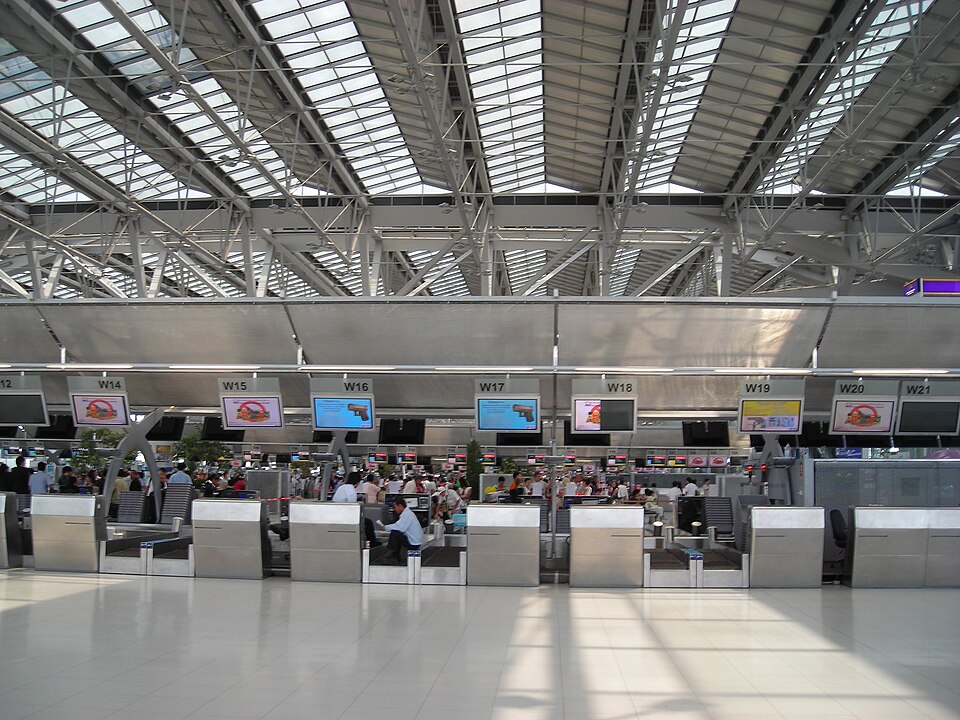 Shows where origin/profession questions arise in travel. (Image: User:Mattes, CC BY-SA 3.0, via Wikimedia Commons)
5. Cultural Nuances in French Greetings
- Time of Day Matters:
- Bonjour (morning/afternoon) vs. Bonsoir (evening).
- In Nepal, Namaste is universal; in France, Bonjour is used all day.
- Formality:
- Use Madame/Monsieur until invited to use first names.
- In tourism, always default to formal speech with guests.
- Non-Verbal Cues:
- A slight nod or smile accompanies greetings.
- Avoid overly loud or abrupt speech.
Real-World Example: At a Daraz customer service desk, a French-speaking employee greets a Nepali customer:
- Employee: Bonjour Madame. Je m’appelle Sophie. Comment puis-je vous aider ?
- Customer: Bonjour. Je suis de Katmandou. Je veux retourner un colis. This shows formal greetings + problem-solving in a real business context.
6. Common Mistakes to Avoid
| Mistake | Correct French | Why It’s Wrong |
|---|---|---|
| Saying Salut to a boss | Bonjour Monsieur | Salut is too casual for superiors. |
| Using tu with strangers | Vous + last name | Tu is only for friends/family. |
| Skipping Madame/Monsieur | Always include it formally. | Omits respect in professional settings. |
In the Real World
eSewa App (Nepal):
- When a French tourist uses eSewa for bus tickets, the app’s automated voice assistant greets them with “Bonjour! Comment puis-je vous aider?” to ensure a polite, multilingual experience. This combines formal greetings + problem-solving in digital customer service.
Khalti Customer Support (Nepal):
- Khalti’s French-speaking support agents start calls with “Bonjour. Je m’appelle [Name]. Comment puis-je vous aider aujourd’hui?” to build trust. This mirrors Unit 2’s introduction templates in a financial service context.
Nepal Tourism (Hotel Receptions):
- At Hotel Yak & Yeti in Kathmandu, front-desk staff greet French guests with “Bonsoir Madame/Monsieur. Bienvenue à l’hôtel!” before introducing themselves. This applies formal greetings + hospitality vocabulary directly to tourism jobs.
Exam Tip
This unit is heavily tested in three ways:
Role-Play (30% weight):
- Expect a 2-minute conversation with an examiner. Practice:
- Greeting a French guest at a hotel.
- Introducing yourself and a colleague to a client.
- Apologizing for a delay (e.g., “Désolé pour l’attente. Merci de votre patience.”).
- Pro Tip: Use formal speech unless told otherwise. Start with “Bonjour Madame/Monsieur” and end with “Au revoir”.
- Expect a 2-minute conversation with an examiner. Practice:
Multiple-Choice Questions (25% weight):
- Focus on formal vs. informal distinctions (e.g., “Which is correct for a boss?”).
- Example:
- Tu es d’où ? (Incorrect for a stranger)
- Vous êtes d’où ? (Correct for a stranger)
Writing (20% weight):
- You may be asked to write a short dialogue (e.g., “Introduce yourself to a French tourist at the airport.”).
- Template:
Bonjour Madame/Monsieur. Je m’appelle [Name]. Enchanté(e) ! Je suis de [Nepal]. Et vous, vous êtes d’où ?
Listening (25% weight):
- Listen for greetings, introductions, and polite phrases in audio clips. Example:
- “Je vous présente mon collègue, Pierre.” → Write: “This is my colleague, Pierre.”
- Listen for greetings, introductions, and polite phrases in audio clips. Example:
Final Advice:
- Memorize the top 5 phrases (e.g., Bonjour, Merci, Désolé, Enchanté, Au revoir).
- Practice with a partner using the hotel/reception scenarios from the note.
- Record yourself speaking aloud to check pronunciation (compare to native speakers on YouTube).
Visual Summary:
Based on the TU BTTM syllabus for French Language I, unit 2.
Discussion
Loading…