Air Cargo ManagementUnit 113 min read
Air Cargo Basics: Definitions, Roles, and Key Documentation
Unit 1 of Air Cargo Management introduces the core concepts of air cargo operations, including definitions of air cargo, its role in global trade, key stakeholders, and essential documentation like Shipper’s Letter of Instruction (SLI) and Air Waybill (AWB). It covers the importance of air cargo in modern logistics, th
TAKEAWAYS:
- Air cargo is a critical component of global trade, offering speed, reliability, and security for high-value or time-sensitive goods.
- Key stakeholders in air cargo include shippers, consignees, airlines, freight forwarders, ground handlers, and regulatory bodies like IATA and ICAO.
- Documentation such as the Shipper’s Letter of Instruction (SLI) and Air Waybill (AWB) are legally binding and ensure smooth cargo handling and customs clearance.
- Air cargo operations differ from passenger operations in terms of handling, security, and documentation requirements.
- INCOTERMS define the responsibilities of buyers and sellers in international trade, reducing disputes and clarifying costs.
- Proper packaging, labeling, and storage are essential to prevent damage, theft, or loss during transit.
1. Introduction to Air Cargo
Air cargo refers to the transportation of goods by air, which is a critical component of global trade. Unlike passenger flights, air cargo operations focus on the movement of freight, ranging from perishable goods to high-value electronics. Air cargo is preferred for its speed, reliability, and ability to reach remote destinations quickly.
Why Air Cargo?
Air cargo is essential for:
- High-value, low-weight goods (e.g., electronics, pharmaceuticals, jewelry).
- Perishable goods (e.g., fresh produce, medical supplies).
- Time-sensitive shipments (e.g., e-commerce orders, urgent documents).
- Emergency relief (e.g., disaster response, humanitarian aid).
Key Stakeholders in Air Cargo
Air cargo operations involve multiple stakeholders, each playing a unique role:
Stakeholders:
- Shipper: The entity sending the cargo (e.g., manufacturers, exporters).
- Freight Forwarder: Acts as an intermediary, arranging transportation and documentation.
- Airlines: Operate cargo flights or use belly space in passenger aircraft.
- Ground Handlers: Handle loading, unloading, and storage at airports.
- Cargo Warehouses: Store cargo before and after flights.
- Consignee: The recipient of the cargo (e.g., importers, retailers).
- Regulatory Bodies: Organizations like IATA (International Air Transport Association) and ICAO (International Civil Aviation Organization) set global standards for safety, security, and documentation.
2. Air Cargo vs. Passenger Operations
While both air cargo and passenger operations share airports and infrastructure, they differ significantly in handling, security, and documentation.
| Feature | Air Cargo Operations | Passenger Operations |
|---|---|---|
| Primary Focus | Transportation of goods | Transportation of people |
| Handling | Specialized equipment (conveyors, forklifts) | Luggage carousels, check-in counters |
| Security | Strict screening of cargo (X-ray, sniffer dogs) | Passenger screening (metal detectors, body scanners) |
| Documentation | Air Waybill (AWB), Shipper’s Letter of Instruction (SLI) | Passenger tickets, boarding passes, passports |
| Storage | Dedicated cargo warehouses | Luggage holds in aircraft |
| Regulations | IATA Dangerous Goods Regulations (DGR) | ICAO Annex 17 (Security) |
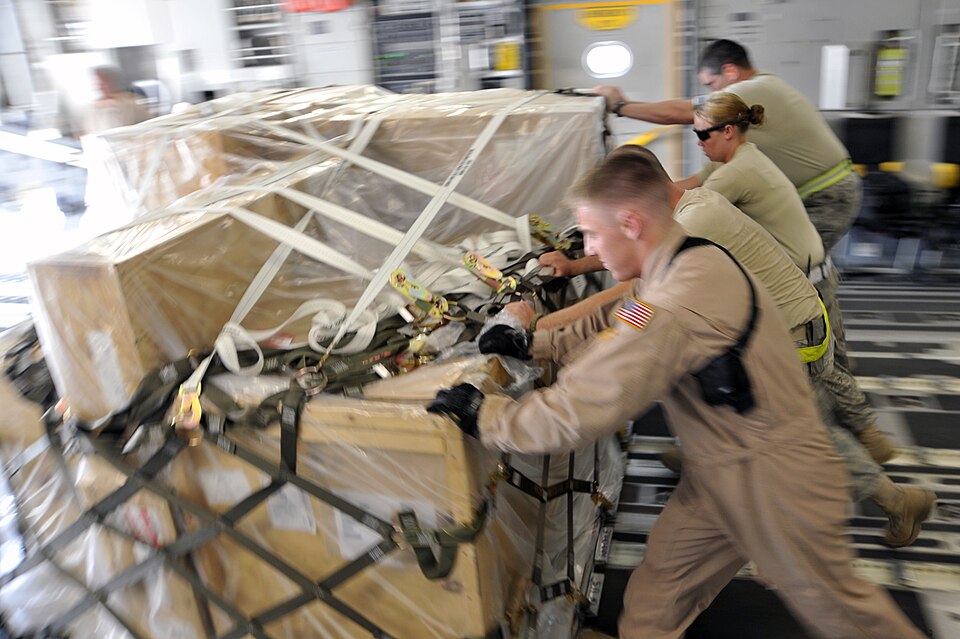 A cargo aircraft being loaded with palletized freight (Image: Senior Airman Perry Aston, Public domain, via Wikimedia Commons)
3. Key Documentation in Air Cargo
Documentation is the backbone of air cargo operations, ensuring legal compliance, smooth customs clearance, and accurate billing. The two most critical documents are:
A. Shipper’s Letter of Instruction (SLI)
The SLI is a detailed instruction sheet provided by the shipper to the freight forwarder or airline. It includes:
- Shipper and consignee details (names, addresses, contact info).
- Cargo description (type, quantity, dimensions, weight).
- Special handling instructions (e.g., "Keep refrigerated," "Handle with care").
- Packaging details (type of packaging, markings).
- Incoterms (e.g., DDP, FOB).
- Insurance requirements (if applicable).
- Preferred carrier and route.
Why is SLI Important?
- Ensures cargo is handled correctly.
- Reduces errors in documentation.
- Helps customs and airlines process the shipment efficiently.
Worked Example: SLI for a Pharmaceutical Shipment Suppose Himalayan Pharmaceuticals in Kathmandu is shipping 100 kg of vaccines to Dar es Salaam, Tanzania. The SLI would include:
- Shipper: Himalayan Pharmaceuticals, Kathmandu.
- Consignee: Tanzania Ministry of Health, Dar es Salaam.
- Cargo Description: 100 kg of vaccines (temperature-controlled, -20°C).
- Special Instructions: "Must be kept in refrigerated container; do not expose to sunlight."
- Packaging: Insulated boxes with "Perishable" and "Keep Refrigerated" labels.
- Incoterms: DAP (Delivered at Place) – Seller pays for delivery to Tanzania port.
B. Air Waybill (AWB)
The AWB is a contract of carriage between the shipper and the airline. It serves as:
- A receipt for the cargo.
- Evidence of the contract of carriage.
- A document of title (can be transferred, unlike a bill of lading in sea freight).
Key Sections of an AWB:
- Shipper and Consignee Details
- Flight Details (departure/arrival airports, flight number).
- Cargo Description (type, quantity, weight, dimensions).
- Charges (freight, insurance, fuel surcharges).
- Special Conditions (e.g., "Live Animals," "Dangerous Goods").
- Signature of the Carrier (acknowledges receipt of cargo).
4. INCOTERMS in Air Cargo
INCOTERMS (International Commercial Terms) are a set of rules that define the responsibilities of buyers and sellers in international trade. There are 11 INCOTERMS, categorized into four groups:
| Group | INCOTERMS | Meaning | Relevance to Air Cargo |
|---|---|---|---|
| Any Mode | EXW, FCA, CPT, CIP, DAT, DAP, DDP | Rules applicable to all transport modes (including air). | Defines who bears costs (freight, insurance, customs) and risk (damage, loss). |
| Sea & Inland Waterways | FAS, FOB, CFR, CIF | Primarily for maritime transport. | Less relevant for air cargo unless combined with sea transport (e.g., air-sea freight). |
| Air Cargo Specific? | No, but DAP and DDP are commonly used in air freight. | For example, DAP (Delivered at Place) means the seller delivers goods to the airport in the destination country. |
Example: INCOTERMS in a Daraz Order Suppose Daraz Nepal sells a laptop to a customer in Lagos, Nigeria. The shipment is sent via air cargo under DAP Lagos Airport:
- Daraz (Seller) is responsible for:
- Packaging the laptop.
- Paying for air freight to Lagos.
- Clearing the laptop for export from Nepal.
- Customer (Buyer) is responsible for:
- Paying import duties in Nigeria.
- Collecting the laptop from Lagos Airport.
5. Role of Air Cargo in Global Trade
Air cargo plays a vital role in supply chain management, especially for:
- E-commerce (e.g., Daraz, Amazon use air cargo for fast deliveries).
- Pharmaceuticals (e.g., Himalayan Drugs ships vaccines globally).
- Perishable Goods (e.g., fresh produce from Nepal to Gulf countries).
- Emergency Supplies (e.g., COVID-19 vaccines, medical equipment).
In the Real World
eSewa & Khalti Payments for Air Cargo Bookings
- When you book an air cargo shipment via eSewa or Khalti, the platform generates an AWB and SLI digitally. The payment gateway ensures secure transactions, similar to how Pathao processes ride payments but for cargo bookings.
Nepal Airlines Cargo Handling Perishable Goods
- Nepal Airlines uses temperature-controlled ULDs (Unit Load Devices) to transport fresh fruits (apricots, oranges) from Pokhara to Doha. The SLI specifies "Keep at 4°C," and the AWB includes "Perishable" markings. If the cargo is mishandled, the airline is liable under the AWB contract.
Daraz’s Air Cargo for Same-Day Deliveries
- Daraz Nepal partners with Nepal Airlines Cargo to deliver orders within 24 hours to major cities. The freight forwarder (e.g., DHL, FedEx) consolidates small parcels into ULDs, reducing costs. The AWB tracks each package’s journey, ensuring transparency.
6. Challenges in Air Cargo Operations
Despite its advantages, air cargo faces challenges:
- High Costs: Air freight is 3-5x more expensive than sea freight.
- Limited Capacity: Belly space in passenger planes is constrained.
- Regulatory Compliance: Strict IATA Dangerous Goods Regulations (DGR) and customs laws.
- Security Risks: Theft, smuggling, and terrorist threats require advanced screening.
Solution Example: Live Animals (AVI) Handling
- Problem: Live animals (e.g., poultry, horses) require special ventilation, temperature control, and documentation.
- Solution: Airlines like Qatar Airways Cargo use dedicated AVI containers with:
- Oxygen supply systems.
- Temperature and humidity monitors.
- IATA-compliant health certificates.
Exam Tip
Memorize Key Definitions:
- Air Cargo: Transportation of goods by air.
- SLI: Shipper’s Letter of Instruction (detailed cargo handling guide).
- AWB: Air Waybill (contract between shipper and airline).
- ULD: Unit Load Device (pallet or container for cargo).
Understand INCOTERMS:
- Focus on DAP, DDP, EXW, FCA (most common in air cargo).
- Know who bears costs and risks under each term.
Documentation is Critical:
- Always include cargo description, special instructions, and Incoterms in SLI/AWB.
- Example: If asked about an SLI for pharmaceuticals, mention temperature control, "Perishable" labels, and IATA regulations.
Compare Air Cargo with Other Modes:
- Use tables to highlight differences (e.g., speed vs. cost, documentation, security).
Real-World Applications:
- Relate Daraz deliveries, Nepal Airlines cargo, or eSewa payments to AWB, SLI, and Incoterms.
- For special cargo (e.g., live animals), mention IATA AVI regulations.
Common Exam Questions:
- Define and describe (e.g., "What is a Shipper’s Letter of Instruction?").
- Explain with examples (e.g., "How does INCOTERMS DAP work in air cargo?").
- Compare and contrast (e.g., "Differences between General and Special Cargo").
Final Note: Air cargo is a fast, secure, and reliable mode of transport, but it requires meticulous documentation, compliance with regulations, and efficient handling. Mastering SLI, AWB, Incoterms, and special cargo rules will give you an edge in exams and real-world applications like working with Nepal Airlines Cargo, DHL, or Daraz Logistics.
Based on the TU BTTM syllabus for Air Cargo Management (TTM301), unit 1.
Discussion
Loading…