Event Management For Tourism and HospitalityUnit 816 min read
Event Theming & Design: Concepts, Techniques & Real-World Applications
Unit 8 of Event Management For Tourism and Hospitality explores how theming and design transform events into immersive experiences, covering creative concepts, visual storytelling, venue adaptation, and case studies from Nepal’s tourism and hospitality sectors.
TAKEAWAYS:
- Theming is the art of creating a cohesive narrative and atmosphere that aligns with an event’s purpose, audience, and brand.
- Design elements (color, lighting, signage, decor) must harmonize to evoke emotions and enhance guest engagement.
- Venue adaptation involves modifying physical spaces to reflect the theme while ensuring functionality and safety.
- Budget constraints require creative solutions—balancing aesthetics with practicality is key to successful event design.
- Cultural sensitivity is critical in Nepal’s diverse tourism landscape, where theming must respect local traditions and values.
- Technology integration (projections, AR/VR, interactive displays) can elevate theming but must align with the event’s scale and audience.
1. Defining Event Theming and Design
Event theming is the process of developing a unified concept that ties together all aspects of an event—from invitations to decor, activities, and even staff uniforms. It creates an immersive experience that resonates with attendees and reinforces the event’s message.
Event design refers to the visual and structural execution of the theme, including:
- Visual elements (color schemes, typography, logos)
- Physical elements (stage design, seating arrangements, decor)
- Sensory elements (soundscapes, aromas, tactile experiences)
- Digital elements (projections, apps, social media integration)
Why does it matter? A well-themed event: ✔ Enhances brand recall (e.g., a luxury hotel’s gala vs. a corporate retreat). ✔ Boosts emotional connection (e.g., a wedding’s romantic ambiance). ✔ Differentiates the event in a competitive market (e.g., Nepal’s Durbar Square Festival vs. a generic cultural show).
2. The Theming Process: A Step-by-Step Breakdown
Theming is not random creativity—it follows a structured approach. Below is a Mermaid flowchart of the theming process, from concept to execution:
flowchart TD
    A["Define Event Goals & Audience"] --> B["Research & Inspiration"]
    B --> C["Develop Core Theme Concept"]
    C --> D["Storyboard & Mood Board"]
    D --> E["Design Visual & Physical Elements"]
    E --> F["Plan Technology & Interactivity"]
    F --> G["Test & Refine"]
    G --> H["Finalize & Execute"]
    H --> I["Post-Event Evaluation"]
Step 1: Define Goals and Audience
Before designing, ask:
- What is the event’s purpose? (e.g., corporate training, cultural festival, product launch)
- Who is the target audience? (e.g., luxury travelers, corporate clients, families)
- What emotions should attendees feel? (e.g., awe at a Nepal Tourism Board’s heritage festival, excitement at a music concert)
Example: For a luxury trekking event in the Annapurna region, the theme might be "Journey of the Senses"—blending nature, adventure, and exclusivity.
Step 2: Research and Inspiration
Draw from:
- Cultural references (e.g., Lhosar festival for a Himalayan-themed event).
- Trends (e.g., sustainable design for eco-conscious events).
- Competitor analysis (e.g., how Daraz’s product launches use gamification).
Step 3: Develop the Core Theme Concept
A strong theme has:
- A clear message (e.g., "Celebrating Nepal’s Heritage" for a tourism event).
- A unique angle (e.g., "Retro Nepal" for a nostalgia-themed party).
- Flexibility (adaptable to budget and venue constraints).
Worked Example: Theming a Corporate Retreat in Kathmandu
| Theme | "Innovate Kathmandu" | "Timeless Himalayan Elegance" |
|---|---|---|
| Audience | Tech startups | Luxury hotel executives |
| Color Palette | Neon blues, electric pink | Earthy golds, deep reds |
| Decor | Futuristic LED installations | Traditional Newari art + modern minimalism |
| Activity | Hackathon + VR demos | Tea ceremonies + guided meditation |
3. Key Design Elements in Event Theming
Design is the visual and physical manifestation of the theme. Below are the critical components:
A. Color Psychology
Colors evoke emotions and influence perception. Use this psychology guide for event design:
| Color | Emotion | Best For | Example in Nepal |
|---|---|---|---|
| Red | Energy, passion | Product launches, concerts | Dashain celebrations (red banners) |
| Blue | Trust, calmness | Corporate events, weddings | Luxury hotel lobbies (serene blues) |
| Green | Growth, harmony | Eco-friendly events, wellness retreats | Himalayan Java’s organic tea events |
| Gold | Luxury, celebration | Royal weddings, high-end galas | Durbar Square’s heritage events |
| Black | Sophistication | Formal dinners, memorials | Nepal Tourism Board’s black-tie events |
Real-World Tie-In:
- Nepal Tourism Board’s "Visit Nepal 2020" campaign used red and gold to evoke tradition and energy, aligning with Nepal’s cultural identity.
B. Lighting and Ambiance
Lighting sets the mood and focus. Types include:
- Spotlighting (for keynote speakers, art installations).
- Backlighting (for stages, creating depth).
- Ambient lighting (soft, warm tones for relaxation).
Example: A wedding in Pokhara might use:
- Fairy lights along the lakefront for a romantic feel.
- Projected stars on the ceiling for a celestial theme.
C. Signage and Wayfinding
Clear signage prevents chaos. Key principles:
- Hierarchy (main signs > directional signs > informational signs).
- Cultural sensitivity (e.g., using Devanagari in Nepal).
- Accessibility (braille, high contrast for visually impaired).
Worked Example: Kathmandu Traffic Management for a Mega-Event During Tihar, roads near Pashupatinath Temple are themed with:
- Traditional lanterns (Akash Deep) as signage.
- Color-coded lanes (red for pilgrims, green for vehicles).
4. Venue Adaptation: Making Spaces Come Alive
Not all venues are blank canvases. Adapting a space to fit the theme requires creativity and logistics planning.
A. Types of Venue Adaptations
| Venue Type | Adaptation Techniques | Nepal Example |
|---|---|---|
| Indoor (Hotels, Halls) | Modular walls, themed ceilings, interactive floors | Radisson Hotel Kathmandu (modular partitions for corporate events) |
| Outdoor (Gardens, Lakes) | Natural elements, projections, temporary structures | Pashupatinath Temple (festival decorations) |
| Historic (Durbar Square, Patan) | Preserving heritage while adding modern tech | UNESCO Heritage Walk (augmented reality guides) |
B. Case Study: Theming a Heritage Walk in Bhaktapur
Theme: "Living History of Bhaktapur" Design Elements:
- Pathway: Red brick paths with traditional Newari patterns.
- Storytelling: QR codes leading to audio guides about Bhaktapur’s history.
- Lighting: Projection-mapped stories on temple walls at night.
- Interactive: Augmented reality showing how the city looked 500 years ago.
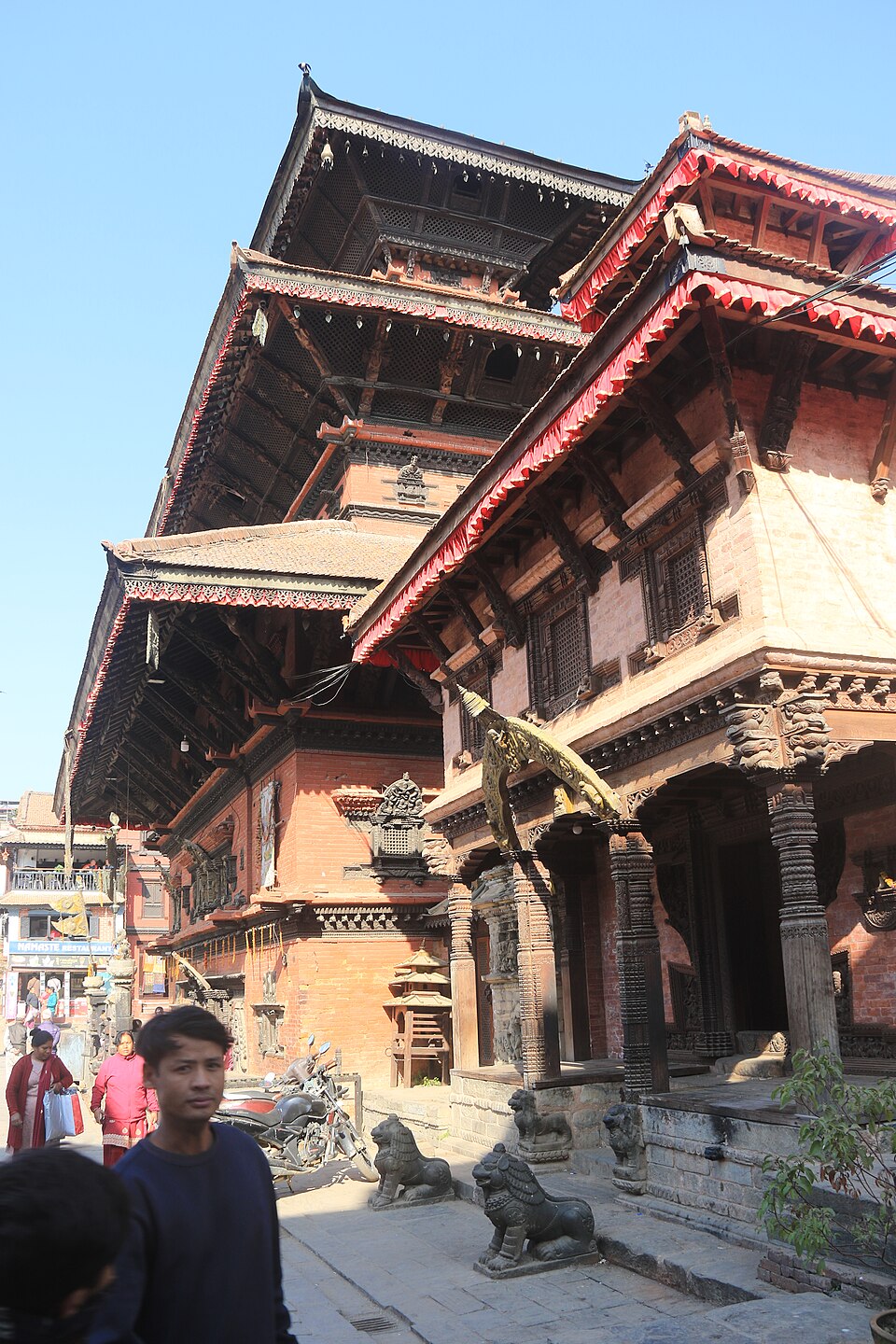 Heritage site adapted for a themed event (Image: Goutam1962, CC BY-SA 4.0, via Wikimedia Commons)
5. Technology in Event Theming
Technology can elevate theming but must serve the theme, not overshadow it.
A. Projections and Digital Displays
- Large-scale projections (e.g., Google I/O keynotes).
- Interactive screens (e.g., Daraz’s virtual try-on mirrors for fashion events).
Nepal Example:
- Nepal Stock Exchange (NEPSE) Annual Gala uses holographic displays to showcase stock trends in a futuristic theme.
B. Augmented and Virtual Reality
- AR filters (e.g., WhatsApp Day themed events).
- VR experiences (e.g., virtual trekking for inaccessible Himalayan routes).
Example: A luxury trekking company in Pokhara could offer VR previews of the Annapurna Circuit, themed as "Adventure Before You Go."
C. Soundscapes and Sensory Design
- Custom soundtracks (e.g., traditional Nepali music for cultural events).
- Aromatherapy (e.g., sandalwood scent for meditation retreats).
6. Budgeting for Theming and Design
Theming can be costly, but smart planning ensures high impact without overspending.
A. Budget Categories
| Category | Low-Budget Options | High-Budget Options |
|---|---|---|
| Decor | DIY floral arrangements | Custom chandeliers, laser displays |
| Lighting | String lights, LED candles | Professional lighting rigs |
| Signage | Printed banners | Digital LED screens |
| Tech | Projector + laptop | AR/VR kits, interactive apps |
**B. Worked Example: Budget Breakdown for a Corporate Event
Theme: "Sustainable Innovation" Venue: Himalayan Java’s Organic Farm (Kathmandu) Budget: NPR 500,000
| Item | Cost (NPR) | Notes |
|---|---|---|
| Decor (Bamboo + Recycled Materials) | 80,000 | Locally sourced, eco-friendly |
| Lighting (Solar-Powered LED Panels) | 120,000 | Energy-efficient |
| Signage (Digital + Print) | 50,000 | QR codes for sustainability tips |
| Tech (Projection + Sound System) | 150,000 | Rented from local AV companies |
| Catering (Plant-Based Menu) | 100,000 | Aligns with theme |
Total: NPR 500,000
7. Cultural Sensitivity in Theming (Critical for Nepal)
Nepal’s diverse cultures require respectful theming. Key considerations:
- Avoid cultural appropriation (e.g., using Dashain symbols without understanding their significance).
- Involve local communities (e.g., hiring Newari artisans for decor).
- Respect religious sentiments (e.g., avoiding sacred colors like white in Hindu events).
Example: A wedding in the Kathmandu Valley might: ✔ Use traditional Newari patterns in invitations. ✔ Include a live Dasain puja as part of the ceremony. ❌ Avoid Western-style confetti (considered inauspicious).
8. Case Study: Theming a Mega-Event in Nepal
Event: Visit Nepal Year 2020 (VN2020) – "Nepal is Open" Theme: "Unveiling the Hidden Treasures of Nepal" Key Design Elements:
- Visual Identity:
- Logo: A lotus flower (symbolizing purity) with the Himalayas.
- Color Scheme: Red, gold, and green (national colors).
- Venue Adaptation:
- Kathmandu Durbar Square: Temporary projection-mapped stories of Nepal’s history.
- Pokhara Lakeside: Floating lanterns with QR codes linking to tourism videos.
- Technology:
- AR app showing invisible temples (e.g., Pashupatinath’s hidden carvings).
- Live-streamed trekking expeditions for global audiences.
- Cultural Integration:
- Traditional music and dance performances at every event.
- Local cuisine stalls featuring regional specialties.
Outcome:
- 3.2 million visitors (record for Nepal).
- $1.2 billion in tourism revenue.
- Global recognition as a culturally rich destination.
9. Common Theming Mistakes to Avoid
| Mistake | Why It Fails | How to Fix It |
|---|---|---|
| Overcomplicating the theme | Confuses attendees | Stick to 1-2 core ideas. |
| Ignoring venue constraints | Poor execution | Survey the space before finalizing. |
| Neglecting cultural context | Offends local audiences | Consult cultural experts. |
| Underestimating tech setup time | Last-minute chaos | Test tech 2 weeks before the event. |
| Budget mismanagement | Half-finished design | Allocate 20% of budget as contingency. |
10. Synergy Between Theming and Tourism
Theming is not just for events—it boosts tourism by:
- Creating memorable experiences (e.g., Everest Base Camp themed treks).
- Promoting cultural heritage (e.g., Lumbini’s Buddha-themed events).
- Driving repeat visits (e.g., luxury hotels with signature themed dinners).
Example:
- The Himalayan Java Tea Festival uses tea-themed storytelling to attract tourists to Pokhara’s tea gardens.
- Nepal Tourism Board’s "Yeti Trail" uses mythology-themed marketing to attract adventure seekers.
In the Real World
eSewa & Khalti (Digital Payments) – Theming for Trust
- How? Both apps use blue and white (trustworthy colors) and Nepali cultural symbols (e.g., lotus motifs) in their branding to build credibility.
- Why? Theming reinforces security and reliability, key for financial services.
Daraz Nepal – Theming for Product Launches
- How? Daraz’s "Daraz Days" use gamified themes (e.g., "Shop Like a Millionaire") with red and gold (luxury appeal) to drive sales.
- Why? Theming creates urgency and excitement, boosting conversions.
Pathao – Theming for Rider Experiences
- How? Pathao’s "Pathao Fest" includes themed rider challenges (e.g., "Safest Rider of the Month") with color-coded rewards.
- Why? Theming engages riders, improving service quality and loyalty.
Exam Tip
This unit is highly visual and application-based. Expect: ✅ Short definitions (e.g., "What is event theming?"). ✅ Classification questions (e.g., "Classify event themes based on audience type"). ✅ Case study analysis (e.g., "Analyze the theming of a recent Nepali event"). ✅ Budgeting scenarios (e.g., "Allocate a budget for a themed corporate event"). ✅ Comparative questions (e.g., "Compare theming for a wedding vs. a corporate event").
Top Scoring Tips:
- Use real examples (e.g., VN2020, Daraz launches, heritage walks).
- Include visuals (even if not drawn, describe color schemes, layouts).
- Link to tourism (e.g., "How does theming attract international tourists?").
- Discuss cultural sensitivity (critical for Nepal-focused answers).
- Show budget awareness (mention cost-saving techniques).
Sample Exam Answer Structure:
Question: "Explain how theming enhances the tourism experience, with reference to a Nepali event."
Answer: Theming transforms passive attendance into active engagement, making events memorable and shareable—key for tourism. For example, Visit Nepal Year 2020 used:
- Cultural storytelling (projections of Nepal’s history in Durbar Square) to educate visitors.
- Interactive tech (AR app for hidden temples) to increase dwell time.
- Local artistry (Newari decor) to support heritage preservation. Result: 3.2M visitors, proving theming boosts tourism revenue and global perception.
mindmap
  root((Event Theming & Design))
    Concepts
      Definition: Unified narrative + visual execution
      Goals: Brand recall, emotional connection, differentiation
    Process
      Step 1: Define audience & purpose
      Step 2: Research & inspiration
      Step 3: Core theme development
      Step 4: Design elements (color, lighting, signage)
      Step 5: Tech integration (AR, projections)
    Key Elements
      Color Psychology: Red=energy, Blue=trust
      Venue Adaptation: Modular walls, projections
      Cultural Sensitivity: Avoid appropriation, involve locals
    Budgeting
      Low-cost: DIY decor, solar lighting
      High-cost: Holograms, custom AV rigs
    Real-World Examples
      VN2020: Lotus + Himalayas branding
      Daraz: Gamified "Shop Like a Millionaire"
      Himalayan Java: Tea-themed storytelling
Based on the TU BTTM syllabus for Event Management For Tourism and Hospitality (BHM302), unit 8.
Discussion
Loading…